Join us on a literary world trip!
Add this book to bookshelf
Grey
Write a new comment Default profile 50px
Grey
Subscribe to read the full book or read the first pages for free!
All characters reduced
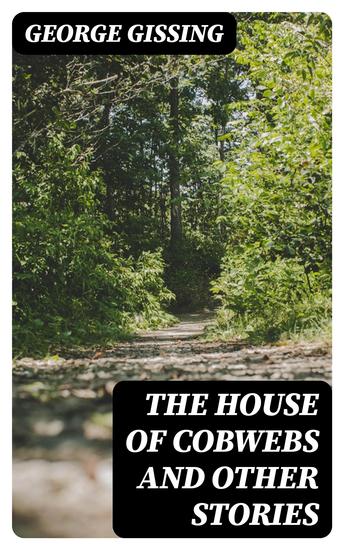
The House of Cobwebs and Other Stories - cover

The House of Cobwebs and Other Stories

George Gissing

Publisher: DigiCat

  • 0
  • 0
  • 0

Summary

In "The House of Cobwebs and Other Stories," George Gissing masterfully weaves a tapestry of human experience, employing a realist style that delves deep into the psyche of his characters. Set against the backdrop of late Victorian England, Gissing explores themes of social class, isolation, and the often-unseen struggles of everyday life. His narratives are marked by a rich, descriptive prose that encapsulates the emotional weight of his characters' dilemmas, illuminating the complexities of their desires and disappointments. Each story reveals not merely individual struggles but also the broader societal issues of the time, making a poignant commentary on the contradictions of an era poised between tradition and modernity. Gissing, a compelling figure in the literary landscape, drew from his own turbulent life experiences, including poverty and the challenges of the publishing world, which profoundly shaped his worldview. His firsthand encounters with the struggles of the working class provided him with a unique perspective, infusing his writing with authenticity and empathy. Gissing's commitment to social realism and his philosophical contemplations on life and literature offer readers a profound lens through which to interpret his stories. "The House of Cobwebs and Other Stories" is highly recommended for those who appreciate literature that reflects the intricacies of human nature and social context. Gissing's ability to evoke sympathy while tackling uncomfortable truths ensures that these narratives resonate with contemporary audiences. For readers seeking a deep exploration of the human condition amidst societal constraints, this collection remains an essential addition to the canon of Victorian literature.
Available since: 09/15/2022.
Print length: 251 pages.

Other books that might interest you

  • Save Me - cover

    Save Me

    Samantha Chase

    • 0
    • 0
    • 0
    Ryleigh Donovan has been unsuccessfully dodging her mother’s matchmaking attempts for far too long. In an act of desperation, she finds the one guy in her small town who is guaranteed to shock everyone to be her fake boyfriend. It doesn’t need to be for long—she just needs to buy herself enough time to recover from her mother’s last disastrous fix-up. It’s really a fool-proof plan. But when a few staged kisses lead to some very real feelings, she realizes she might be in over her head. Ryker Masella has been patiently waiting for the perfect opportunity to get Ryleigh to take him—and his numerous attempts at asking her out—seriously. When she grabs him and kisses him in front of her family to prove a point, he’s more than on board. But when she proposes a fake—and temporary—relationship, he’s 100% on board. After all, she might be all about pretending, but he sees it as a way for Ryleigh to truly see the real him. Fake flirting and orchestrated dates quickly bring on real feelings. For Ryker, they’ve always been there, and he’ll be as patient as he needs to be. She might have asked him to save her from her family, but what he wants is to save her from herself. Each book in the Donovans series can be read as a standalone.
    Show book
  • 3 Stories About - Women's Sexuality - A trio of classic tales perfect for a commute walk or quiet night in - cover

    3 Stories About - Women's...

    Katherine Mansfield, Charlotte...

    • 0
    • 0
    • 0
    There is something about the number 3.    
     
    The Ancient Greeks believed 3 was the perfect number, and in China 3 has always been a lucky number, and they know a thing or two.   
     
    Most religions also have 3 this and 3 that and, of course, in these more modern times, three’s a crowd may be too many, except when it’s a ménage à trois.  It seems good things usually come in threes. 
     
    Whatever history and culture says WE think 3, a hat-trick of stories, is a great number to explore themes and literary avenues that classic authors were so adept at creating. 
     
    From their pens to your your ears.   
     
    01 - 3 Stories About - Women's Sexuality 
    02 - Bliss by Katherine Mansfield 
    03 - The Giant Wisteria by Charlotte Perkins Gilman 
    04 - The Storm by Kate Chopin
    Show book
  • People Who Talk to Stuffed Animals Are Nice - Stories - cover

    People Who Talk to Stuffed...

    Ao Omae

    • 0
    • 0
    • 0
    “A captivating exploration of gender dynamics, set against a background of the trying and confusing time of adolescence, when identity is in flux and everything in life is unstable and magical.” —Lydia Conklin, author of Rainbow Rainbow 
    A fresh, thoughtful, and always surprising short story collection from a rising young star in the world of Japanese literature. 
    Composed of the title novella and three short stories, People Who Talk to Stuffed Animals Are Nice sensitively explores gender, friendship, romance, love, human interaction and its absence, and how a misogynistic society limits women and men. 
    In the title story, Nanamori and Mugito, two university students appalled by society’s gendered roles, rebel. Refusing to interact with other people they use stuffed toys for emotional support. Unlike Nanamori and Mugito, their fellow plushie society member Shiraki does not talk to plushies. Pragmatic, she accepts the status quo that boys sometimes make nasty jokes; she believes their behavior resembles the real world. 
    In “Realizing Fun Things Through Water,” a young woman named Hatsuoka must contend with a mother-in-law who swears by cancer-preventing “hyper-organization” water, and a sister who writes fake news for a living. “Bath Towel Visuals” illuminates the mental cost of not just laughing along at mean humor, while “Hello, Thank You I’m Okay” follows a family’s response when their shut-in son announces he wants to throw himself a birthday party. 
    Written in brisk and gentle prose, Ao Omae’s stories capture the subtleties and complexities of his characters’ inner world, individuals struggling to conform in an inflexible society little tolerant of difference. These stories, sometimes comical, sometimes bittersweet, and always thought-provoking, speak to the pain and desires of all who embrace nuance, repudiate traditional sex roles, and long for a gentler and more tolerant world.
    Show book
  • A Diagnosis of Death - From their pens to your ears genius in every story - cover

    A Diagnosis of Death - From...

    Ambrose Bierce

    • 0
    • 0
    • 0
    Ambrose Gwinnett Bierce was born on 24th June 1842 at Horse Cave Creek in Meigs County, Ohio. His parents were poor but they introduced him to literature at an early age, instilling in him a deep appreciation of books, the written word and the elegance of language.  
    Growing up in Koscuisko County, Indiana poverty and religion were defining features of his childhood, and he would later describe his parents as “unwashed savages” and fanatically religious, showing him little affection but always quick to punish. He came to resent religion, and his introduction to literature appears to be their only positive effect. 
    At age 15 Bierce left home to become a printer’s devil, mixing ink and fetching type at The Northern Indian, a small Ohio paper. Falsely accused of theft he returned to his farm and spent time sending out work in the hopes of being published. 
    His Uncle Lucius advised he be sent to the Kentucky Military Institute. A year later he was commissioned as an Officer.  As the Civil War started Bierce enlisted in the 9th Indiana Infantry Regiment.  
    In April 1862 Bierce fought at the Battle of Shiloh, an experience which, though terrifying, became the source of several short stories. Two years later he sustained a serious head wound and was off duty for several months. He was discharged in early 1865.  
    A later expedition to inspect military outposts across the Great Plains took him all the way to San Francisco. He remained there to become involved with publishing and editing and to marry, Mary Ellen on Christmas Day 1871.  They had a child, Day, the following year.  
    In 1872 the family moved to England for 3 years where he wrote for Fun magazine. His son, Leigh, was born, and first book, ‘The Fiend’s Delight’, was published.  
    They returned to San Francisco and to work for a number of papers where he gained admiration for his crime reporting. In 1887 he began a column at the William Randolph Hearst’s San Francisco Examiner.  
    Bierce’s marriage fell apart when he discovered compromising letters to his wife from a secret admirer. The following year, 1889 his son Day committed suicide, depressed by romantic rejection. 
    In 1891 Bierce wrote and published the collection of 26 short stories which included ‘An Occurrence at Owl Creek Bridge’.  Success and further works including poetry followed.  
    Bierce with Hearst’s resources helped uncover a financial plot by a railroad to turn 130 million dollars of loans into a handout. Confronted by the railroad and asked to name his price Bierce answered “my price is $130 million dollars. If, when you are ready to pay, I happen to be out of town, you may hand it over to my friend, the Treasurer of the United States”.  
    He now began his first foray as a fabulist, publishing ‘Fantastic Fables’ in 1899.  But tragedy again struck two years later when his second son Leigh died of pneumonia relating to his alcoholism.  
    He continued to write short stories and poetry and also published ‘The Devil’s Dictionary’.  
    At the age of 71, in 1913 Bierce departed from Washington, D.C., for a tour of the battlefields where he had fought during the civil war. At the city of Chihuahua he wrote his last known communication, a letter to a friend. It’s closing words were “as to me, I leave here tomorrow for an unknown destination,” Ambrose Bierce then vanished without trace.
    Show book
  • Clifftop Crisis and Transformation - A Thousand Li short story - cover

    Clifftop Crisis and...

    Tao Wong

    • 0
    • 0
    • 0
    A martial artist falls from a cliff to his death. A rival stands, triumphant above.  
    The beginning of an all too familiar story. Yet, in the time of recuperation and return, time passes and sometimes, the transformation that occurs is not the one you expect.  
    This is a 4,500 word short story set in the A Thousand Li universe featuring as yet to be seen characters in the universe. Does not need to be read to follow the main series.
    Show book
  • His Wife's Deceased Sister - From their pens to your ears genius in every story - cover

    His Wife's Deceased Sister -...

    Frank R Stockton

    • 0
    • 0
    • 0
    Frank Richard Stockton was born in Philadelphia on 5th April 1834.  
    His father, a Methodist minister, discouraged Stockton’s literary career from an early age.  Feeling unable to go against those wishes it was for many years that Stockton’s income was maintained as a wood engraver.   
    His first work was published in 1867 and his first collection only appeared in 1870.  Despite this late arrival Stockton’s innovative and often far-fetched stories, with a gentle ‘poking fun’ humour were very popular.  Like his contemporary Mark Twain he avoided the scolding, hectoring and moral tones of many other authors and instead gently teased and cajoled his reader to open their eyes to the ills, the greed and the ambitions of the world around them.  His sci-fi stories in particular were far-seeing and inventive including a tale of negative gravity and a bloodless Anglo-US war won by technological feats.  
    Perhaps his most enduring tale though is ‘The Lady, or the Tiger?’ from 1882.  A condemned man is given a choice of being eaten alive or marrying his princess lover.  But he has to choose which door each is behind. 
    Frank R Stockton died in Washington, DC, on 20th April 1902, of a cerebral haemorrhage.  He is buried at The Woodlands in Philadelphia.
    Show book