Join us on a literary world trip!
Add this book to bookshelf
Grey
Write a new comment Default profile 50px
Grey
Subscribe to read the full book or read the first pages for free!
All characters reduced
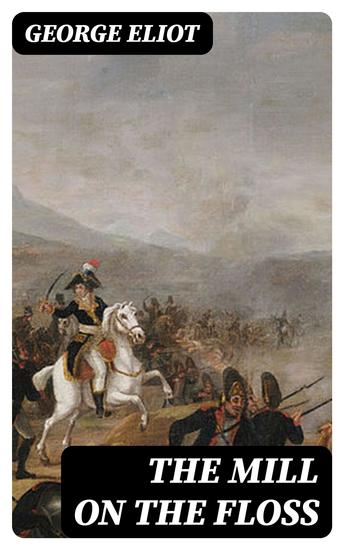
The Mill on the Floss - Enriched edition - cover

The Mill on the Floss - Enriched edition

George Eliot

Publisher: DigiCat

  • 0
  • 0
  • 0

Summary

In "The Mill on the Floss," George Eliot intricately weaves a tale of familial bonds, personal struggle, and the quest for self-identity against the backdrop of rural 19th-century England. With its rich psychological depth and a narrative style characterized by a blend of realism and philosophical musings, the novel explores the tumultuous relationship between siblings Maggie and Tom Tulliver. Eliot's keen observation of societal norms and her profound understanding of human emotion create a vivid tapestry that reflects the constraints placed on women and the complexities of love and ambition. The narrative unfolds with lyrical prose, offering a compelling critique of the era's social mores while engaging readers in the characters' emotional landscapes. George Eliot, the pen name of Mary Ann Evans, was a pioneering British novelist and a significant figure in the realism movement. Her own life experiences, marked by intellectual independence and social challenges, inform the themes in her works. Eliot's commitment to exploring the inner lives of her characters and her profound empathy for human suffering underscore the driving impetus behind "The Mill on the Floss," as she sought to reveal the often harsh realities faced by women of her time. This novel is highly recommended for readers who appreciate intricate character studies and social commentary. Eliot's masterful storytelling invites a deep emotional engagement and offers timeless insights into the human experience, making "The Mill on the Floss" a profound exploration of love, loss, and the struggle for self-understanding.

In this enriched edition, we have carefully created added value for your reading experience:
- A succinct Introduction situates the work's timeless appeal and themes.
- The Synopsis outlines the central plot, highlighting key developments without spoiling critical twists.
- A detailed Historical Context immerses you in the era's events and influences that shaped the writing.
- An Author Biography reveals milestones in the author's life, illuminating the personal insights behind the text.
- A thorough Analysis dissects symbols, motifs, and character arcs to unearth underlying meanings.
- Reflection questions prompt you to engage personally with the work's messages, connecting them to modern life.
- Hand‐picked Memorable Quotes shine a spotlight on moments of literary brilliance.
- Interactive footnotes clarify unusual references, historical allusions, and archaic phrases for an effortless, more informed read.
Available since: 05/18/2022.
Print length: 541 pages.
Other books that might interest you

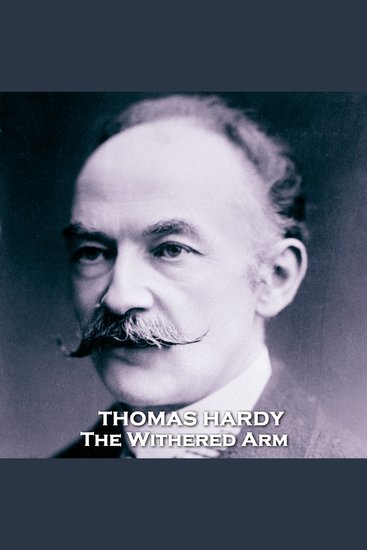
  • The Withered Arm - From their pens to your ears genius in every story - cover

    The Withered Arm - From their...

    Thomas Hardy

    • 0
    • 0
    • 0
    Thomas Hardy was born in the hamlet of Upper Bockhampton about three miles east of Dorchester in Dorset, England, on 2nd June 1840.  
    Despite a fairly wide education and being an avid reader his parents thought it unlikely he would lead a successful scholarly or clerical career and he was apprenticed in 1856, at age 16, to a local architect whose speciality was in church restoration.  Hardy’s only opportunity to read was in the morning before work between the hours of five and eight.  
    On the back of a failed love affair he moved to London and spent five years working as an assistant to the architect Arthur Blomfield, also a restorer and designer of churches. Hardy though had by now become disillusioned with institutionalised forms of Christianity and abandoned any lingering hopes of ordination in the Anglican Church.  However, his writing of poetry was now flourishing, although it was still rejected for publication.  
    His novel ‘Desperate Remedies’, was published anonymously in 1871 and he now resolved to write full time though he was not yet in a position to achieve financial security or literary success. His second novel, ‘Under the Greenwood Tree’, appeared in 1872 and in 1873 ‘A Pair of Blue Eyes’, the most autobiographical of his works arrived. With ‘Far From the Madding Crowd’ in 1874, came critical acclaim, public attention and financial success. This was repeated in 1878 with ‘The Return of the Native’, and the ensuing years saw him rise to ever greater popularity.  
    His classic ‘The Mayor of Casterbridge’ arrived in 1886 and 5 years later ‘Tess of the d’Urbervilles’. The latter only saw publication after extensive alterations to its plot and the deletion of long passages to lessen the shock to the prudish Victorian audience who were dismayed by the seduction and ruin of a young girl by a rakish aristocrat.  
    ‘Jude the Obscure’, his last novel, suffered the same fate when it was published in 1895.  The uproar so disturbed him that he returned to poetry. In 1898 he had an earlier poetry collection, ‘Wessex Poems’ published. 
    Hardy spent the years between 1903 and 1908 writing ‘The Dynasts’, an epic poem on the Napoleonic Wars. 
    In his twilight years came honours and awards from the great and the good in recognition of his stature as one of the most outstanding of British authors across novels, short stories and poetry. George V conferred on him the Order of Merit in 1910. 
    From 1920 to 1927 he worked, in secret, on his autobiography, which was later published after his death as the work of his second wife, Florence Hardy.  
    Thomas Hardy OM died on the 11th January 1928. 
    His heart was buried alongside his first wife in Stinsford churchyard, Dorchester.
    Show book
  • A Complete Recovery - From their pens to your ears genius in every story - cover

    A Complete Recovery - From their...

    Barry Pain

    • 0
    • 0
    • 0
    Barry Eric Odell Pain was born at 3 Sydney Street in Cambridge on 28th September 1864. He was one of 4 children. 
    He was educated at Sedbergh School and then Corpus Christi College, Cambridge. 
    In 1889, Cornhill Magazine published his short story ‘The Hundred Gates’.  This opened the way for Pain to advance his literary career on several fronts. He became a contributor to Punch and The Speaker, as well as joining the staff of both the Daily Chronicle and Black and White.  
    Pain was also a noted and prominent contributor to The Granta and from 1896 to 1928 a regular contributor to the Windsor Magazine. 
    It is often said that Pain was discovered by Robert Louis Stevenson, who compared his work to that of Guy de Maupassant.  It’s an apt comparison. Pain was a master of disturbing prose but was also able to inject parody and light comedy into many of his works.  A simple premise could in his hands suddenly expand into a world very real but somehow emotionally fraught and on the very edge of darkness. 
    Barry Pain died on 5th May 1928 in Bushey, Hertfordshire.
    Show book
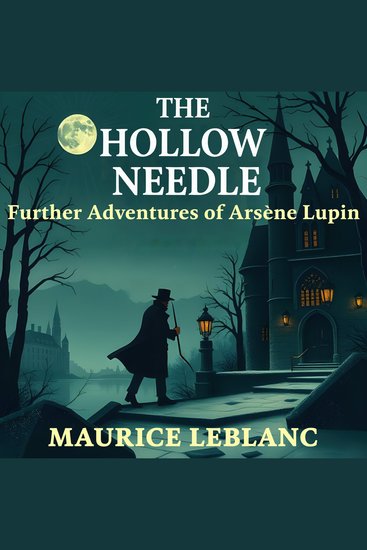
  • Hollow Needle The: Further adventures of Arsène Lupin - cover

    Hollow Needle The: Further...

    Maurice Leblanc

    • 0
    • 0
    • 0
    "The Hollow Needle: Further Adventures of Arsène Lupin," written by Maurice Leblanc, is a detective novel likely set in the early 20th century. The story revolves around the clever gentleman thief, Arsène Lupin, and a young amateur detective named Isidore Beautrelet, who becomes involved in a complex case featuring a robbery, a murder, and a series of clever deceptions. 
    The novel opens with a tense scene at the Château d'Ambrumésy, where two young women, Raymonde and Suzanne, are awakened by strange noises in the night. Their fears are confirmed when they encounter a mysterious man carrying something, leading to a violent struggle that results in a murder. 
    As the plot unfolds, the local gendarmes investigate the crime but quickly find themselves misled. Meanwhile, Beautrelet eagerly pursues his deductions, determined to solve the case before the infamous Arsène Lupin can escape detection. The initial chapters hint at a web of intrigue involving stolen art, treachery, and a race against time, all set against the backdrop of the pursuit of one of literature's most celebrated thieves.
    Show book
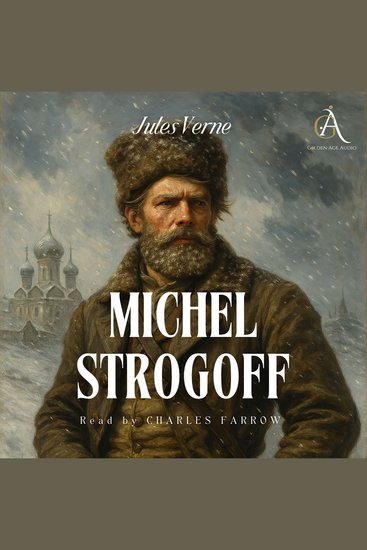
  • Michael Strogoff - Audiobook - cover

    Michael Strogoff - Audiobook

    Jules Verne, Classic Audiobooks,...

    • 0
    • 0
    • 0
    Michael Strogoff is one of Jules Verne's most human and heroic works — a sweeping tale of courage, loyalty, and endurance across the vast wilderness of imperial Russia. When the Tsar entrusts his brave courier with a secret mission, Strogoff must cross thousands of miles of danger, through forests, steppes, and snow-covered mountains, to save his nation from disaster.Unlike Verne's more scientific novels, Michael Strogoff is a deeply emotional adventure. It blends the epic scale of history with the intimacy of personal sacrifice, portraying a hero whose strength lies not only in his body but in his moral will.Vividly written and full of suspense, this novel combines the pace of a thriller with the grandeur of a national legend. Michael Strogoff remains a celebration of resilience — and of the human heart's power to endure.
    Show book
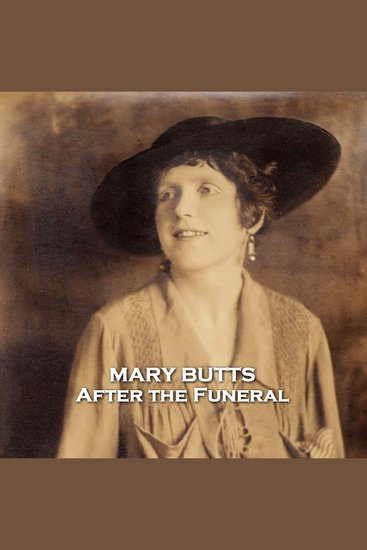
  • After the Funeral - From their pens to your ears genius in every story - cover

    After the Funeral - From their...

    Mary Butts

    • 0
    • 0
    • 0
    Mary Frances Butts was born on 13th December 1890 in Poole, Dorset. 
    Her early years were spent at Salterns, an 18th-century house overlooking Poole Harbour.  Sadly in 1905 her father died, and she was sent for boarding at St Leonard's school for girls in St Andrews. 
    Her mother remarried and, from 1909, Mary studied at Westfield College in London, and here, first became aware of her bisexual feelings.  She was sent down for organising a trip to Epsom races and only completed her degree in 1914 when she graduated from the London School of Economics.  By then Mary had become an admirer of the occultist Aleister Crowley and she was given a co-authorship credit on his ‘Magick (Book 4)’. 
    In 1916, she began the diary which would now detail her future life and be a constant reference point for her observations and her absorbing experiences. 
    During World War I, she was doing social work for the London County Council in Hackney Wick, and involved in a lesbian relationship.  Life changed after meeting the modernist poet, John Rodker and they married in 1918. 
    In 1921 she spent 3 months at Aleister Crowley's Abbey of Thelema in Sicily; she found the practices dreadful and also acquired a drug habit.  Mary now spent time writing in Dorset, including her celebrated book of short stories ‘Speed the Plough’ which saw fully develop her unique Modernist prose style. 
    Europe now beckoned and several years were spent in Paris befriending many artists and writing further extraordinary stories.   
    She was continually sought after by literary magazines and also published several short story collections as books. Although a Modernist writer she worked in other genres but is essentially only known for her short stories.  Mary was deeply committed to nature conservation and wrote several pamphlets attacking the growing pollution of the countryside. 
    In 1927, she divorced and the following year her novel ‘Armed with Madness’ was published.  A further marriage followed in 1930 and time was spent attempting to settle in London and Newcastle before setting up home on the western tip of Cornwall.  By 1934 the marriage had failed. 
    Mary Butts died on 5th March 1937, at the West Cornwall Hospital, Penzance, after an operation for a perforated gastric ulcer. She was 46.
    Show book
  • Utopia - cover

    Utopia

    Thomas Moore

    • 0
    • 0
    • 0
    'For if you suffer your people to be ill-educated and their manners to be corrupted from their infancy, and then punish them for those crimes to which their first education disposed them, what else is to be concluded from this, but that you first make thieves and then punish them.'
    
    A classic work of socio-political satire and still widely read and studied to this day, Utopia sees a fictional traveller describe an ideal society; a vehicle for More to highlight the flaws of sixteenth-century Europe.
    
    First published in 1516, Utopia is a political and philosophical satire presented as a dialogue between More and the traveller Raphael Hythlodaeus. Raphael recounts his time visiting the island of Utopia, where private property ceases to exist, all citizens work, and the laws promote equality, education and religious tolerance. Through this imagined society, More indirectly challenges the injustices of European politics, and cleverly reflects on the meaning of justice, governance and what it takes to create a 'perfect' society.
    Thomas More (1478 – 1535) was an English philosopher, statesman, lawyer and author. Venerated in the Catholic Church, More served Henry VIII as Lord Chancellor from 1529 to 1532. Today, he is noted for being a Renaissance humanist, and is best known for his political work, Utopia.
    Show book