Join us on a literary world trip!
Add this book to bookshelf
Grey
Write a new comment Default profile 50px
Grey
Subscribe to read the full book or read the first pages for free!
All characters reduced
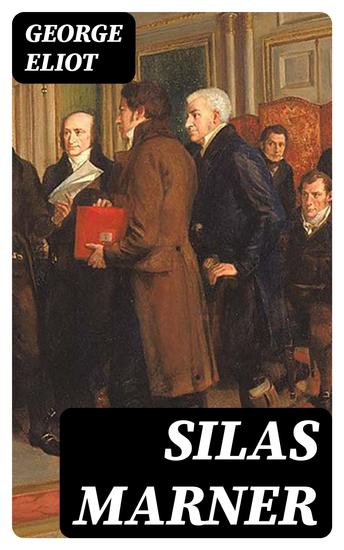
Silas Marner - Enriched edition - cover

Silas Marner - Enriched edition

George Eliot

Publisher: DigiCat

  • 0
  • 0
  • 0

Summary

In "Silas Marner," George Eliot explores the themes of isolation, redemption, and the transformative power of love through the poignant tale of a reclusive weaver who finds unexpected solace in a child. Using a richly evocative style, Eliot weaves a narrative that captures the nuances of rural Victorian life, blending psychological insight with social commentary. The novel's structure is meticulous, allowing the characters' arcs to unfold in a manner that highlights their moral and emotional struggles against the backdrop of a changing society. Eliot's use of intricate symbolism, especially through Marner's gold and the eventual replacing of this treasure with the gold of human connection, enhances the story's depth and significance. George Eliot, a pioneer of literary realism and a prominent figure in 19th-century literature, experienced her own struggles with societal norms, often reflected in her writings. Born Mary Ann Evans, she adopted a male pen name to ensure her work would be taken seriously in a male-dominated literary culture. Her personal experiences, including themes of faith, community, and individual redemption, significantly influenced her portrayal of Marner's journey from despair to emotional fulfillment. "Silas Marner" is highly recommended for readers interested in profound character studies that delve into the complexities of human relationships and the capacity for change. Eliot's masterful storytelling resonates with anyone who has sought connection and meaning, making this timeless classic essential reading for those who appreciate the interplay of social context and personal growth.

In this enriched edition, we have carefully created added value for your reading experience:
- A succinct Introduction situates the work's timeless appeal and themes.
- The Synopsis outlines the central plot, highlighting key developments without spoiling critical twists.
- A detailed Historical Context immerses you in the era's events and influences that shaped the writing.
- An Author Biography reveals milestones in the author's life, illuminating the personal insights behind the text.
- A thorough Analysis dissects symbols, motifs, and character arcs to unearth underlying meanings.
- Reflection questions prompt you to engage personally with the work's messages, connecting them to modern life.
- Hand‐picked Memorable Quotes shine a spotlight on moments of literary brilliance.
- Interactive footnotes clarify unusual references, historical allusions, and archaic phrases for an effortless, more informed read.
Available since: 09/15/2022.
Print length: 172 pages.
Other books that might interest you

  • My Confession - cover

    My Confession

    Leo Tolstoy

    • 0
    • 0
    • 0
    My Confession is a brief autobiographical story of Leo Tolstoy's struggle with a mid-life existential crisis of melancholia. It describes his search for answers to the profound questions "What will come of my life?" and "What is the meaning of life?", without answers to which life, for him, had become "impossible." Tolstoy reflects on the arc of his philosophical life until then: his childhood abandonment of his Russian orthodox faith; his mastery of strength, will, power, and reason; and how, after he had achieved tremendous financial success and social status, life to him seemed meaningless. After despairing of his attempts to find answers in science, philosophy, eastern wisdom, and his fellow men of letters, he describes his turn to the wisdom of the common people and his attempts to reconcile their instinctive faith with the dictates of his reason. The main body of the text ends with the author reaching a compromise: faith, he realizes, is a necessity, but it must be constrained by reason. However, an epilogue that describes a dream he had some time after completing the body of the text suggests that he has undergone a radical personal and spiritual transformation. (Summary from Wikipedia)
    Show book
  • Death at 830 - From their pens to your ears genius in every story - cover

    Death at 830 - From their pens...

    Christopher St John Sprigg

    • 0
    • 0
    • 0
    The bookshelves of British literature are incredible collections that have gathered together centuries of very talented authors.  From these Isles their fame spread and whilst among their number many are now forgotten or neglected their talents endure.  Among them is Christopher St John Sprigg.
    Show book
  • Banned Books – Heart of Darkness and Metamorphosis - cover

    Banned Books – Heart of Darkness...

    Franz Kafka, Joseph Conrad

    • 0
    • 0
    • 0
    Banned Books – Heart of Darkness and Metamorphosis brings together two of the most provocative and frequently challenged works of modern literature. Joseph Conrad’s Heart of Darkness and Franz Kafka’s The Metamorphosis each confronted readers with unsettling truths about humanity, identity, and the fragile structures of society — and both faced censorship, controversy, and removal from classrooms and libraries around the world. 
     
    In Heart of Darkness, Conrad exposes the brutality of colonialism through the 
    haunting journey of Charles Marlow into the Congo. Its stark portrayal of 
    imperial violence, psychological unraveling, and moral ambiguity has made it a 
    powerful but often contested text, debated for its themes and depictions for 
    more than a century. 
     
    In The Metamorphosis, Kafka delivers one of the most iconic and disturbing 
    stories in world literature: the tale of Gregor Samsa, who awakens one morning 
    transformed into a monstrous insect. Its exploration of alienation, 
    dehumanization, and existential dread led to challenges in schools and 
    censorship under authoritarian regimes. 
     
    Together, these works reveal why banned 
    and challenged books remain essential — they provoke thought, confront 
    uncomfortable realities, and continue to shape cultural conversations long 
    after their publication. 
    Perfect for listeners who appreciate 
    classic literature, psychological fiction, and stories that push boundaries and 
    question the world around us.
    Show book
  • The Poor Relation's Story - cover

    The Poor Relation's Story

    Charles Dickens

    • 0
    • 0
    • 0
    Charles John Huffam Dickens (7 February 1812 – 9 June 1870) was an English writer and social critic. He created some of the world's best-known fictional characters and is regarded as the greatest novelist of the Victorian era. His works enjoyed unprecedented popularity during his lifetime, and by the twentieth century critics and scholars had recognised him as a literary genius. His novels and short stories enjoy lasting popularity.
    The Poor Relation's Story: He was very reluctant to take precedence of so many respected members of the family, by beginning the round of stories they were to relate as they sat in a goodly circle by the Christmas fire; and he modestly suggested that it would be more correct if "John our esteemed host" (whose health he begged to drink) would have the kindness to begin. For as to himself, he said, he was so little used to lead the way that really--But as they all cried out here, that he must begin, and agreed with one voice that he might, could, would, and should begin, he left off rubbing his hands, and took his legs out from under his armchair, and did begin.
    Show book
  • If - Classic Tales Edition - cover

    If - Classic Tales Edition

    Rudyard Kipling

    • 0
    • 0
    • 0
    The beloved poem from the great Rudyard Kipling. If you can follow these precepts, you will indeed be a man, my son.
    Show book
  • HorrorBabble's Subterranean Terror - 10 Stories of the Dark Places Beneath Us - cover

    HorrorBabble's Subterranean...

    Robert Bloch, Edmond Hamilton,...

    • 0
    • 0
    • 0
    A collection of horror stories set in shadowy caverns, crypts, and other undesirable hollows. 
    Contents: 
    Far Below by Robert Barbour Johnson (Weird Tales, June-July 1939) 
    The story of dreadful creatures burrowing up into the New York subway. 
    The Creeper in the Crypt by Robert Bloch (Weird Tales, July 1937) 
    An unusual case of kidnapping in witch-haunted Arkham. 
    The Secret in the Tomb by Robert Bloch (Weird Tales, May 1935) 
    A man answers an inexplicable summons from beyond the grave. 
    Murder in the Grave by Edmond Hamilton (Weird Tales, February 1935) 
    A night of terror ten feet below the surface of the ground. 
    The Thing in the Cellar by David H. Keller (Weird Tales, March 1932) 
    The tale of a terrified little boy, and his fear of what might be lurking in the basement. 
    It Walks by Night by Henry Kuttner (Weird Tales, December 1936) 
    A ghastly horror that stalked through the crypts beneath an old graveyard. 
    The Graveyard Rats by Henry Kuttner (Weird Tales, March 1936) 
    A cemetery caretaker must exterminate a colony of monstrous rats. 
    The People of the Pit by Abraham Merritt (All-Story Weekly, January 1918) 
    An individual descended much too deeply into the heart of the Earth. 
    The Epiphany of Death by Clark Ashton Smith (The Fantasy Fan, July 1934) 
    A shocking revelation in the catacombs of Ptolemides. 
    The Seed from the Sepulchre by Clark Ashton Smith (Weird Tales, October 1933) 
    In the Venezuelan jungle, a diabolical plant lived on human life.
    Show book