Join us on a literary world trip!
Add this book to bookshelf
Grey
Write a new comment Default profile 50px
Grey
Subscribe to read the full book or read the first pages for free!
All characters reduced
Romola - cover

Romola

George Eliot

Publisher: Bu Classics Books

  • 0
  • 0
  • 0

Summary

Set in Renaissance Florence, this historical romance follows a young woman's intellectual and spiritual journey amidst the turmoil of Savonarola's rise. Betrayal and political chaos force her to forge a new path, blending deep scholarship with a gripping narrative of moral awakening.
Available since: 03/05/2026.
Print length: 893 pages.

Other books that might interest you

  • The English at the North Pole - A chilling masterpiece of Adventure Fiction Sail into the deadly uncharted Arctic on a mysterious vessel commanded by a phantom captain in this classic saga of survival and exploration - cover

    The English at the North Pole -...

    Jules Verne

    • 0
    • 0
    • 0
    Set sail into the frozen abyss where only the bravest—or the most foolish—dare to venture. 
    The steam-brig Forward leaves the docks of Liverpool bound for a perilous and unknown destination. Manned by a hand-picked crew and loaded with six years of provisions, she is built to withstand the deadliest forces of nature. But there is a chilling mystery aboard: the true captain is missing, communicating only through strange, unheralded letters. As Commander Richard Shandon and the eccentric Dr. Clawbonny lead the men deep into the towering icebergs of Baffin's Bay, morale begins to fracture. Paranoia spreads among the crew, fueled by the haunting presence of a ferocious, silent dog that seems to know their route better than they do. With monstrous ice floes threatening to crush the ship and mutiny brewing in the bitter cold, the Forward presses on toward an impossible, mythical goal. 
    Why you will love this audiobook:Fans of classic Adventure Fiction will be absolutely gripped by this relentless tale of maritime survival and Arctic exploration. Jules Verne weaves a masterclass in tension, combining the golden age of discovery tropes with the eerie atmosphere of a ghost ship lost on the polar seas. Whether you crave man-versus-nature conflicts, treacherous nautical navigation, historic ocean legends, or psychological suspense among a stranded crew, this gripping saga of courage against insurmountable odds is essential listening. 
    About the Author:Jules Verne (1828–1905) was a pioneering French novelist who laid the foundation for modern science fiction and adventure literature. Renowned for his meticulous scientific research and visionary imagination, Verne's timeless classics continue to inspire global explorers, inventors, and readers to this day.
    Show book
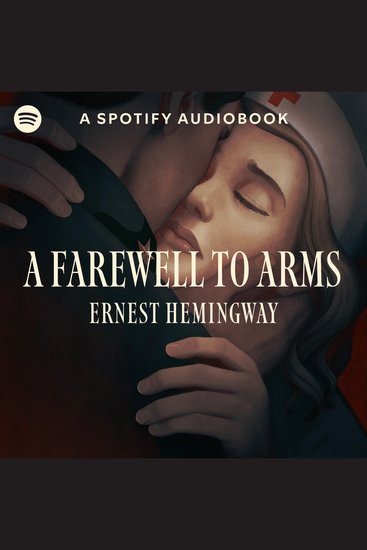
  • A Farewell to Arms - cover

    A Farewell to Arms

    Ernest Hemingway

    • 0
    • 0
    • 0
    Set against the harsh landscape of World War I-era Europe, this hauntingly beautiful tale of love and loss follows American ambulance driver Frederic Henry as he embarks on a romance with British nurse Catherine Barkley. Narrated with Hemingway's signature economy and power, the book navigates the brutal realities of war and the sacrifices one makes for those they love.
     
    Blending gritty realism with poignant romance, and daring escapes with focused emotion, A Farewell to Arms endures as one of Hemingway's most iconic novels.
    Show book
  • The Thinker - From their pens to your ears genius in every story - cover

    The Thinker - From their pens to...

    Sherwood Anderson

    • 0
    • 0
    • 0
    Sherwood Anderson was born on 13th September 1876 in Camden, Ohio. 
    When his father’s business failed the family was forced to move on a regular basis before finally settling in Clyde, Ohio.   
    Anderson, one of 7 children, left school at 14 to take a number of jobs to help with the family finances. These were difficult years. 
    He moved to Chicago in search of opportunities before joining the Army for the US-Spanish War of 1898.  He then entered Wittenberg Academy in Springfield, Ohio to complete his education before moving back to Chicago to take up a writing job. 
    In 1904 he married Cornelia Lane, her family had resources and Anderson was keen, with this family backing, to run a business. 
    The early years of their marriage produced 3 children but a nervous breakdown in 1907 and another in 1912, despite his success as a business entrepreneur, resulted in him abandoning his family and deciding that a literary career would be best for him.   
    A move back to Chicago resulted in a job in advertising, a divorce from Cornelia and marriage to Tennessee Mitchell.  
    That same year his first book ‘Windy McPherson’s Son’ was released and in 1919, his most famous book, ‘Winesburg, Ohio’, a collection of short stories about life in an Ohio town was released. 
    Anderson continued to write short stories, novels and non-fiction but his only true bestseller came with ‘Dark Laughter’.  His influence on writers that followed, from Faulkner to Hemingway, was immense. He also married a further two times.   
    Sherwood Anderson died in in Colón, Panama, on the 8th March, 1941. He was 64. An autopsy revealed that a swallowed toothpick had resulted in peritonitis. 
    His headstone epitaph reads ‘Life, Not Death is the Great Adventure.’
    Show book
  • The Wings of Horus - cover

    The Wings of Horus

    Algernon Blackwood

    • 0
    • 0
    • 0
    The Wings of Horus by Algernon Blackwood is offered here in a clean English digital edition prepared for fluent ebook reading. The work stands within horror and gives modern readers direct access to a public-domain classic with navigable structure and a restrained typographic presentation. The opening pages establish the book's atmosphere with this first movement: BINOVITCH had the bird in him somewhere: in his features, certainly, with his piercing eye and hawk-like nose; in his movements, with his quick way of flitting, hopping, darting; in the way he perched on the edge of a chair; in the manner he pecked at his food; in his twittering, high-pitched voice This edition is suited to readers who want a reliable, uncluttered version of the text for study, rediscovery, and sustained reading.
    Show book
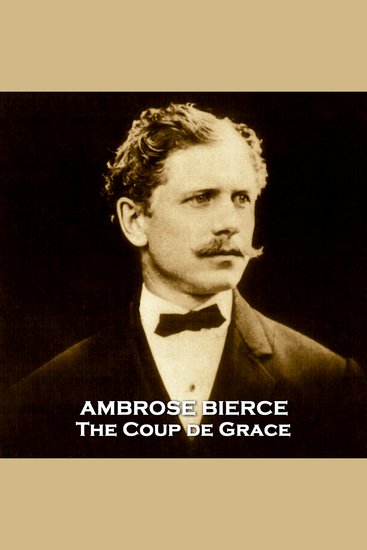
  • The Coup de Grace - From their pens to your ears genius in every story - cover

    The Coup de Grace - From their...

    Ambrose Bierce

    • 0
    • 0
    • 0
    Ambrose Gwinnett Bierce was born on 24th June 1842 at Horse Cave Creek in Meigs County, Ohio. His parents were poor but they introduced him to literature at an early age, instilling in him a deep appreciation of books, the written word and the elegance of language.  
    Growing up in Koscuisko County, Indiana poverty and religion were defining features of his childhood, and he would later describe his parents as “unwashed savages” and fanatically religious, showing him little affection but always quick to punish. He came to resent religion, and his introduction to literature appears to be their only positive effect. 
    At age 15 Bierce left home to become a printer’s devil, mixing ink and fetching type at The Northern Indian, a small Ohio paper. Falsely accused of theft he returned to his farm and spent time sending out work in the hopes of being published. 
    His Uncle Lucius advised he be sent to the Kentucky Military Institute. A year later he was commissioned as an Officer.  As the Civil War started Bierce enlisted in the 9th Indiana Infantry Regiment.  
    In April 1862 Bierce fought at the Battle of Shiloh, an experience which, though terrifying, became the source of several short stories. Two years later he sustained a serious head wound and was off duty for several months. He was discharged in early 1865.  
    A later expedition to inspect military outposts across the Great Plains took him all the way to San Francisco. He remained there to become involved with publishing and editing and to marry, Mary Ellen on Christmas Day 1871.  They had a child, Day, the following year.  
    In 1872 the family moved to England for 3 years where he wrote for Fun magazine. His son, Leigh, was born, and first book, ‘The Fiend’s Delight’, was published.  
    They returned to San Francisco and to work for a number of papers where he gained admiration for his crime reporting. In 1887 he began a column at the William Randolph Hearst’s San Francisco Examiner.  
    Bierce’s marriage fell apart when he discovered compromising letters to his wife from a secret admirer. The following year, 1889 his son Day committed suicide, depressed by romantic rejection. 
    In 1891 Bierce wrote and published the collection of 26 short stories which included ‘An Occurrence at Owl Creek Bridge’.  Success and further works including poetry followed.  
    Bierce with Hearst’s resources helped uncover a financial plot by a railroad to turn 130 million dollars of loans into a handout. Confronted by the railroad and asked to name his price Bierce answered “my price is $130 million dollars. If, when you are ready to pay, I happen to be out of town, you may hand it over to my friend, the Treasurer of the United States”.  
    He now began his first foray as a fabulist, publishing ‘Fantastic Fables’ in 1899.  But tragedy again struck two years later when his second son Leigh died of pneumonia relating to his alcoholism.  
    He continued to write short stories and poetry and also published ‘The Devil’s Dictionary’.  
    At the age of 71, in 1913 Bierce departed from Washington, D.C., for a tour of the battlefields where he had fought during the civil war. At the city of Chihuahua he wrote his last known communication, a letter to a friend. It’s closing words were “as to me, I leave here tomorrow for an unknown destination,” Ambrose Bierce then vanished without trace.
    Show book

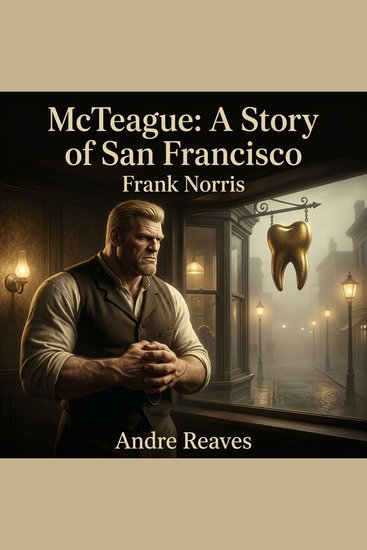
  • McTeague: A Story of San Francisco - A gripping masterpiece of Naturalism Literary Fiction where a San Francisco dentist's descent into greed animal instinct and obsession unleashes the tragic consequences of human nature - cover

    McTeague: A Story of San...

    Frank Norris

    • 0
    • 0
    • 0
    In the fog-shrouded streets of late nineteenth-century San Francisco, a slumbering beast is about to awaken beneath the veneer of ordinary life. 
    McTeague is a hulking, slow-witted dentist of immense physical strength who lives a simple, predictable life on Polk Street. Content with his concertina, his steam beer, and his modest dental practice, his world is forever upended when he meets Trina Sieppe, the beautiful cousin of his best friend. What begins as a clumsy but genuine romance soon spirals into a dark, suffocating web of obsession. When unexpected wealth enters their lives in the form of a winning lottery ticket, the dormant demons of greed, jealousy, and feral violence are unleashed. As friendships fracture and paranoia takes root, McTeague and Trina are dragged downward by their own fatal flaws and the inescapable pressures of their environment, leading to a climax of shocking, inevitable tragedy. 
    Why you will love this: This audiobook is a cornerstone of American Naturalism / Literary Fiction. It masterfully dissects the collision of civilization and savage instinct, exploring themes of poverty, class struggle, environmental determinism, and the devastating psychological decay caused by the love of money. Listeners seeking a gritty, uncompromising character study filled with atmospheric tension will be utterly gripped by this dark portrait of the human condition. 
    About the Author: Frank Norris was a pioneering American novelist and journalist during the Progressive Era, profoundly influencing the Naturalist literary movement. Drawing inspiration from Emile Zola, Norris stripped away romanticism to expose the harsh, unyielding realities of industrialism, heredity, and environment shaping human destiny.
    Show book