Join us on a literary world trip!
Add this book to bookshelf
Grey
Write a new comment Default profile 50px
Grey
Subscribe to read the full book or read the first pages for free!
All characters reduced
Impressions of Theophrastus Such - Exploring Human Nature and Society: A Victorian Critique - cover

Impressions of Theophrastus Such - Exploring Human Nature and Society: A Victorian Critique

George Eliot

Publisher: Good Press

  • 0
  • 0
  • 0

Summary

In "Impressions of Theophrastus Such," George Eliot presents a series of interconnected essays narrated by a fictional philosopher named Theophrastus, who explores human nature, morality, and the complexities of social relationships. Through a blend of keen observation and philosophical musings, Eliot employs a distinctive literary style marked by lyrical prose and rich character sketches. The work reflects the Victorian intellectual milieu, engaging with contemporary debates on psychology and ethics, and often challenges the reader to ponder the intricacies of personal and societal behavior. George Eliot, born Mary Ann Evans, was a pioneer of psychological realism, often drawing from her own struggles with identity and societal expectations. Her keen interest in philosophy, particularly German idealism and utilitarianism, profoundly influenced her writing. "Impressions of Theophrastus Such" showcases her commitment to examining the moral implications of human actions, a theme rooted in her own life experiences and philosophical inquiries, creating a tapestry that resonates with the existential questions of her time. Eliot's "Impressions of Theophrastus Such" is a timeless exploration of human nature and morality that will captivate readers interested in psychological depth and social critique. It offers profound insights into the human condition, making it essential reading for anyone seeking to understand the interplay of individual character and societal norms in a rapidly changing world.
Available since: 08/12/2023.
Print length: 150 pages.


Other books that might interest you

  • Breaking Free: Divorcing a Narcissist: Outsmart Gaslighting Techniques Secure Your Future and Heal from Emotional Abuse without Compromising Your Dignity - cover

    Breaking Free: Divorcing a...

    Lena Winters

    • 0
    • 0
    • 0
    If you've always wanted a peaceful, dignified divorce but find yourself trapped in a narcissist's web of manipulation, then keep reading… 
    Are you sick and tired of being gaslit, belittled, and emotionally drained during your divorce proceedings? 
    Have you tried to negotiate fairly, only to face deceit, false accusations, and financial threats? 
    Do you finally want to say goodbye to the nightmare of divorcing a narcissist and reclaim your freedom? 
    If so, then you've come to the right place. 
    You see, breaking free from a narcissistic spouse doesn't have to be an endless battle that leaves you emotionally and financially devastated. 
    Even if you've endured years of abuse and believe you'll never outsmart your ex's manipulative tactics. 
    You can break free and heal without compromising your dignity or future. 
    Here's just a tiny fraction of what you'll discover:The 7 most insidious gaslighting techniques narcissists use during divorce - and how to deflect themWhy your emotional responses are sabotaging your case – and what to do insteadHow to secure your financial future without falling prey to hidden money tricks5 dangerous myths about divorcing a narcissist that could cost you everythingHow to save thousands in legal fees with one crucial documentation strategyA powerful method used by divorce attorneys to protect clients from narcissistic smear campaignsThe 3 best tactics to maintain your sanity and dignity throughout the divorce process 
    …and much, much more! 
    So if you have a burning desire to break the chains of a toxic marriage, protect your rights and assets, and finally step into a life of freedom and healing – all while maintaining your integrity – then scroll up and click "add to cart".
    Show book
  • Micah - The World English Bible Book 33 (Unabridged) - cover

    Micah - The World English Bible...

    Various Authors

    • 0
    • 0
    • 0
    The Book of Micah is the sixth of the twelve minor prophets in the Hebrew Bible. Ostensibly, it records the sayings of Micah, whose name is Mikayahu meaning "Who is like Yahweh?", an 8th-century BCE prophet from the village of Moresheth in Judah.
    Show book
  • Summary of Kevin Simler & Robin Hanson’s The Elephant in the Brain - cover

    Summary of Kevin Simler & Robin...

    Falcon Press

    • 0
    • 0
    • 0
    Buy now to get the main key ideas from Kevin Simler & Robin Hanson’s The Elephant in the Brain 
      
    We, the human species, not only act on hidden motives, but we’re naturally designed to do so. Our brains are programmed to act in our own interest, even while we are trying hard not to be selfish. That’s why our brain often keeps our conscious mind in the dark. The more we ignore our ugly, hidden motives, the easier it is for us to keep them hidden from others, too. Self-deception is a strategic ploy that our brain adopts to disguise our bad behavior, and the key to change is understanding it.  
    In The Elephant in the Brain (2017), writer Kevin Simler and professor Robin Hanson uncover the hidden motives behind our main social behaviors and shed light on unexamined aspects of public life: respected social institutions in which nearly all participants are strategically self-interested, self-deceived, and driven by social signaling. 
     
    Show book
  • Jugurthine War The: The History of the Roman Republic’s Controversial Conflict with the Numidians - cover

    Jugurthine War The: The History...

    Editors Charles River

    • 0
    • 0
    • 0
    Before the Numidians were conquered by the Romans and Numidia was officially made part of Roman Africa, they developed a culture that was as sophisticated and unique as any in the ancient world. The Numidians were a Berber people who emerged from the edge of the desert in the late 2nd millennium BCE, and despite the harshness of their environment (or perhaps because of it), they eventually became the most powerful people in North Africa. The Numidians found success on the backs of horses, which they rode to countless military victories, and when they could not defeat their enemies with conventional tactics, they were not afraid to resort to asymmetrical warfare.  
    	The most famous conflict with the Romans was the Jugurthine War, even though the Romans do not appear to have officially declared war on Numidia. The Romans entered Numidia determined to defeat Jugurtha and his Numidian army in a very conventional way, but having fought alongside and against the Numidians in the Punic Wars, the Romans should have known better, as Jugurtha knew that he had little chance of defeating the Romans in head-to-head combat. Numidia was rich, but it was not as rich as Rome in resources or people, and although the Numidian military was among the best in the Mediterranean at the time, it was not equipped to defeat the Romans.  
    	The most significant aspect of the Jugurthine War was the rivalry that it produced between Marius and Sulla. As was tradition, the commander, Marius, received the credit for the victory, but Sulla resented that his own part was downplayed, in particular his personal success in taking Jugurtha into custody. Sulla had a celebratory ring made to commemorate the event, and he, and the aristocratic faction that supported him, did all they could to enhance the role he had played while minimizing that of Marius.
    Show book
  • How Society Trains You to Stay Average - cover

    How Society Trains You to Stay...

    Owen Blackwood

    • 0
    • 0
    • 0
    This audiobook is narrated by an AI Voice.   
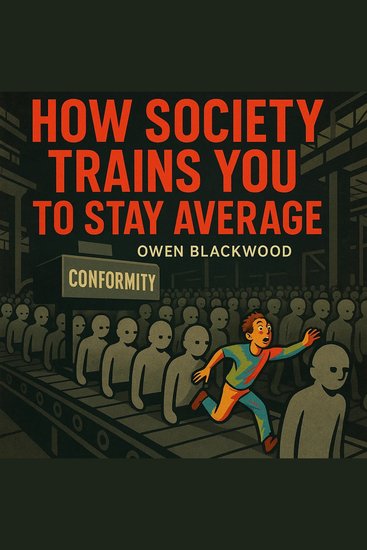
    Are invisible forces shaping your beliefs, ambitions, and limitations without your awareness? Owen Blackwood reveals how educational systems, media, and social institutions systematically program people for mediocrity in this powerful audiobook about breaking free from average. Discover the hidden curriculum that teaches conformity, fear of failure, and small thinking while claiming to prepare you for success. Through analysis of schooling, workplace culture, and family dynamics, Blackwood exposes how society manufactures obedient consumers and workers rather than independent thinkers. Learn why most people unconsciously adopt limiting beliefs about what they can achieve and deserve. This guide examines the psychological mechanisms that keep individuals playing small despite enormous untapped potential. Understand how comparison culture, credentialism, and risk aversion combine to trap millions in unfulfilling lives. Blackwood provides strategies for recognizing and escaping these invisible cages of social conditioning. Whether you sense that something has been holding you back or simply want to understand how mass psychology operates, this audiobook delivers crucial insights. Stop accepting artificial ceilings on your ambitions and start thinking independently about what you truly want. Perfect for rebels, entrepreneurs, and anyone ready to question the assumptions that keep most people trapped in ordinary existence forever.
    Show book
  • D-Day Through French Eyes - Normandy 1944 - cover

    D-Day Through French Eyes -...

    Mary Louise Roberts

    • 0
    • 0
    • 0
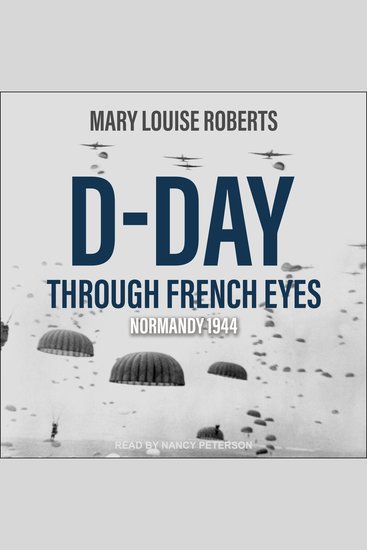
    Silent parachutes dotting the night sky—that's how one Normandy woman learned that the D-Day invasion was under way in June of 1944. Though they yearned for liberation, the French had to steel themselves for war, knowing that their homes, lands, and fellow citizens would have to bear the brunt of the attack. 


    With D-Day through French Eyes, Mary Louise Roberts turns the conventional narrative of D-Day on its head, taking listeners across the Channel to view the invasion anew. Roberts builds her history from an impressive range of gripping first-person accounts by French citizens throughout the region. A farm family notices that cabbage is missing from their garden—then discovers that the guilty culprits are American paratroopers hiding in the cowshed. Fishermen rescue pilots from the wreck of their B-17, then search for clothes big enough to disguise them as civilians. A young man learns to determine whether a bomb is whistling overhead or silently plummeting toward them. When the allied infantry arrived, French citizens guided them to hidden paths and little-known bridges, giving them crucial advantages over the German occupiers. As she did in her acclaimed account of GIs in postwar France, What Soldiers Do, Roberts here sheds vital new light on a story we thought we knew.
    Show book