Join us on a literary world trip!
Add this book to bookshelf
Grey
Write a new comment Default profile 50px
Grey
Subscribe to read the full book or read the first pages for free!
All characters reduced
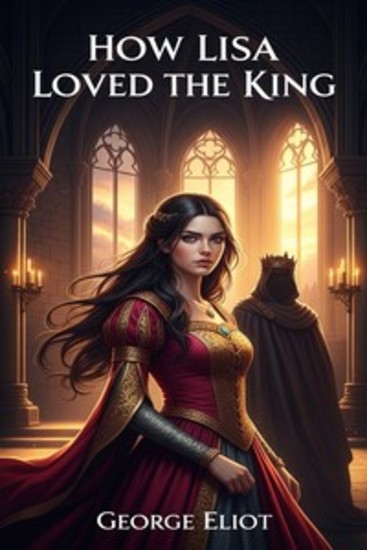
How Lisa Loved the King - cover

How Lisa Loved the King

George Eliot

Publisher: Bu Classics Books

  • 0
  • 0
  • 0

Summary

Based on a tale from the Decameron, this narrative poem explores the overwhelming, silent passion of a young girl for a king who is unaware of her existence. It captures the bittersweet essence of courtly love, painting a portrait of devotion that transcends social rank and practical hope.
Available since: 03/05/2026.
Print length: 21 pages.

Other books that might interest you

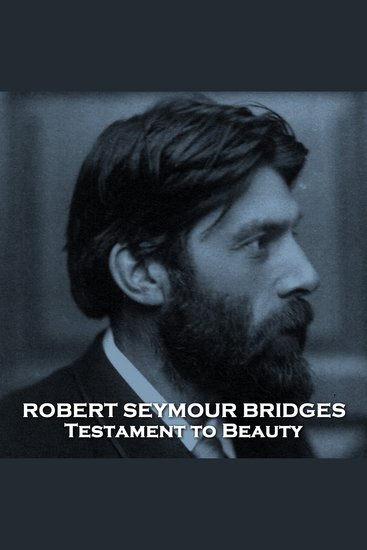
  • Testament to Beauty - A former Poet Laureate demonstrates his poetic talents in this tender and beautiful verse - cover

    Testament to Beauty - A former...

    Robert Seymour Bridges

    • 0
    • 0
    • 0
    Robert Seymour Bridges, OM was born on 23rd October 1844 at Walmer in Kent where he spent his early childhood in a house overlooking the anchoring ground of the British fleet.  
    His father died aged only 47 in 1853. A year later his mother remarried and the family relocated to Rochdale, where his stepfather was the vicar.  
    In 1854 Bridges was sent to Eton College and attended until 1863.  After Eton he went to Corpus Christi College at Oxford. There he became good friends with Gerard Manley Hopkins and would later compile an edition of his poems that is now considered a major contribution to English literature. 
    He graduated from Oxford, in 1867, with a second-class degree in literae humaniores.  Initially he planned to join the Church of England and travelled to the Middle East to broaden his religious horizons.  However, he soon decided that life as a physician would be a better path and, after 8 months studying German (that being the language of many scientific papers at the time) he began his study of medicine at St. Bartholomew's Hospital in 1869.  His long-term ambition was that by the age of forty he could retire from medicine to devote himself to writing. 
    Unfortunately Bridges failed his final medical examinations in 1873 and, as unable to immediately retake the papers, spent six months in Italy learning Italian as well as immersing himself in its art. In July 1874 he went to Dublin to continue his medical studies. Re-examined in December he passed and became a house physician at St Bartholomew's Hospital. It was whilst here that he engaged in a series of highly critical remarks about the Victorian medical establishment. One such was his claim that whilst working as a young doctor he saw a staggering 30,940 patients in one year. 
    A bout of severe pneumonia and lung disease forced his retirement from the medical profession in 1882 and so, slightly ahead of schedule, he began his literary career in earnest.  He already been writing for several years and had published his first poetry collection in 1873.  
    After his illness and a trip to Italy, Bridges moved, with his mother, to Yattendon in Berkshire.  It was during this time, from 1882 to 1904, that Bridges wrote most of his best-known lyrics as well as eight plays and two masques, all in verse.  
    It was also here, in 1884, that he married Monica Waterhouse. They would go on to have three children and spend the rest of their lives in rural seclusion, in an idyllic marriage, first at Yattendon, then at Boars Hill, Oxford. 
    Bridges made an important contribution to hymnody with the publication in 1899 of his Yattendon Hymnal. This collection of hymns became a bridge between the Victorian hymnody of the late 19th century and the modern hymnody of the early 20th century. He was also a chorister at Yattendon church for 18 years. 
    In 1902 Monica and his daughter Margaret became seriously ill with tuberculosis, and a move from Yattendon to a healthier climate was in order. After several temporary homes they moved abroad to spend a year in Switzerland before returning to settle again in England at Chilswell House, which Bridges had designed, and built on Boar's Hill overlooking Oxford University.   
    His greatest achievement though was still some years ahead of him.  The office of Poet Laureate was held by Alfred Austin but with his death it was offered first to Rudyard Kipling, who refused it, and then to Bridges. He was appointed Poet Laureate in 1913 by George V, the only medical graduate to have ever held the office. Bridges, at this time, was neither highly regarded nor well known but a safe pair of hands in a World rapidly being overshadowed by the storms about to erupt over Europe and the First World War. 
    The events of this War, including the wounding of his son, Edward, had a sobering effect on Bridges' poetry. His work became fiercely patriotic. In 1915 edited a volume of prose and poetry, The Spirit of Man, intended to appeal to readers living in war time
    Show book

  • STORIES FROM THE EDGE OF AWARENESS - Mythic Mnemonic Mosaic - cover

    STORIES FROM THE EDGE OF...

    Christopher Graham PhD CCHT

    • 0
    • 0
    • 0
    This is not a traditional book of stories. 
    It’s a collection of fragments — short, lyrical reflections that invite you to slow down, breathe deeply, and recognize yourself between the lines. Each page pulses with memory, metaphor, and quiet insight. Some pieces offer comfort. Others stir something ancient and unspeakable. All of them honor the idea that healing doesn’t happen in perfect paragraphs — it happens in pulses. 
    Written in a unique style designed for nonlinear thinkers, sensitive souls, and those navigating complex emotional histories, this book uses: 
    Fragments instead of long chapters — easy to dip into and out of. 
    Metaphors & symbolism to speak to your inner world, not just your mind. 
    Poetic rhythm & repetition that calms, awakens, and gently disrupts. 
    Image-based storytelling that feels more like dreaming than reading. 
    If you’ve ever felt like conventional prose moves too fast or speaks too loudly, this is a book that waits for you. It doesn’t explain your experience — it echoes it. 
    For the seeker, the feeler, the quiet witness… Welcome to the edge. Everything speaks here.
    Show book
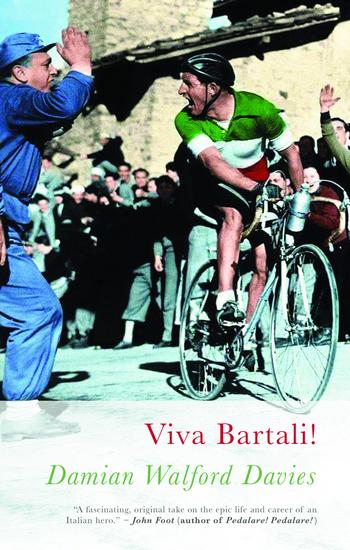
  • Viva Bartali! - cover

    Viva Bartali!

    Damian Walford Davies

    • 0
    • 0
    • 0
    Inspired by the lyrical, mythic mode of Italian sports journalism from the 1930s to the 1950s, Viva Bartali! is a biography-in-verse of the iconic Italian cyclist Gino Bartali (1914—2000), two-time winner of the Tour de France (1938, 1948), known both as 'Gino the Pious' because of his fervent Catholic faith, and as Ginettaccio ('Gino the Terrible'), owing to the short shrift he so often gave the Press.
    Conjuring Bartali at crux moments in his personal and professional career, through joy and tragedy, defeat and victory, the collection places us alongside the young rider proving his mettle and adding to his palmarès in the edgy atmosphere of Mussolini's Fascist Italy, whose political ideology he loathed. From amateur races to the professional one-day classics and on to Tour de France glory, Bartali is seen alongside his fellow riders as both vulnerable body and élite athlete; both cycling's hard man and fond and bereaved father; both kneeling believer and climbing god.
    The collection gives us an insight into the complex relationship that underpinned his great rivalry with the campionissimo ('champion of champions') Fausto Coppi – the 'man of glass' against Bartali's 'man of iron'. It was a rivalry that a divided a nation and defined a sport. We are with Bartali at the 1948 Tour de France when he takes a phone call from the Italian prime minister, who asks him to do his part in diffusing a political crisis that could have tipped over into violence. And we witness his remarkable secret missions in the saddle as a courier throughout Tuscany during World War 2, carrying forged identity documents that helped save the lives of hundreds of Italian Jews. It was a deed he never spoke about – one for which he was named 'Righteous Among the Nations' by Yad Vashem in 2013.
    "A fascinating, original take on the epic life and career of an Italian hero." John Foot, author of 'Pedalare! Pedalare!'
    "Stylish and sophisticated, this poetic record of an extraordinary life confirms Damian Walford Davies' status as one of the finest poets writing in Wales today." Jem Poster
    Show book
  • Life (Bronte Version) - cover

    Life (Bronte Version)

    Charlotte Brontë

    • 0
    • 0
    • 0
    LibriVox volunteers bring you 11 recordings of Life by Charlotte Brontë. This was the weekly poetry project for March 8th, 2009.
    Show book
  • Umbilical Cord - cover

    Umbilical Cord

    Hasan Namir

    • 0
    • 0
    • 0
    Dear Child
    Once upon a time
    Your baba fell in love with your dad
    
    We got married and dreamt of having a baby
    
    A roller coaster of emotions and feelings
    
    We were always hopeful
    Lambda Literary and Stonewall Book Award-winner Hasan Namir shares a joyful collection about parenting, fatherhood and hope. These warm free-verse poems document the journey that he and his husband took to have a child. Between love letters to their young son, Namir shares insight into his love story with his husband, the complexities of the IVF surrogacy process and the first year as a family of three. Umbilical Cord is a heartfelt book for parents or would-be parents, with a universal message of hope.
    Show book
  • Lady Dealer (NHB Modern Plays) - cover

    Lady Dealer (NHB Modern Plays)

    Martha Watson Allpress

    • 0
    • 0
    • 0
    For Charly, every day is the same. Things used to be different, when there was Clo, but now there isn't Clo, and Charly doesn't want to dwell on that. She just wants to chug coffee, blast Beastie Boys and deal drugs. Simple.
    But when Charly suffers a power cut, she's forced back into the real world of knock-off Morrisseys, disapproving mothers and, ultimately, a world she has to navigate alone.
    Lady Dealer is a mile-a-minute, one-person poem play by Martha Watson Allpress about forgiveness, the exhaustion of trying, and mistaking self-destruction for self-preservation.
    It premiered in Paines Plough's Roundabout during the 2023 Edinburgh Festival Fringe.
    Show book