Join us on a literary world trip!
Add this book to bookshelf
Grey
Write a new comment Default profile 50px
Grey
Subscribe to read the full book or read the first pages for free!
All characters reduced
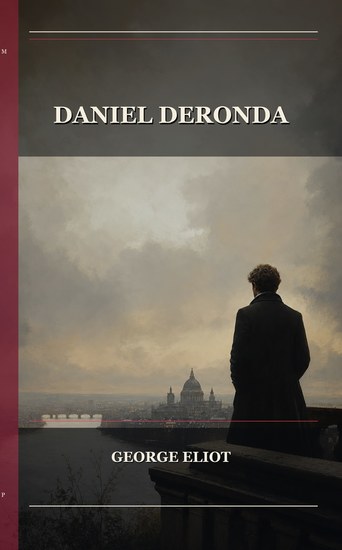
Daniel Deronda - cover

Daniel Deronda

George Eliot

Publisher: Caelwick Press

  • 0
  • 0
  • 0

Summary

We rely on your support to help us keep producing beautiful, free, and unrestricted editions of literature for the digital age. Will you support our efforts with a donation ? Daniel Deronda , published in 1876, was George Eliot's last novel. It deals with two major characters whose lives intersect: One is a spoiled young woman named Gwendolen Harleth who makes an unwise marriage to escape impending poverty; the other is the titular character, Daniel Deronda, a wealthy young man who feels a mission to help the suffering. During her childhood Gwendolen's family was well-off. She lived in comfort and was indulged and pampered. But the family's fortune is lost through an unwise investment, and she returns to a life of near-poverty, a change which she greatly resents both for herself and for her widowed mother. The only escape seems to be for her to marry a wealthy older man who has been courting her in a casual, unemotional way. The marriage turns out to be a terrible mistake. Daniel Deronda has been raised by Sir Hugo Mallinger as his nephew, but Daniel has never discovered his true parentage, thinking it likely that he is Sir Hugo's natural son. This consciousness of his probable illegitimacy moves him to kindness and tolerance towards anyone who is suffering from disadvantage. One evening, while rowing on the river Thames, he spots a young woman about to leap into the water to drown herself. He persuades her instead to come with him for shelter to a family he knows. The young woman turns out to be Jewish, and through his trying to help her find her lost family, Deronda comes into contact with Jewish culture—and in particular with a man named Mordecai, who has a passionate vision for the future of the Jewish race and who sees in Daniel a kindred spirit. The paths that Gwendolen and Daniel follow intersect often, and Daniel's kindly nature moves him to try to offer her comfort and advice in her moments of distress. Unsurprisingly, Gwendolen misinterprets Daniel's attentions. In Daniel Deronda Eliot demonstrates considerable sympathy towards the Jewish people, their culture, and their aspirations for a national homeland. At the time this was an unpopular and even.
Available since: 05/19/2026.
Print length: 1079 pages.
Other books that might interest you

  • Frankenstein; or the Modern Prometheus - cover

    Frankenstein; or the Modern...

    Mary Wollstonecraft Shelley

    • 0
    • 0
    • 0
    Frankenstein; or, the Modern Prometheus 
    In the early nineteenth century, English author Mary Wollstonecraft (Godwin) Shelley penned a novel that would forever alter literature. Born in 1797, Mary’s unconventional upbringing shaped her worldview. During a summer near Lake Geneva in 1816, she conceived the tale of Victor Frankenstein, a brilliant but tormented scientist. 
    Driven by relentless ambition, Victor embarked on an unorthodox experiment: creating life itself. The result—the Creature, often called “Frankenstein’s Monster”—was stitched together from various body parts. Seeking understanding and acceptance, the Creature grappled with its existence and harsh treatment. 
    The novel delves into profound themes: ambition, nature vs. nurture, responsibility, and loneliness. Beyond horror, “Frankenstein” challenges us to consider science’s boundaries and creators’ roles. It serves as a cautionary tale, warning against unchecked ambition and dehumanization. 
    Because of time, some words in the novel may have changed meanings.
    Show book
  • A Journey of Little Profit - From their pens to your ears genius in every story - cover

    A Journey of Little Profit -...

    John Buchan

    • 0
    • 0
    • 0
    The Scottish novelist John Buchan enjoyed a remarkable career as politician, historian and Governor General. He was born John Buchan on 26th August 1875 and later added 1st Baron Tweedsmuir PC GCMG GCVO CH to his name.  
    Buchan studied at Hutchesons’ Grammar School, Glasgow and at seventeen won a scholarship to the University of Glasgow to study classics. There he began to write poetry. In 1895 he transferred to Oxford to continue his study of Classics and in 1896 ‘Sir Quixote of the Moors’ was published followed by the non-fiction ‘Scholar-Gipsies’. His prolific literary output now hardly faltered. 
    He graduated in 1900 and became the private secretary to Alfred Milner, the High Commissioner for Southern Africa and other colonies. Buchan found the same inspiration in the African landscape as he had in the Scottish Borders, and would later set many works here. Returning to London he became a partner in a publishing house, and garnered an editorial role at The Spectator. He also completed his law studies. He was called to the bar in 1901 but never practiced.  
    On 15th July 1907 Buchan married Susan Charlotte Grosvenor, the cousin of the Duke of Westminster. In 1910 he wrote ‘Prester John’, the first of a series set in South Africa.  
    In 1911 Buchan entered politics as a Unionist candidate in the Scottish Borders advocating the support of free trade, women’s suffrage, national insurance, and reducing the power of the House of Lords.  
    The Great War saw Buchan writing for the War Propaganda Bureau and as Times correspondent in France. In 1915, he published ‘The Thirty-Nine Steps’, his most famous book and a follow-up Richard Hannay novel, ‘Greenmantle’, in 1916.  
    In 1916 Buchan enlisted in the Intelligence Corps which included writing speeches for Sir Douglas Haig. By 1917 he was Director of Information under Lord Beaverbrook. Buchan called it “the toughest job he ever took on”. He somehow found time to assist in a history of the war magazine. This was later published in 24 volumes: Nelson’s History of the War. 
    After the war his writing focused on historical studies. In 1927 Buchan became the Unionist Party Member of Parliament for the Combined Scottish Universities. In a speech to Parliament he said “I believe every Scotsman should be a Scottish nationalist. If it could be proved that a Scottish parliament were desirable… Scotsmen should support it.”  
    Over the next decade he continued to distinguish himself politically and in literature.  On the 1st June 1935 he became 1st Baron Tweedsmuir of Elsfield in the County of Oxford.  
    He was now also given the position of Governor General in Canada and resolved to travel all over Canada to gain a better insight of the country. Having crossed both length and breadth he saw the cultural shift between areas and their common ground and helped bring about a clear national Canadian identity. 
    On the 6th February 1940 he collapsed from a stroke and sustained a very serious head injury in falling. Two rounds of surgery to stabilise his condition were unsuccessful and Buchan died on the 11th February. After a state funeral in Ottawa his ashes were returned to his estate in Oxfordshire.
    Show book
  • The Door in the Wall - cover

    The Door in the Wall

    H. G. Wells

    • 0
    • 0
    • 0
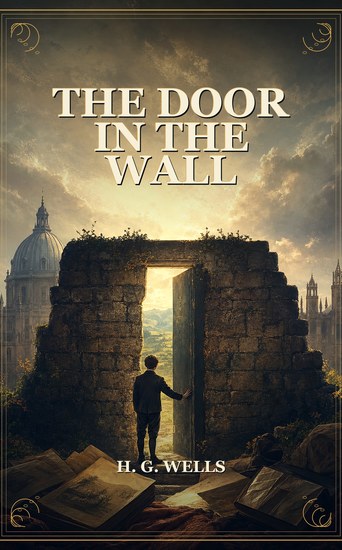
    The Door in the Wall by H. G. Wells is presented in a clean English digital edition with active navigation. The book belongs to classics and preserves the character of the source text for sustained ebook reading. The opening pages establish the work's atmosphere with this first movement: One confidential evening, not three months ago, Lionel Wallace told me this story of the Door in the Wall. And at the time I thought that so far as he was concerned it was a true story. He told it me with such a direct simplicity of conviction that I could not do otherwise than believe in him. But in the morning, in my. Detected sections include: Chapter 1, Chapter 2, Chapter 3, Chapter 4. This edition is prepared for a fluent reading experience with clear typography and no extraneous promotional material.
    Show book
  • Hard Times - cover

    Hard Times

    Charles Dickens

    • 0
    • 0
    • 0
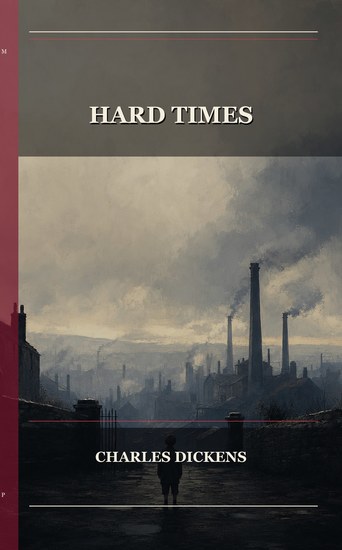
    Hard Times (originally Hard Times—For These Times ) was published in 1854, and is the shortest novel Charles Dickens ever published. It's set in Coketown, a fictional mill-town set in the north of England. One of the major themes of the book is the miserable treatment of workers in the mills, and the resistance to their unionization by the mill owners, typified by the character Josiah Bounderby, who absurdly asserts that the workers live a near-idyllic life but they all "expect to be set up in a coach and six, and to be fed on turtle soup and venison, with a gold spoon." The truth, of course, is far different. The other major topic which Dickens tackles in this novel is the rationalist movement in schooling and the denigration of imagination and fantasy. It begins with the words "Now, what I want is, Facts," spoken by the wealthy magnate Thomas Gradgrind, who is supervising a class at a model school he has opened. This indeed is Gradgrind's entire philosophy. "Teach these boys and girls nothing but Facts. Facts alone are wanted in life. Plant nothing else, and root out everything else." He is supported and encouraged in this approach by his friend Bounderby. Grandgrind raises his own children on these principles, and, as we discover, in doing so blights their lives. The novel also follows the story of a particular mill-worker, Stephen Blackpool, who leads a tragic life. He is burdened with an alcoholic, slatternly wife, who is mostly absent from his life, but who returns at irregular intervals to trouble him. This existing marriage, and the near-impossibility of divorce for someone of his class, prevents him marrying Rachael, who is the light of his life. Dickens depicts Stephen as representing the nobility of honest work, and contrasts his character with that of the self-satisfied humbug Josiah Bounderby who represents the worst aspects of capitalism.
    Show book
  • Plato's Dream - From their pens to your ears genius in every story - cover

    Plato's Dream - From their pens...

    Voltaire

    • 0
    • 0
    • 0
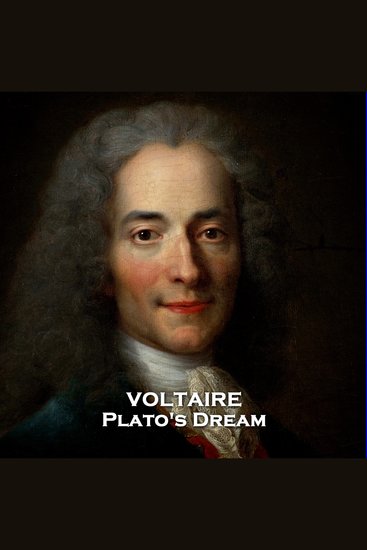
    The bookshelves of European literature are incredible collections that have gathered together centuries of very talented authors.  From this continent their fame spread and whilst among their number many are now forgotten or neglected their talents endure.  Among them is Voltaire.
    Show book
  • Wuthering Heights - cover

    Wuthering Heights

    Emily Brontë

    • 0
    • 0
    • 0
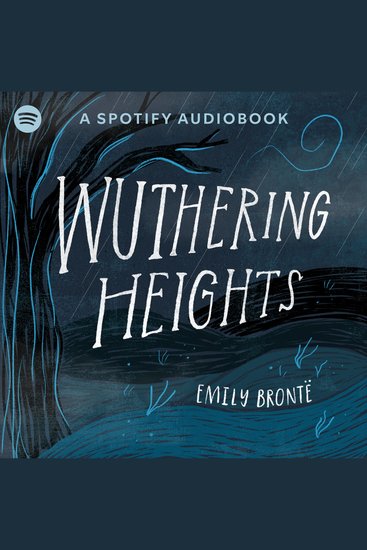
    Considered to be one of the greatest novels ever written in English, Wuthering Heights is a wild, passionate story of the intense love between Catherine and Heathcliff. 
    They meet as children. They grow up together. It’s only after one fatefully misheard conversation that Heathcliff leaves, believing his love for Catherine isn’t reciprocated. When he returns, he is a wealthy and polished man but things have now changed – drastically – and Heathcliff starts to exact terrible revenge on those who wronged him… 
    “Be with me always—take any form—drive me mad! only do not leave me in this abyss, where I cannot find you!”
    Show book