Join us on a literary world trip!
Add this book to bookshelf
Grey
Write a new comment Default profile 50px
Grey
Subscribe to read the full book or read the first pages for free!
All characters reduced
Adam Bede - cover

Adam Bede

George Eliot

Publisher: Bu Classics Books

  • 0
  • 0
  • 0

Summary

A diligent carpenter's life is shattered by the reckless actions of a young squire and a naive dairymaid in this lush, tragic pastoral. The narrative weaves a complex tapestry of rural community life, exploring how a single moment of weakness can ripple outward to destroy innocent lives.
Available since: 03/05/2026.
Print length: 855 pages.

Other books that might interest you

  • The World My Wilderness - cover

    The World My Wilderness

    Rose Macaulay

    • 0
    • 0
    • 0
    Rose Macaulay was a fascinating and influential British writer, known for her wit and intellect. She wrote numerous novels, essays and biographies, and she was highly regarded for her versatility as a writer. Her works often explored themes of social change, women’s rights and the complexities of human relationships. She had a unique ability to capture the essence of her characters and the world they inhabited, making her a much-admired figure in the literary world.
    The World My Wilderness was published in 1955 and follows the story of Barbary Deniston, a 17-year-old girl growing up in London during World War II. Barbary’s parents are divorced, and she divides her time between her mother’s bohemian lifestyle and her father’s more conventional life. The novel explores themes of identity, family, and the impact of war on individuals and society. It is considered one of Macaulay’s most personal and autobiographical works.
    Show book
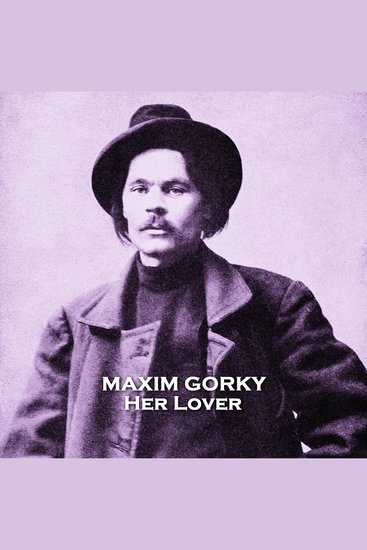
  • Her Lover - From their pens to your ears genius in every story - cover

    Her Lover - From their pens to...

    Maxim Gorky

    • 0
    • 0
    • 0
    Alexei Maximovich Peshkov was born on 28th March 1868, in Nizhny Novgorod, Russia. 
    Better known as Maxim Gorky he was orphaned at 11 and ran away from home at 12.  At 19 he had already attempted suicide and thereafter travelled, by foot, across the Russian Empire for 5 years. 
    His first book ‘Essays & Stories’ in 1898 was a sensation and so began a long career as an author of short stories, novels and plays.  Gorky saw writing as a moral and political act that would help to change the unjust world around him.  He was an ardent early advocate of the emerging Marxist movement and publicly opposed the Tsarist regime leading several times to his arrest.  
    In 1904 he began his own theatre but the censor banned every play and Gorky was forced to abandon the project. 
    But Gorky was a financially successful author, editor, and playwright and gave monies to political parties as well as for civil rights and social reform.  The brutal shooting of workers, which set in motion the Revolution of 1905, pushed Gorky more decisively toward radical solutions.  
    In 1906 he went to the United States to raise funds for the Bolsheviks. Those experiences including a scandal over travelling with his lover and not his wife deepened his contempt for the ‘bourgeois soul.’ 
    Gorky now moved to Capri in Italy, both for health reasons and to escape the increasingly repressive times in Russia.  
    An amnesty for the 300th anniversary of the Romanov dynasty saw him return to Russia in 1914. His politics remained close to the Bolshevik cause.  But soon, after the 1918 revolution, his essays referred to Lenin as a tyrant for his senseless arrests and repression.  He was soon appealing to the outside world for food aid after the catastrophic crop failure. 
    In October 1921 Gorky returned to Italy, now in Fascist hands, and settled in Sorrento until 1932.  His health worsened with the onset of tuberculosis. 
    He wrote several successful books there but now decided to find an understanding with the communist regime. Stalin invited him home and his return was hailed as a major propaganda victory.  He was decorated with the Order of Lenin, and a province, a park, and various streets re-named in his honour. 
    But he had his faults too.  In 1933, Gorky co-edited a book on the White Sea-Baltic Canal and denied even a single prisoner died during its construction, but thousands had. As well, knowing that some Nazis were homosexual, a phrase was attributed to him that said ‘exterminate all homosexuals and fascism will vanish’.  Although he was himself was quoting another he was decidedly homophobic. 
    With the increase of Stalinist repression in 1935 Gorky was placed under unannounced house arrest. 
    Maxim Gorky died on the 18th June 1936 from pneumonia.  He was 68. 
    Stalin and Molotov were among those who carried Gorky's urn of ashes at his funeral.
    Show book
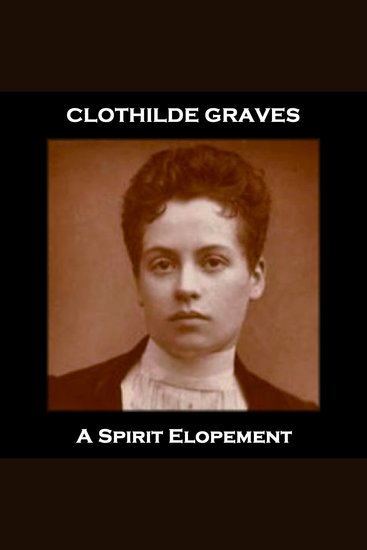
  • A Spirit Elopement - From their pens to your ears genius in every story - cover

    A Spirit Elopement - From their...

    Clothilde Graves

    • 0
    • 0
    • 0
    Clotilde Augusta Inez Mary Graves was born on the 3rd June 1863 at Buttevant Castle, Co. Cork, to parents with military backgrounds. 
    At age nine, the family moved to Southsea in England for yet another military posting.  Her father’s postings gave her valuable experiences that would be put to good use in later years in some of her literary works. 
    She was educated at a Catholic convent in Lourdes before returning to London in 1884 to study art in Bloomsbury.  She worked part-time at the British Museum and the Royal Female School of Art and generated further income by drawing little pen-and-ink grotesques for the comic papers.  
    A few years later a chance meeting found her writing extra lyrics for a pantomime version of Puss in Boots.  She followed up with several financially successful plays, both in London and New York, and gained a measure of notoriety in one with the comparison of marriage and prostitution.   
    Despite her dramatic success she published her first novel in 1911 under the pseudonym of Richard Dehan which she continued to use for later works.  As well as novels and plays she published collections of short stories which glow with talent and invention. 
    She was an unusual figure in London society, wearing her hair short, taking on a masculine manner and cut of clothing, and smoking cigarettes in public when such traits were considered eccentric at best.  Add to this her admired collection of Chinese and Japanese trophies, her enthusiasm for fly-fishing and her riding of a tricycle and you have a perfect image of this fascinating writer. 
    Clotilde Graves died at the convent of Our Lady of Lourdes at Hatch End in Middlesex, on the 3rd December 1932.  She was 69.
    Show book
  • Apache Ambush (Stonecroft Saga Book 15) - A Historical Western Novel - cover

    Apache Ambush (Stonecroft Saga...

    B.N. Rundell

    • 0
    • 0
    • 0
    The south country beckoned, and Gabe and Ezra answered. 
    It was nothing more than a re-supply trip to Santa Fe, but an encounter with the Tabeguache Ute and the Caputa Ute changed the course of their journey. It wasn’t until they came upon the massacre at a Mexican Hacienda and the subsequent attack from a rampaging band of renegade Jicarilla Apache, that they would uncover a prospering trade in captives and slaves that would raise the ire of both Gabe and Ezra. 
    When a garrison of Mexican Soldados and one particular officer intervenes, things are not as they would first appear. Their purpose was derailed when an unexpected ambush by Apache would prompt a rescue expedition. When all is complicated by the intervention of slave traders, Comancheros, and the perpetrators masking as Mexican Soldados, only then does a simple re-supply journey become a vengeance quest, and all the blood that would flow would not be Apache! 
    This historical western series will have you gasping for air and capture your heart.
    Show book
  • Around the World in Eighty Days - Audiobook - cover

    Around the World in Eighty Days...

    Jules Verne, Classic Audiobooks,...

    • 0
    • 0
    • 0
    Jules Verne's Around the World in Eighty Days is a thrilling adventure novel that follows the unshakable English gentleman Phileas Fogg as he attempts to circumnavigate the globe in just eighty days to win a wager. Accompanied by his loyal French valet, Passepartout, Fogg races against time using steamships, trains, elephants, and even sledges, navigating unexpected obstacles and cultural encounters across continents. Set in the late 19th century, this novel is both a celebration of technological progress and a timeless story of determination, precision, and courage.Verne masterfully blends humor, suspense, and exotic settings, offering readers a whirlwind tour of the world through the lens of a man who never loses his composure. The novel remains one of the most beloved works of classic adventure literature and continues to captivate readers of all ages.
    Show book
  • Tony's Wife - From their pens to your ears genius in every story - cover

    Tony's Wife - From their pens to...

    Alice Dunbar Nelson

    • 0
    • 0
    • 0
    Alice Ruth Moore was born on 19th July 1875 in New Orleans where she was part of the multi-racial Creole community.  She was the first generation seemingly born free after the Civil War and unusually for the times, obtained a university education which led to her becoming a teacher at a public school in New Orleans.   
    In 1895, when she was 20, she published her first collection of short stories and poems, ‘Violets and Other Tales’, and moved to New York City where she co-founded and taught at the White Rose Mission, a Home for Girls.   
    Alice was always politically active and sought to advance the position of black women.  She began work as a journalist at the Woman’s Era newspaper where her work was seen by the established poet and journalist Paul Laurence Dunbar.  After corresponding for two years she joined him in Washington DC and they married in 1898.   
    It was a difficult relationship, due mainly to Dunbar’s fragile health, alcoholism and depression.  After a severe beating she left him and moved to Delaware to teach for a decade though took time out to enroll at Cornell University. 
    A short-lived marriage to Henry A. Callis, a physician and professor at Howard University ended in divorce and she became co-editor and writer for an influential publication of the African Methodist Episcopal Church.  A third marriage to civil rights activist Robert J. Nelson came about, as did affairs with several women, notably the activist Fay Jackie Robinson.   
    In Wilmington Delaware she and her husband devoted their time and writings to working for equality for African Americans and women’s suffrage.   
    Alice Dunbar Nelson was a natural and gifted writer across many genres, from novels, essays, plays to diaries, criticism, poetry and of course short stories, of which ‘Stones in the Village’ is a fine example.  The protagonist, like herself, is light skinned from New Orleans, which allows for a social mobility and a unique position in American society that Dunbar Nelson captures with an imagination and insight to explores another divisive perspective on race.  It is unsurprising that Alice was a prominent part of the early Harlem Renaissance and influenced many others including Langston Hughes and Countee Cullen. 
    Alice and her husband moved to Philadelphia in 1932 and it was here that she died on 18th September 1935, at the age of 60, from a heart ailment.
    Show book