Join us on a literary world trip!
Add this book to bookshelf
Grey
Write a new comment Default profile 50px
Grey
Subscribe to read the full book or read the first pages for free!
All characters reduced
50 Masterpieces you have to read before you die vol: 2 - cover

50 Masterpieces you have to read before you die vol: 2

George Eliot, Charles Dickens, Louisa May Alcott, Jane Austen, Joseph Conrad, D. H. Lawrence, James Joyce, Zenith Evergreen Literary Co.

Publisher: Zenith Evergreen Literary Co.

  • 0
  • 0
  • 0

Summary

One lifetime. Fifty books. Endless wisdom.

50 Masterpieces You Have to Read Before You Die – Volume 2 continues the literary journey through the most profound, beautiful, and enduring stories ever written. This carefully curated collection features essential works by Fyodor Dostoyevsky, Gustave Flaubert, Anne Brontë, Oscar Wilde, and many more.

Covering a wide array of genres, cultures, and time periods, these masterpieces form the bedrock of world literature and invite readers into profound meditations on life, love, society, and the human spirit.

💬 "An indispensable library for anyone who believes that great stories shape great lives."

🌟 Why This Volume is Essential:
Includes 50 complete classic novels, novellas, and literary works

A perfect gift for literature students, lifelong learners, and reading challenge participants

Ideal for those building a Kindle collection or personal literary canon

📣 Expand Your Mind. Enrich Your Life. Read the Masterpieces.
Buy 50 Masterpieces You Have to Read Before You Die – Volume 2 today and embark on a reading adventure through the world's greatest books.
Available since: 04/28/2025.
Print length: 30451 pages.

Other books that might interest you

  • A Tale of the Ragged Mountains - cover

    A Tale of the Ragged Mountains

    Edgar Allan Poe

    • 0
    • 0
    • 0
    "A Tale of the Ragged Mountains," published in 1844, is a short story written by Edgar Allan Poe partially based on his experiences while a student at the University of Virginia. Set near Charlottesville, it is the only one of Poe's stories to take place in Virginia. It was first published in 1844. "A Tale of the Ragged Mountains" highlights scientific theories of Poe's day, engages with British imperial history and forecasts contemporary interest in psychoactive drugs, the transmigration of the soul and the dynamics of the doctor-patient relationship.
    Show book
  • Madam Crowl's Ghost and the Dead Sexton - cover

    Madam Crowl's Ghost and the Dead...

    Joseph Sheridan Le Fanu

    • 0
    • 0
    • 0
    "The dead do not always rest, and the past is never truly buried."
    
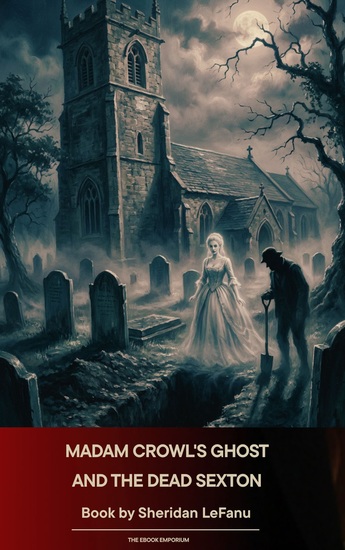
    In this collection, Le Fanu takes us into the dark corners of the human conscience. "Madam Crowl's Ghost" tells the story of an ancient, wealthy woman whose deathbed secrets refuse to remain hidden. As a young servant girl discovers, the old woman's spirit continues to wander the corridors of Applewale House, driven by a terrifying need to reveal a hidden crime. In "The Dead Sexton," the focus shifts to the mysterious and grim Mr. Toby Appleby, a man whose life—and death—are bound up with a sinister bargain. These stories are not merely about things that go bump in the night; they are about the weight of guilt and the inevitability of justice from beyond the grave.
    
    The Terror of the Domestic: Le Fanu excels at making the familiar feel threatening. A rustle of silk in an empty room, a misplaced key, or the sight of a familiar face where it shouldn't be—these are the tools he uses to create a sense of profound unease. He pioneered the idea that the most terrifying ghosts are those tied to our own families and histories.
    
    The "Hanging Past": Both stories explore the theme of the "Unresolved." Whether it is a hidden will in a secret drawer or a soul sold for earthly gain, Le Fanu's ghosts are active agents of fate. They don't just haunt; they demand a reckoning. This collection showcases his ability to blend traditional folklore with a sophisticated psychological edge.
    
    A Legacy of Influence: These tales were famously rediscovered and praised by M.R. James, the father of the modern ghost story. To read "Madam Crowl's Ghost" is to see the blueprint for every "secret in the attic" horror story that followed. It is essential reading for anyone who loves the classic, atmospheric thrill of the Victorian macabre.
    
    Turn the page and face the past. Purchase this classic collection today.
    Show book
  • Five Children and It - cover

    Five Children and It

    E. Nesbit

    • 0
    • 0
    • 0
    The story of three wishes being granted is an old one and often takes the form of a precautionary tale with the resultant moral being “be careful what you wish for!” Such is the fallibility of human nature that we can’t easily be trusted to use those wishes wisely. 
    The great children’s author Edith Nesbit (1858 – 1924) took this popular concept for her 1903 book “Five Children and It” and extended the wishes from three to eleven, now granted to five young siblings in Edwardian England. 
    They have no Geni of the Lamp or Fairy Godmother, but instead, an irascible Sand Fairy dug accidently out of the sand of an abandon quarry. This strange “Psammead”, with his snail’s eyes on stalks, furry squat body and aversion to water reluctantly grants the four children their, often ill thought out, wishes. 
    Nesbit writes with her usual warmth and humour, placing her protagonists into funny and sometimes frightening adventures which gradually make the children “wise beyond their years.” 
    Head Stories Audio presents "Five Children and It" by E. Nesbit. Narrated by Simon Hester. With original music.
    Show book
  • White Fang - cover

    White Fang

    Jack London

    • 0
    • 0
    • 0
    It was the she-wolf who had first caught the sound of men's voices and the whining of the sled-dogs; and it was the she-wolf who was first to spring away from the cornered man in his circle of dying flame. The pack had been loath to forego the kill it had hunted down, and it lingered for several minutes, making sure of the sounds, and then it, too, sprang away on the trail made by the she-wolf. Running at the forefront of the pack was a large grey wolf—one of its several leaders.    It was he who directed the pack's course on the heels of the she-wolf. It was he who snarled warningly at the younger members of the pack or slashed at them with his fangs when they ambitiously tried to pass him. And it was he who increased the pace when he sighted the she-wolf, now trotting slowly across the snow. She dropped in alongside by him, as though it were her appointed position, and took the pace of the pack. He did not snarl at her, nor show his teeth, when any leap of hers chanced to put her in advance of him.    On the contrary, he seemed kindly disposed toward her—too kindly to suit her, for he was prone to run near to her, and when he ran too near it was she who snarled and showed her teeth. Nor was she above slashing his shoulder sharply on occasion. At such times he betrayed no anger. He merely sprang to the side and ran stiffly ahead for several awkward leaps, in carriage and conduct resembling an abashed country swain. This was his one trouble in the running of the pack; but she had other troubles.    On her other side ran a gaunt old wolf, grizzled and marked with the scars of many battles. He ran always on her right side. The fact that he had but one eye, and that the left eye, might account for this. He, also, was addicted to crowding her, to veering toward her till his scarred muzzle touched her body, or shoulder, or neck. As with the running mate on the left, she repelled these attentions with her teeth; but when both bestowed their attentions at the same time she was roughly jostled, being compelled, with quick snaps to either side, to drive both lovers away and at the same time to maintain her forward leap with the pack and see the way of her feet before her.    At such times her running mates flashed their teeth and growled threateningly across at each other. They might have fought, but even wooing and its rivalry waited upon the more pressing hunger-need of the pack. After each repulse, when the old wolf sheered abruptly away from the sharp-toothed object of his desire, he shouldered against a young three-year-old that ran on his blind right side. This young wolf had attained his full size; and, considering the weak and famished condition of the pack, he possessed more than the average vigour and spirit. Nevertheless, he ran with his head even with the shoulder of his one-eyed elder. When he ventured to run abreast of the older wolf (which was seldom), a snarl and a snap sent him back even with the shoulder again.    Sometimes, however, he dropped cautiously and slowly behind and edged in between the old leader and the she-wolf. This was doubly resented, even triply resented. When she snarled her displeasure, the old leader would whirl on the three-year-old. Sometimes she whirled with him. And sometimes the young leader on the left whirled, too. At such times, confronted by three sets of savage teeth, the young wolf stopped precipitately, throwing himself back on his haunches, with fore-legs stiff, mouth menacing, and mane bristling. This confusion in the front of the moving pack always caused confusion in the rear. The wolves behind collided with the young wolf and expressed their displeasure by administering sharp nips on his hind-legs and flanks. He was laying up trouble for himself, for lack of food and short tempers went together; but with the boundless faith of youth he persisted in repeating the manoeuvre every little while, though it never succeeded in gaining anything for him but discomfiture.
    Show book

  • The Jungle Book - cover

    The Jungle Book

    Rudyard Kipling

    • 0
    • 0
    • 0
    "The Jungle Book" by Rudyard Kipling is a collection of stories originally published in the late 19th century. The central focus is on the adventures of a young boy named Mowgli, who is raised by wolves in the Indian jungle. The book explores themes of nature, survival, and the conflict between civilization and the wild.  
    The narrative highlights the bonds formed between Mowgli and various animal characters, emphasizing the laws that govern the lives of the jungle's inhabitants. At the beginning of the book, we learn about Mowgli's origins when he is discovered by Father Wolf after wandering into the wolf pack's territory. The fierce tiger, Shere Khan, poses a significant threat as he seeks to claim Mowgli for himself. However, Mother Wolf fiercely defends Mowgli, declaring him as her own, which ignites a debate among the pack members about the implications of accepting a human child into their midst. 
    This opening sets the stage for Mowgli’s complex relationship with both the jungle and the human world, showcasing the challenges he faces as he grows up estranged from both realms. The tone of adventure and danger that permeates the stories to come invites listeners into a vividly imagined natural world.
    Show book
  • Great Gatsby The (Annotated) - cover

    Great Gatsby The (Annotated)

    F. Scott Fitzgerald

    • 0
    • 0
    • 0
    The Great Gatsby is a 1925 novel by American writer F. Scott Fitzgerald. Set in the Jazz Age on Long Island, near New York City, the novel depicts first-person narrator Nick Carraway's interactions with mysterious millionaire Jay Gatsby and Gatsby's obsession to reunite with his former lover, Daisy Buchanan. 
    The novel was inspired by a youthful romance Fitzgerald had with socialite Ginevra King, and the riotous parties he attended on Long Island's North Shore in 1922. Following a move to the French Riviera, Fitzgerald completed a rough draft of the novel in 1924. He submitted it to editor Maxwell Perkins, who persuaded Fitzgerald to revise the work over the following winter. After making revisions, Fitzgerald was satisfied with the text, but remained ambivalent about the book's title and considered several alternatives. Painter Francis Cugat's cover art greatly impressed Fitzgerald, and he incorporated aspects of it into the novel. 
    After its publication by Scribner's in April 1925, The Great Gatsby received generally favorable reviews, though some literary critics believed it did not equal Fitzgerald's previous efforts. Compared to his earlier novels, Gatsby was a commercial disappointment, selling fewer than 20,000 copies by October, and Fitzgerald's hopes of a monetary windfall from the novel were unrealized.  
    Gatsby continues to attract popular and scholarly attention. Contemporary scholars emphasize the novel's treatment of social class, inherited versus self-made wealth, race, and environmentalism, and its cynical attitude towards the American dream. One persistent item of criticism is an allegation of antisemitic stereotyping. The Great Gatsby is widely considered to be a literary masterwork and a contender for the title of the Great American Novel. 
    -Wikipedia
    Show book