¡Acompáñanos a viajar por el mundo de los libros!
Añadir este libro a la estantería
Grey
Escribe un nuevo comentario Default profile 50px
Grey
Suscríbete para leer el libro completo o lee las primeras páginas gratis.
All characters reduced
50 Masterpieces you have to read before you die vol: 1 - Timeless Classics by Dostoevsky Austen Hugo Tolstoy and More - cover

50 Masterpieces you have to read before you die vol: 1 - Timeless Classics by Dostoevsky Austen Hugo Tolstoy and More

Joseph Conrad, D. H. Lawrence, George Eliot, Leo Tolstoy, James Joyce, Charles Dickens, Jane Austen, Bram Stoker, Oscar Wilde, Louisa May Alcott, Honoré Balzac, Edgar Rice Burroughs

Editorial: Zenith Golden Quill

  • 0
  • 0
  • 0

Sinopsis

📚 One collection. Fifty essential classics. A literary journey through time.

Discover the stories that shaped the world. 50 Masterpieces You Have to Read Before You Die (Vol. 1) is a curated anthology of the most celebrated and enduring works of literature—spanning romance, tragedy, philosophy, adventure, and social commentary. Whether you're revisiting a beloved classic or exploring it for the first time, this volume brings together the most influential voices in literary history ✒️🌍.

Includes works by:

Fyodor Dostoevsky

Jane Austen

Victor Hugo

Leo Tolstoy

Charles Dickens

Mark Twain

Homer

Mary Shelley
…and many more.

This beautifully formatted edition includes:

Complete, unabridged texts

Annotations and historical insights

Author introductions and thematic notes

"An essential library in a single volume." — Readers' Review Weekly
"A stunning collection of the world's most powerful prose." — Literary Digest

📘 Click Buy Now to start your journey through the greatest books ever written.
Disponible desde: 22/05/2025.
Longitud de impresión: 12348 páginas.
Otros libros que te pueden interesar

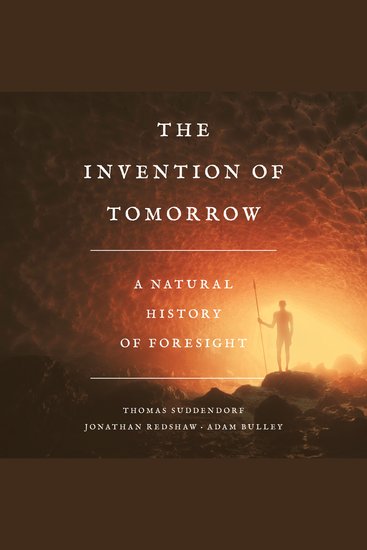
  • The Invention of Tomorrow - A Natural History of Foresight - cover

    The Invention of Tomorrow - A...

    Thomas Suddendorf, Jonathan...

    • 0
    • 0
    • 0
    A spellbinding exploration of the human capacity to imagine the future  
     
    Our ability to think about the future is one of the most powerful tools at our disposal. In The Invention of Tomorrow, cognitive scientists Thomas Suddendorf, Jonathan Redshaw, and Adam Bulley argue that its emergence transformed humans from unremarkable primates to creatures that hold the destiny of the planet in their hands.  
     
    Drawing on their own cutting-edge research, the authors break down the science of foresight, showing us where it comes from, how it works, and how it made our world. Journeying through biology, psychology, history, and culture, they show that thinking ahead is at the heart of human nature—even if we often get it terribly wrong. Incisive and expansive, The Invention of Tomorrow offers a fresh perspective on the human tale that shows how our species clawed its way to control the future.
    Ver libro
  • The Greatest Viking - The Life of Olav Haraldsson - cover

    The Greatest Viking - The Life...

    Desmond Seward

    • 0
    • 0
    • 0
    A ruthless Viking warrior who named his most prized battle weapon after the Norse goddess of death, Olav Haraldsson and his mercenaries wrought terror and destruction from the Baltic to Galicia in the early eleventh century. Thousands were put to the sword, enslaved, or ransomed. In England, Canterbury was sacked, its archbishop murdered, and London Bridge pulled down. The loot amassed from years of plunder helped Olav win the throne of Norway, and a century after his death he was proclaimed "Eternal King" and has been a national hero there ever since. 


    Despite his bloodthirsty beginnings, Olav converted to Christianity and, in a personal vendetta against the old Norse gods, made Norway Christian too, thereby changing irrevocably the Viking world he was born into. Told with reference to Norse sagas, early chronicles, and the work of modern scholars, Desmond Seward paints an intensely vivid and colorful portrait of the life and times of arguably the greatest Viking of them all.
    Ver libro
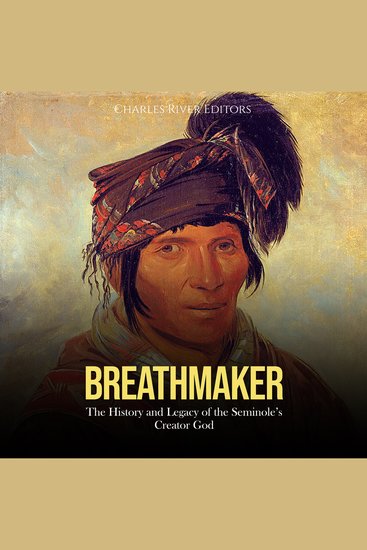
  • Breathmaker: The History and Legacy of the Seminole’s Creator God - cover

    Breathmaker: The History and...

    Editors Charles River

    • 0
    • 0
    • 0
    The Seminole tribe is one of the best known Native American tribes, and one of the most feared among 19th century Americans and Spaniards. In fact, the origin of the term Seminole comes from a Spanish description of them as “wild”, which belies the fact that the Seminole had friendly relations with the British and Spanish during the colonial era.  
    	To appreciate Seminole Native American mythology, their history and origins must be understood. Their forebears, the Muscogee, first migrated into what is now the Southeastern United States from various points in the north and west, which they accomplished by overpowering the indigenous inhabitants. The region was already occupied by several groups, including the Yuchi and Hitchiti, tribes that were likely descendants of the Moundbuilders. These tribes were subdued and then integrated into the Muscogee system. Thus, the traditions, beliefs, rituals, and mythologies of these various groups became the communal belief system of the Muscogee collective.  	 
    	According to the Muscogee, humans emerged “somewhere in the west,” a location described as the “foundation of all things” or the “backbone” of the Earth. Most scholars associate this location with the Rocky Mountains, and they credit the Four Corners area of the United States as being the location for the creation myths of Native American groups like the Pueblo. Though still not commonly understood, Breathmaker became the creator god of the Seminole peoples (the name is also written as Breath Maker and Maker of Breath), and he became the center of a cycle of creation stories. 
    Ver libro
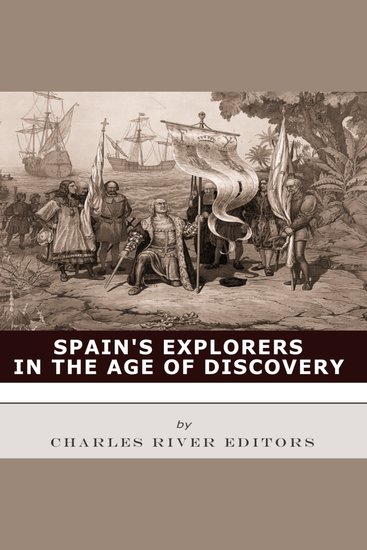
  • Spain’s Explorers in the Age of Discovery - cover

    Spain’s Explorers in the Age of...

    Editors Charles River

    • 0
    • 0
    • 0
    The most seminal event of the last millennium might also be its most controversial. As schoolchildren have been taught for over 500 years, “In 1492 Columbus sailed the ocean blue.” In October of that year, the Italian Christopher Columbus immortalized himself by landing in the New World and beginning the process of European settlement in the Americas for Spain, bringing the Age of Exploration to a new hemisphere with him. Ironically, the Italian had led a Spanish expedition, in part because the Portugese rejected his offers in the belief that sailing west to Asia would take too long. 
    If Columbus and Cortés were the pioneers of Spain’s new global empire, Pizarro consolidated its immense power and riches, and his successes inspired a further generation to expand Spain’s dominions to unheard of dimensions. Furthermore, he participated in the forging of a new culture: like Cortés, he took an indigenous mistress with whom he had two mixed-race children, and yet the woman has none of the lasting fame of Cortés’s Doña Marina. With all of this in mind, it is again remarkable that Pizarro remains one of the less well-known and less written about of the explorers of his age. 
    Today Ferdinand Magellan is remembered as the first man to circumnavigate the globe, an ironic legacy given that he died half a world away from completing that journey. But though it ended catastrophically for Magellan and most of his crew, his expedition accomplished its objective, and in economic terms, the opening up of new trade routes with Asia was a more significant development than the conquest of the Americas for the Europeans of the early 16th century.
    Ver libro
  • Does Self-Knowledge Come Through Searching? - Ojai 1949 - Public Talk 1 - cover

    Does Self-Knowledge Come Through...

    Jiddu Krishnamurti

    • 0
    • 0
    • 0
    1. Does self-knowledge come through searching? - 16 July 1949 
    • What is it that most of us are seeking? 
    • Does clarity come through searching and trying to find out what others say? 
    • Can incessant search and longing give you the extraordinary sense of reality or 
    creative being that comes when you really understand yourself? 
    • Without knowing your background and the substance of your thought, where 
    it comes from, surely your search is utterly futile and your action has no 
    meaning. 
    • The responsibility for any action depends on ourselves, not on others. 
    • Q: Do I have to be at any special level of consciousness to understand you? 
    • Q: The movement of life is experienced in relationship to people and to ideas.
    Ver libro
  • Tarot for the Hard Work - An Archetypal Journey to Confront Racism and Inspire Collective Healing - cover

    Tarot for the Hard Work - An...

    Maria Minnis, Rashunda Tramble

    • 0
    • 0
    • 0
    Tarot has always been a powerful guide for introspection and inner work, so what better tool to use when we're ready to do the really hard work? Author Maria Minnis takes a radical new look at the Major Arcana in this tarot workbook, which provides listeners a unique, personal understanding of systemic racism—and what steps we can take to begin to dismantle it. This book says tarot can be a tool for action, one that may offer great satisfaction as well as great difficulty, all while pushing you out of your comfort zone. 


    You'll explore the Major Arcana to uncover how each archetype can help cultivate a freer, anti-racist world. It will consider the upright, or benevolent, aspects of each card and how listeners can use those themes to dismantle internalized racism, racism in our relationships, and racism in our communities. As you move from the Fool to the World card, you'll discover that everything we do ripples beyond us, and that there are practical ways to change our actions and perspectives. 


    This is a book that speaks to both white and BIPOC audiences. The author addresses the human community as a whole and how racism affects our relationships to each other, to our communities, and to our institutions. This book addresses how the energy can be turned around into self-awareness, self-love, and positive action.
    Ver libro