Join us on a literary world trip!
Add this book to bookshelf
Grey
Write a new comment Default profile 50px
Grey
Subscribe to read the full book or read the first pages for free!
All characters reduced
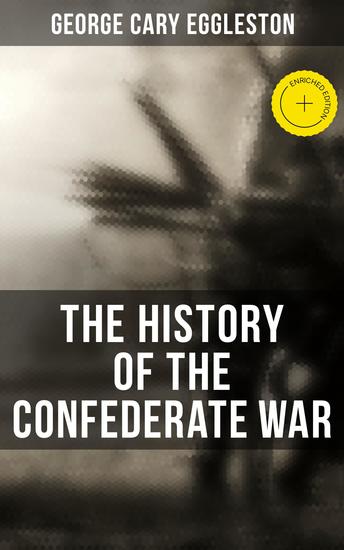
The History of the Confederate War - Enriched edition - cover

The History of the Confederate War - Enriched edition

George Cary Eggleston

Publisher: Musaicum Books

  • 0
  • 0
  • 0

Summary

In 'The History of the Confederate War' by George Cary Eggleston, the author provides a comprehensive account of the American Civil War from the perspective of the Confederacy. Eggleston's prose is highly detailed and immersive, painting a vivid picture of the events and key figures involved in this pivotal moment in American history. The book serves as a valuable resource for understanding the military strategies, political tensions, and societal impacts of the Civil War, making it a significant contribution to Civil War literature. Eggleston expertly weaves together historical facts and personal anecdotes to create a compelling narrative that engages readers and sheds light on a complex and tumultuous period in American history. Written with a scholarly voice, 'The History of the Confederate War' offers readers a deeper understanding of the Confederate perspective during this transformative era. Recommended for history enthusiasts and anyone interested in gaining insight into the Civil War from a different vantage point.

In this enriched edition, we have carefully created added value for your reading experience:
- Hand‐picked Memorable Quotes shine a spotlight on moments of literary brilliance.
- Interactive footnotes clarify unusual references, historical allusions, and archaic phrases for an effortless, more informed read.
Available since: 12/17/2020.
Print length: 537 pages.

Other books that might interest you

  • The Conscience of Care - Navigating Health in the Culture Wars - cover

    The Conscience of Care -...

    Dov Fox

    • 0
    • 0
    • 0
    Pitched battles over abortion, puberty blockers, and assisted suicide have turned American healthcare into a legal minefield. Faced with mounting restrictions on medical practice, doctors and nurses who follow their conscience to provide standard treatments risk being fined, fired, or even imprisoned, while clinicians who conscientiously deny evidence-based care are shielded without condition from any such consequences. Dov Fox argues that by ceding the moral vocabulary of conscience to refusers alone, the lopsided law of medical conscience selectively burdens providers, drives vulnerable patients underground, and impoverishes the dynamic pluralism of medicine.The Conscience of Care lays bare the broken system of medical conscience and sets out to fix it. Fox canvases a landscape of contested services that include IVF, IUDs, opioids, psychedelics, organ transplants, and advance directives. He develops practical reforms that rebalance conscience protection by introducing measured safeguards for providers and scaling back the categorical refuge afforded to refusers. The Conscience of Care articulates a bold vision of medicine that reclaims the lost promise of conscience to bridge social divides on matters of life and death, impairment and identity.
    Show book
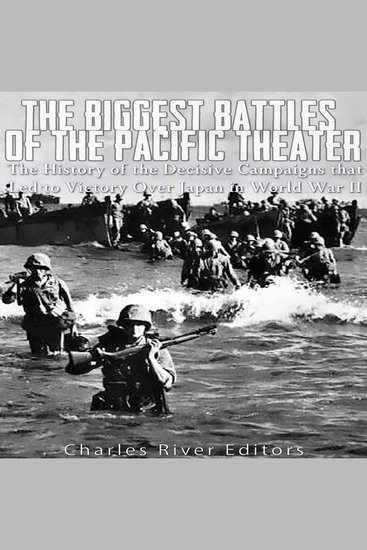
  • Biggest Battles of the Pacific Theater The: The History of the Decisive Campaigns that Led to Victory Over Japan in World War II - cover

    Biggest Battles of the Pacific...

    Editors Charles River

    • 0
    • 0
    • 0
    The waters of the Pacific Ocean – stretching deep blue under the tropical sun, or scourged by typhoons – provided World War II's most far-flung battlefield. Two of the world's premier mid 20th century maritime powers, the United States of American and the Empire of Japan, grappled for supremacy across that vast expanse.  
    	Although not as well-remembered as D-Day or even the attack at Pearl Harbor that preceded it, the Battle of Midway was one of the most unique and important battles fought during World War II. In fact, the turning point in the Pacific theater took place between June 4-7, 1942 as a Japanese fleet moved a sizable fleet intending to occupy Midway Island and draw the American navy near. Instead, American aircraft flying from three aircraft carriers that had been away from Pearl Harbor in December 1941 got a bearing on the Japanese fleet and sunk four Japanese aircraft carriers, permanently crippling Japan’s navy. The Battle of Midway was one of the first major naval battles in history where the enemy fleets never actually saw or came into contact with each other.  
    	By the time the Battle of Midway was over, the defeat was so devastating that it was actually kept secret from all but the highest echelons of the Japanese government. Along with the loss of hundreds of aircraft and over 3,000 men killed, the four Japanese aircraft carriers lost, when compared to America’s one lost carrier, was critical considering America’s huge shipbuilding superiority. However, the Battle of Midway could also have easily turned out differently.
    Show book
  • A Rare Recording of HP Lovecraft - cover

    A Rare Recording of HP Lovecraft

    H. P. Lovecraft

    • 0
    • 0
    • 0
    H.P. Lovecraft (1890 - 1937) was an American horror fiction writer. Though he died in poverty and was only published in pulp magazines before his death, he is now regarded as one of the most significant 20th century authors in the genre. Lovecraft's most popular book is, perhaps, At the Mountains of Madness. He also wrote The Call of Cthulhu, along with many short stories and literary correspondences. In this rare recording, he is interviewed as part of a WPA project during the New Deal.
    
    ©2016 Listen & Live Audio (P)2016 Listen & Live Audio
    Show book
  • Searching for George Gordon Meade - The Forgotten Victor of Gettysburg - cover

    Searching for George Gordon...

    Tom Huntington

    • 0
    • 0
    • 0
    A historian chronicles the life of the Union Civil War general while recounting his own unusual journey during his investigation into the past. Who was George Gordon Meade? He should be remembered as one of the Civil War’s most important generals. Instead, history has pushed him aside. The hot-tempered Meade received command of the Union’s dysfunctional Army of the Potomac only three days before he defeated Robert E. Lee’s Confederates at Gettysburg. After that, Meade watched his reputation decline, thanks in part to the escape of Lee’s army, hostility from politicians and the press, the machinations of Gen. Daniel Sickles, and the rise of Ulysses S. Grant. “I suppose after a while,” Meade once grumbled, “it will be discovered I was not at Gettysburg at all.”  The Rodney Dangerfield of Civil War generals, Meade gets no respect—and author Tom Huntington wanted to find out why. In Searching for George Gordon Meade, he tells the story of the general’s life and his participation in the Civil War’s great engagements, from George McClellan’s Richmond Campaign to Appomattox. Huntington also provides accounts of his own investigations of Meade’s legacy. Along the way he hikes across battlefields, recites the names of fallen soldiers at a candlelit ceremony at Gettysburg, drinks a champagne toast at Meade’s grave on New Year’s Eve, and visits a severed leg, a buried arm, and a horse’s head. The result is a quirky and compelling mash-up of history, biography, travel, and journalism that casts new light on an overlooked figure from the past. Praise for Searching for George Gordon Meade“Unique and irresistible.” —Harold Holzer, chairman of Lincoln Bicentennial Foundation“Huntington’s wry, boisterous biography-within-a-travel journal . . . strives to remake the reputation of Meade and offers a compelling new way to approach biography.” —John G. Shelby, Meade: The Price of Command, 1863–1865 “It’s the rare reader who will not enjoy accompanying Huntington on his search for Meade.” —America’s Civil War "A refreshingly readable and well-researched book. . . . Searching for George Gordon Meade should be required reading for all those interested in Civil War history.” —Civil War News
    Show book
  • A Rare Recording of Thomas Watson Explaining the Invention of the Telephone - cover

    A Rare Recording of Thomas...

    Thomas Watson

    • 0
    • 0
    • 0
    Born in Salem, Massachusetts, Thomas A. Watson (January 18, 1854 - December 13, 1934) was a bookkeeper and a carpenter before he found a job more to his liking in the Charles Williams machine shop in Boston. He was then hired by Alexander Graham Bell, who was a professor at Boston University. They were known for the invention of the telephone.
    Show book
  • Dark Psychology and Manipulation - Influencing People Using NLP and Mind Control Learn about Hypnosis Emotional Intelligence and Brainwashing through body language (2022 Guide for Beginners) - cover

    Dark Psychology and Manipulation...

    Fred Field

    • 0
    • 0
    • 0
    Did you know you were often influenced but were unaware of it? 
      
    Many of you may be wondering, "How can I know if I've been manipulated?" 
      
    You will manipulate people "ethically" by taking them to "useful" and "convenient" streets for you. You will discover how much our body language can say about us (and then you will find out if someone is lying to you or telling the truth). 
      
    This book will teach you: 
     How to Protect Yourself Against People Who Use Dark Psychology and Brainwashing TechniquesThe Most Effective Ways to Protect Yourself against Mind Control.Incredible 8 Advanced Mind Manipulation TechniquesThe Top 10 Dark Psychology TechniquesWhat is NLP, and how does it work?Nonverbal Communication and how it can Help You Understand Someone's True IntentionsHow to Make Empathy Your Secret Weapon.The Manipulator's Profile: How to Spot Him Right AwayBONUS CHAPTER: Quick and straightforward strategies and procedures for recognizing and resolving manipulation attempts....  
      
    & Much More!... 
    What are you waiting for?  
      
    The means to your success have arrived. 
      
    Order Your Copy NOW and Begin Being the Master of Your Life!
    Show book