Junte-se a nós em uma viagem ao mundo dos livros!
Adicionar este livro à prateleira
Grey
Deixe um novo comentário Default profile 50px
Grey
Assine para ler o livro completo ou leia as primeiras páginas de graça!
All characters reduced
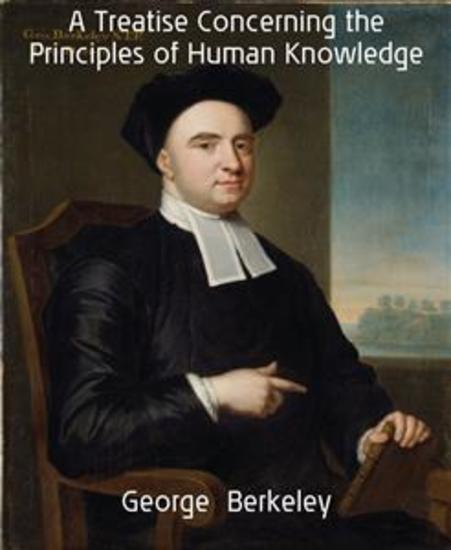
A Treatise Concerning the Principles of Human Knowledge - cover
LER

A Treatise Concerning the Principles of Human Knowledge

George Berkeley

Editora: BookRix

  • 0
  • 0
  • 0

Sinopse

A Treatise Concerning the Principles of Human Knowledge is a work by Anglo-Irish Empiricist philosopher George Berkeley. This book largely seeks to refute the claims made by his contemporary John Locke about the nature of human perception. Whilst, like all the Empiricist philosophers, both Locke and Berkeley agreed that we were having experiences, regardless of whether material objects exist or not. The world which caused the ideas one has within one's mind, Berkeley sought to prove that the outside world was also composed solely of ideas. Berkeley did this by suggesting that "Ideas can only resemble Ideas" - the mental ideas that we possessed could only resemble other ideas (not physical objects) and thus the external world consisted not of physical form, but rather of ideas. This world was given logic and regularity by some other force, which Berkeley concluded was God.

Berkeley declared that his intention was to make an inquiry into the First Principles of Human Knowledge in order to discover the principles that have led to doubt, uncertainty, absurdity, and contradiction in philosophy. In order to prepare the reader, he discussed two topics that lead to errors. First, he claimed that the mind cannot conceive abstract ideas. We can't have an idea of some abstract thing that is common to many particular ideas and therefore has, at the same time, many different predicates and no predicates. Second, Berkeley declared that words, such as names, do not signify abstract ideas. With regard to ideas, he asserted that we can only think of particular things that have been perceived. Names, he wrote, signify general ideas, not abstract ideas. General ideas represent any one of several particular ideas. Berkeley criticized Locke for saying that words signify general, but abstract, ideas. At the end of his Introduction, he advised the reader to let his words engender clear, particular ideas instead of trying to associate them with non–existent abstractions.
Disponível desde: 19/12/2023.
Comprimento de impressão: 149 páginas.

Outros livros que poderiam interessá-lo

  • A Rare Recording of Father Charles Coughlin - Vol 1 - cover

    A Rare Recording of Father...

    Father Charles Coughlin

    • 0
    • 0
    • 0
    Father Charles Coughlin was a controversial Canadian-American Catholic priest based in Michigan. Calling for monetary reforms, the nationalization of major industries and railroads, and protection of the rights of labor, Coughlin used weekly radio broadcasts to reach a mass audience of up to thirty million listeners during the 1930s. 
     An early supporter of Franklin D. Roosevelt and his New Deal, Coughlin later became a harsh critic. Coughlin’s commentary also became more anti-semitic, and he supported some of the fascist policies of Hitler, Mussolini, and Hirohito. As a result, many American Catholic leaders, as well as the Vatican, wanted Coughlin silenced. After the outbreak of World War II in 1939, the Roosevelt administration finally forced the cancellation of his radio program and forbade the dissemination of his newspaper, Social Justice. 
     In this recording, Coughlin the plight of farmers, oppressive bankers, and a living wage for American workers.
    Ver livro
  • Dialogue with a Somnambulist - Stories Essays & A Portrait Gallery - cover

    Dialogue with a Somnambulist -...

    Chloe Aridjis

    • 0
    • 0
    • 0
    Renowned internationally for her lyrically unsettling novels, PEN/Faulkner Award winner Chloe Aridjis now presents her first collection of shorter works, with an introduction by Tom McCarthy 


    Chloe Aridjis's stories and essays are known to transport readers into liminal, often dreamlike, realms. In this collection of works, we meet a woman guided only by a plastic bag drifting through the streets of Berlin who discovers a nonsense-named bar that is home to papier-mâché monsters and one glass-encased somnambulist. Floating through space, cosmonauts are confronted not only with wonder and astonishment, but tedium and solitude. And in Mexico City, stray dogs animate public spaces, "infusing them with a noble life force." In her pen portraits, Aridjis turns her eye to expats and outsiders, including artists and writers such as Leonora Carrington, Mavis Gallant, and Beatrice Hastings. 


    Exploring the complexity of exile and urban alienation, Dialogue with a Somnambulist showcases "the rare writer who reinvents herself in each book" (Garth Greenwell) and who is as imaginatively at home in the short form as in her longer fiction.
    Ver livro
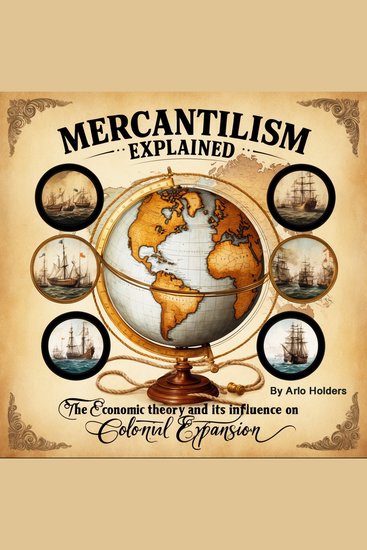
  • Mercantilism Explained - The Economic Theory and Its Influence on Colonial Expansion - cover

    Mercantilism Explained - The...

    Arlo Holders

    • 0
    • 0
    • 0
    Mercantilism, a dominant economic theory from the 16th to the 18th century, played a pivotal role in shaping the economic and political landscape of early modern Europe. Rooted in the belief that a nation's wealth and power were measured by its stockpile of precious metals, particularly gold and silver, mercantilism emphasized the importance of maintaining a favorable balance of trade. Nations sought to maximize exports while minimizing imports, often employing protectionist policies to achieve this goal. This approach reflected the belief that global wealth was finite, creating fierce competition among nations to secure the largest share of resources and economic advantage. 
    The historical context of mercantilism is deeply intertwined with the Age of Exploration and the rise of powerful nation-states. During this period, European powers such as Spain, Portugal, England, France, and the Netherlands expanded their empires overseas, establishing colonies that served as both sources of raw materials and markets for finished goods. These colonies were central to mercantilist strategies, enabling mother countries to extract wealth and resources while controlling trade to their advantage. This symbiotic relationship between mercantilism and colonial expansion would shape the geopolitical dynamics of the time, fueling rivalries and conflicts between competing empires. 
    Central to mercantilism was the role of government intervention in the economy. Unlike modern free-market principles, mercantilist policies relied heavily on state control to regulate trade and protect domestic industries. Governments imposed tariffs on imported goods, subsidized local production, and established monopolies through chartered companies to ensure economic self-sufficiency and reduce dependence on foreign powers. This top-down approach sought to consolidate economic power within the state, reinforcing the notion that national prosperity and security were interconnected.
    Ver livro
  • Subconscious mind reprogramming creativity - A guided meditation - DST Hypno with Stu Newman - cover

    Subconscious mind reprogramming...

    Stuart Newman

    • 0
    • 0
    • 0
    Subconscious mind reprogramming creativity with DST Hypno and Stu Newman is a powerful way to unlock your creative potential.  
    By tapping into the power of hypnosis, you can access hidden resources within yourself that will help you become more creative and productive in all areas of your life.  
    With this program, you'll be able to identify negative thought patterns that are blocking your progress and replace them with positive ones that promote growth. 
      
    You'll also learn how to use visualization techniques for greater clarity in decision-making as well as other tools such as affirmations for self-empowerment.  
    This program has already helped many people realize their full potential - why not give it a try?  
    Unlocking the power of creativity can open up new doors for success!
    Ver livro
  • A History of the Undead - Mummies Vampires and Zombies - cover

    A History of the Undead -...

    Charlotte Booth

    • 0
    • 1
    • 0
    A history of Western culture’s fascination with undead creatures in film and television. 
     
    Are you a fan of the undead? Watch lots of mummy, zombie and vampire movies and TV shows? Have you ever wondered if they could be “real?” 
     
    This book, A History of the Undead, unravels the truth behind these popular reanimated corpses. 
     
    Starting with the common representations in Western media through the decades, we go back in time to find the origins of the myths. Using a combination of folklore, religion and archaeological studies we find out the reality behind the walking dead. You may be surprised at what you find . . .
    Ver livro
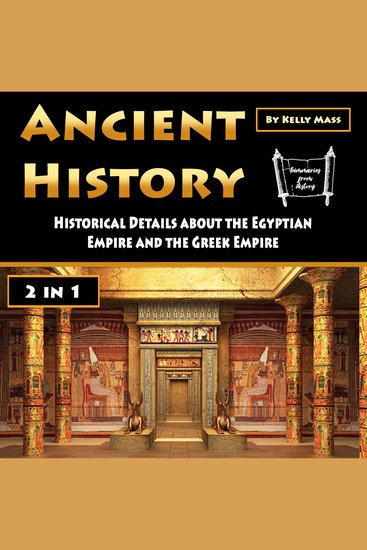
  • Ancient History - Historical Details about the Egyptian Empire and the Greek Empire (2 in 1) - cover

    Ancient History - Historical...

    Kelly Mass

    • 0
    • 0
    • 0
    This bundle consists of 2 books: 
    Ancient Greece: Thanks to ancient Greece, we know more about philosophy, politics, the democratic system, mythology, art, the Olympics, and many, many lingual references imbedded in almost every European language. Ancient Greece has had a significant impact on many concepts we still hold true today. 
    Ancient Greece was a northeastern Mediterranean society that existed from the 12th-9th centuries BC till the end of classical antiquity (c. AD 600). It was made up of a loose collection of culturally and linguistically associated city-states and other areas that were only combined once, under Alexander the Great's empire, for 13 years (336-323 BC). Classical antiquity was quickly followed by the Early Middle Ages and the Byzantine period in Western history. 
    Ancient Egypt: When we think of Ancient Egypt, we picture movies with mazes, pyramids, traps, mummies, and symbols. And although some of these things were definitely part of it, there is so much more to this ancient civilization. 
    Ancient Egypt was a North African society that grew in the lower banks of the Nile River, in what's now the nation of Egypt. Following ancient Egypt, old Egyptian civilization culminated circa 3100 BC (according to basic Egyptian chronology) with Menes' political marriage of Upper and Lower Egypt (usually related to Narmer). The Old Kingdom of the Early Bronze Age, the Middle Kingdom of the Middle Bronze Age, and the New Kingdom of the Late Bronze Age formed a series of steady kingdoms split up by periods of relative instability called Intermediate Durations.
    Ver livro