Join us on a literary world trip!
Add this book to bookshelf
Grey
Write a new comment Default profile 50px
Grey
Subscribe to read the full book or read the first pages for free!
All characters reduced
Twice round the clock; or The hours of the day and night in London - A Literary Journey Through London's Daily Tapestry - cover

Twice round the clock; or The hours of the day and night in London - A Literary Journey Through London's Daily Tapestry

George Augustus Sala

Publisher: Good Press

  • 0
  • 0
  • 0

Summary

In "Twice Round the Clock; or, The Hours of the Day and Night in London," George Augustus Sala offers a vivid panorama of London life across the spectrum of its diverse hours. With a unique blend of journalism and literature, Sala's narrative unfolds like a tapestry, rich in detail and character. He employs a distinctive episodic structure, guiding readers through the city'Äôs bustling streets, quiet corners, and vibrant nightlife. Set in the context of Victorian urban experience, his work reflects the socio-economic patterns and cultural dynamics of the era, weaving personal anecdotes with acute observations that reveal the essence of human existence in the metropolis, enticing readers to explore both the mundane and the extraordinary aspects of daily life in London. George Augustus Sala was a prominent Victorian journalist and travel writer whose keen sense of observation and rich imagination informed his writings. Growing up in a milieu steeped in culture and surrounded by the burgeoning complexities of urban society, Sala was uniquely positioned to scrutinize the human condition. His extensive travels and diverse experiences nourished a profound understanding of London, leading him to craft this intricately layered work that transcends mere reporting. "Twice Round the Clock" is highly recommended for readers interested in Victorian literature, urban studies, and social commentary. Sala'Äôs compelling prose offers not just a glimpse into an era long past, but an enduring reflection on the nature of time, place, and human connection. This book invites readers to embark on a journey through the heart of London, encouraging them to appreciate the beauty and intricacies of life as they unfold, hour by hour.
Available since: 07/10/2023.
Print length: 414 pages.
Other books that might interest you

  • Plagues and Their Aftermath - How Societies Recover from Pandemics - cover

    Plagues and Their Aftermath -...

    Brian Michael Jenkins

    • 0
    • 0
    • 0
    From a plague in Athens during the Peloponnesian War in 430 BCE, to another in 540 that wiped out half the population of the Roman empire, down through the Black Death in the Middle Ages and on through the 1918 flu epidemic (which killed between 50 and 100 million people) and this century's deadly SARS outbreak, plagues have been a much more relentless fact of life than many realize. 


    The legacy of epidemics, Brian Michael Jenkins observes, is not only one of lives lost but of devastated economies and social disorder, all of which have severe political repercussions. 


    Thus, each chapter of Plagues and Their Aftermath draws on those historical precursors to focus on one particular aspect of their aftermath: What happens to political systems? What happens in the area of crime and terrorism? Do wars happen? What are the effects on cultures? What was the impact of widespread fear and public hysteria, of increased suspicion and scapegoating, of the spread of rumors and conspiracy theories? 


    Jenkins's sobering analysis is riveting and thought-provoking listening for general listeners and specialists alike, and throws welcome light into what many fear is a dark future.
    Show book
  • Christianity and Critical Race Theory - A Faithful and Constructive Conversation - cover

    Christianity and Critical Race...

    Robert Chao Romero, Jeff M. Liou

    • 0
    • 0
    • 0
    Critical Race Theory (CRT) has become a lightning rod in American politics and evangelical Christianity. This book offers a critical but constructive and sympathetic introduction to CRT written from a perspective rooted in Scripture and Christian theology. The authors take us beyond caricatures and misinformation to consider how CRT can be an analytical tool to help us understand persistent inequality and injustice—and to see how Christians and churches working for racial justice can engage CRT in faithful and constructive ways. 


    The authors explore aspects of CRT that resonate with well-trod Christian doctrine but also that challenge or are corrected by Christian theology. They also address the controversial connection that critics see between CRT and Marxism. Their aim is to offer objective analysis and critique that go beyond the debates about social identity and the culture wars and aid those who are engaging the issues in Christian life and ministry. Reflection/discussion questions, exercises, a glossary of key CRT terms, and suggested readings make the book helpful for students or small groups.
    Show book
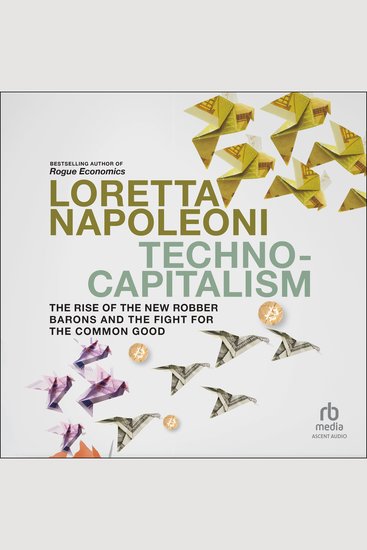
  • Techno-Capitalism - The Rise of the New Robber Barons and the Fight for the Common Good - cover

    Techno-Capitalism - The Rise of...

    Loretta Napoleoni

    • 0
    • 0
    • 0
    The respected Italian economist and journalist offers a bold and provocative argument that the speed of technological transformation is threatening our future 


    At the dawn of the digital revolution, the internet was going to be the great equalizer, a global democratic force. Instead, Wall Street ended up funding a new breed of serial capitalists, the Techtitans, who embraced rapid, transformational change while stripping their workers of rights and enriching themselves beyond anybody's wildest imagination; and the Space Barons, who mine new frontiers for precious resources. 


    Tech pioneers like Google, Facebook, Apple, Uber, and Microsoft never had any intention of spreading democracy. Those who control and own the technology are the absolute masters. As artificial intelligence enters the labor market, companies like Uber are able to cut labor costs to the barest of minimums, by squeezing workers' privileges and rights. 


    Technological transformation is occurring at a speed that is existentially unbearable for most of us. We must fight for our common good to address today's real challenges of global warming and militarism and the soulessness of capitalist endeavor. Napoleoni shows us how.
    Show book
  • Archimedes: A short biography - 5 Minutes: Short on time - long on info! - cover

    Archimedes: A short biography -...

    5 Minutes, 5 Minute Biographies,...

    • 0
    • 0
    • 0
    Archimedes, Greek universal genius: Life and work in a short biography! Everything you need to know, brief and concise. Infotainment, education and entertainment at its best!
    Show book
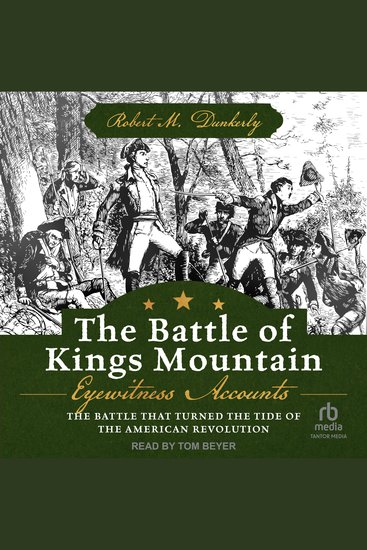
  • The Battle of Kings Mountain - Eyewitness Accounts: The Battle That Turned The Tide of the American Revolution - cover

    The Battle of Kings Mountain -...

    Robert M. Dunkerly

    • 0
    • 0
    • 0
    A pivotal moment in American history, as told by our forefathers 


    On October 7, 1780, American Patriot and Loyalist soldiers battled each other at Kings Mountain, near the border of North and South Carolina. With over one hundred eyewitness accounts, this collection of participant statements from men of both sides includes letters and statements in their original form—the soldiers' own words—unedited and unabridged. Rife with previously unpublished details of this historic turning point in the American Revolution, described as the war's "largest all-American fight," these accounts expose the dramatic happenings of the battle, including new perspectives on the debate over Patriot Colonel William Campbell's bravery during the fight. Robert M. Dunkerley's work is an invaluable resource to historians studying the flow of combat, genealogists tracing their ancestors, and anyone interested in Kings Mountain and the Southern Campaign.
    Show book
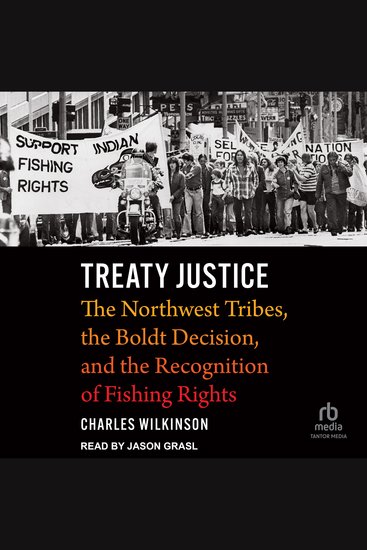
  • Treaty Justice - The Northwest Tribes the Boldt Decision and the Recognition of Fishing Rights - cover

    Treaty Justice - The Northwest...

    Charles Wilkinson

    • 0
    • 0
    • 0
    In 1974, Judge George Boldt issued a ruling that affirmed the fishing rights and tribal sovereignty of Native nations in Washington State. The Boldt Decision transformed Indigenous law and resource management across the United States and beyond. The case also brought about far-reaching societal changes, reinforcing tribal sovereignty and remedying decades of injustice. 


    Eminent legal historian and tribal advocate Charles Wilkinson tells the story of the Boldt Decision against the backdrop of salmon's central place in the cultures and economies of the Pacific Northwest. In the 1960s, Native people reasserted their fishing rights as delineated in nineteenth-century treaties. In response, state officials worked with non-Indian commercial and sport fishing interests to forcefully oppose Native actions. These "fish wars" spurred twenty tribes and the United States government to file suit in federal court. Boldt pointedly waited until Lincoln's birthday to hand down a decision recognizing the tribes' right to half of the state's fish. The case's aftermath led from the Supreme Court's affirmation of Boldt's opinion to collaborative management of the harvest of salmon. 


    Treaty Justice weaves personalities and local detail into the definitive account of one of the twentieth century's most important civil rights cases.
    Show book