
Join us on a literary world trip!
Add this book to bookshelf
Grey
Write a new comment Default profile 50px
Grey
Subscribe to read the full book or read the first pages for free!
All characters reduced
The Philosophy of Right & The Philosophy of Law - Hegel's Views on Legal Moral Social & Political Philosophy - cover

The Philosophy of Right & The Philosophy of Law - Hegel's Views on Legal Moral Social & Political Philosophy

Georg Wilhelm Friedrich Hegel

Translator S. W. Dyde, J. Loewenberg

Publisher: DigiCat

  • 0
  • 0
  • 0

Summary

In "The Philosophy of Right & The Philosophy of Law," Georg Wilhelm Friedrich Hegel addresses the intricate relationship between freedom, ethics, and law within a rational framework. This seminal work delves into the essence of individual rights and the moral fabric of society, illustrating Hegel's dialectical method—a process of understanding through contradictions and reconciliations that propels history and human thought. Set against the backdrop of 19th-century German philosophy, Hegel's exploration of the state, civil society, and moral life presents a compelling synthesis that seeks to ground ethical life in the realities of governance and community. Hegel, a pivotal figure in German idealism, was deeply influenced by the tumultuous socio-political landscape of his time, including the French Revolution and the rise of modern nationalism. His philosophical inquiries into freedom and statehood reflect his belief in the evolution of human consciousness and the development of societal norms. Throughout his career, Hegel sought to confront the dissonance between individual liberty and the collective good, a theme that emerges prominently in his mature political thought. This book serves as a critical resource for anyone seeking to engage with the foundations of modern political philosophy. Readers interested in the interplay of ethics, politics, and law will find Hegel's insights invaluable, as he articulates a vision of freedom that is deeply interwoven with community and the necessity of law. "The Philosophy of Right & The Philosophy of Law" is essential for scholars, students, and engaged citizens alike, inviting them to reconsider the nature of law and morality in contemporary society.
Available since: 12/28/2023.
Print length: 271 pages.

Other books that might interest you

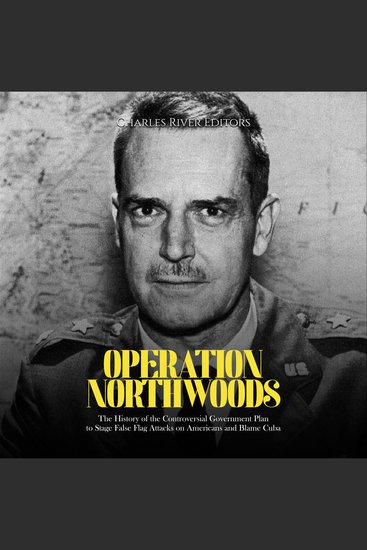
  • Operation Northwoods: The History of the Controversial Government Plan to Stage False Flag Attacks on Americans and Blame Cuba - cover

    Operation Northwoods: The...

    Editors Charles River

    • 0
    • 0
    • 0
    Throughout the history of warfare, the practice of placing blame on innocent parties in order to justify attacking them has been a constant feature. In the 20th century, this practice began to be commonly referred to as a “false flag” operation. The essence of a false flag scenario is that it is conducted by one party or government and “made to appear as though another party sponsored it.”[1] In informal legal terminology, the practice is commonly referred to as a “stitch up”[2] or “setup.”[3] The modern use of this action based on deceit originated in the 16th century, typically when ships displayed the flags of a neutral or enemy country to hide their identities. 
    	The severity of false flag operations moves in tandem with the perceived danger. In the late 20th century, the Soviet Union constituted an ongoing threat to the United States, ideologically and militarily. When Fidel Castro, a Soviet sympathizer, came to power in Cuba in 1959, the presence of a communist extension of Soviet influence so near American shores caused great discomfort to the U.S. government. 
    	Some of the Cold War’s tensest moments involved Cuba, including the Bay of Pigs invasion and the Cuban Missile Crisis, amply demonstrating that throughout the early 1960s, alarmed individuals within the American government believed that the only way to handle Castro was by immediate elimination and a takeover of Cuba. They were pitted against more nuanced points of view held by others within the Kennedy administration. The Pentagon was of the general mind that in such a perilous environment, military decision-making should come to the front and civilians should withdraw, even the White House. Diplomacy was seen as being of little use by the Joint Chiefs of Staff against an encroaching Soviet superpower led by a political street fighter and his puppet situated just off the coast of Florida. 	This charged atmosphere would lead to one of the most controversial proposals in history.
    Show book
  • Strange History Life's Mysteries and Other Bloviation - cover

    Strange History Life's Mysteries...

    J. Dallas Brooks

    • 0
    • 0
    • 0
    A slip and fall changed the course of 20th century history and broadcasting. 
    One man's dislike of cats contributed to the deaths of millions of people. 
    A World War II pilot survives 3 plane crashes before switching gears and changing the world of science fiction forever. 
    A bullet fired in the Civil War nearly wiped yours truly from existence.  
    Told in the spirit of Paul Harvey's The Rest of the Story, this series of short and fantastic historical stories will intrigue and delight readers who enjoy a fresh take on history. All of these stories come with a fun twist at the end, and some readers will enjoy guessing who or what each story is about as they follow along with each new tale. This is a short, but engaging listen about an hour long.
    Show book
  • The History of Hungary - From Ancient Times to the Present - cover

    The History of Hungary - From...

    Will Forrest

    • 0
    • 0
    • 0
    Experience the intrigue and drama of Hungary's past as you dive into the pages of this captivating book.  
    Learn about the country's turbulent history, filled with twists and turns, triumphs, and tragedies. 
    In this book, you will:Explore the life and legacy of one of Hungary's most famous historical figures, King Matthias Corvinus, who ruled in the 15th century and left a lasting impact on the country's culture and politics.Discover the dramatic events of the Hungarian Revolution of 1956, a watershed moment in the country's history that challenged Soviet domination and inspired other anti-communist movements across Eastern Europe.Learn about the Battle of Mohács, a pivotal event in Hungarian history that marked the defeat of the Kingdom of Hungary by the Ottoman Empire in 1526 and had far-reaching consequences for the country's political and cultural development.Explore the impact of World War I on Hungary and its people, from the experiences of soldiers and civilians to the lasting effects on society and politics. 
    This book will transport you back in time and give you a new perspective on Hungary's rich history, making it an essential read for anyone interested in the past. 
    Get your copy today and explore the mysteries of Hungary's past.
    Show book
  • Ancient and Medieval Conspiracy Theories: The History of the World’s Most Persistent Conspiracy Theories - cover

    Ancient and Medieval Conspiracy...

    Editors Charles River

    • 0
    • 0
    • 0
    Perhaps it should also not be surprising that the themes found in contemporary conspiracy theories are often echoed in ancient conspiracy theories. While some people still insist that Lyndon B. Johnson was in on John F. Kennedy’s assassination, it was speculated across the ancient world that the young Macedonian king, Alexander the Great, conspired to have his own father, Philip II of Macedon, assassinated. Likewise, the New Age beliefs that Mesoamerican ruins in Mexico were somehow tied to extraterrestrials find common cause with people who believe the ancient Indus Valley site at Mohenjo-daro was destroyed by a nuclear weapon. And through it all, the lack of surviving documentary evidence about much of antiquity has allowed for all of the unknowns to become highly speculative sources of debate. For example, did Caesar’s men burn the Library of Alexandria in the 1st century B.C., or was it destroyed later, if at all? Some people even suggest that the Library of Alexandria, whose ruins have never been located, never existed at all.  
    	Few eras are easier to let the imagination run wild than the Middle Ages, which have often been coined the Dark Ages based on a perceived lack of progress and information. In some respects, that is not completely unfounded because less is known about that historical period compared to the eras that came after it. In addition, it was a period marked by a great number of deaths caused by plague epidemics, crusades, and inquisitorial persecutions. Often, researchers are not even sure how and why certain events happened, and these mysteries still occupy the attention of historians. 
    	At the same time, some historical mysteries about the era may never be solved, if only because the relevant excavated material has been lost or the archaeological site has been destroyed. Of course, the lack of answers only makes these enigmas more intriguing. 
    Show book
  • The Life Of Buddha - cover

    The Life Of Buddha

    Sripad Jaganantha Das

    • 0
    • 0
    • 0
    Gautama Buddha, also known as Siddhartha Gautama, was a spiritual teacher who lived in ancient India between the 6th and 4th centuries BCE. He is the founder of Buddhism, one of the major religions of the world. Buddha was born into a royal family, but he renounced his luxurious lifestyle at the age of 29 to seek the truth about life and the nature of suffering. He spent six years as a wandering ascetic before attaining enlightenment at the age of 35. The Buddha's teachings, known as the Dharma, revolve around the Four Noble Truths, which explain the nature of suffering and the path to its cessation. The core message of Buddhism is that suffering arises from craving and attachment, and that liberation can be attained through the practice of the Eightfold Path, which includes meditation, mindfulness, ethical conduct, and wisdom. 
     
    The Buddha's teachings have had a profound impact on the spiritual and cultural history of Asia and beyond. His teachings spread rapidly throughout India and other parts of Asia, and they continue to inspire millions of people today. The Buddha's emphasis on non-violence, compassion, and the importance of the present moment has also resonated with many in the West. In addition to his spiritual teachings, the Buddha also provided practical guidance on social and ethical issues. He advocated for the abolition of caste distinctions, the treatment of animals with compassion, and the importance of community and social harmony. 
     
    Buddha's teachings continue to be relevant and inspiring today. His teachings on the nature of suffering, impermanence, and the importance of self-awareness are particularly relevant in today's fast-paced and materialistic world.
    Show book
  • Instructions to His Generals - The Military Philosophy of Frederick the Great - cover

    Instructions to His Generals -...

    Frederick the Great, Tim Zengerink

    • 0
    • 0
    • 0
    What if you could master the art of leadership, inspire loyalty, and achieve victory through strategy and discipline? 
    Instructions to His Generals: The Military Philosophy of Frederick the Great presents the timeless wisdom of one of history’s greatest military leaders, thoughtfully adapted for today’s listeners. 
    Frederick the Great, King of Prussia, distilled his strategies and leadership principles into concise instructions for his generals. His insights provide a practical roadmap for military success, effective leadership, and strategic thinking. Beyond the battlefield, these principles offer profound lessons for modern leaders, strategists, and anyone seeking success through preparation and discipline. 
    This isn’t just a military text—it’s a guide to mastering leadership, building confidence, and achieving success in the face of challenges. 
    What You’ll Discover: 
    - Strategic Leadership: Inspire loyalty, build disciplined teams, and lead decisively with preparation and adaptability. 
    - The Art of Strategy: Gain insights into planning, executing campaigns, and succeeding through calculated decisions. 
    - Discipline and Adaptability: Embrace preparation, resilience, and flexibility to overcome obstacles. 
    - Clear, Accessible Language: Frederick’s timeless instructions are presented in a modernized format for today’s leaders. 
    Frederick the Great’s Instructions offers a masterclass in leadership, strategy, and discipline. His principles continue to inspire leaders and professionals striving to succeed in a competitive world. 
    Imagine having the tools to lead decisively, adapt to challenges, and inspire confidence in those you lead. 
    Download your copy today and transform your approach to leadership with Frederick the Great’s timeless wisdom.
    Show book