Join us on a literary world trip!
Add this book to bookshelf
Grey
Write a new comment Default profile 50px
Grey
Subscribe to read the full book or read the first pages for free!
All characters reduced
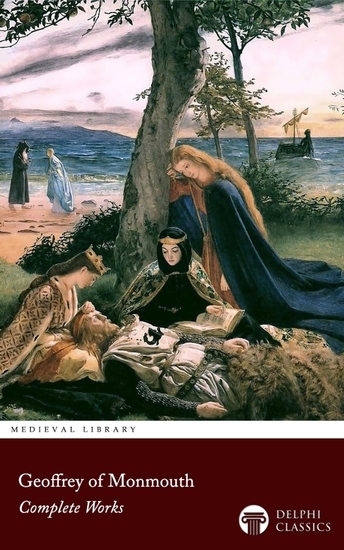
Delphi Complete Works of Geoffrey of Monmouth Illustrated - cover

Delphi Complete Works of Geoffrey of Monmouth Illustrated

Geoffrey of Monmouth

Publisher: Delphi Publishing Ltd

  • 0
  • 0
  • 0

Summary

The twelfth century chronicler Geoffrey of Monmouth was the author of one of the most famous and influential works of the Middle Ages. ‘History of the Kings of Britain’ brought the figures of Arthur and Merlin into European literature, ensuring a popularity that continues to this day. It relates the purported history of Britain, from its first settlement by Brutus of Troy to the death of Cadwaladr in the seventh century. It also covers Caesar’s invasions of Britain, Kings Leir and Cymbeline and one of the earliest developed narratives of the fabled King Arthur. Denounced from the first by sober historians, this fictional history still exerted an enormous influence on the course of English literature. Delphi’s Medieval Library provides eReaders with rare and precious works of the Middle Ages, with noted English translations and the original texts.  This eBook presents Geoffrey’s complete works, with illustrations, informative introductions and the usual Delphi bonus material. (Version 1)

 
* Beautifully illustrated with images relating to Geoffrey's life and works* Features the complete extant works of Geoffrey, in both English translation and the original Latin* Aaron Thompson’s celebrated translation of ‘History of the Kings of Britain’, with J. A. Giles’ 1905 revisions and hyperlinked footnotes* Concise introductions to the works* Excellent formatting of the texts* Easily locate the sections you want to read with individual contents tables* Includes Geoffrey’s rare work ‘The Life of Merlin’ (tr. John Jay Parry, 1925), first time in digital print* Provides a special dual English and Latin text, allowing readers to compare the sections paragraph by paragraph — ideal for students* Features a bonus biography — discover Geoffrey's medieval world

 
CONTENTS:

 
The TranslationsThe History of the Kings of Britain (c. 1136)The Life of Merlin (c. 1150)

 
The Latin TextsContents of the Latin Texts

 
The Dual TextHistoria regum Britanniae

 
The BiographiesGeoffrey of Monmouth (1900) by Henry Richard TedderGeoffrey of Monmouth (1902) by A. G. LittleGeoffrey of Monmouth (1911) by Henry William Carless DavisGeoffrey of Monmouth (1922) by Andrew Lang
Available since: 03/26/2024.
Print length: 1136 pages.
Other books that might interest you

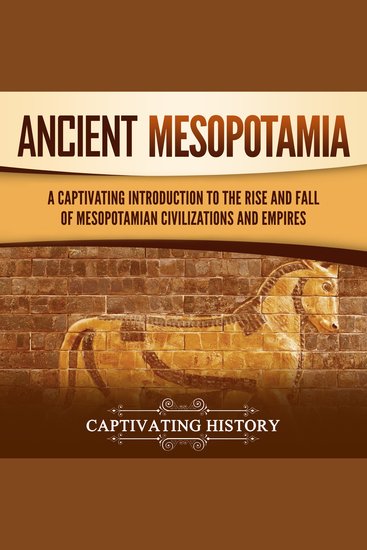
  • Ancient Mesopotamia: A Captivating Introduction to the Rise and Fall of Mesopotamian Civilizations and Empires - cover

    Ancient Mesopotamia: A...

    Captivating History

    • 0
    • 0
    • 0
    Did you know that the first early battery and diving apparatus were invented in ancient Mesopotamia?  
    The land between the Tigris and Euphrates Rivers is called the “cradle of civilization,” and for good reason! Although Mesopotamia’s first civilization, Sumer, developed parallel with those of Egypt and nearby Elam, it was a place of many firsts for humanity. Some of them are well known, such as the wheel and the writing script. But it was the ancient Mesopotamians who first came up with the concept of time, the mathematical sexagesimal system, and a calendar with twelve months. It is all these inventions and ideas that set Mesopotamia apart from other civilizations that developed at approximately the same time.  
    There are so many interesting facts about the history and life of the people in Mesopotamia. By listening to this audiobook, you will find out:How agriculture and the domestication of animals led to the development of the world’s earliest civilizationWho were the peoples that occupied the region of Mesopotamia and came up with epics such as Gilgamesh?Who was Sargon of Akkad, and how did he rise to power to unite the cities and form one of the world’s first empires?How the first cuneiform script was invented and how it changed over time to fit the many languages spoken in the Akkadian EmpireWhy a new local ruler was needed to found the Third Dynasty of UrWho was Hammurabi, and why was he so important for the history of humankind?Why was Babylon obscured by Assyria?What role the Chaldeans played in the Assyrian EmpireAnd so much more! 
    Scroll up and click the “add to cart” button today to learn more about this incredible time in history!
    Show book
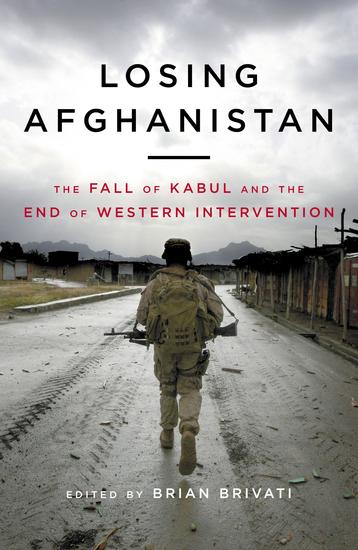
  • Losing Afghanistan - The Fall of Kabul and the End of Western Intervention - cover

    Losing Afghanistan - The Fall of...

    Brian Brivati

    • 0
    • 0
    • 0
    "Those who wonder how the international community failed so dramatically in Afghanistan need look no further … Losing Afghanistan explores the arguments for and against intervention and highlights the difficulty of establishing unity of purpose and effort in such demanding circumstances. Above all, it poses a question: how can we in the West claim we know so much, yet demonstrate in Afghanistan that we understand so little?" – General (retd) Sir Jack Deverell OBE, former Commander-in-Chief of Allied Forces Northern Europe
    "A wonderful book of insightful essays on Afghanistan from an outsider lens." – Ezatullah Adib, head of research at Integrity Watch Afghanistan and national country representative at the World Association for Public Opinion Research
    "The strategic question posed by these brilliant essays is: how can the doctrine of liberal intervention be reframed to ensure the West intervenes overseas to manage future humanitarian calamities for reasons beyond just national security?" – Brigadier (retd) Justin Hedges OBE
    ***
    When Taliban forces took Kabul on 15 August 2021, it marked the end of the Western intervention that had begun nearly twenty years earlier with the US-led invasion.
    The fall of Afghanistan triggered a seismic shock in the West, where US President Joe Biden announced an end to America's involvement in conflicts overseas. In Afghanistan itself it produced terror for the future for those who had worked with and grown up under the coalition-supported administration.
    Now, with the country spiralling into economic collapse and famine, Losing Afghanistan is a plea for us to keep our gaze on the plight of the people of Afghanistan and to understand how action and inaction in the West shaped the fate of the nation.
    Why was Afghanistan lost? Can it be regained? And what happens next? Edited by international development expert Brian Brivati, this collection of twenty-one essays by analysts, politicians, soldiers, commentators and practitioners – interspersed with powerful eyewitness testimony from Afghan voices – explains what happened in Afghanistan and why, and what the future holds both for its people and for liberal intervention.
    Show book
  • Polygamy - A Very Short Introduction - cover

    Polygamy - A Very Short...

    Sarah M.S. Pearsall

    • 0
    • 0
    • 0
    Marriage has not always meant just one man and one woman. For much of human history, the most common alternative was polygamy: marriage involving more than one spouse. However, polygamy has come to symbolize a problematic, even "barbaric," form of marriage that is often labeled as "backwards," embodying the oppression of women by men. 


    In Polygamy: A Very Short Introduction, Sarah M. S. Pearsall explores what plural marriages reveal about the inner workings of marriage and describes the controversies surrounding it. The book emphasizes the diversity of historical polygamist societies, from the Shi'ite Muslims and Wendat men who practiced short-term marriages to the Mixteca, Maori, Inca, Algonquin, and Marta indigenous people of North America and the Pacific Islands. Pearsall also explains the divides within Christianity that led to Joseph Smith's establishment of the Church of Jesus Christ of Latter-day Saints (Mormonism). 


    Polygamy: A Very Short Introduction looks at how polygamous domestic and sexual relationships have influenced larger dynamics of power, gender, rank, race, and religion in societies all over the world, while also attempting to untangle the paradox of female constraint and liberty for women who advocated for polygamy, arguing that plural marriage offered security and stability rather than restraint for women.
    Show book
  • The Happy Little Engine - cover

    The Happy Little Engine

    Judy Nayer

    • 0
    • 0
    • 0
    Fun sound-effects and whimsical music help tell the story of “The Happy Little Engine.” It was a beautiful Sunday morning and the Baker family decided to take a nice drive in their little red car. The Baker family loved the little red car because it was so much fun to ride in and it had a great little engine. Find out what happens when the little red car gets a flat tire, overheats, and then runs out of gasoline. Will the Baker family know what to do? A positive ending adds interest to this adorable story and encourages a lifelong love for storytime.
    Show book
  • Memory Improvement - The Ultimate Guide to Improving Memory and Focus Training Your Brain to Boost Your IQ and Live a Balanced Life Discovering Your Full Potential and Increasing Productivity (2022) - cover

    Memory Improvement - The...

    Buck Francis

    • 0
    • 0
    • 0
    Do you aspire to read at least 300 words each minute?  
    Do you want to know why, no matter how hard you try, you can't remember the name of a recently completed book's author?  
    Are you the kind of person who goes to study one day before the test and has a massive pile of books ready for him to devour?  
    Have you ever wondered how it feels to walk backwards, putting your wits to the test? 
    Although each brain is unique, the cognitive processes are the same. What you believe is what you feel, and what you think is what you remember. That's all there is to it. The issue emerges when this simplicity is disrupted by brain-conflicting factors such as excessive stress, inconsistent sleep habits, an improper diet, and a lack of brain exercise. 
    This book will take you on an instructive and mood-lifting trip as you pass the many milestones on your way to memory development. 
    Readers may use this book as a personal memory enhancement aid:It discusses the most effective ways for gaining rapid learning skills that improve focus and memory.It also incorporates critical life skills and alternative medical methods to boost brain capacity.It goes over brain-boosting, edible vitamins and how they affect cognitive functions.Offers realistic memory-improvement activities 
                ...And so much more!!! 
    Do you want to learn more? 
    Scroll up and press the "Add to Cart" button RIGHT NOW.
    Show book
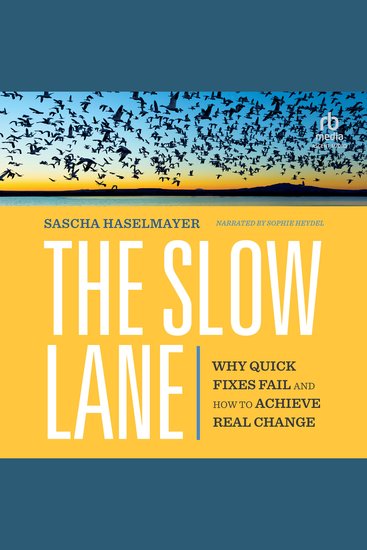
  • The Slow Lane - Why Quick Fixes Fail and How to Achieve Real Change - cover

    The Slow Lane - Why Quick Fixes...

    Sascha Haselmayer

    • 0
    • 0
    • 0
    Avoid the speed trap! Discover how changemakers can find lasting solutions to urgent social problems through a proven 5-step process for listening thoughtfully, building broad support, and exploring unconventional options. 
     
     
    Society celebrates leaders who promise fast, easy solutions to the world's problems-but quick fixes are just mirages that fade, leaving us with the same broken systems. The truth is, effective social change happens through slow, intentional actions. The author, a globally acclaimed social entrepreneur, offers a 5-step process for taking the slow lane to change-the lane that gets you to the right place faster: 
     
    -	Listening-Listen to build trust, which can change hearts and minds and allow for something new to emerge. 
    -	Holding the urgency-Accept that even in moments of crisis you can move only at the speed of trust instead of rushing into action. 
    -	Sharing the agency-Create an inclusive environment where everyone can lead. 
    -	Healing democracy-Build bridges that allow marginalized people to participate. 
    -	Maintaining curiosity-Be inspired by nontraditional sources. 
     
    Using dozens of examples-prison reform in England, urban development in Venezuela, healthcare in the Navajo Nation, early childhood education in New York, and many more-The Slow Lane shows how, by following the principles taught in this book, readers can create lasting change.
    Show book