Rejoignez-nous pour un voyage dans le monde des livres!
Ajouter ce livre à l'électronique
Grey
Ecrivez un nouveau commentaire Default profile 50px
Grey
Abonnez-vous pour lire le livre complet ou lisez les premières pages gratuitement!
All characters reduced
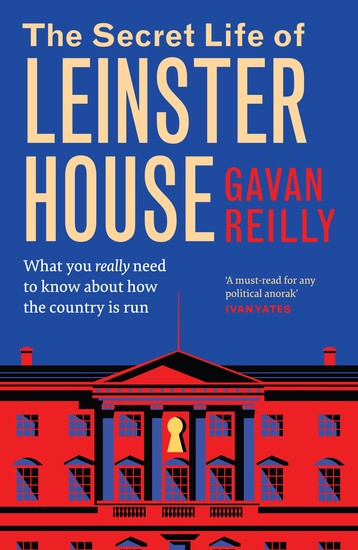
The Secret Life of Leinster House - What you really need to know about how the country is run - cover

The Secret Life of Leinster House - What you really need to know about how the country is run

Gavan Reilly

Maison d'édition: Gill Books

  • 0
  • 0
  • 0

Synopsis

What is it like to run for election? How do public representatives deal with the cut-throat competition from their rivals – and their own running mates? What's the Dáil bar really like? And how, given the demands of the 24-hour news cycle, does any meaningful work get done?
Political correspondent Gavan Reilly turns his keen analytical eye to the machinations of Leinster House. With unprecedented access to political insiders, Gavan offers us a seat at the cabinet table exposing how Irish politics really works.
'If you want to understand, really understand, how Irish politics works behind the scenes, you should read this book' SHANE COLEMAN
'This book has it all … the ultimate behind-the-curtain guide to the world of Irish politics' JENNIFER BRAY
'Invaluable insights into the drama, demands and drudgery of politics … essential reading for anyone with ambitions' SEAN O'ROURKE
Disponible depuis: 22/05/2025.
Longueur d'impression: 256 pages.

D'autres livres qui pourraient vous intéresser

  • Money Parties and Democracy - Political Finance Between Fat Cats and Big Government - cover

    Money Parties and Democracy -...

    Zim Nwokora, matteo Bonotti

    • 0
    • 0
    • 0
    Democratic politics is expensive. In US presidential elections, for instance, total spending now exceeds $6.5 billion. In the US, election campaigns are largely funded by private donations from individuals and corporate entities, whereas in Germany, the state is the main funder of electoral politics through subventions to parties. In some other countries, parties have been able to raise most of what they need internally by charging membership dues or, more exceptionally, by relying on a wealthy patron. However, there have been numerous scandals and controversies involving political finance, which pose a serious challenge to fundamental democratic principles.Matteo Bonotti and Zim Nwokora analyze the nature of these democratic risks and how they differ across various models of political finance. They argue that political finance rules ought to counterbalance the weaknesses of the party system they are being used alongside. To do so, political finance rules and party systems should be assessed together, in terms of three distinctive normative dimensions—collegiality, systemic voice, and systemic accountability—which capture what parties, at their best, can contribute to democratic politics. Money, Parties, and Democracy sets out a framework for evaluating political finance systems so that they can be designed or reformed to better support good governance.
    Voir livre
  • The Fall of Communism - Understanding the Collapse of the Soviet Union and Its Impact - cover

    The Fall of Communism -...

    Arlo Holders

    • 0
    • 0
    • 0
    The origins of communism can be traced back to the mid-19th century, largely shaped by the theories of Karl Marx and Friedrich Engels. Marx's writings, particularly The Communist Manifesto (1848), presented a vision for a classless society where the working class, or proletariat, would overthrow the capitalist bourgeoisie and establish a dictatorship of the proletariat. Marx believed this revolution would lead to the eventual abolition of private property, creating a system where resources and wealth were shared equally among all people. Engels, Marx’s collaborator, helped to spread these ideas, laying the theoretical foundation for communism as a political ideology. 
    In the early 20th century, the ideas of Marxism found fertile ground in Russia, where economic disparity and social unrest were widespread. The Russian Empire, under Tsar Nicholas II, faced increasing pressure from industrialization, a growing working class, and a largely disenfranchised peasantry. The Russian Revolution of 1917, led by the Bolshevik Party under Vladimir Lenin, marked the beginning of communism’s practical implementation. The Bolsheviks sought to establish a socialist state where the working class would control the means of production and dismantle the old Tsarist monarchy. 
    Following the revolution, the Soviet Union was formed in 1922, uniting the Russian Federation and several other Soviet republics under a single communist government. The new government, however, faced significant challenges, including civil war, foreign intervention, and the task of restructuring a country that had been predominantly agrarian into a socialist industrialized state. Lenin’s death in 1924 led to the rise of Joseph Stalin, who consolidated power through brutal purges and policies such as forced collectivization and rapid industrialization.
    Voir livre
  • Role-modeling Socialist Behavior - The Life and Letters of Isaac Rab - cover

    Role-modeling Socialist Behavior...

    Karla Doris Rab

    • 0
    • 0
    • 0
    Isaac Rab (1893 - 1986) was a well-known agitator for Socialism in the Boston area, as a soap-box orator, a lecturer and a teacher, for most of the Twentieth Century. He was among the founding members of the World Socialist Party and organized a Boston Local in 1932, in which he was a central figure for many years. Today the WSP(US) remains a companion party of the World Socialist Movement.
    Voir livre
  • Constitution of Liberty The: Book Summary & Analysis - cover

    Constitution of Liberty The:...

    Briefly Summaries

    • 0
    • 0
    • 0
    This is a concise summary and analysis of The Constitution of Liberty, by Friedrich A. Hayek.
    It is not the original book and is not affiliated with or endorsed by Friedrich A. Hayek.
    Ideal those seeking a quick and insightful overview.
     
    The Constitution of Liberty is a timeless exploration of the principles of freedom, justice, and the rule of law in modern societies. This influential work provides a compelling argument for the preservation of individual liberty as the foundation of prosperity and social order. The book examines the relationship between government and the individual, emphasizing the importance of limited government and spontaneous order in fostering innovation and progress. Thought-provoking and meticulously reasoned, this work challenges readers to reflect on the philosophical and practical underpinnings of a free society.
    Voir livre
  • How To Raise A Citizen (And Why It's Up to You to Do It) - cover

    How To Raise A Citizen (And Why...

    Lindsey Cormack

    • 0
    • 0
    • 0
    An essential guide to nurturing the next generation of responsible, informed citizens 


    Lindsey Cormack's book, How to Raise a Citizen (And Why It's Up to You to Do It), speaks directly to an America in which civic knowledge is alarmingly sparse and many people dread politics. It's a tool for parents, educators, and anyone eager to fill this gap. In the book, Cormack offers an engaging and practical approach to discussing political issues and the inner workings of the US government with children. She explains why our schools can no longer be the sites of civic education that they used to be and provides parents with strategies and necessary know-how to be able to impart these lessons to their children. From the intricacies of the voting process to the foundational principles of democracy and the significance of key government documents like the Constitution, the author demystifies complex topics with clarity and insight. 


    How to Raise a Citizen is a roadmap to a future where political dialogue and civic engagement are not just encouraged but celebrated in our homes. With actionable advice and easy-to-understand explanations, it empowers listeners to instill a sense of civic responsibility and curiosity in the young minds they influence.
    Voir livre
  • First Inaugural Address - cover

    First Inaugural Address

    Ronald Reagan

    • 0
    • 0
    • 0
    On January 20, 1981, Reagan began his first presidential inauguration address by thanking Carter for his “gracious cooperation in the transition process”. 
    Reagan notes “one of the worst sustained inflations in our national history. It distorts our economic decisions, penalizes thrift, and crushes the struggling young and the fixed-income elderly alike.” “In this present crisis, government is not the solution to our problem; government is the problem.” 
    “For decades we have piled deficit upon deficit, mortgaging our future and our children's future for the temporary convenience of the present.” “It is my intention to curb the size and influence of the Federal establishment and to demand recognition of the distinction between the powers granted to the Federal Government and those reserved to the States or to the people.” 
    “If we look to the answer as to why for so many years we achieved so much, prospered as no other people on Earth, it was because here in this land we unleashed the energy and individual genius of man to a greater extent than has ever been done before.” “It is time to reawaken this industrial giant, to get government back within its means, and to lighten our punitive tax burden.” 
    “As for the enemies of freedom, … [w]e will maintain sufficient strength to prevail if need be, knowing that if we do so we have the best chance of never having to use that strength.” 
    “[T]ogether with God's help we can and will resolve the problems which now confront us. And after all, why shouldn't we believe that? We are Americans. God bless you, and thank you. 
    aspenleafmedia.com
    Voir livre