Join us on a literary world trip!
Add this book to bookshelf
Grey
Write a new comment Default profile 50px
Grey
Subscribe to read the full book or read the first pages for free!
All characters reduced
Death in Irish prehistory - cover

Death in Irish prehistory

Gabriel Cooney

Publisher: Royal Irish Academy

  • 0
  • 0
  • 0

Summary

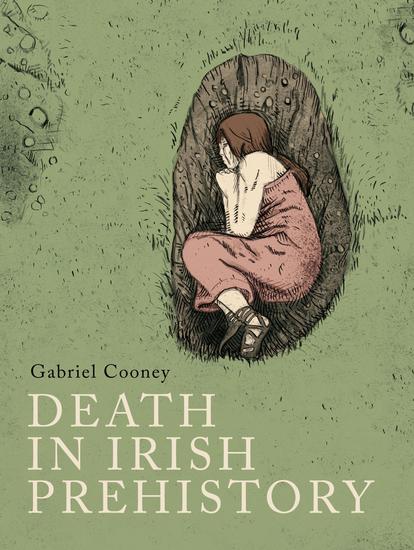
This is a book about life and death over 8,500 years in Ireland. It explores the richness of the mortuary record that we have for Irish prehistory (8000 BC to AD 500) as a highlight of the archaeological record for that long period of time. Because we are dealing with how people coped with death, this rich and diverse record of mortuary practice is also relevant to understanding how we deal with death today, which is just as central a social issue as it always was.
Available since: 10/31/2023.
Print length: 456 pages.

Other books that might interest you

  • Enduring Urgency - Thinking Like a Tortoise in a Time of Hares - cover

    Enduring Urgency - Thinking Like...

    David A. Brown-Dawson

    • 0
    • 0
    • 0
    This book is a call to action and a toolbox. You have gifts and the world needs you to identify, understand, and employ your gifts. Today. 
    There is important work to be done and we do not have forever on this earth, so we should do good when we can where we are with what we have, knowing improvement will take time and we will face challenges. 
    Important work: children need to be raised, people need to be loved and educated, homes need to be built, code needs to be written, songs need to be sung, clean water needs to be provided, scripts need to be produced, difficult conversations need to be had, systems need to be fixed. 
    The Enduring Urgency strategy can be used to improve our families and our communities, but it starts in the mind of each person. It is about holding a decade and a day at the same time; seeing who and where you want to be a decade from now and doing everything you can each day to become that person. Enduring Urgency is a strategy used by effective humans throughout history. For ease, David uses the following formula: 
    Enduring Urgency = Resilience + Patience + Consistent Focused Action 
    In this book, David shares stories and provides tools to help you build resilience, develop patience, and take consistent focused action in support of those important people and goals you have. The resilience is for the adversity you have, are, or will face. The patience is for your process and the time required to improve. The consistent focused action is for the compounding effect, the consequences of what happens when we act consistently over time. 
    This book can provide value if you are:Wanting to better understand yourself, your gifts, and how to use them for goodWanting to develop your social and emotional learningPreparing to graduateTransitioning from one career to another
    Show book

  • The Religion of American Greatness - What's Wrong with Christian Nationalism - cover

    The Religion of American...

    Paul D. Miller

    • 0
    • 0
    • 0
    ECPA Top Shelf Award Winner
    Long before it featured dramatically in the 2016 presidential election, Christian nationalism had sunk deep roots in the United States. From America's beginning, Christians have often merged their religious faith with national identity. But what is Christian nationalism? How is it different from patriotism? Is it an honest quirk, or something more threatening?
    Paul D. Miller, a Christian scholar, political theorist, veteran, and former White House staffer, provides a detailed portrait of—and case against—Christian nationalism. Building on his practical expertise not only in the archives and classroom but also in public service, Miller unravels this ideology's historical importance, its key tenets, and its political, cultural, and spiritual implications.
    Miller shows what's at stake if we misunderstand the relationship between Christianity and the American nation. Christian nationalism—the religion of American greatness—is an illiberal political theory, at odds with the genius of the American experiment, and could prove devastating to both church and state. Christians must relearn how to love our country without idolizing it and seek a healthier Christian political witness that respects our constitutional ideals and a biblical vision of justice.
    Show book
  • American Political Parties - Why They Formed How They Function and Where They're Headed - cover

    American Political Parties - Why...

    John Kenneth White, Matthew R....

    • 0
    • 0
    • 0
    American Political Parties is a core textbook on political parties in the United States that places the US party system into a framework designed around the disagreements between Alexander Hamilton and Thomas Jefferson. White and Kerbel argue that the two-party system in the United States began with a common agreement on the key values of freedom, individual rights, and equality of opportunity but that Hamilton and Jefferson disagreed—often vehemently—over how to translate these ideals into an acceptable form of governance. 


    While Hamilton wanted to marry freedom to a strong, active federal government with an energetic president who would act on behalf of all citizens, Jefferson believed that freedom should be allied to local civic virtue, with governmental responsibilities placed primarily at the local level. Today, Hamiltonian nationalism finds its home in the Democratic Party, while Republicans have espoused Jeffersonian localism since 1964. Using this historical framework, American Political Parties examines a range of topics including marketing and social media, campaign finance, reforms in the presidential nominating process, political demography, and third parties. In this new edition, the authors describe four possible futures in the wake of the 2020 election and why Americans believed it was "the most important" election in their lifetimes.
    Show book
  • Henry V - cover

    Henry V

    William Shakespeare

    • 0
    • 0
    • 0
    After the turmoil and uncertainty of Henry IV a new era appears to dawn for England with the accession of the eponymous Henry V. In this sunny pageant Chorus guides us along Henry's glittering carpet ride of success as the new king completes his transformation from rebellious wastrel to a truly regal potentate. Of course, there is an underlying feeling that the good times won't last, and this is all the more reason to enjoy the Indian summer before the protracted and bitter fall of the house of Lancaster.
    Show book
  • Socrates Meets Hume - The Father of Philosophy Cross-Examines the Father of Modern Skepticism - cover

    Socrates Meets Hume - The Father...

    Peter Kreeft

    • 0
    • 0
    • 0
    In the Socrates Meets series, Peter Kreeft revives the classic method of bringing philosophy to life through dialogue. In eight innovative volumes, he uncovers the principles, assumptions, and sometimes dangerous conclusions of some of history’s most influential minds.  Each dialogue imagines a purgatory where we can listen in on conversations between Socrates and the great thinkers who, centuries later, picked up the philosopher’s torch. Each conversation investigates one of the philosopher’s key works, a short, readable classic that raises central questions both for philosophy and for life. In this volume, Socrates cross-examines David Hume, the father of modern skepticism and author of An Enquiry Concerning Human Understanding, exploring human knowledge, causality, miracles, and the idea of the self.
    Show book
  • Any Person is the Only Self - Essays - cover

    Any Person is the Only Self -...

    Elisa Gabbert

    • 0
    • 0
    • 0
    Contagiously curious essays on reading, art, and the life of the mind, from the acclaimed author of The Unreality of Memory. 
     
    Who are we when we read? When we journal? Are we more ourselves alone or with friends? Right now or in memory? How does time transform us and the art we love? 
     
    In sixteen dazzling, expansive essays, the acclaimed essayist and poet Elisa Gabbert explores a life lived alongside books of all kinds: dog-eared and destroyed, cherished and discarded, classic and clichėd, familiar and profoundly new. She turns her witty, searching mind to the writers she admires, from Plath to Proust, and the themes that bind them―chance, freedom, envy, ambition, nostalgia, and happiness. She takes us to the strange edges of art and culture, from hair metal to surf movies to party fiction. Any Person Is the Only Self is a love letter to literature and to life, inviting us to think alongside one of our most thrilling and versatile critics.
    Show book