Junte-se a nós em uma viagem ao mundo dos livros!
Adicionar este livro à prateleira
Grey
Deixe um novo comentário Default profile 50px
Grey
Assine para ler o livro completo ou leia as primeiras páginas de graça!
All characters reduced
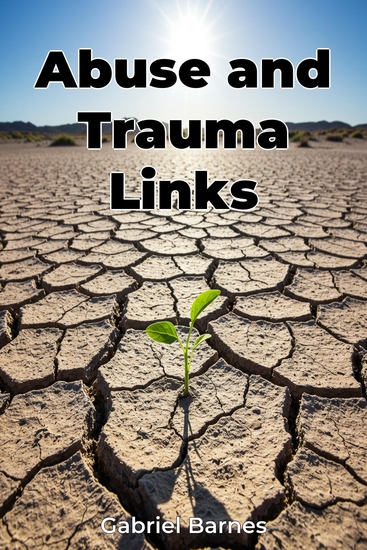
Abuse and Trauma Links - cover
LER

Abuse and Trauma Links

Gabriel Barnes

Tradutor A AI

Editora: Publifye

  • 0
  • 0
  • 0

Sinopse

Abuse and Trauma Links explores the often-overlooked connection between trauma and addiction. The book posits that addictive behaviors frequently arise as coping mechanisms for unresolved traumatic experiences. Revealing the neurobiology of trauma, it explains how adverse childhood experiences (ACEs) can disrupt brain development, affecting reward processing and impulse control. Highlighting the significance of trauma-informed treatment, the book argues for compassionate approaches to addiction recovery. The book uniquely frames addiction not as a moral failing but as a response to overwhelming pain. It progresses from foundational concepts to specific trauma types, supported by case studies and research. By integrating psychology, neuroscience, and sociology, it emphasizes self-compassion and resilience in healing.

 
For example, witnessing domestic violence as a child can lead to substance abuse later in life as a way to numb emotional pain.

 
Concluding with a discussion of trauma-informed approaches, the book advocates for addressing underlying trauma for lasting recovery. It emphasizes the importance of emotional regulation and provides a roadmap for understanding personal experiences and seeking support. This integrated approach aims to improve addiction treatment programs and promote understanding.
Disponível desde: 27/02/2025.
Comprimento de impressão: 89 páginas.

Outros livros que poderiam interessá-lo

  • Italy - A Concise Guide to a Selection of Historic Factors - cover

    Italy - A Concise Guide to a...

    Kelly Mass

    • 0
    • 0
    • 0
    This valuable deal contains multiple titles in one book. The topics are the following: 
    Florence: Florence was a major center of middle ages European trade and banking, and also one of the most affluent cities in the world at the time. A lot of academics believe it was the beginning of the Renaissance, and it has been called "the Athens of the Middle Ages." Renaissance painters and sculptures alike have their legacy in this city. 
    Naples: Naples, established by Greeks in the first millennium BC, is just one of the world's oldest constantly occupied cities. Naples has a long history, all the way dating back to Roman times, the outbreak of the Vesuvius, and much more. Let’s learn more about this fascinating city’s history. 
    St. Catherine of Siena: Catherine of Siena (who lived from March 25, in 1347 to April 29th, in the year 1380), a Dominican laywoman, was a mystic, activist, and writer who impacted Italian literature and the Catholic Church significantly. She was canonized in 1461 and is a Medical professional of the Church. She was born and raised in Siena and, regardless of her parents' desires, desired dedicate her life to God from an early age. 
    The Vatican: What comes to mind when you say the words “Vatican City?” The Pope? Big cathedrals or underground catacombs with the corpses of buried saints from the past? Crowds of people with candles? Or a choir of young men in a certain attire? The Vatican is a landlocked, independent city state and enclave in Rome, Italy. 
    Venetian Empire: When we think of Venice, we think of masks, canals, murals and frescoes, and little “gondoliers” with picturesque boats. Venice, indeed, has an impressive artistic history. But did you know that Venice was also, for a while, a considerably sized empire? The creation of the Venetian republic is said to have accompanied the starting of the church of St. James at the exact same time.
    Ver livro
  • Operation Balak: The History of the Weapons Smuggling Operation that Helped Israel Win the 1948 Arab-Israeli War - cover

    Operation Balak: The History of...

    Editors Charles River

    • 0
    • 0
    • 0
    Less than two weeks after the creation of Israel, the state’s leader, David Ben-Gurion, announced the creation of the Israel Defense Forces (IDF). This represented the combined military forces that would protect the new state, and while it might have sounded impressive on paper, the reality was very different. The new army was comprised mainly of ex-members of several paramilitary organizations that had fought for the establishment of the new state, but they lacked heavy weapons, armor and air defenses. The Israeli navy and air force did not exist other than as largely notional organizations, and at the beginning of 1948, the Israeli Air Force did not possess a single combat aircraft of any type.  
    	To many outsiders, the defeat of the nascent Jewish state seemed a certainty, yet in an unbelievably short space of time, and despite international embargoes on the export of arms to the region, Israel was able to procure sufficient arms to equip its armed forces and to successfully defend its territory in what became known as the War of Independence (also known as First Arab–Israeli War). 
    	This was not the last war that Israel would fight, nor the largest, but its very survival as a state depended on avoiding complete military defeat in 1948. The efforts to do so were tied to a series of secret operations that provided the aircraft and weapons that enabled Israel to survive the First Arab–Israeli War. The smuggling would center on procuring advanced European weaponry, which ironically meant that some of the weapons that reached Israel hailed from none other than Nazi Germany. 
    Ver livro
  • Northumberland - A guide - cover

    Northumberland - A guide

    Stephen Platten

    • 0
    • 0
    • 0
    Northumberland, one of the most sparsely-populated counties in England, with unique features like the Holy Island of Lindisfarne and Hadrian’s Wall, was also a crucible of European civilization and remains a treasury of culture. Giving birth to railways worldwide through George Stephenson, it saw the beginnings of hydraulics, hydro-electricity and turbines and, with Joseph Swan, witnessed the earliest light from electric incandescent lamps; it was a laboratory of invention.
    
     
    Northumberland has, however, changed dramatically over the course of the last century: deep coal-mining, shipbuilding and much heavy engineering have gone, but new industries have flowered. So, the largest man-made lake in northwest Europe, lying within the largest man-made forest is set within the north west of the county, bringing water in abundance and supporting entirely new leisure and tourist activities. The lower Tyne has been transformed both architecturally, and culturally.
    
     
    This unique guide to England’s most northern county explores the land, the people, the flora and fauna alongside its architecture and history. A gazetteer takes readers to Northumberland’s towns and cities – Newcastle, Hexham, and Berwick-upon-Tweed, but also to villages, hamlets, castles, beaches, churchyards, great houses, ruined abbeys, and vast wild open countryside. Among the places visited are the castles at Warkworth, Bamburgh, Dunstanburgh and Alnwick, the Farne Islands and the remote valleys of Allendale and the South Tyne, battle sites at Heavenfield, Otterburn and Flodden, alongside Vanbrugh’s final triumphant Palladian mansion at Seaton Delaval.
    
     
    Fully illustrated with more than 240 photographs, this guidebook invites travellers and locals alike to explore the unique features and the true character of Northumberland.
    Ver livro
  • The Pharaoh's Cities - Urban Development and Architecture in Ancient Egypt - cover

    The Pharaoh's Cities - Urban...

    Omar Khalil

    • 0
    • 0
    • 0
    The emergence of ancient Egyptian cities was a direct result of environmental, political, and cultural forces that converged around the Nile River. The geography of Egypt—with its fertile riverbanks and harsh surrounding deserts—encouraged people to settle in concentrated areas where water and arable land were accessible. These early settlements began as small agricultural communities but gradually expanded into organized urban centers. 
    The Nile River played an essential role in this transformation. It provided not only irrigation for crops but also a natural transportation route that linked various parts of the country. The regular flooding of the Nile deposited nutrient-rich silt onto the land, ensuring a reliable agricultural cycle. This dependable environment allowed food surpluses to develop, leading to population growth and the specialization of labor—both critical components for urbanization. 
    As Egypt became unified under strong rulers, cities took on new roles beyond agriculture. Administrative centers emerged to coordinate the collection of taxes, the management of resources, and the oversight of large-scale projects like irrigation canals and temple construction. Memphis, established as the first capital of a unified Egypt, became a powerful political and religious hub. Likewise, Thebes rose in prominence as a center of worship and royal authority, especially during the Middle and New Kingdoms.
    Ver livro
  • Smart Brevity (Revised and Updated) - The Power of Saying More with Less - cover

    Smart Brevity (Revised and...

    Jim VandeHei, Mike Allen, Roy...

    • 0
    • 0
    • 0
    Brevity is confidence. Length is fear. This is the guiding principle of Smart Brevity, a communication formula built by Axios journalists to prioritize essential news and information, explain its impact and deliver it in a concise and visual format. In this revised and updated edition, the co-founders of Axios have created an essential guide for communicating effectively and efficiently using Smart Brevity—think Strunk and White’s Elements of Style for the digital age.   In Smart Brevity​: The Power of Saying More with Less, Axios co-founders Jim VandeHei, Mike Allen, and Roy Schwartz teach readers how to say more with less in virtually any format. They also share communications lessons learned from their decades of experience in media, business and communications.
    Ver livro
  • Riding with Cochise - The Apache Story of America's Longest War - cover

    Riding with Cochise - The Apache...

    Steve Price

    • 0
    • 0
    • 0
    Riding With Cochise brings the violent drama of the American Southwest to life through the eyes of the legendary Apache chieftain Cochise and three other tribal leaders. Relying largely on the oral histories told by relatives of these great warriors as well as personal diaries of others who were involved, veteran author Steve Price takes listeners deep into the Cochise Stronghold, through Massacre Canyon, and across Apache Pass. You'll sit beside the campfires of Tom Jeffords, the only white man Cochise ever fully trusted, and touch the faded stone walls of Fort Craig, the rock cairns at Dragoon Springs, and the cottonwoods at Ojo Caliente. You'll be with General George Crook and Lt. Charles Gatewood as they pursue Geronimo through New Mexico, Arizona and even into Mexico's Sierra Madre, and learn how a handful of Apache warriors could disappear into open desert, ride and sleep on horseback, and outwit thousands of American and Mexican troops for months at a time. Thoroughly researched and written in easy but fast-paced storytelling style, Riding With Cochise presents a sweeping history of how one Native American tribe fought desperately to keep its land and its culture in the face of America's westward expansion known as Manifest Destiny, then spent twenty-seven years in exile and captivity before finally being allowed to return to their beloved homeland.
    Ver livro