Join us on a literary world trip!
Add this book to bookshelf
Grey
Write a new comment Default profile 50px
Grey
Subscribe to read the full book or read the first pages for free!
All characters reduced
Manalive - cover

Manalive

G.K. Chesterton

Publisher: Delhi Open Book

  • 0
  • 0
  • 0

Summary

Perhaps the most light hearted of all Chesterton's "serious" works, Manalive pits a group of disillusioned young people against Mr. Innocent Smith, a bubbly, high spirited gentleman who literally falls into their midst. Later accused of murder and denounced for philandering everywhere he goes, Smith prompts his newfound acquaintances to recognize an important idea in most unexpected ways.
Available since: 05/28/2024.
Print length: 202 pages.

Other books that might interest you

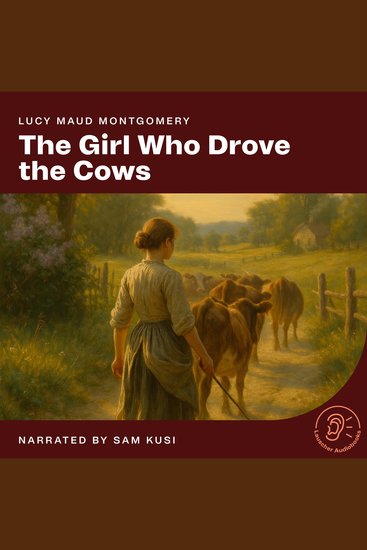
  • The Girl Who Drove the Cows - cover

    The Girl Who Drove the Cows

    Lucy Maud Montgomery

    • 0
    • 0
    • 0
    Lucy Maud Montgomery (November 30, 1874 – April 24, 1942), published as L. M. Montgomery, was a Canadian author best known for a series of novels beginning in 1908 with Anne of Green Gables. The book was an immediate success. The title character, orphan Anne Shirley, made Montgomery famous in her lifetime and gave her an international following.
    The Girl Who Drove the Cows: "I wonder who that pleasant-looking girl who drives cows down the beech lane every morning and evening is," said Pauline Palmer, at the tea table of the country farmhouse where she and her aunt were spending the summer.
    Show book
  • The March Family Trilogy - Three Novels of an American Marriage - cover

    The March Family Trilogy - Three...

    William Dean Howells

    • 0
    • 0
    • 0
    Three novels following Basil and Isabel March from their wedding journey down the St Lawrence to a New York magazine office and a silver-wedding tour of Germany - the whole arc of a marriage and a career. Howells was the most powerful literary man in America and the Marches are as close to himself as he came. Its 70 original illustrations have been carefully restored and coloured for this edition.
    Show book
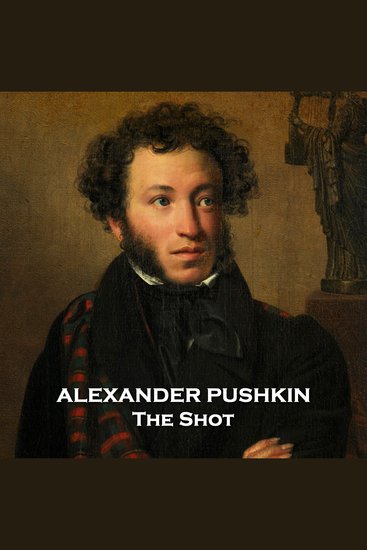
  • The Shot - From their pens to your ears genius in every story - cover

    The Shot - From their pens to...

    Alexander Pushkin

    • 0
    • 0
    • 0
    Alexander Sergeyevich Pushkin was born on 26th May 1799 in Moscow into a family of Russian nobility. 
    Raised by nursemaids and French tutors in French he learnt Russian only via the household staff. 
    He graduated from the prestigious Imperial Lyceum, near St Petersburg and plunged into the vibrant and raucous intellectual youth culture of what was then the capital of the Russian Empire.  
    In 1820, he published his first long poem, ‘Ruslan and Ludmila’, with much controversy about both subject and style.  Pushkin was heavily influenced by the French Enlightenment and gravitated, with other literary radicals, towards social reform angering the Government. 
    His early literary work and reputation was poetic and written as he travelled around the Empire or engaged himself in various rebellions against the Ottoman Empire.  A clash with his own government after his poem, ‘Ode to Liberty’, was found among the belongings of the Decembrist Uprising rebels meant two years of internal exile at his mother's rural estate.  His friends and family continually petitioned for his release, sending letters and meeting with Tsar Alexander I and then Tsar Nicholas I.   
    In 1825, whilst at his Mother’s estate, Pushkin wrote his most famous play, the drama ‘Boris Godunov’.  
    Upon meeting with Tsar Nicholas I, Pushkin obtained his release and began work as the Tsar's Titular Counsel of the National Archives.  However, because of the earlier problems the tsar retained control of everything Pushkin published, and he was banned from travelling at will. 
    Around 1828, Pushkin met the 16-year-old Natalia Goncharova, one of the most talked-about beauties of Moscow.  After much hesitation, Natalia accepted his marriage proposal after she received assurances that the government had no intentions to persecute the libertarian poet.  When the Tsar gave Pushkin the lowest court title, Gentleman of the Chamber, he became enraged, feeling that the Tsar intended to humiliate him. 
    In the year 1831, during Pushkin's growing literary influence, he met Nikolai Gogol.  Recognising his gifts Pushkin supported him and published his short stories in his own magazine ‘The Contemporary’. 
    By the autumn of 1836, Pushkin was falling into greater and greater debt and facing scandalous rumours that his wife was having an affair.  
    In January 1837, Pushkin sent a ‘highly insulting letter’ to his wife’s pursuer, Georges-Charles de Heeckeren d'Anthès.  The only answer could be a challenge to a duel. 
    It took place on 27th January.  D'Anthès fired first, critically wounding Pushkin; the bullet entered at his hip and penetrated his abdomen.  Two days later Alexander Pushkin died of peritonitis.  He was 37.
    Show book

  • The "Dock Rats" of New York - or The Smuggler Band's Last Stand - cover

    The "Dock Rats" of New York - or...

    Old Sleuth

    • 0
    • 0
    • 0
    A smuggling ring works the East River wharves, and Old Sleuth goes among them in disguise — the docks, the dives, the tug at midnight, the informer who is not one. Old Sleuth was Harlan Page Halsey, a Brooklyn school-board man who invented the American detective serial and gave the language the word sleuth in the sense we use it. This is dime fiction doing exactly what it was built to do. Fifty-nine plates, among them George Bellows and John Sloan, gather the city's wharves, streets, and riverside crowds that give this tale of smuggling its atmosphere.
    Show book
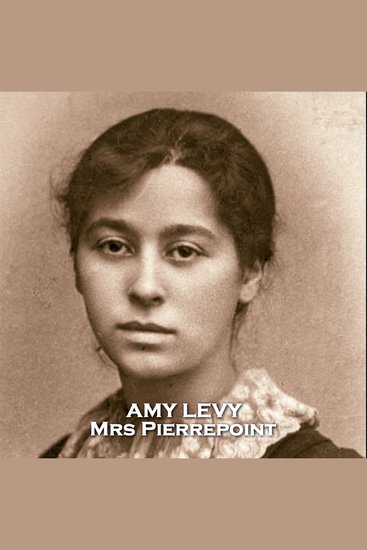
  • Mrs Pierrepoint - From their pens to your ears genius in every story - cover

    Mrs Pierrepoint - From their...

    Amy Levy

    • 0
    • 0
    • 0
    Amy Levy was born in London, England in 1861, the second of seven in a fairly wealthy Anglo-Jewish family. The children read and participated in secular literary activities and became firmly integrated into Victorian life. 
    Her education was at Brighton High School, Brighton, before studies at Newnham College, Cambridge; she was the first Jewish student when she arrived in 1879, but left after four terms. 
    Amy’s writing career began early; her poem ‘Ida Grey’ appeared when she was only fourteen. Her acclaimed short stories ‘Cohen of Trinity’ and ‘Wise in Their Generation,’ were published by Oscar Wilde in his magazine ‘Women's World’. 
    Her poetic writings reveal feminist concerns; ‘Xantippe and Other Verses’, from 1881 includes a poem in the voice of Socrates's wife. ‘A Minor Poet and Other Verse’ from 1884 comprises of dramatic monologues and lyric poems. 
    In 1886, Amy began a series of essays on Jewish culture and literature for the Jewish Chronicle, including ‘The Ghetto at Florence’, ‘The Jew in Fiction’, ‘Jewish Humour’ and ‘Jewish Children’. 
    That same year while travelling in Florence she met the writer Vernon Lee. It is generally assumed they fell in love and this inspired the poem ‘To Vernon Lee’. 
    Her first novel ‘Romance of a Shop’, written in 1888 is based on four sisters who experience the pleasures and hardships of running a London business during the 1880s. This was followed by Reuben Sachs (also 1888) and concerned with Jewish identity and mores in the England of her time and was somewhat controversial. 
    Her final book of poems, ‘A London Plane-Tree’ from 1889, shows the beginnings of the influence of French symbolism. 
    Despite many friendships and an active life, Amy suffered for many years with serious depressions and this, together with her growing deafness, led her to commit suicide by inhaling carbon monoxide on September 10th, 1889. She was 27.
    Show book
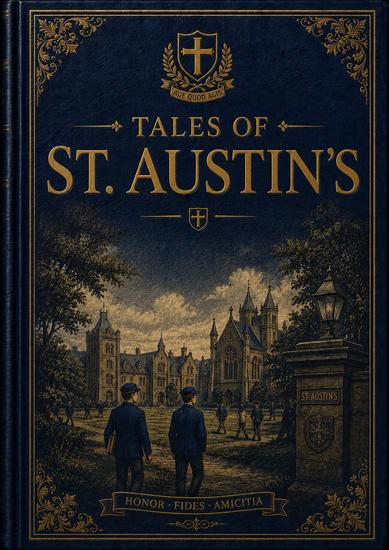
  • Tales of St Austin's - cover

    Tales of St Austin's

    P. G. Wodehouse

    • 0
    • 0
    • 0
    St Austins school (as featured in The Pothunters) is the setting for twelve delightful early Wodehouse stories. The familiar ingredients - and some of the same characters - are present: cricket and rugby loom large, school colours are gained, tricks are played, exams avoided, revenge wreaked upon enemies, and the honour of School and House upheld. A nostalgic look at English public-school life at the turn of the twentieth century, made enjoyable today by the young Wodehouses gentle humour and witty turn of phrase.
    Show book