Join us on a literary world trip!
Add this book to bookshelf
Grey
Write a new comment Default profile 50px
Grey
Subscribe to read the full book or read the first pages for free!
All characters reduced
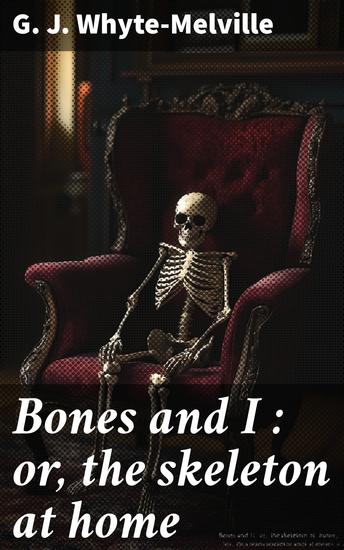
Bones and I : or the skeleton at home - cover

Bones and I : or the skeleton at home

G. J. Whyte-Melville

Publisher: Good Press

  • 0
  • 0
  • 0

Summary

In "Bones and I: or, the skeleton at home," G. J. Whyte-Melville crafts a unique blend of gothic fiction and dark humor that explores the intricacies of human psychology through an unusual lens. Set against the backdrop of Victorian society, the narrative centers around the eccentric character of Cuthbert, who engages with a literal skeleton, inviting readers into a whimsical yet macabre examination of life, death, and the absurdities of existence. Melville's prose is both vivid and richly descriptive, reflecting the atmospheric tones of the period while also displaying a keen insight into the idiosyncrasies of human nature. The novel sits at an intriguing intersection of social commentary and the grotesque, making it a fascinating work within the genre of Victorian literature. G. J. Whyte-Melville, born into a wealthy Scottish family, was deeply influenced by his upbringing and education, which often encompassed themes of death and mortality. His experiences as a soldier and a horseman also permeate his narrative style, infusing his work with a deep understanding of the emotions involved in human connections and losses. "Bones and I" reflects Melville's own preoccupations with society's expectations, the absurdity of life, and ultimately, a longing for connection amidst the inevitability of death. This book is an essential read for anyone interested in Victorian literature or the exploration of thematic complexities surrounding mortality. Whyte-Melville's compelling and unconventional narrative invites readers to confront their own perceptions of life and death through a blend of humor and pathos. Dive into this remarkable work to appreciate its rich stylistic elements and the profound inquiries it poses about the human condition.
Available since: 03/02/2025.
Print length: 200 pages.

Other books that might interest you

  • The Burning Secret - cover

    The Burning Secret

    Stefan Zweig

    • 0
    • 0
    • 0
    "The Burning Secret" by Stefan Zweig is a captivating novella that delves into the complexities of human emotions and relationships.  
    Set against the backdrop of an Austrian resort in the early 20th century, the story revolves around a young baron who, in his pursuit of an intriguing woman, unwittingly befriends her young son. This friendship becomes a strategic tool in his quest, leading to an intricate web of deceit, passion, and emotional turmoil.  
    Zweig masterfully explores themes of innocence, manipulation, and the subtle dynamics of human interaction. The boy's innocent perspective contrasts sharply with the baron's more worldly views, creating a tension that drives the narrative forward.  
    As the baron's intentions become clearer, the story unfolds into a compelling exploration of secrecy and the burning desires that drive us. The author's signature psychological depth is on full display, offering readers a nuanced look at the characters' inner lives.  
    The lush descriptions of the Austrian countryside provide a serene backdrop to the turbulent emotions that simmer beneath the surface.
    Show book
  • The Shadow Over Innsmouth - cover

    The Shadow Over Innsmouth

    H. P. Lovecraft

    • 0
    • 0
    • 0
    H.P. Lovecraft's dark tale of fate and fear.
    Show book
  • Tale of Two Cities A - Audiobook - cover

    Tale of Two Cities A - Audiobook

    CHARLES DICKENS, Classic...

    • 0
    • 0
    • 0
    A Tale of Two Cities is a sweeping historical novel set against the backdrop of the French Revolution, exploring the tumultuous events that shake both Paris and London. The story follows two very different men—Charles Darnay, a French aristocrat who renounces his privilege, and Sydney Carton, a disillusioned English lawyer—whose lives become intertwined through love, sacrifice, and revolution. At the center of their shared fate is Lucie Manette, a symbol of compassion and renewal.With its famous opening line, "It was the best of times, it was the worst of times," Dickens paints a vivid portrait of societal upheaval, personal redemption, and the violence born from oppression. The novel is a powerful meditation on resurrection—of individuals, nations, and ideals—and it builds to one of the most memorable and moving climaxes in all of English literature.
    Show book
  • Lord Jim - cover

    Lord Jim

    Joseph Conrad

    • 0
    • 0
    • 0
    "Lord Jim" is a novel by Joseph Conrad, originally published as a serial in Blackwood's Magazine from 1899 to 1900 and later as a book in 1900. The novel is a complex exploration of honor, guilt, and redemption through the story of Jim, a young British seaman. Jim dreams of being a hero but is faced with a critical test when he abandons a ship in distress. His idealism is shattered by his actions, and the novel follows his quest for atonement. Conrad's narrative delves into the psychological depth of Jim's character, using a non-linear storytelling technique that was innovative for its time.
    Show book
  • Les Misérables: Volume 4: The Idyll in the Rue Plumet and the Epic in the Rue St Denis - Book 1: A Few Pages of History (Unabridged) - cover

    Les Misérables: Volume 4: The...

    Victor Hugo

    • 0
    • 0
    • 0
    Victor-Marie Hugo (26 February 1802 - 22 May 1885) was a French poet, novelist, essayist, playwright, and dramatist of the Romantic movement. During a literary career that spanned more than sixty years, he wrote abundantly in an exceptional variety of genres: lyrics, satires, epics, philosophical poems, epigrams, novels, history, critical essays, political speeches, funeral orations, diaries, and letters public and private, as well as dramas in verse and prose.
    BOOK 1: A FEW PAGES OF HISTORY: 1831 and 1832, the two years which are immediately connected with the Revolution of July, form one of the most peculiar and striking moments of history. These two years rise like two mountains midway between those which precede and those which follow them.
    Show book
  • The Garden Lodge - cover

    The Garden Lodge

    Willa Cather

    • 0
    • 0
    • 0
    "The Garden Lodge" is a short story by Willa Cather, first published in 1905. It tells the story of a woman asked by her husband if she would agree to tear down their garden lodge and build a new summer house there instead. She grows nostalgic as she remembers spending fond times there with tenor Raymond d'Esquerre when he was visiting. Although a moderate and no-nonsense woman, the singer rekindled her passion for music during his stay. She had to let go of it after her lazy brother killed himself and her father was crippled with debts. She then proceeds to go to the garden lodge and plays a piece of opera that she played with the tenor the previous summer. However, after a night's sleep she comes around and tells her husband she agrees the lodge should go.
    Show book