Join us on a literary world trip!
Add this book to bookshelf
Grey
Write a new comment Default profile 50px
Grey
Subscribe to read the full book or read the first pages for free!
All characters reduced
Hammersmith Fulham and Putney - cover

Hammersmith Fulham and Putney

John Cunningham Geikie, G. E. Mitton

Publisher: DigiCat

  • 0
  • 0
  • 0

Summary

Hammersmith, Fulham and Putney is a compelling anthology that masterfully weaves together a tapestry of historical narratives, cultural reflections, and vivid portrayals of these iconic London districts. The collection spans a diverse range of literary styles, from evocative descriptions to keen historical analysis, offering readers a profound exploration of the area's evolution through time. The anthology's standout pieces frame the unique convergence of social, architectural, and cultural developments, enveloping readers in the districts' rich past and present. Readers are invited into a dialogue with the dynamic urban sceneries and their transformative stories. The anthology is spearheaded by the insightful contributions of John Cunningham Geikie and G. E. Mitton, whose scholarly endeavors have significantly shaped the portrayal of London's nuanced landscapes. Their works reflect a deep connection and commitment to chronicling the intricacies of these regions, aligning with historical and cultural movements that prioritize urban and social histories. The diverse voices included in this collection provide a multifaceted perspective that enriches the anthology, allowing readers to gain a greater understanding of the urban evolution and cultural significance of these vibrant districts. For readers seeking a thorough exploration of Hammersmith, Fulham, and Putney, this anthology presents an unparalleled opportunity. It offers educational rewards and a multitude of insights into the complex interplay of locality, identity, and historical progression. By engaging with this anthology, readers will traverse a wealth of perspectives and enter into a dialogue that spans generations and genres, making it an essential addition to the collection of any discerning reader who values historical and cultural depth.
Available since: 09/04/2022.
Print length: 401 pages.

Other books that might interest you

  • The History and Legacy of Ancient Greece’s Most Influential City-States - cover

    The History and Legacy of...

    Editors Charles River

    • 0
    • 0
    • 0
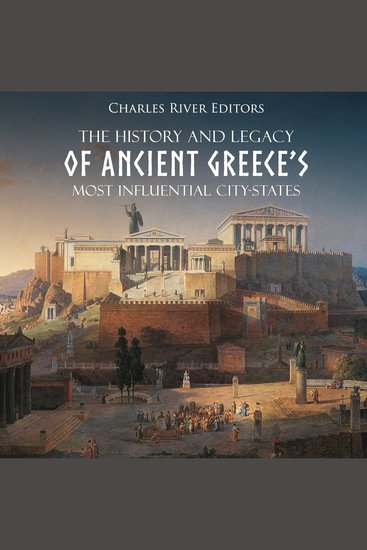
    Athens is chiefly remembered for two reasons: its political system, which would in time form the nucleus of all Western democratic systems of government, and the remarkable number of outstanding individuals which, during the Golden Age of Athens, lived and flourished in the enlightened city-state. The Ancient Athenians formed the backbone of the West’s entire culture, from the arts to philosophy and everything in between. 
    The most unique city-state in Ancient Greece was Sparta, which continues to fascinate contemporaneous society. It is not entirely clear why Sparta placed such a great emphasis on having a militaristic society, but the result was that military fitness was a preoccupation from birth. 
    In the Archaic and Classical periods, Rhodes often stood as a prime exemplar of the highs and lows of its fellow Greek cities, and as the largest island of the Dodecanese, Rhodes’ history is largely in line with that of the rest of those islands. Rhodes would reach the zenith of its power in the Hellenistic period following the death of Alexander the Great in 323 B.C.  
    Modern perceptions of Classical Greece are almost invariably based on Athens and Sparta, but Thebes was also a key player in the history of the region in this pivotal period. Indeed, it was, in fact, Thebes that was the major power for many of the years preceding the emergence of Macedon. The reasons for so little being known about Thebes and its contributions to ancient Greek civilization are complex, but the fact that it was totally destroyed by Alexander the Great is certainly one. 
    Ancient Corinth had actually been founded in the 10th century B.C. and was, for most of its history, the richest port and the largest city in all of Greece. Corinth had a population in excess of 90,000 in 400 B.C., but the Romans leveled this original city in 146 B.C., killing all the male inhabitants and selling the women and children into slavery.
    Show book
  • Manipulation Forbidden Techniques and Dark Psychology - cover

    Manipulation Forbidden...

    Edward Collins

    • 0
    • 0
    • 0
    This audiobook is narrated by an AI Voice. Do You Want to Learn How to Convince, Influence, and Manipulate the Decisions of Others? 
     
    Are you interested in capturing the attention of others and generating trust and influence? 


    Persuasion, mental manipulation, and hypnosis are three topics that go to the limits of ethics, as the manipulated person is never aware of the techniques applied to them to modify their thoughts, behavior, and/or decision-making ability. 
     
    Knowing how to communicate with the subconscious part of the mind, bypassing the filter of the conscious mind, is crucial for a person to receive a suggestion without noticing anything. 
     
    To generate influence over others, you must master the techniques of persuasive communication, using good communication techniques, combining them with good body language and using words appropriately. 


    In this book, you will find: 
     
    Dark Psychology 
     
    Principles and rules of mental manipulation 
     
    Persuasion techniques 
     
    Mind manipulation tricks 
     
    Psychological tricks 
     
    Mind manipulation tricks with words 
     
    How to read people 


    A book where you will find directly, without turns, the techniques and tricks necessary to be able to persuade, influence, and manipulate the decisions of others, very easy to understand with everyday and work examples so that you can apply them easily. 
     
    Implementing everything you will learn will change your way of being dramatically, it will be a huge change, you will be seen differently, you will be more liked by people, you will be seen as confident, you will be more respected than before and they will do things for you that they surely will not do for other people.
    Show book
  • Byzantium and Constantinople: The History of the Ancient Greek City that Became the Byzantine Empire’s Capital - cover

    Byzantium and Constantinople:...

    Editors Charles River

    • 0
    • 0
    • 0
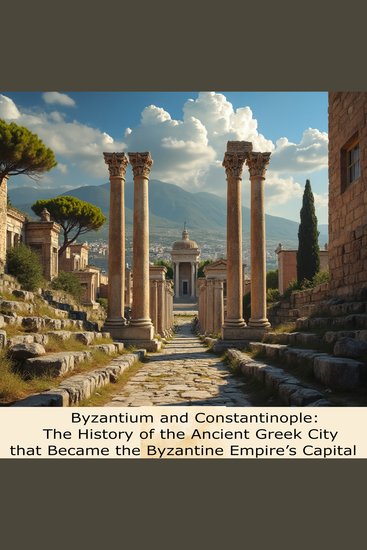
    Due to the importance of the Roman Empire and the offshoot Byzantine Empire, it’s often forgotten that Constantinople wasn’t chosen at random; in fact, the city already existed, and it lent its name to the empire that was subsequently centered there. Byzantium, known originally as Byzantion, was an ancient Greek city centuries before it became known as Constantinople, and the etymology of Byzantion/Byzantium is still unknown. It has been suggested that Byzantion is of Thracian origin and may be derived from the Thracian personal name Byzas, which means “he-goat.” Ancient Greek legend refers to King Byzas as the leader of the Megaran colonists and the founder of the city, but the earliest name for a city on the site is “Lygos,” which likely corresponds to an earlier Thracian settlement described by Pliny the Elder in his seminal work, Natural History: “On leaving the Dardanelles we come to the Bay of Casthenes, ...and the promontory of the Golden Horn, on which is the town of Byzantium, a free state, formerly called Lygos; it is 711 miles from Durazzo.” 
    Pliny went on to explain that Lygos was a Thracian settlement founded between the 13th and 11th centuries BCE. The site, however, was probably abandoned well before Megara founded Byzantion around 657 BCE across from Chalcedon on the Asiatic side of the Bosphorus. The city was briefly renamed Augusta Antonina in the early 3rd century CE by the Emperor Septimius Severus, who razed the city to the ground in 196 CE for supporting a rival contender in the civil war and had it rebuilt in honor of his son and successor, Marcus Aurelius Antoninus, known as Caracalla. This new name appears to have been quickly forgotten and abandoned, with the city reverting to Byzantium after the assassination of Caracalla in 217 CE, and that’s how it would be known when Constantine fatefully moved the seat of power there over a century later.
    Show book
  • How to Write Erotica - cover

    How to Write Erotica

    Rachel Kramer Bussel

    • 0
    • 0
    • 0
    Have you had intimate fantasies or simmering plotlines you've wanted to write but weren't sure how or where to start? Let renowned erotica author and editor Rachel Kramer Bussel show you how to turn those fragments into fully fleshed out erotic stories, novellas, and novels. In this guide, Bussel takes her twenty plus years of experience in the genre and walks writers through the ins and outs of erotic writing. Whether you want to see your work on the shelves of bookstores, pen sexy stories or letters, or simply explore your creativity, How to Write Erotica will put you on the path to becoming the next Anaïs Nin! 


    Having taught erotic writing workshops at universities, conferences, and sex toy stores, Bussel knows how to make even those who blush at the word "sex" feel comfortable putting pen to paper. 


    Aspiring erotic authors will learn everything they need to know about gaining inspiration from their surroundings, breaking into publishing, promoting their work, and making a name for themselves. You don't need a degree, writing experience, or sexual experience to write good erotica. All you need is a keen imagination and a willingness to follow your lusty mind. 


    Contains mature themes.
    Show book
  • Title IX Pat Summitt and Tennessee's Trailblazers - 50 Years 50 Stories - cover

    Title IX Pat Summitt and...

    Mary Ellen Pethel

    • 0
    • 0
    • 0
    In June 1972, President Richard Nixon put pen to paper and signed the Educational Amendments of 1972 into law. The nearly 150-page document makes no mention of “gender,” “athletics,” “girls,” or “women.” The bill did not appear to contain anything earth shattering. But tucked into its final pages, a heading appears, “Title IX—Prohibition of Sex Discrimination.” These 37 words would change the world for girls and women across the United States. On its face, Title IX legally guaranteed equal opportunity in education. In time, Title IX would serve as the tipping point for the modern era of women’s sport. Slowly but surely, women’s athletics at the high school and collegiate levels grew to prominence, and Tennessee fast emerged as a national leader. 
    In Title IX, Pat Summitt, and Tennessee’s Trailblazers, Mary Ellen Pethel introduces readers to past and present pioneers—each instrumental to the success of women’s athletics across the state and nation. Through vibrant profiles, Pethel celebrates the lives and careers of household names like Pat Summitt and Candace Parker, as well as equally important forerunners such as Ann Furrow and Teresa Phillips. Through their lived experiences, these fifty individuals laid the foundation for athletic excellence in Tennessee, which in turn shaped the national landscape for women’s sports. 
    With interviewees ranging from age 20 to 93, Pethel artfully combines storytelling with scholarship. Guided by the voices of the athletes, coaches, and administrators, Pethel vividly documents achievement and adversity, wins and losses, and advice for the next generation. This book represents the first statewide compilation of its kind—offering readers a behind-the- scenes perspective of Tennessee women who dedicated their lives to the advancement of sport and gender equality. Readers will delight in Title IX, Pat Summitt, and Tennessee’s Trailblazers: 50 Years, 50 Stories. For more follow @drpethel.
    Show book
  • Luftwaffe Aces - German Combat Pilots of WWII - cover

    Luftwaffe Aces - German Combat...

    Franz Kurowski

    • 0
    • 0
    • 0
    Combat biographies of seven ace pilots flying for the Nazi German air force during World War II, featuring in-the-cockpit accounts of aerial dogfights. Whether providing support for the blitzkrieg in Poland and France, bombing British cities and industrial centers, or attacking Allied fighters and bombers in the light of day and dark of night, the Luftwaffe revolutionized aerial warfare and experienced some of World War II’s most harrowing combat. For the pilots who carried out these missions, every flight meant possible death and certain danger. Franz Kurowski puts readers in the cockpit with seven of these men—three day-fighter, on night-fighter, one close-support, and two bomber pilots—who were among the most successful ever to take to the skies.
    Show book