Join us on a literary world trip!
Add this book to bookshelf
Grey
Write a new comment Default profile 50px
Grey
Subscribe to read the full book or read the first pages for free!
All characters reduced
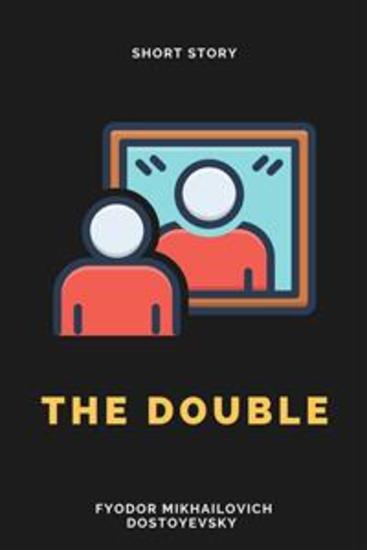
The Double - cover

The Double

Fyodor Mikhailovich Dostoyevsky

Publisher: Publisher s23237

  • 0
  • 0
  • 0

Summary

The Double centers on a government clerk who goes mad. It deals with the internal psychological struggle of its main character, Yakov Petrovich Golyadkin, who repeatedly encounters someone who is his exact double in appearance but confident, aggressive, and extroverted, characteristics that are the polar opposites to those of the toadying "pushover" protagonist. The motif of the novella is a doppelgänger (Russian "dvoynik"), known throughout the world in various guises such as the fetch.
Available since: 08/12/2022.

Other books that might interest you

  • Rising Water - A Jesse McDermitt Novel - cover

    Rising Water - A Jesse McDermitt...

    Wayne Stinnett

    • 0
    • 0
    • 0
    When a group of strangers purchase land on Tortola and Norman Island to set up a commune, the locals simply write them off as an odd sort - until one of their bloated bodies washes up on the shore of a nearby resort island. 
    As luck would have it, Jesse McDermitt is visiting a friend on Norman Island after tracking a terrorist submarine from the Windward Islands. The sub was destroyed by locals on the Dutch island of Saba, so Jesse had nothing much else to do. What he wasn’t looking for was a murderous cult at the center of a drug manufacturing and distribution ring. 
    If a person didn’t succumb to the rules of this cult, they might end up riding the chum sluice. If they did, they might meet Jesse.
    Show book
  • Gazing at the Moon - 1500 years of lunar exploration and encounters - cover

    Gazing at the Moon - 1500 years...

    Lucian of Samosata, Francis...

    • 0
    • 0
    • 0
    Collected here are six tales that span nearly two thousand years, from a Roman citizen writing a satire of the ‘historical’ literature of his time in 182 AD to Edgar Allan Poe exploring the idea of a scientific ascent to the moon in 1835. Humanity changed vastly across that time, and yet the moon never lost its allure, its promise of mystery and magic. By the late nineteenth century, it was clear that the moon’s surface was barren, and a wave of moon-based stories inaugurated the expansion into space of fiction. 
    Before we breached the atmosphere and sent men to our planet’s satellite, humanity spent countless millennia gazing up at the moon and wondering what might be there, telling stories by firelight of the mystery and magic of our constant and changing night-time companion.
    Show book
  • Top 10 Short Stories The - Men 1910s - The top ten Short Stories of the 1910's written by male authors - cover

    Top 10 Short Stories The - Men...

    James Joyce, Franz Kafka, Arnold...

    • 0
    • 0
    • 0
    Short stories have always been a sort of instant access into an author’s brain, their soul and heart.  A few pages can lift our lives into locations, people and experiences with a sweep of landscape, narration, feelings and emotions that is difficult to achieve elsewhere. 
     
    In this series we try to offer up tried and trusted ‘Top Tens’ across many different themes and authors. But any anthology will immediately throw up the questions – Why that story? Why that author?  
     
    The theme itself will form the boundaries for our stories which range from well-known classics, newly told, to stories that modern times have overlooked but perfectly exemplify the theme.  Throughout the volume our authors whether of instant recognition or new to you are all leviathans of literature. 
     
    Some you may disagree with but they will get you thinking; about our choices and about those you would have made.  If this volume takes you on a path to discover more of these miniature masterpieces then we have all gained something. 
     
    A decade of catastrophic worldwide war.  Empires in tectonic collision, a society heaving under the yoke, tired of sacrifice, ready for revolution.  In literature ideas were explored and detailed revealing a world and people that seem so long ago but also very near. 
     
    1 - The Top 10 - The 1910's - The Men - An Introduction 
    2 - The Dead - Part 1 by James Joyce 
    3 - The Dead - Part 2 by James Joyce 
    4 - In the Penal Colony by Franz Kafka 
    5 - The Interlopers by Saki the pseudonym for H H Munro 
    6 - Odour of Chrysanthemums by D H Lawrence 
    7 - The Revolutionist by Mikhail Petrovich Artzybashev 
    8 - Casting the Runes by M R James 
    9 - Carnacki, The Ghost Finder - No 1 - The Gateway of the Monster by William Hope Hodgson 
    10 - Hands by Sherwood Anderson 
    11 - The Matador of the Five Towns by Arnold Bennett 
    12 - August Heat by W F Harvey
    Show book
  • The Yellow Sign - cover

    The Yellow Sign

    Robert W. Chambers

    • 0
    • 0
    • 0
    “Have you seen the Yellow Sign?”, mumbles a cadaverous hearse driver with a soft, squishy head. He’s been skulking about Scott’s painting studio, where he and Tessie have been developing a tangled relationship between artist and model. But as this ever-present watchman resembling a coffin worm begins to distract Scott, his portrait of Tessie takes on a death-like pallor. How can they forever rid themselves of this hearse stalker? And what precisely does he mean by a “Yellow Sign”?  
     
    Developing themes as old as time, Chambers takes his lovers and twists their story into a chilling danse macabre. 
    Show book
  • Dropped Calls - cover

    Dropped Calls

    Robert McGuiness

    • 0
    • 0
    • 0
    Dropped Calls will  ring like a lost phone and have you scrambling to pick up the call. Should water, food, and even the air we breathe become threatened? Providence assembles at the bugler’s call. When democracy is under threat from our collective complacency, these words shall find meaning in the screaming echoes of two centuries past “eternal vigilance is the price of liberty”. 
     
    In  this work of fiction, the resonance of truth should challenge the reader’s sagacity so that each person becomes the keystone to the solution. Just like Siddhartha, to read it once is a revelation, and immersed deep in its pages, understanding and enlightenment may develop.
     Perhaps  some of the people and places in this book are familiar to you. Imagine  the events that unfold happening to your loved ones, in your backyard, or on your watch. Prudence necessitates reading Dropped Calls as an act of prevention and a pathway to compassion.
    Show book
  • About Love - From their pens to your ears genius in every story - cover

    About Love - From their pens to...

    Anton Chekhov

    • 0
    • 0
    • 0
    Anton Pavlovich Chekhov was born on 29th January 1860 in Taganrog, on the south coast of Russia.  
    His family life was difficult; his father was strict and over-bearing but his mother was a passionate story-teller, a subject Chekhov warmed to. As he later said; ‘our talents we got from our father, but our soul from our mother’.  
    At school Chekhov was distinctly average. At 16 his father mis-managed his finances and was declared bankrupt. His family fled to Moscow. Chekhov remained and eked out a living by various means, including writing and selling short sketches to newspapers, to finish his schooling. That completed and with a scholarship to Moscow University obtained he rejoined his family. 
    He was able to help support them by selling satirical sketches and vignettes of Russian lifestyles and gradually obtained further commissions. In 1884, he qualified as a physician and, although it earned him little, he often treated the poor for free, he was fond of saying ‘Medicine is my lawful wife, and literature is my mistress.’ 
    His own health was now an issue as he began to cough up blood, a symptom of tuberculosis.  Despite this his writing success enabled him to move the family into more comfortable accommodation.  
    Chekhov wrote over 500 short stories which included many, many classics including ‘The Kiss’ and ‘The Lady with a Dog’.  His collection ‘At Dusk’ won him the coveted Pushkin Prize when was only 26.  
    He was also a major playwright beginning with the huge success of ‘Ivanov’ in 1887.   
    In 1892 Chekhov bought a country estate north of Moscow. Here his medical skills and money helped the peasants tackle outbreaks of cholera and bouts of famine. He also built three schools, a fire station and a clinic.  It left him with less time for writing but the interactions with real people gained him detailed knowledge about the peasantry and their living conditions for his stories.  
    His most famous work, ‘The Seagull’ was received disastrously at its premiere in St Petersburg. It was later restaged in Moscow to highlight its psychological aspects and was a huge success. It led to ‘Uncle Vanya’, ‘The Three Sisters’ and ‘The Cherry Orchard’.  
    Chekhov suffered a major lung hemorrhage in 1897 while visiting Moscow. A formal diagnosis confirmed tuberculosis and the doctors ordered changes to his lifestyle.  
    Despite a dread of weddings the elusive literary bachelor quietly married the actress Olga Knipper, whom he had met at rehearsals for ‘The Seagull’, on 25th May 1901. 
    By May 1904 with his tuberculosis worsening and death imminent he set off for the German town of Badenweiler writing cheerful, witty letters to his family and assuring them his health was improving.  
    On 15th July 1904 Anton Chekhov died at Badenweiler.  He was 44.
    Show book