Join us on a literary world trip!
Add this book to bookshelf
Grey
Write a new comment Default profile 50px
Grey
Subscribe to read the full book or read the first pages for free!
All characters reduced
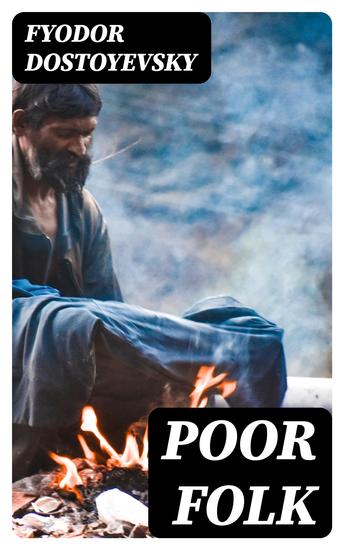
Poor Folk - cover

Poor Folk

Fyodor Dostoyevsky

Translator C.J. Hogarth

Publisher: DigiCat

  • 0
  • 0
  • 0

Summary

In "Poor Folk," Fyodor Dostoyevsky delivers a poignant exploration of the lives of the impoverished citizens of 19th-century St. Petersburg, melding epistolary narrative with profound psychological insight. The novel follows the correspondence between Makar Devushkin, a humble clerk, and his young neighbor, Varvara Dobroselova, illuminating their struggles against societal indifference and personal despair. With its rich character development and stark realism, Dostoyevsky demonstrates the stark contrasts between human emotion and the harsh conditions of poverty, marking a significant precursor to his later works that delve deep into existential themes. Dostoyevsky, influenced by his own experiences of financial hardship and personal turmoil, constructs a compassionate narrative that reflects his early commitment to social justice. His exposure to the destitute and disenfranchised in Russian society, particularly after his imprisonment and subsequent exile, propelled him to create a literary landscape that portrays genuine human suffering. This backdrop not only informs the narrative but also underscores Dostoyevsky's evolving philosophical concerns regarding morality and the struggles of the human spirit. "Poor Folk" is a vital read for anyone seeking to understand the formative themes that underpin Dostoyevsky's oeuvre. It offers a striking perspective on empathy, resilience, and the social fabric of his time, making it an essential recommendation for readers interested in classic literature, psychology, and social issues.
Available since: 09/15/2022.
Print length: 129 pages.

Other books that might interest you

  • Little Boy Lost - cover

    Little Boy Lost

    Marghanita Laski

    • 0
    • 0
    • 0
    Marghanita Laski’s novel Little Boy Lost is as enthralling as it is heart-wrenching. A man grapples with questions of emotional responsibility, fatherhood, and memory. Laski describes a much-changed France, struggling to rebuild its morale after the ruin caused by wartime bombing and occupation.English writer Hilary Wainwright lost all trace of his young son when Lisa, his wife, was killed by the Gestapo in Paris. Several years later, an acquaintance travels to England with news that Hilary’s son may be alive in France. Doubting whether five-year-old Jean is indeed his, and determined not to feel vulnerable to love and tenderness again, Hilary travels to France to find the boy. Amidst a war-torn Northern French town, he gets to know young Jean, as well as the town’s inhabitants. In a matter of days Hilary must decide if this charming and intelligent child could be his own . . . and if he is prepared to take Jean home.Little Boy Lost is part of the Persephone Audiobook Collection, a series of forgotten classics including neglected fiction and non-fiction by women writers. First published in 1949, this edition includes a new afterword by Anne Sebba.
    Show book
  • The Landlady - A rare benevolent ghost sighting in this story of a couple moving into a new home - cover

    The Landlady - A rare benevolent...

    Elinor Mordaunt

    • 0
    • 0
    • 0
    Evelyn May Clowes was born on 7th May 1872 in Cotgrave, Nottinghamshire.  
     
    Growing up in genteel circumstances, her early childhood was spent at Charlton Down House near Cheltenham, Gloucestershire, and her teenage years near Heythrop in the Cotswolds.  
     
    She was educated at home by governesses, excelling at German, Latin, Greek, shorthand, landscape painting, and fabric and wallpaper design. 
     
    In 1897 she went to Mauritius as companion to her cousin Caroline and in 1898 married Maurice Wilhemn Wiehe, the owner of a sugar plantation. She gave birth to two stillborn children. After a few years of marriage, she found life difficult and returned to England. Shortly afterwards she went by herself to Australia, arriving in June 1902 and gave birth to a son a few months later.   
     
    She lived in Melbourne for about eight years.  To earn a living she took on a wide and varied range of jobs; she edited a woman's fashion paper, wrote short stories and articles, made blouses, designed embroideries, tilled gardens, acted as a housekeeper, and did other artistic work. Her health was not strong, but she undertook any kind of work which would provide a living for herself and her infant son. This gained her an experience of life which was readily put to use in her literary works. 
     
    Her first book, ‘The Garden of Contentment’, was published in 1902 under her pen-name Elinor Mordaunt. It was the first of many works that covered fiction, short stories, travel and autobiography. 
     
    She changed her name by deed poll to Evelyn May Mordaunt on 1st July 1915 and gained a further reputation as a writer of short stories for magazines which display both her humour and sense of tragedy. Travel was always high on her priority and the experiences used not only for pleasure but in her writings and, as travel books, ideas in themselves.  
     
    On 27th January 1933 at Tenerife, in the Canary Islands, she married a retired barrister from Gloucestershire. In her own words, the marriage ‘ended in tragedy.’ 
     
    Elinor Mordaunt died on 25th June 1942 at the Radcliffe Infirmary, Oxford. She was 70.
    Show book
  • His Last Bow: Short Stories of Sherlock Holmes - cover

    His Last Bow: Short Stories of...

    Arthur Conan Doyle

    • 0
    • 0
    • 0
    Immerse yourself in the final adventures of the world's greatest detective with His Last Bow: Short Stories of Sherlock Holmes by Arthur Conan Doyle. This captivating audiobook brings together a collection of the last stories featuring Sherlock Holmes and Dr. John Watson, offering a blend of nostalgia and excitement as the legendary detective takes on his final cases. 
    In His Last Bow, listeners are treated to a range of intriguing mysteries and memorable moments. From "The Adventure of the Cardboard Box," where Holmes faces a puzzling case of murder and deception, to "His Last Bow" itself, set against the backdrop of World War I and showcasing Holmes’ role in espionage, these stories highlight the detective’s unparalleled skill and enduring spirit. 
    Narrated with engaging clarity and enthusiasm, this audiobook provides an insightful and satisfying conclusion to Holmes' storied career. The collection captures the essence of Doyle's masterful storytelling, blending suspense, clever deductions, and the deep bond between Holmes and Watson. 
    Perfect for both devoted fans and new listeners, His Last Bow offers a fitting tribute to the detective who captivated readers for decades. Start Listening to His Last Bow: Short Stories of Sherlock Holmes today and experience the final, unforgettable adventures of Sherlock Holmes.
    Show book
  • The Metropolis - cover

    The Metropolis

    Upton Sinclair

    • 0
    • 0
    • 0
    This gripping novel follows Allan Montague, a young lawyer who enters the dazzling high society of New York City, only to uncover a web of corruption, greed, and moral decay. As Montague navigates the glittering ballrooms and shadowy boardrooms of the elite, he is forced to confront the stark realities behind the facade of wealth and power. Sinclair's incisive critique of the American Gilded Age unveils the stark contrasts between opulence and poverty, integrity and vice.
    Show book
  • The Possessed or The Devils - cover

    The Possessed or The Devils

    Fyodor Dostoyevsky

    • 0
    • 0
    • 0
    Originally published in 1872, "The Possessed" (also known as "The Devils" or "Demons") is a political novel by the renowned Russian writer Fyodor Dostoyevsky. The story focuses on a group of revolutionaries plotting an uprising in a provincial Russian town, exploring their motives, philosophies, and interpersonal dynamics. It delves deep into the psychology of its characters, offering a scathing critique of radical ideologies and the intellectuals who espoused them during Dostoyevsky's time. As with much of his work, the narrative is a profound exploration of good and evil, freedom and enslavement, and the nature of power.
    Show book
  • Childhood Boyhood Youth - cover

    Childhood Boyhood Youth

    Leo Tolstoy

    • 0
    • 0
    • 0
    Leo Tolstoy began his trilogy Childhood, Boyhood, and Youth in his early twenties. Although he would in his old age famously dismiss it as an 'awkward mixture of fact and fiction', generations of readers and listeners have not agreed, finding the series to be a charming and insightful portrait of inner growth against the background of a world limned with extraordinary clarity, grace and color.
    
    Evident too in its brilliant account of a young person's emerging awareness of the world and of his place within it are many of the stances, techniques and themes that would come to full flower in the immortal War and Peace and Anna Karenina, and in the other great works of Tolstoy's maturity.
    Show book