Join us on a literary world trip!
Add this book to bookshelf
Grey
Write a new comment Default profile 50px
Grey
Subscribe to read the full book or read the first pages for free!
All characters reduced
Polzunkov - cover

Polzunkov

Fyodor Dostoevsky

Publisher: Interactive Media

  • 0
  • 0
  • 0

Summary

The story follows the life of a man named Polzunkov, who is living in poverty and is constantly persecuted by those around him. The novel is said to be based on Dostoevsky's own experiences living in poverty, and it is considered to be one of his most autobiographical works.
Available since: 06/27/2022.
Print length: 28 pages.

Other books that might interest you

  • Brown Wolf (Unabridged) - cover

    Brown Wolf (Unabridged)

    Jack London

    • 0
    • 0
    • 0
    Jack London (born John Griffith Chaney, January 12, 1876 - November 22, 1916) was an American author, journalist, and social activist. He was a pioneer in the then-burgeoning world of commercial magazine fiction and was one of the first fiction writers to obtain worldwide celebrity and a large fortune from his fiction alone.
    BROWN WOLF: She had delayed, because of the dew-wet grass, in order to put on her overshoes, and when she emerged from the house found her waiting husband absorbed in the wonder of a bursting almond-bud. She sent a questing glance across the tall grass and in and out among the orchard trees.
    Show book
  • Quest of Iranon The (Unabridged) - cover

    Quest of Iranon The (Unabridged)

    H. P. Lovecraft

    • 0
    • 0
    • 0
    The story is about a golden-haired youth who wanders into the city of Teloth, telling tales of the great city of Aira, where he was a prince. While Iranon enjoys singing and telling his tales of wonder, few people appreciate it. A city solon even orders Iranon to cease his singing & music, and become apprenticed to a cobbler - or leave the city by sunset. When a disenfranchised boy named Romnod suggests leaving Teloth to go to the famed city of Oonai (which he thinks may be Aira, now under a different name), Iranon takes him up on his offer. Iranon and Romnod spend years on their journey to Oonai. Along the way, Romnod grows up while Iranon remains exactly the same. Eventually they reach Oonai, which Iranon is disappointed (although not surprised) to discover isn't Aira. Iranon is loved by the people in Oonai, however, so he stays there even though he still desires to return to Aira. As the years pass, people appreciate him less and less, and he is eventually upstaged by dancers from the desert. By this point, Romnod has grown old and has become a drunkard. After Romnod's death, Iranon decides to leave Oonai and continue his search for Aira. Eventually Iranon comes across an old shepherd and asks him if he knows of Aira. The shepherd tells him that he has indeed heard of it, for in his youth there was a beggar's boy who had always talked about it. The boy, who presumed himself to be a prince, was laughed at by everyone and ran away. With the truth revealed, that Aira was merely a figment of his imagination, Iranon loses his eternal youth. Now aged significantly, Iranon wanders into the quicksands to his death.
    Show book
  • What happened to the thistle - cover

    What happened to the thistle

    H. C. Andersen

    • 0
    • 0
    • 0
    Short story by H. Ch. Andersen about the way plants are likely to perceive the world and their fate.
    Show book
  • A Profitable Weakness - From their pens to your ears genius in every story - cover

    A Profitable Weakness - From...

    George Gissing

    • 0
    • 0
    • 0
    George Robert Gissing was born on November 22nd, 1857 in Wakefield, Yorkshire.  
    He was educated at Back Lane School in Wakefield. Gissing loved school. He was enthusiastic with a thirst for learning and always diligent.  By the age of ten he was reading Dickens, a lifelong hero. 
    In 1872 Gissing won a scholarship to Owens College. Whilst there Gissing worked hard but remained solitary. Unfortunately, he had run short of funds and stole from his fellow students. He was arrested, prosecuted, found guilty, expelled and sentenced to a month's hard labour in 1876. 
    On release he decided to start over.  In September 1876 he travelled to the United States. Here he wrote short stories for the Chicago Tribune and other newspapers. On his return home he was ready for novels. 
    Gissing self-published his first novel but it failed to sell.  His second was acquired but never published. His writing career was static.  Something had to change.  And it did. 
    By 1884 The Unclassed was published.  Now everything he wrote was published. Both Isabel Clarendon and Demos appeared in 1886. He mined the lives of the working class as diligently as any capitalist. 
    In 1889 Gissing used the proceeds from the sale of The Nether World to go to Italy. This trip formed the basis for his 1890 work The Emancipated. 
    Gissing's works began to command higher payments. New Grub Street (1891) brought a fee of £250.  
    Short stories followed and in 1895, three novellas were published; Eve's Ransom, The Paying Guest and Sleeping Fires. Gissing was careful to keep up with the changing attitudes of his audience.  
    Unfortunately, he was also diagnosed as suffering from emphysema. The last years of his life were spent as a semi-invalid in France but he continued to write. 1899; The Crown of Life. Our Friend the Charlatan appeared in 1901, followed two years later by The Private Papers of Henry Ryecroft. 
    George Robert Gissing died aged 46 on December 28th, 1903 after catching a chill on a winter walk.
    Show book
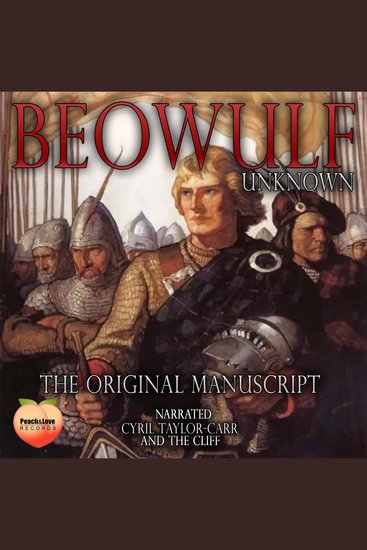
  • Beowulf - cover

    Beowulf

    Unknown Unknown

    • 0
    • 0
    • 0
    Beowulf is an Old English epic poem in the tradition of Germanic heroic legend consisting of 3,182 alliterative lines. It is one of the most important and most often translated works of Old English literature. The date of composition is a matter of contention among scholars; the only certain dating is for the manuscript, which was produced between 975 and 1025. Scholars call the anonymous author the "Beowulf poet". The story is set in pagan Scandinavia in the 6th century. Beowulf, a hero of the Geats, comes to the aid of Hrothgar, the king of the Danes, whose mead hall in Heorot has been under attack by the monster Grendel. After Beowulf slays him, Grendel's mother attacks the hall and is then defeated. Victorious, Beowulf goes home to Geatland and becomes king of the Geats. Fifty years later, Beowulf defeats a dragon but is mortally wounded in the battle. After his death, his attendants cremate his body and erect a tower on a headland in his memory. Scholars have debated whether Beowulf was transmitted orally, affecting its interpretation: if it was composed early, in pagan times, then the paganism is central and the Christian elements were added later, whereas if it was composed later, in writing, by a Christian. Beowulf is written mostly in the West Saxon dialect of Old English, but many other dialectal forms are present, suggesting that the poem may have had a long and complex transmission throughout the dialect areas of England.No definite sources or analogs of the poem can be proven, but many suggestions have been made, including the Icelandic Grettis saga, the Norse story of Hrolf Kraki and his bear-shapeshifting servant Bodvar Bjarki, the international folktale the Bear's Son Tale, and the Irish folktale of the Hand and the Child. Persistent attempts have been made to link Beowulf to tales from Homer's Odyssey or Virgil's Aeneid. More definite are Biblical parallels, with clear allusions to the books of Genesis, Exodus, and Daniel.
    Show book

  • Oedipus at Colonus - cover

    Oedipus at Colonus

    Sophocles

    • 0
    • 0
    • 0
    Dive into the mesmerizing conclusion of Sophocles' Theban Trilogy with 'Oedipus at Colonus,' a captivating audiobook that stands as a testament to the enduring power of Greek tragedy.In the final chapter of his tumultuous life, Oedipus, once a proud king brought low by fate and his own actions, seeks solace and redemption in the town of Colonus. Blinded and exiled, he embarks on a profound journey toward tranquility, only to find himself once more at the center of earthly and divine conflicts.This audiobook brings Sophocles' timeless text to life with skillful narration, immersing you in Oedipus' poignant quest for peace. Experience the deeply human themes of repentance, forgiveness, and the desire for rest after a life filled with hardship. Observe how Oedipus, in his final hours, grapples with the repercussions of his past, the nature of his present, and the uncertainty of his legacy.'Oedipus at Colonus' is more than a tragic tale—it is a profound exploration of human endurance in the face of suffering, and the possibility of redemption even in the bleakest of circumstances. Whether you're a student of classical literature, a lover of timeless dramas, or an audiobook enthusiast seeking a thought-provoking listen, this rendition of 'Oedipus at Colonus' offers a rich, immersive experience that will resonate long after the final words have been spoken.Step into the world of ancient Greek drama and explore the depths of human resilience and the quest for peace with 'Oedipus at Colonus.' Let this immortal story touch your heart, challenge your perceptions, and leave you with timeless insights into the human condition.
    Show book