Join us on a literary world trip!
Add this book to bookshelf
Grey
Write a new comment Default profile 50px
Grey
Subscribe to read the full book or read the first pages for free!
All characters reduced
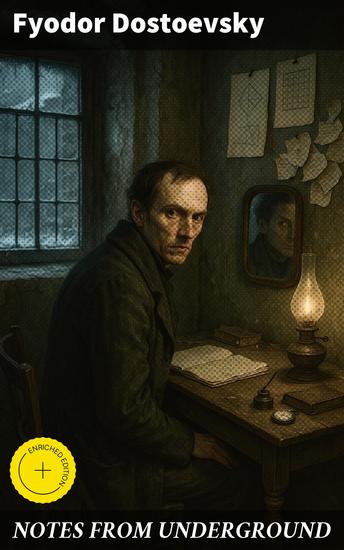
NOTES FROM UNDERGROUND - Enriched edition The Unabridged Garnett Translation - cover

NOTES FROM UNDERGROUND - Enriched edition The Unabridged Garnett Translation

Fyodor Dostoevsky

Publisher: Good Press

  • 0
  • 0
  • 0

Summary

In "Notes from Underground," Fyodor Dostoevsky presents a profound exploration of the human psyche through the voice of an unnamed, disillusioned narrator. This novella, written in 1864, is characterized by its introspective narrative style and its innovative structure, which blends philosophical discourse with a semi-autobiographical format. Set against the backdrop of post-Napoleonic Russia, it serves as a precursor to existential literature, delving into themes of alienation, free will, and the conflict between rationality and emotion. The Underground Man's scathing critique of society and his inner turmoil reflect the existential questioning that would come to dominate 19th-century literature. Dostoevsky, a pivotal figure in Russian literature, was heavily influenced by his tumultuous life experiences, including imprisonment and exposure to radical ideas. His struggles with faith, morality, and social injustice shaped his worldview, infusing "Notes from Underground" with a sense of urgency and depth. This work is considered a reflection of Dostoevsky's complex relationship with the emerging ideas of nihilism and rational egoism, as he grapples with the implications of these philosophies in a rapidly changing society. For readers seeking to engage with the foundational text of modern existentialism, "Notes from Underground" offers an incisive and provocative examination of the human condition. Its rich psychological complexity and enduring themes invite reflection and discussion, making it essential reading for anyone interested in literature that challenges conventional understanding of self and society.

In this enriched edition, we have carefully created added value for your reading experience:
- A succinct Introduction situates the work's timeless appeal and themes.
- The Synopsis outlines the central plot, highlighting key developments without spoiling critical twists.
- A detailed Historical Context immerses you in the era's events and influences that shaped the writing.
- An Author Biography reveals milestones in the author's life, illuminating the personal insights behind the text.
- A thorough Analysis dissects symbols, motifs, and character arcs to unearth underlying meanings.
- Reflection questions prompt you to engage personally with the work's messages, connecting them to modern life.
- Hand‐picked Memorable Quotes shine a spotlight on moments of literary brilliance.
- Interactive footnotes clarify unusual references, historical allusions, and archaic phrases for an effortless, more informed read.
Available since: 11/28/2023.
Print length: 233 pages.
Other books that might interest you

  • A Warning to the Curious - From their pens to your ears genius in every story - cover

    A Warning to the Curious - From...

    M R James

    • 0
    • 0
    • 0
    Montague Rhodes James is cited as perhaps the greatest English writer of ghost stories, an opinion few would disagree with. 
    James was born on 1st August 1862 at Goodnestone Parsonage in Kent, where his father was Curate but at age 3 the family went to live at Livermere, near Bury St Edmunds in East Anglia.  
    From early childhood he had a passion for mediaeval books and antiques. He was educated initially as a boarder at Temple Grove School in East Sheen, west London, before gaining a scholarship to Eton and thence Cambridge where he gained a double first, becoming a distinguished linguist and mediaevalist.  
    Before the Great War vacations were usually spent touring Europe absorbing cultures and references for his later writing. 
    A man of enormous knowledge it was said he timed his breakfast egg whilst he completed the Times crossword.  
    Many of his elegant yet terrifying tales were created by discarding the prevailing gothic cliches and placing his characters and narrative in a realistic setting.  Thereby the stories gained atmosphere and menace on a grand scale and he was famed as the originator of the antiquarian ghost story. 
    Although story-telling and writing these 30 or so tales was a hobby, when published their effect transformed the genre and still chill the bones in our more modern times. 
    James was also a medievalist scholar and translator whose work remains highly respected. He was also Provost of Eton College between 1918 and 1936. 
    M R James died on 12th June 1936 at Eton in Buckinghamshire.  He was 73.
    Show book
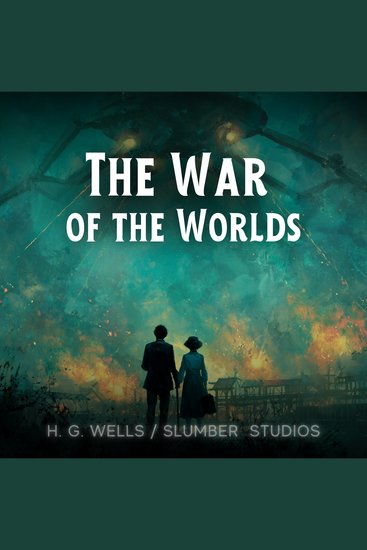
  • The War of the Worlds - A soothing reading for sleep and relaxation - cover

    The War of the Worlds - A...

    H. G. Wells

    • 0
    • 0
    • 0
    Drift into a dreamlike state with The War of the Worlds, the visionary sci-fi classic by H.G. Wells, brought to life by the calming voice of Andrew Bond and produced by Slumber Studios. 
    If a restless mind or lingering stress is keeping you awake, this soothing audiobook is crafted to ease you into a deep, restful sleep, while gently transporting you to another world. 
    Close your eyes and let the steady rhythm of Andrew Bond’s narration carry you into the mysterious English countryside, where strange lights in the sky signal the arrival of something unknown… something beyond our world. Follow the journey of an unnamed narrator as he witnesses the astonishing arrival of Martian cylinders and the surreal unfolding of an otherworldly invasion. 
    Rather than shock or suspense, this version is designed for a peaceful night's rest. Wells’ poetic language, paired with gentle music and slow, thoughtful narration, becomes a meditative experience—a soft backdrop for your imagination as you prepare to drift off. 
    At Slumber Studios, all of our audiobooks are edited, produced and narrated to help you relax and fall asleep. Along with calming music in the background, we also lightly edit the books. We keep the plotlines, protagonists and antagonists, and moments of tension, but we remove anything that may be startling or upsetting, to ensure you always get a good night's rest. 
    If you're seeking a tranquil way to end your day, The War of the Worlds offers the perfect escape. Just press play, get comfortable, and let Andrew’s soothing voice guide you gently into a universe of wonder and sleep.
    Show book
  • The Iliad - cover

    The Iliad

    Homer

    • 0
    • 0
    • 0
    The heroic story of the siege of Troy is as enthralling today as it ever was. 
     
    The Greeks are entering the tenth year of their war with the Trojans, but their armies are fractured and their best warrior Achilles has abandoned the battle on a mission of revenge. Only the death of his best friend Patroclus persuades Achilles to return to battle and confront the Trojan leader Hector in single combat. 
     
    The Iliad is the oldest surviving work of Western literature and provides a powerful glimpse into the horrors and heroics of war - a message which undoubtedly endures today. This edition provides an accessible prose translation by the classical scholar and novelist Samuel Butler. Butler is considered one of the finest English writers of the late Victorian era, and his translation one of the most accessible and satisfying.
    Show book
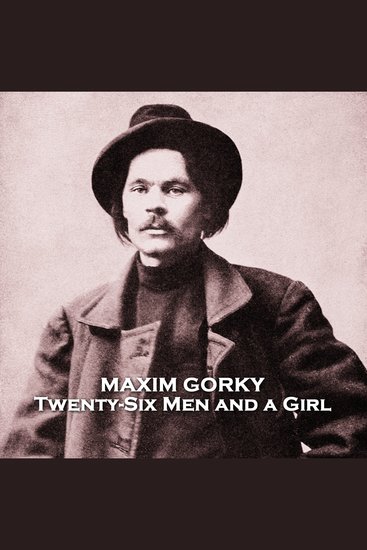
  • Twenty-Six Men and a Girl - From their pens to your ears genius in every story - cover

    Twenty-Six Men and a Girl - From...

    Maxim Gorky

    • 0
    • 0
    • 0
    Alexei Maximovich Peshkov was born on 28th March 1868, in Nizhny Novgorod, Russia. 
    Better known as Maxim Gorky he was orphaned at 11 and ran away from home at 12.  At 19 he had already attempted suicide and thereafter travelled, by foot, across the Russian Empire for 5 years. 
    His first book ‘Essays & Stories’ in 1898 was a sensation and so began a long career as an author of short stories, novels and plays.  Gorky saw writing as a moral and political act that would help to change the unjust world around him.  He was an ardent early advocate of the emerging Marxist movement and publicly opposed the Tsarist regime leading several times to his arrest.  
    In 1904 he began his own theatre but the censor banned every play and Gorky was forced to abandon the project. 
    But Gorky was a financially successful author, editor, and playwright and gave monies to political parties as well as for civil rights and social reform.  The brutal shooting of workers, which set in motion the Revolution of 1905, pushed Gorky more decisively toward radical solutions.  
    In 1906 he went to the United States to raise funds for the Bolsheviks. Those experiences including a scandal over travelling with his lover and not his wife deepened his contempt for the ‘bourgeois soul.’ 
    Gorky now moved to Capri in Italy, both for health reasons and to escape the increasingly repressive times in Russia.  
    An amnesty for the 300th anniversary of the Romanov dynasty saw him return to Russia in 1914. His politics remained close to the Bolshevik cause.  But soon, after the 1918 revolution, his essays referred to Lenin as a tyrant for his senseless arrests and repression.  He was soon appealing to the outside world for food aid after the catastrophic crop failure. 
    In October 1921 Gorky returned to Italy, now in Fascist hands, and settled in Sorrento until 1932.  His health worsened with the onset of tuberculosis. 
    He wrote several successful books there but now decided to find an understanding with the communist regime. Stalin invited him home and his return was hailed as a major propaganda victory.  He was decorated with the Order of Lenin, and a province, a park, and various streets re-named in his honour. 
    But he had his faults too.  In 1933, Gorky co-edited a book on the White Sea-Baltic Canal and denied even a single prisoner died during its construction, but thousands had. As well, knowing that some Nazis were homosexual, a phrase was attributed to him that said ‘exterminate all homosexuals and fascism will vanish’.  Although he was himself was quoting another he was decidedly homophobic. 
    With the increase of Stalinist repression in 1935 Gorky was placed under unannounced house arrest. 
    Maxim Gorky died on the 18th June 1936 from pneumonia.  He was 68. 
    Stalin and Molotov were among those who carried Gorky's urn of ashes at his funeral.
    Show book
  • Frankenstein; or the Modern Prometheus - cover

    Frankenstein; or the Modern...

    Mary Wollstonecraft Shelley

    • 0
    • 0
    • 0
    Frankenstein; or, the Modern Prometheus 
    In the early nineteenth century, English author Mary Wollstonecraft (Godwin) Shelley penned a novel that would forever alter literature. Born in 1797, Mary’s unconventional upbringing shaped her worldview. During a summer near Lake Geneva in 1816, she conceived the tale of Victor Frankenstein, a brilliant but tormented scientist. 
    Driven by relentless ambition, Victor embarked on an unorthodox experiment: creating life itself. The result—the Creature, often called “Frankenstein’s Monster”—was stitched together from various body parts. Seeking understanding and acceptance, the Creature grappled with its existence and harsh treatment. 
    The novel delves into profound themes: ambition, nature vs. nurture, responsibility, and loneliness. Beyond horror, “Frankenstein” challenges us to consider science’s boundaries and creators’ roles. It serves as a cautionary tale, warning against unchecked ambition and dehumanization. 
    Because of time, some words in the novel may have changed meanings.
    Show book
  • At the Edge of the Night - cover

    At the Edge of the Night

    Friedo Lampe

    • 0
    • 0
    • 0
    Banned by the Nazis, the haunting novel At the Edge of the Night (Am Rande der Nacht), by the German writer Friedo Lampe, is a work of magic realism. This poignant book, beautifully translated by Simon Beattie, was, in Lampe’s own words, ‘born into a regime where it could not breathe’; he hoped that one day it might rise again. It evokes the sensations and impressions of a sultry September evening on the waterfront of Bremen, with its charm and tenderness, squalor and lust. The plot contains a stream of images with many characters: children, old and young people, men and women, townsfolk, performers, students and sailors. Its depiction of raw reality was unacceptable to the Nazis: the book was seized by them in December 1933 and withdrawn from sale.
    At the Edge of the Night is a powerful and thought-provoking novel that offers a unique perspective on the experience of the Second World War. Lampe’s prose is lyrical and evocative, and his characters are complex and multi-dimensional. The book is a must-read for anyone interested in the history of the war or the human experience of conflict. It drew praise from Hermann Hesse, who first read it in 1933 and said that ‘what struck us at the time... as so beautiful and powerful has not paled, it has withstood; it proves itself with the best, and captivates and delights just as then’.
    Show book