Join us on a literary world trip!
Add this book to bookshelf
Grey
Write a new comment Default profile 50px
Grey
Subscribe to read the full book or read the first pages for free!
All characters reduced
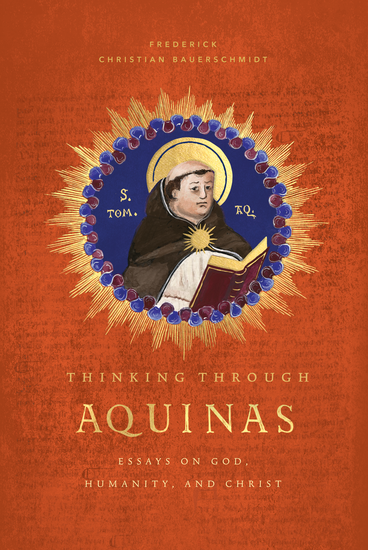
Thinking Through Aquinas - Essays on God Humanity and Christ - cover

Thinking Through Aquinas - Essays on God Humanity and Christ

Fritz Bauerschmidt

Publisher: Word on Fire Academic

  • 0
  • 0
  • 0

Summary

In Thinking Through Aquinas: Essays on God, Humanity, and Christ, Frederick Christian Bauerschmidt presents fourteen essays, written over the course of twenty years, that are attempts both to think through the arguments contained in the theology of Thomas Aquinas and to use the theology of Thomas to think through the questions that confront theologians in our own day. The essays include discussions of Thomas’s understanding of the nature of theology and of God; his reflections on virtue, vice, and the moral life; and his theology of Christ, the Church, and the Sacraments. Over the course of these essays, Thomas is brought into dialogue with figures ranging from Michel Foucault to Flannery O’Connor, Jonathan Lear to Ignacio Ellacuría, Stanley Hauerwas to St. John Paul II.  
Available since: 09/26/2024.
Print length: 384 pages.

Other books that might interest you

  • Against Technoableism - Rethinking Who Needs Improvement - cover

    Against Technoableism -...

    Ashley Shew

    • 0
    • 0
    • 0
    When Ashley Shew became a self-described "hard-of-hearing chemobrained amputee with Crohn's disease and tinnitus," there was no returning to "normal." Suddenly well-meaning people called her an "inspiration" while grocery shopping or viewed her as a needy recipient of technological wizardry. Most disabled people don't want what the abled assume they want—nor are they generally asked. 


    In vibrant prose, Shew shows how we can create better narratives and more accessible futures by drawing from the insights of the cross-disability community. To forge a more equitable world, Shew argues that we must eliminate "technoableism"—the harmful belief that technology is a "solution" for disability; that the disabled simply await being "fixed" by technological wizardry; that making society more accessible and equitable is somehow a lesser priority. 


    This badly needed introduction to disability expertise considers mobility devices, medical infrastructure, neurodivergence, and the relationship between disability and race. The future, Shew points out, is surely disabled—whether through changing climate, new diseases, or even through space travel. It's time we looked closely at how we all think about disability technologies and learn to envision disabilities not as liabilities, but as skill sets enabling all of us to navigate a challenging world.
    Show book
  • Minoans and Mycenaeans The: The History of the Civilizations that First Developed Ancient Greek Culture - cover

    Minoans and Mycenaeans The: The...

    Editors Charles River

    • 0
    • 0
    • 0
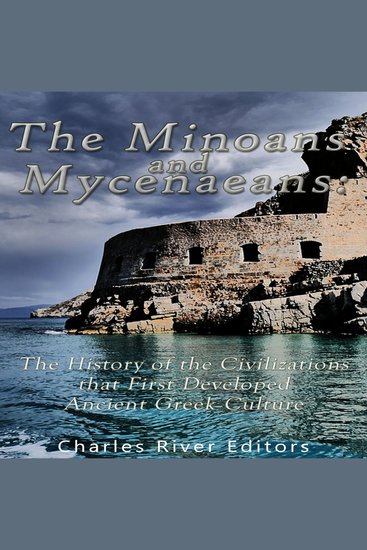
    Nearly 2,500 years after the Golden Age of Athens, people across the world today continue to be fascinated by the Ancient Greeks. But who did the Ancient Greeks look up to? The answer to that question can be found in Homer’s The Odyssey, in which Odysseus makes note of “a great town there, Cnossus, where Minos reigned.” It was perhaps the earliest reference to the Minoan civilization, a mysterious ancient civilization that historians and archaeologists still puzzle over, but a civilization that renowned historian Will Durant described as "the first link in the European chain.” 
    Nearly 2,000 years before Homer wrote his epic poems, the Minoan civilization was centered on the island of Crete, a location that required the Minoans to be a regional sea power. And indeed they were, stretching across the Aegean Sea from about 2700-1500 BCE with trade routes extending all the way to Egypt. 
    The Minoans may have been the first link in the “European chain”, leading to the Ancient Greeks and beyond, but questions persist over the origins of the civilization, the end of the civilization, and substantial parts of their history inbetween, including their religion and buildings.  
    In the wake of the Minoans, a Greek culture flourished and spread its tentacles throughout the western Mediterranean region via trade and warfare. Scholars have termed this pre-Classical Greek culture the Mycenaean culture, which existed from about 2000-1200 BCE, when Greece, along with much of the eastern Mediterranean, was thrust into a centuries long dark age. However, before the Mycenaean culture collapsed, it was a vital part of the late Bronze Age Mediterranean system and stood on equal footing with some of the great powers of the region, such as the Egyptians and Hittites. At the same time, the Mycenaeans had more in common with their neighbors from the island of Crete.
    Show book
  • Army Gazette - A foray into the turbulent events of the British Army at War A full-cast audio - cover

    Army Gazette - A foray into the...

    Mr Punch

    • 0
    • 0
    • 0
    A fascinating foray into British military history revealing the life of the British soldier at war.  From the Roman invasion of Britain to the retreat from Dunkirk, from the horrors of Culloden to the courage of Rourke’s Drift, we experience first-hand the stories behind the triumphs and tragedies that make up the history of the British Army. Told entirely in the words of those who were there 
      
    Performed by an outstanding company of award-winning actors including Dame Eileen Atkins, Cheryl Campbell, Nigel Davenport, Alex Jennings, Richard Johnson OBE, Hugh Laurie CBE, Michael Maloney, Geoffrey Palmer OBE, Michael Pennington, Prunella Scales CBE, Samuel West, John Wood CBE & full supporting cast. 
        
    Also available as part of The Gazettes Box Set, a six-volume edition (Military, Sport & Travel) creating a vivid portrait of British life through the centuries. 
      
    It is a highly enjoyable collection. Some pieces are just dazzling. Independent on Sunday 
      
    An extraordinary series... deserves a medal. The readers are all excellent and many of them distinguished. The Spectator 
      
    From the same stable that produced The Chronicle, my favourite audio this year, I've just listened equally spellbound to a compilation of travellers' tales at home. The Guardian 
      
    Time travel as well as the geographical kind is offered in this anthology… to form a collage of impressions and details of the British Isles over the past 400 years, with a cast of big-name readers. Sunday Times 
     
    ©2022 Mr Punch Audiobooks Ltd. (P)2022 Mr Punch Audiobooks Ltd
    Show book
  • History of Georgia: A Captivating Guide to the People and Events That Shaped the History of the Peach State of the United States of America - cover

    History of Georgia: A...

    Captivating History

    • 0
    • 0
    • 0
    Georgia’s history is more than just peaches—it’s a story of prisoners, preachers, and presidents who rose above the status quo to help transform a nation. 
    Georgia has been home to many influential figures in US history, including President Jimmy Carter and Martin Luther King Jr. But how much do you really know about the state? 
    Did you know, for instance, that Georgia was the last of the Thirteen Colonies to be created? Or that it was the last state to be admitted into the Union after the Civil War. 
    This introductory guide takes you on a journey through Georgia’s past, starting with the earliest settlers of the land to more current events, such as the 1996 Summer Olympics. This page-turning read will provide you with interesting facts about one of the largest states in the South. 
    Here’s just a small fraction of what you’ll discover:The people who called Georgia home long before it was called GeorgiaAn easy-to-read account of Georgia’s pre-Revolution historyHow a preacher was able to unify the nation for warFascinating accounts of the people and events that transformed AmericaThe truth of why such a weak state became a pillar of the nationThe heartbreaking reality of Jim Crow laws in the SouthAn amazing victory of a down-on-his-luck governorAnd so much more! 
    Scroll up and click the “add to cart” button to learn more about the Peach State!
    Show book
  • Anglo-Saxons - History of the Germanic Inhabitants of England - cover

    Anglo-Saxons - History of the...

    Kelly Mass

    • 0
    • 0
    • 0
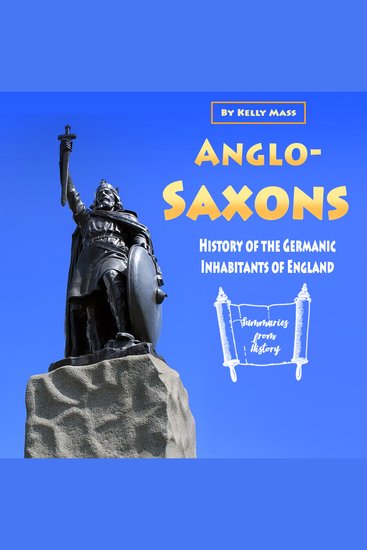
    In the Early Middle Ages, the Anglo-Saxons were a cultural group that resided in England. They traced their roots back to the arrival of incomers to Britain in the fifth century, who originated from the North Sea coastlands of continental Europe. The ethnogenesis of the Anglo-Saxons, on the other hand, happened in Britain, and the identity wasn't just imported. The contact between getting in groups of people from some Germanic tribe, both amongst themselves and with native British populations, led to the facility of an Anglo-Saxon identity. A lot of the native tribes ultimately incorporated and embraced Anglo-Saxon society and language. The Anglo-Saxons established the idea of England and the Kingdom of England, and while the modern English language owes practically 26% of its vocabulary to them, this includes the great bulk of words used in daily discussion. 
    The Anglo-Saxon period in history describes the period in Britain from roughly 450 and 1066, starting with their preliminary settlement and ending with the Norman Conquest. 
    Let’s have a look at how this time period has influenced European history, and what else was so significant about the Anglo-Saxon civilization.
    Show book
  • Human Trafficking - Modern-Day Slavery Sex Trafficking and Child Prostitution in the Global Economy - cover

    Human Trafficking - Modern-Day...

    Marcus Klein

    • 0
    • 0
    • 0
    Human trafficking is one of the gravest human rights abuses of our time, affecting millions of individuals across the globe. It is a hidden yet pervasive crime that exploits people for labor, sex, and other forms of servitude. While often referred to as modern-day slavery, human trafficking encompasses a complex web of economic, social, and political factors that perpetuate its existence. This introduction aims to lay the foundation for understanding the scale, scope, and urgency of addressing this issue.  
      
    The global nature of human trafficking is staggering. Victims are often lured by false promises of employment, education, or a better life, only to find themselves trapped in cycles of exploitation. Traffickers prey on vulnerabilities such as poverty, lack of education, and unstable political environments, creating a system where victims are treated as commodities. According to the latest statistics, tens of millions of people are estimated to be living in conditions of forced labor or sexual exploitation, generating billions of dollars annually for criminal networks.  
      
    Despite increased awareness, human trafficking remains challenging to combat due to its clandestine nature. Victims are often invisible, hidden in plain sight, or silenced by fear and manipulation. The advent of technology has further complicated efforts to address trafficking, as perpetrators leverage online platforms to recruit, exploit, and evade detection. This underscores the urgent need for innovative approaches to tackle the issue. 
    Show book