Join us on a literary world trip!
Add this book to bookshelf
Grey
Write a new comment Default profile 50px
Grey
Subscribe to read the full book or read the first pages for free!
All characters reduced
The Philosophy of History - Complete Edition (Vol 1&2) - cover

The Philosophy of History - Complete Edition (Vol 1&2)

Friedrich von Schlegel

Publisher: Good Press

  • 0
  • 0
  • 0

Summary

In "The Philosophy of History," Friedrich von Schlegel presents a profound exploration of the interplay between history and philosophy, probing the processes that shape human experience across time. Written during the early 19th century, this work is emblematic of the German Romantic movement, characterized by its emphasis on subjective experience, the individuality of human actions, and the transcendent essence of culture. Schlegel'Äôs style combines lyrical prose with analytical commentary, offering readers a philosophical framework to understand historical events not merely as mere chronicles but as manifestations of a deeper, ongoing narrative of human spirit and progress. Friedrich von Schlegel was a pivotal figure in the Romantic literary movement and a leading thinker of the German Idealism that shaped European intellectual thought. His experiences as a poet, critic, and translator influenced his philosophical stance, leading him to grapple with the complexity of time and its implications for humanity. This work reflects Schlegel's quest to synthesize diverse philosophical influences, drawing inspiration from Hegel and Kant while asserting his unique vision of history as a dynamic interplay between the ideal and the real. For anyone interested in the intricate relations between philosophy and history, Schlegel's "The Philosophy of History" is an essential read. It invites readers to reflect on the narratives that define human existence, encouraging them to consider the ways in which our understanding of the past informs our future. This work not only contributes to philosophical discourse but also enriches the reader's appreciation of history as an artful and complex tapestry.
Available since: 12/18/2023.
Print length: 400 pages.


Other books that might interest you

  • Bookology - Grow Your Business and Boost our Expertise through Book Publication - cover

    Bookology - Grow Your Business...

    Stephanie Larkin

    • 0
    • 0
    • 0
    Are you ready to turn your expertise into a book - and your business into a brand? 
    Sarah's wedding planning business looked picture-perfect on the outside, but behind the scenes, she was burned out, uninspired, and attracting the wrong clients. Everything changed the day she learned that publishing a book could be the most powerful tool in her marketing toolbox. 
    In Bookology, follow Sarah's journey from creative rut to business reinvention as she writes her way into a new niche, discovers a supportive community, and launches a book that transforms her brand. Blending entrepreneurial insight with real-world storytelling, this inspiring guide reveals how writing a book can unlock visibility, credibility, and passion for service-based professionals. 
    Perfect for creatives, coaches, and anyone ready to step into thought leadership, Bookology shows that your next big business breakthrough might start with just one chapter.
    Show book
  • James Meredith and the Little Rock Nine: The History of the Civil Rights Icons Who Integrated Schools in the South after Brown v Board of Education - cover

    James Meredith and the Little...

    Editors Charles River

    • 0
    • 0
    • 0
    For millions of kids, high school is a tumultuous time, with social highs and lows, academic pressure, and extracurricular wins and losses, but for the Little Rock Nine, the first African American students to attend a previously segregated high school in Little Rock, Arkansas, those years were nightmarish.  
    Getting into Central High School was an obstacle witnessed by the entire nation, but that was only the beginning of their ordeal, because once they were permitted to step through the doors, their true battle began, pitting them against bullies, tormentors, and narrow-minded ignorance. While many teenagers’ main concern is finding a date for prom, theirs was surviving until lunch, and when some students were worrying about making the volleyball team, they were worried about making it home alive each day. The Little Rock Nine and their families and neighbors could not trust the local government to serve them, the school system to treat them fairly, or the police to protect them. As Melba Patillo Beals, one of the Little Rock Times, noted, “All my life I had felt unprotected by city officials…Whites had control of the police, the firemen, and the ambulances. They could decide who got help and who didn’t. Even if the Ku Klux Klan ravaged one of our homes, we wouldn’t call the police for help.” 
    Meredith is still remembered for the almost surreal scenes that came with his admission to the school, but those historic moments required a prolonged fight. After a drawn out lawsuit that involved the State of Mississippi appealing the lower court’s decision, he was finally set to attend the university in September 1962, only to be repeatedly prevented by a mob, which included Mississippi Governor Ross Barnett. Governor Barnett had earlier attempted to stop Meredith’s admission by changing state laws to ban anyone who had been convicted of a state crime; Meredith’s “crime” had been false voter registration.
    Show book
  • Engaging the Earl - cover

    Engaging the Earl

    Mindy Burbidge Strunk

    • 0
    • 0
    • 0
    He had no intentions of marrying, especially not the girl next door.Miss Sarah Brown is the insignificant daughter of an insignificant knight. With a small dowry and an unremarkable appearance, she has little hope of marrying better than a vicar or a solicitor. When her father announces that she is to have a London Season, she allows herself to hope for something more. Surely in the ballrooms of London, there is a gentleman of wealth who will make her a proper match. She need only to discover how to draw the gentleman’s attention to her. But that is not so easily done until her best friend comes up with a plan. Sarah simply needs to learn how to flirt. While it seems ridiculous, if it results in the desired match, it seems like a risk worth taking.Reginald Thornbeck, the Earl of Stoke-on-Trent, has no plans of marrying. At least not anytime soon. He enjoys his life as a bachelor far too much. But as his sister’s guardian, he is responsible for presenting her at court and giving her a Season. Thankfully her best friend, Sarah, will be in London at the same time—allowing Reginald more time in the card room, and less time in the ballroom. But when Reginald learns of his sister’s idiotic plans to help Sarah woo a gentleman, he has no choice but to intervene.As Reginald spends time instructing Sarah, he realizes that bachelorhood might not be as desirable as he previously thought. Now he must try to convince Sarah that she can set her sights higher than a vicar or a solicitor. But the task proves more difficult than he imagined.
    Show book
  • Academic Inferno - My Academic Trip Through Adjunct Hell - cover

    Academic Inferno - My Academic...

    Virgil Henry

    • 0
    • 0
    • 0
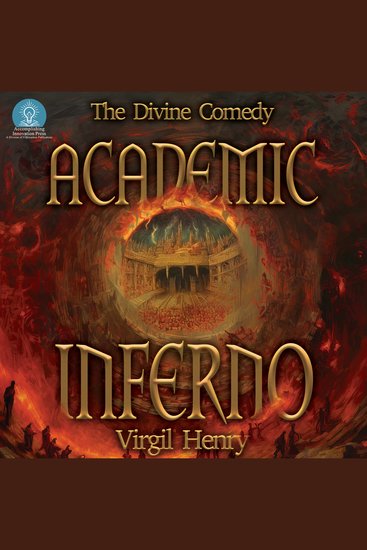
    Welcome to Adjunct Hell, where second-class teachers do first-class work. 
    A 30-year veteran of higher-education, Professor Virgil Henry uses Dante's Inferno as a guide to take readers on an epic adventure through the hellscape of higher education in the United States. 
    Follow Virgil and his band of like-minded adjuncts as they battle educational bureaucracy, low-pay, lack of health-care or job security, and social and professional indignities, all while showing up every day (and every night) for the students they care for and the job they love.
    Show book
  • Free Speech and Turbulent Freedom - The Dangerous Allure of Censorship in the Digital Era - cover

    Free Speech and Turbulent...

    Michael J. Glennon

    • 0
    • 0
    • 0
    A vast censorship regime has smothered America's digital marketplace of ideas, squelching free speech on vital policy issues. Its supporters regard its benefits as morally and politically beyond question. They contend it's carried out by private social media platforms, not governmental authorities. 


    In Free Speech and Turbulent Freedom, Michael J. Glennon offers a timely and incisive response. The censors are short-sighted, he argues. Quibbling over outdated distinctions misses the real threat—which is the fusion of public and private power into a modern-day cartel able to overleap longstanding constitutional safeguards. American democracy, he argues, rests on a decentralized marketplace of ideas independent of the government. In crisp, trenchant terms, Glennon shows how concrete practical concerns justify protecting admittedly harmful online speech—even speech that advocates violence or embraces hatred or apparent falsehood. 


    To safely self-correct, democracy requires open channels of political communication. Glennon calls on the courts to unblock those channels—to measure such speech against enduring First Amendment precepts rather than pliable international norms—and to protect the speech interests not merely of the government and Big Tech, but of all participants in the marketplace of ideas.
    Show book
  • From Where Do Attachment And Detachment Come? - Gstaad 1965 - Small Group Discussion 4 - cover

    From Where Do Attachment And...

    Jiddu Krishnamurti

    • 0
    • 0
    • 0
    From where do attachment and detachment come? - 24 August 1965  
    • What is the relationship of the brain to the totality of the mind? 
    • Fear of not being, fear of isolation, fear of not having pleasure, fear of having 
    no relationship, is the soil from which the stem of contradiction grows. 
    • I want to be free of this stem to see what happens if there is no attachment, no 
    detachment, because I am not afraid. 
    • Is there a peace with no entity saying, ‘I am peaceful’?
    Show book