Join us on a literary world trip!
Add this book to bookshelf
Grey
Write a new comment Default profile 50px
Grey
Subscribe to read the full book or read the first pages for free!
All characters reduced
The History of the Thirty Years' War - cover

The History of the Thirty Years' War

Friedrich Schiller

Translator A. J. W. Morrison

Publisher: DigiCat

  • 0
  • 0
  • 0

Summary

Friedrich Schiller's "The History of the Thirty Years' War" is a monumental study that delves into the complex socio-political and religious conflicts that ravaged Europe from 1618 to 1648. Written in a lyrical yet analytical style, Schiller blends dramatic narrative with historical rigor, employing an eloquent language that captures the tumult of war, the motivations of leaders, and the sufferings of common people. This work not only serves as a historical account but also as a philosophical reflection on the nature of humanity in times of strife, situating itself within the broader Romantic context that seeks to reconcile the ideals of freedom with the harsh realities of existence. Friedrich Schiller, a key figure in German literature and thought, found in the Thirty Years' War a profound backdrop for exploring themes of heroism, conflict, and ethical dilemmas. His own experiences as a playwright and philosopher informed his historical writing, as he aimed to understand how deeply personal and communal struggles shape human destiny. His intention was not merely to chronicle events but to engage readers in a moral contemplation of the war's implications for society and individual integrity. For readers interested in a compelling blend of history and philosophy, Schiller's "The History of the Thirty Years' War" is an essential read. It not only illuminates a pivotal era of European history but also engages with timeless questions about the human condition, making it relevant for contemporary discussions on conflict, identity, and moral responsibility.
Available since: 08/15/2022.
Print length: 378 pages.


Other books that might interest you

  • Can Deliberation Cure the Ills of Democracy? - cover

    Can Deliberation Cure the Ills...

    James S. Fishkin

    • 0
    • 0
    • 0
    In our modern world of propaganda, social media enclaves, misinformation, and manipulation, the connection between "the will of the people" and political action has broken down, political divisions are becoming increasingly intractable, and democracies are growing ever more ungovernable. Democracy is in crisis. 


    In Can Deliberation Cure the Ills of Democracy?, James S. Fishkin argues that deliberative democracy can have surprisingly positive effects on all of these problems and charts a unique path to fixing them with his method of Deliberative Polling. After decades of applying and perfecting the methods of deliberative democracy in countries all over the world, this book synthesizes the results of 150 applications and shows how the method can be applied to resolve many of democracy's seemingly intractable challenges. It can clarify the public will and depolarize our divisions. 


    Fishkin demonstrates that deliberative democracy is a practical solution if applied widely and lays out a vision for how to combine elections with deliberation to build a more deliberative society, one that cures our extreme partisanship and leads to substantive dialogues that foster mutual respect and more engaged voters. Deliberation provides a story of thoughtful empowerment and democratic reform, strengthening but not replacing our current institutions.
    Show book
  • 3rd Floor Flowers Poetry for PTSD A Collective Project for Trauma Survivors - A fundraiser for Mental Health Initiatives - cover

    3rd Floor Flowers Poetry for...

    Melinda Barss

    • 0
    • 0
    • 0
    3rd Floor Flowers: Poetry for PTSD is a powerful global healing initiative created to support trauma survivors through the art of poetry. Curated by Melinda Barss of Healing Light Press, this anthology features heartfelt and transformative poems and artwork composed by those who have journeyed through the depths of PTSD and come out stronger. 
    This collection is more than just a book—it's a fundraiser for mental health awareness and a tribute to the strength of the human spirit. Each poem serves as a beacon of light for those still in darkness, offering comfort, hope, and healing through words. 
    Whether you are a survivor, a supporter, or simply someone seeking inspiration, this book is a compassionate companion on the path to emotional and spiritual recovery. 
    PTSD healing, trauma recovery, mental health poetry, 3rd Floor Flowers, Melinda Barss, Healing Light Press, fundraiser for mental health, spiritual healing poetry, poetry for PTSD, global mental health project, trauma-informed poetry, healing initiative, PTSD support, expressive writing, healing through poetry 
    #PoetryForPTSD 
    #MentalHealthMatters 
    #TraumaHealing 
    #HealingThroughWords 
    #3rdFloorFlowers 
    #HealingLightPress 
    #MelindaBarss 
    #MentalHealthAwareness 
    #PTSDRecovery 
    #SpiritualHealing 
    #GlobalHealingProject 
    #MentalHealthFundraiser 
    #HealingPoetry 
    #PoetryTherapy 
    #VoicesOfSurvivors
    Show book
  • Medieval Conspiracy Theories: The History of the Most Popular Conspiracy Theories about the Middle Ages - cover

    Medieval Conspiracy Theories:...

    Editors Charles River

    • 0
    • 0
    • 0
    Few eras are easier to let the imagination run wild than the Middle Ages, which have often been coined the Dark Ages based on a perceived lack of progress and information. Indeed, we can say that it is not completely unfounded because we know less about that historical period compared to those that come after it. In addition, it is a period marked by a great number of deaths caused by plague epidemics, crusades, and inquisitorial persecutions. Often, researchers are not even sure how and why certain events happened, and these mysteries still occupy the attention of historians. 
    	This era was very harsh, difficult, and often gloomy. In that greyness, burdened by various fears, people were looking for something that would light up their lives and bring them a feeling of beauty and joy. People experienced all things and events around them more intensely than people do today. They often exaggerated the events that happened, giving them a mystical and divine character. For this reason, medieval sources are taken with a grain of salt and are first carefully examined before believing.  
    	At the same time, some historical mysteries about the era may never be solved, if only because the relevant excavated material has been lost or the archaeological site has been destroyed. In other cases, it is because new evidence is unlikely to emerge, or the surviving evidence is too vague to lead to a consensus. Of course, the lack of answers only makes these enigmas more intriguing.  
    	Similarly, few stories have the power to mesmerize as much as unsolved mysteries, so codes and missing puzzle pieces fill people with excitement and intrigue. What did a source want to say with that coded message? What mysteries did they hide? 
    Show book
  • Homegrown - Guidance and Inspiration for Navigating Your Homeschooling Journey - cover

    Homegrown - Guidance and...

    Amber O'Neal Johnston

    • 0
    • 0
    • 0
    Warm and wise, grounded and liberating, Homegrown offers clarity and encouragement to homeschooling parents, asking what it means to build a life where learning and love grow side by side. 
     
    Homeschooling is the fastest-growing form of education in America, and it's here to stay. If you're a homeschool veteran, finishing up your first year, or are just homeschool curious, Homegrown is destined to become a go-to resource. 
     
    This collection of 30 original, thought-provoking pieces from a diverse group of contributors covers common questions such as 
     
    · What fuels families to educate children at home? 
    · How do relationships, culture, and vision affect the decision to homeschool? 
    · What roles do spouses, friends, extended family, and communities play in our ability to homeschool? 
    · How do culture, heritage, history, and legacy seamlessly intertwine with reading, writing, and arithmetic? 
    · Why is raising our kids this way so important, and how do we prioritize it? 
     
    Whether your aim is to nurture your child's passions, support their individual learning style, or connect with a community of like-minded families, this book will be your trusted companion every step of the way. Spanning age, race, ethnicity, political beliefs, geography, religion, family size, educational philosophy, and more, the essays in Homegrown provide parents with guidance and inspiration to kickstart or refine their homeschooling practice with creativity, connection, and confidence. 
     
    Features essays from Ainsley Arment, Sally Clarkson, Greta Eskridge, Julie Bogart, Ginny Yurich, Leslie Martino, Yvette Henry, Sonya Shafer, Leah Boden, Rea Berg, Alberta Stevens, Trisha Vuong, Susan Seay, Delina Pryce McPhaull, Erin Loechner, Richard M. Smith, Jennifer Pepito, Rachel Devenish Ford, Mandy Davis, Jason B. Esters, Elsie Iudicello, Alisha Roth, Torrie Oglesby, Erika Alicea, Brytni McNeil, Nicole Cottrell, Brenaea Fairchild, Julie Ross, Min Hwang, and editor Amber O'Neal Johnston.
    Show book
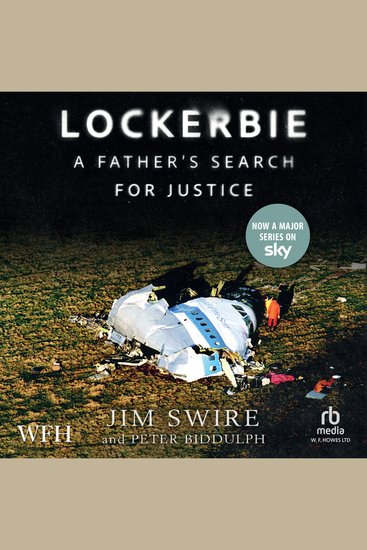
  • Lockerbie - A Father’s Search for Justice - cover

    Lockerbie - A Father’s Search...

    Peter Biddulph, Jim Swire

    • 0
    • 0
    • 0
    Now a Major Sky TV Series starring Colin Firth 
    The destruction of Pan Am Flight 103 over the Scottish town of Lockerbie in December 1988 was the largest attack on Britain since World War Two. 259 passengers and 11 townsfolk of Lockerbie were murdered. Libyan Abdelbaset al-Megrahi was convicted of the crime. He maintained his innocence until his death in 2012. 
    Among the passengers was Flora, beloved daughter of Dr Jim Swire. Jim accepted American claims that Libya was responsible, but during the Lockerbie Trial he began to distrust key witnesses and supposed firm evidence. Since then it has been revealed that the USA paid millions of dollars to two central identification witnesses, and the only forensic evidence central to the prosecution has been discredited. 
    The book takes us along Dr. Swire’s journey as his initial grief and loss becomes a campaign to uncover the truth behind not only a personal tragedy but one of the modern world’s most shocking events. 
    'A shattering tale of grief and love' – Daily Mail
    Show book
  • The Tu Quoque Fallacy - Deflecting Criticism by Accusing the Accuser - cover

    The Tu Quoque Fallacy -...

    William Rands

    • 0
    • 0
    • 0
    The Tu Quoque fallacy, often referred to as the "appeal to hypocrisy," is a form of argumentation where an individual deflects criticism by accusing the accuser of the same flaw or wrongdoing. Instead of addressing the substance of the criticism, the person making this fallacious argument focuses on the accuser’s behavior, thereby shifting the attention away from the original issue. This technique is often employed to avoid dealing with uncomfortable truths and to undermine the credibility of the person making the accusation. While the Tu Quoque fallacy may seem like a valid rebuttal in certain situations, it is inherently flawed because it does not address the merit of the argument but instead aims to discredit the opponent by pointing out their perceived hypocrisy. 
    The term "Tu Quoque" is derived from Latin, meaning "you too" or "you also." It is a logical misstep in which the argument shifts from the issue at hand to the behavior or actions of the accuser. For example, if person A criticizes person B for smoking, and person B responds by saying, "But you smoke too," this response deflects the criticism without actually addressing the harmful effects of smoking. By focusing on the accuser's actions, the fallacy diverts attention from the original point and diminishes the potential for meaningful discussion. 
    This fallacy is common in many aspects of modern discourse, particularly in political debates, social media discussions, and even in personal relationships. In public debates, individuals or groups may use the Tu Quoque fallacy to avoid engaging with difficult questions, redirecting the conversation toward the alleged hypocrisy of their opponents rather than addressing the real issues. In personal relationships, it may appear as a defensive reaction to avoid taking responsibility for one's actions or mistakes.
    Show book