Junte-se a nós em uma viagem ao mundo dos livros!
Adicionar este livro à prateleira
Grey
Deixe um novo comentário Default profile 50px
Grey
Assine para ler o livro completo ou leia as primeiras páginas de graça!
All characters reduced
THUS SPOKE ZARATHUSTRA (Modern Classics Series) - Enriched edition Exploring Existentialism: The Übermensch and Eternal Recurrence - cover
LER

THUS SPOKE ZARATHUSTRA (Modern Classics Series) - Enriched edition Exploring Existentialism: The Übermensch and Eternal Recurrence

Friedrich Nietzsche

Tradutor Thomas Common

Editora: Good Press

  • 0
  • 0
  • 0

Sinopse

In "Thus Spoke Zarathustra," Friedrich Nietzsche artfully intertwines philosophy and prose within a lyrical narrative structure. This work embraces the character of Zarathustra, who descends from the mountains to share his profound insights on morality, religion, and the human condition. Nietzsche employs a poetic style that oscillates between parable and aphorism, presenting his ideas on concepts such as the √úbermensch and the eternal recurrence. The book stands as a transformative text that critiques traditional norms, encouraging readers to reclaim individuality and creativity amidst the rigid frameworks of contemporary society. Friedrich Nietzsche, a pivotal figure in the realm of existential and postmodern thought, penned this seminal work during a pivotal period of intellectual upheaval in the late 19th century. His own struggles with health, belief systems, and societal expectations shaped his philosophies, leading him to advocate for the reevaluation of all values. Nietzsche's experiences as a classical philologist and his engagement with various philosophical traditions provided a rich backdrop for the spiritual and existential explorations found in Zarathustra. This book is highly recommended for readers seeking a deeper understanding of Nietzsche's radical philosophy and its enduring impact on modern thought. "Thus Spoke Zarathustra" challenges us to confront our limitations and reimagine our potential, making it an essential read for those intrigued by the intersections of philosophy, literature, and the quest for meaning.

In this enriched edition, we have carefully created added value for your reading experience:
- A succinct Introduction situates the work's timeless appeal and themes.
- The Synopsis outlines the central plot, highlighting key developments without spoiling critical twists.
- A detailed Historical Context immerses you in the era's events and influences that shaped the writing.
- An Author Biography reveals milestones in the author's life, illuminating the personal insights behind the text.
- A thorough Analysis dissects symbols, motifs, and character arcs to unearth underlying meanings.
- Reflection questions prompt you to engage personally with the work's messages, connecting them to modern life.
- Hand‐picked Memorable Quotes shine a spotlight on moments of literary brilliance.
- Interactive footnotes clarify unusual references, historical allusions, and archaic phrases for an effortless, more informed read.
Disponível desde: 16/01/2024.
Comprimento de impressão: 367 páginas.
Outros livros que poderiam interessá-lo

  • Superstition in All Ages - cover

    Superstition in All Ages

    Jean Meslier

    • 0
    • 0
    • 0
    "Superstition in All Ages" is a book written by French priest and philosopher Jean Meslier in the early 18th century. The book is a critique of religion and an argument for atheism. Meslier argues that religion, particularly Christianity, is based on superstition and that its claims cannot be proven. 
    Meslier's book is divided into two parts. The first part examines the origins of superstition and religion, arguing that they are based on fear, ignorance, and the desire for power. Meslier claims that the belief in supernatural beings and forces is a result of humanity's inability to explain natural phenomena, and that religion is a way for those in power to control and manipulate the masses. 
    The second part of the book is a direct attack on Christianity. Meslier argues that the Bible is a collection of myths and legends, and that its moral teachings are inconsistent and often immoral. He also critiques the Christian concept of God, arguing that it is illogical and contradictory. 
    Meslier's arguments were highly controversial in his time, and he was forced to keep his atheism a secret to avoid persecution. After his death, his manuscript was discovered and published, making him one of the earliest and most influential atheist thinkers in history.
    Ver livro
  • Sahih Al Bukhari English Translation Volume 9 Book 87-97 Hadith number 6861-7563 of 7563 - Most Authentic Hadith Audio Collection (English Translation) - cover

    Sahih Al Bukhari English...

    Imam Bukhari, Translator - Dr....

    • 0
    • 0
    • 0
    Ṣaḥīḥ al-Bukhārī is a collection of hadīth compiled by Imam Bukhārī. His collection is recognized by the overwhelming majority of the Muslim world to be one of the most authentic collections of the Sunnah of the Prophet (peace be upon him). It contains roughly 7563 hadīth (with repetitions) in 97 books. The translation provided here is by Dr. M. Muhsin Khan. 
    Volume 9 contains hadith 6861-7563 of 7563 in book 87-97: 
    87 The Book Of Blood Money (Ad-Diyat) Hadith 6861-6917 of 7563 English 
    88 The Book Of Obliging the Apostates and Repentance of ..... Hadith 6918-6939 of 7563 English 
    89 The Book Of Al-Ikrah (Coercion) (saying some-thing under compulsion) H 6940-6952 of 7563 English 
    90 The Book Of Tricks Hadith 6953-6981 of 7563 English 
    91 The Book Of the Interpretation of Dreams Hadith 6982-7047 of 7563 English 
    92 The Book Of Fitan (Trials and afflictions) Hadith 7048-7136 of 7563 English 
    93 The Book Of Judgments (Al-Ahkaam) Hadith 7137-7225 of 7563 English 
    94 The Book Of Wishes Hadith 7226-7245 of 7563 English 
    95 The Book Of The Information Given by one Person Hadith 7246-7267 of 7563 English 
    96 The Book Of Holding Fast to the Quran and Sunnah Hadith 7268-7370 of 7563 English 
    97 The Book Of Islamic Monotheism (Tawhid Tawheed) Hadith 7371-7563 of 7563 English 
    Contact: For any feedback or correction please feel free to contact at qnsacademy@outlook.com
    Ver livro
  • The Antichrist - A Bold Critique of Morality Religion and Power - cover

    The Antichrist - A Bold Critique...

    Friedrich Nietzsche, Tim Zengerink

    • 0
    • 0
    • 0
    What if the moral systems that guide our lives are not the pinnacle of virtue but barriers to true freedom and greatness? 
    The Antichrist is Friedrich Nietzsche’s unapologetic critique of Christianity, traditional morality, and the societal norms that he saw as stifling human potential. This bold and revolutionary work examines the origins of religious belief, its impact on human behavior, and the need to break free from outdated systems to embrace a more empowering and life-affirming philosophy. 
    This modern translation makes Nietzsche’s challenging ideas more accessible to today’s readers while maintaining the sharpness and depth of his original work. 
    What You’ll Discover: 
    - A Radical Critique of Religion and Morality – Explore Nietzsche’s piercing analysis of Christianity and traditional ethics. 
    - The Pursuit of True Freedom – Understand Nietzsche’s philosophy of self-overcoming and the path to personal greatness. 
    - A Call to Embrace Life – Learn how to reject life-denying beliefs and adopt a philosophy of strength, vitality, and empowerment. 
    - Timeless Insights for Modern Readers – Gain inspiration to question societal norms, foster individualism, and navigate life with confidence. 
    Imagine breaking free from outdated beliefs, discovering your true potential, and embracing life with clarity and strength. The Antichrist is a timeless manifesto for personal freedom, boldness, and self-discovery. 
    Start your journey today. Get your copy now and transform the way you see the world.
    Ver livro
  • Past Imperfect - French Intellectuals 1944-1956 - cover

    Past Imperfect - French...

    Tony Judt

    • 0
    • 1
    • 0
    A “marvelously readable” critique of Sartre, Camus, de Beauvoir, and other French postwar intellectuals that “consistently entertains and provokes” (The Washington Post).   The uniquely prominent role of French intellectuals in European cultural and political life following World War II is the focus of this book by the acclaimed author of Postwar: A History of Europe Since 1945. Tony Judt analyzes this intellectual community’s most divisive conflicts: how to respond to the promise and the betrayal of Communism and how to sustain a commitment to radical ideals when confronting the hypocrisy in Stalin’s Soviet Union, in the new Eastern European Communist states, and in France itself. Judt shows why this was an all-consuming moral dilemma to a generation of French men and women, how their responses were conditioned by war and occupation, and how postwar political choices have come to sit uneasily on the conscience of later generations of French intellectuals. Judt’s analysis extends beyond the writings of fashionable “existentialist” personalities such as Jean-Paul Sartre, Albert Camus, and Simone de Beauvoir to include a wide intellectual community of Catholic philosophers, non-aligned journalists, literary critics and poets, Communist and non-Communist alike—and asserts that what he calls the “moral irresponsibility” of those years damaged France’s cultural standing, and reflected the nation’s larger difficulty in confronting its own ambivalent past.   “A forthright and uncommonly damning study of those intellectually volatile years . . . indicts these intellectuals for their inhumanity in failing to test their political thought against political reality.” —The New York Times Book Review   “Brilliant . . . splendidly written.” —Foreign Affairs
    Ver livro
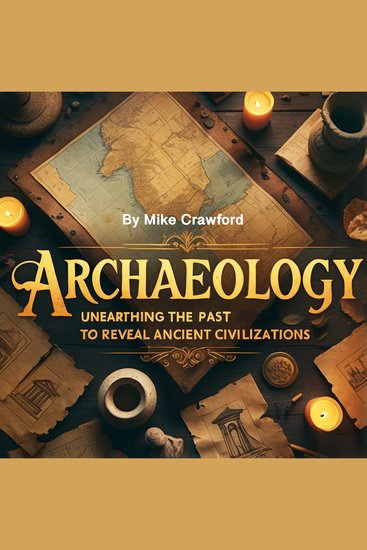
  • Archaeology - Unearthing the Past to Reveal Ancient Civilizations - cover

    Archaeology - Unearthing the...

    Mike Crawford

    • 0
    • 0
    • 0
    Archaeology is the scientific study of past human cultures through material remains. It offers invaluable insights into ancient civilizations, their ways of life, and the development of human society over millennia. By examining artifacts, structures, and other remnants of the past, archaeologists reconstruct histories that might otherwise remain unknown. This discipline bridges the gap between history and anthropology, providing a tangible connection to cultures that predate written records. 
    The scope of archaeology is vast, encompassing prehistoric societies, ancient empires, and even more recent historical periods. Archaeologists investigate a wide range of sites, from early human settlements and burial mounds to grand cities and monumental structures. The study of these remains allows researchers to piece together how societies evolved, adapted to their environments, and interacted with one another. Archaeology is not limited to famous civilizations such as the Egyptians, Romans, or Mayans—it also sheds light on lesser-known cultures that played significant roles in shaping human history. 
    One of the core reasons for studying archaeology is to understand the complexities of past human behavior. By analyzing tools, pottery, inscriptions, and architectural remains, scholars can infer how people lived, what they believed, and how they organized their communities. For instance, burial practices provide insights into religious beliefs, while trade artifacts reveal connections between distant societies. Archaeology helps challenge assumptions and correct misconceptions about the past, ensuring a more accurate historical record.
    Ver livro
  • Titanic - A Fresh Look at the Evidence by a Former Chief Inspector of Marine Accidents - cover

    Titanic - A Fresh Look at the...

    John Lang

    • 0
    • 0
    • 0
    “By far the most thorough and well-written investigative book on RMS Titanic’s short life and tragic sinking that this reviewer has read . . . fascinating.” —Choice Reviews   The sinking of the Titanic on her maiden voyage in April 1912 was one of the defining moments of the twentieth century. Books and films about the disaster that befell the iconic liner are commonplace, and it seems almost inconceivable that anything fresh can emerge. But there is one angle that has not been covered, and Titanic examines the events of April 1912 from that completely new perspective. John Lang brings the standards of a twenty-first-century accident investigation to bear on the events of April 1912, using his expertise and his investigator’s instinct to determine exactly what happened a century ago, and what important lessons still need to be learned.  “A fascinating account . . . this book looks at the facts from a new perspective and uncovers some unexpected findings. A worthwhile read.” —Royal Naval Sailing Association  “Provides genuine insight into what almost certainly happened before, during and after the ice sliced through the five compartments on the liner’s starboard bow.” —Viewpoint  “Lang, with his experience of marine accident investigation has found an angle in examining events of April 1912 from the perspective of an MAIB officer. His analysis is supported by detailed background material enabling the reader to understand the events of the collision and sinking more fully as he brings the standards of a 21st century investigation to bear on the events in determining exactly what happened and why.” —Flash  
    Ver livro