Unisciti a noi in un viaggio nel mondo dei libri!
Aggiungi questo libro allo scaffale
Grey
Scrivi un nuovo commento Default profile 50px
Grey
Iscriviti per leggere l'intero libro o leggi le prime pagine gratuitamente!
All characters reduced
Past Imperfect - French Intellectuals 1944-1956 - cover

Past Imperfect - French Intellectuals 1944-1956

Tony Judt

Casa editrice: NYU Press

  • 0
  • 1
  • 0

Sinossi

A “marvelously readable” critique of Sartre, Camus, de Beauvoir, and other French postwar intellectuals that “consistently entertains and provokes” (The Washington Post).   The uniquely prominent role of French intellectuals in European cultural and political life following World War II is the focus of this book by the acclaimed author of Postwar: A History of Europe Since 1945. Tony Judt analyzes this intellectual community’s most divisive conflicts: how to respond to the promise and the betrayal of Communism and how to sustain a commitment to radical ideals when confronting the hypocrisy in Stalin’s Soviet Union, in the new Eastern European Communist states, and in France itself. Judt shows why this was an all-consuming moral dilemma to a generation of French men and women, how their responses were conditioned by war and occupation, and how postwar political choices have come to sit uneasily on the conscience of later generations of French intellectuals. Judt’s analysis extends beyond the writings of fashionable “existentialist” personalities such as Jean-Paul Sartre, Albert Camus, and Simone de Beauvoir to include a wide intellectual community of Catholic philosophers, non-aligned journalists, literary critics and poets, Communist and non-Communist alike—and asserts that what he calls the “moral irresponsibility” of those years damaged France’s cultural standing, and reflected the nation’s larger difficulty in confronting its own ambivalent past.   “A forthright and uncommonly damning study of those intellectually volatile years . . . indicts these intellectuals for their inhumanity in failing to test their political thought against political reality.” —The New York Times Book Review   “Brilliant . . . splendidly written.” —Foreign Affairs
Disponibile da: 01/05/2011.
Lunghezza di stampa: 362 pagine.
Altri libri che potrebbero interessarti

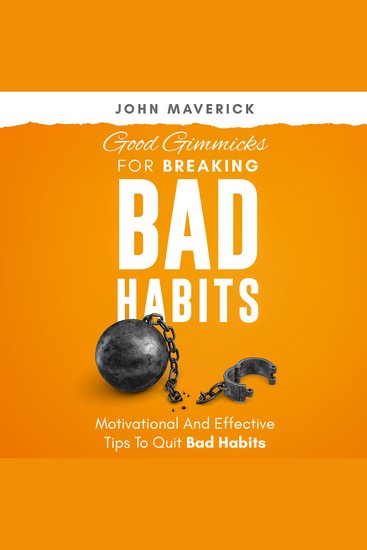
  • Good Gimmicks For Breaking Bad Habits - Motivational and Effective Tips to Quit Bad Habits - cover

    Good Gimmicks For Breaking Bad...

    John Maverick, Van Johnson

    • 0
    • 0
    • 0
    We shape our environment, and habits shape us. The key to personal development is understanding habit formation, which is the natural process in which behaviors are repeated over time and become automatic or even an Atomic Habit. You will learn that habits can begin without your intention; also, the Habits of Highly Effective People are intentional and long-lasting. "Making Good Habits Breaking Bad Habits" is also deliberately cultivated or destroyed to conform to one's personal goals and objectives. Bad habits and good habits are formed by a process in which behavior becomes habitual due to repetitive actions. The term NLP or (Neuro-Linguistic Programming) also can create Good Habits while Breaking Bad Habits. The process can be slow or quick, depending on factors such as the type of habit or the individual.  
    You will learn about 
    •	KEYSTONE HABITS 
    •	FACTS ABOUT HABITS 
    •	UNDERSTANDING HOW OUR MINDS WORK 
    •	THE DRASTIC CHANGE MYTH ABOUT HABITS 
    •	THE OPTIMAL GROWTH RATE 
    •	THE BEHAVIOR CHANGE PROBLEM 
    •	HABITS OF THE MIND 
    Habits can make or break a person's life. Good habits can lead to happiness and self-actualization, whilst bad habits inhibit a person's quality of life, resulting in depression and failure.  
    This self-help book will teach you everything about habits, Changing Your Habits, habit formation, and much more. Now is the time to learn how to destroy that bad habit once and for all.   
    Let's get started.
    Mostra libro
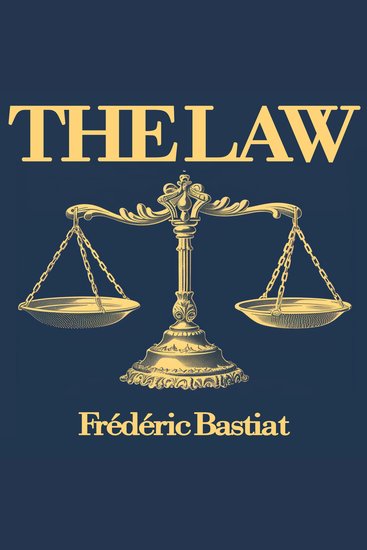
  • The Law - cover

    The Law

    Frédéric Bastiat

    • 0
    • 0
    • 0
    "The Law" by Frédéric Bastiat is a seminal work in political philosophy and economics, offering a robust defense of individual liberty and property rights against the encroachments of government. Written in 1850, Bastiat's concise yet profound treatise critiques the use of law as an instrument of coercion and redistribution, arguing instead that its proper role is the protection of individual freedoms. Through eloquent and accessible prose, Bastiat expounds on the dangers of socialism and economic interventionism, advocating for a system where the law serves only to uphold justice, ensure public order, and protect rights. His work remains a cornerstone of libertarian thought, celebrated for its lucid analysis of the principles underpinning a free society and its prescient warnings against the overreach of governmental power.
    Mostra libro
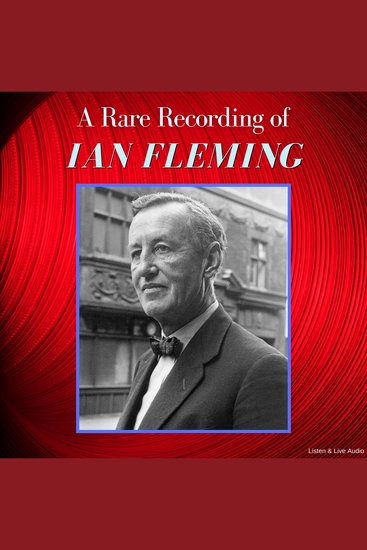
  • A Rare Recording of Novelist Ian Fleming - cover

    A Rare Recording of Novelist Ian...

    Ian Fleming

    • 0
    • 0
    • 0
    Ian Lancaster Fleming (May 28, 1908 to August 12, 1964) was an English writer, best known for his postwar James Bond series of spy novels. The Bond stories rank among the best-selling series of fictional books of all time, having sold over 100 million copies worldwide. Fleming also wrote the children's story Chitty-Chitty-Bang-Bang (1964) and two works of non-fiction.
    Mostra libro
  • The Prophet - cover

    The Prophet

    Kahlil Gibran

    • 0
    • 0
    • 0
    The Prophet is a book beloved by millions for 100 years. The Prophet is a book of 26 prose poetry fables written in English by the Lebanese-American poet and writer Kahlil Gibran. It is Gibran's best-known work.
    The prophet Al Mustafa has lived in the city of Orphalese for 12 years and is about to board a ship that will carry him home. He is stopped by a group of people with whom he discusses topics such as life and the human condition. The book is divided into chapters dealing with love, marriage, children, giving, eating and drinking, work, joy and sorrow, houses, clothes, buying and selling, crime and punishment, laws, freedom, reason and passion, pain, self-knowledge, teaching, friendship, talking, time, good and evil, prayer, pleasure, beauty, religion, and death.
    Although published in 1923, the book contains universal wisdom that still rings true to this day and makes an excellent audiobook.
    Mostra libro
  • Frederick Douglass Revolt & Rebellion - cover

    Frederick Douglass Revolt &...

    Frederick Douglass

    • 0
    • 0
    • 0
    Frederick Douglass was an American social reformer, abolitionist, orator, writer, and statesman. After escaping from slavery in Maryland, he became a national leader of the abolitionist movement in Massachusetts and New York, becoming famous for his oratory and incisive antislavery writings. Accordingly, he was described by abolitionists in his time as a living counterexample to slaveholders' arguments that slaves lacked the intellectual capacity to function as independent American citizens. Northerners at the time found it hard to believe that such a great orator had once been a slave. It was in response to this disbelief that Douglass wrote his first autobiography. 
     
    Following the Civil War, Douglass was an active campaigner for the rights of freed slaves . Douglass also actively supported women's suffrage, and he held several public offices. Without his permission, Douglass became the first African American nominated for vice president of the United States, as the running mate of Victoria Woodhull on the Equal Rights Party ticket. 
     
    Douglass believed in dialogue and in making alliances across racial and ideological divides, as well as in the liberal values of the U.S. Constitution. When radical abolitionists, under the motto "No Union with Slaveholders", criticized Douglass's willingness to engage in dialogue with slave owners, he replied: "I would unite with anybody to do right and with nobody to do wrong.
    Mostra libro
  • Zen: Zest Zip Zap and Zing - Eat Dessert First Because Life Is So Uncertain - cover

    Zen: Zest Zip Zap and Zing - Eat...

    Osho

    • 0
    • 0
    • 0
    In Zen, Zest, Zip, Zap and Zing, Osho responds to questions on love, freedom, morality, women's role in society, nostalgia, a child's right to privacy, the purpose of life, and more. Again and again he nudges the listener back to the essential: Zen – awareness, being here and now. While responding to the concerns of the questioners, Osho also illustrates how nonessential their preoccupations are.
    Whenever questions are academic or "spiritual," Osho hits the questioner's head hard, dismissing such enquiries as games of the ego and even as 'holy cow dung'! Describing how centuries of political and religious slavery have repressed India, Osho lays out a blueprint for the nation to move away from the burdens of the past towards freedom.
    And between the lines, he offers an invitation to live life to the full, to take its challenges head-on and with a sense of humor.
    
    - Zen: The Koan of Life
    - Innocence: Lost and Found Agai
    - Compassion: Love's Highest Refinement
    - Mind: An Expert Coward
    - Freedom and Love: The Center and the Circumference
    - Beauty: Higher than Good, Higher than Truth
    - Intelligence: Discovery of Your Innermost Nature
    - Women: Free of All the Chains
    - India: From Slavery to Freedom
    - Here and Now: The Only Time, the Only Place
    - Man: The Call of the Eternal
    - Life: Let It Have It's Dance
    - Godliness: An Experience of Immense Joy
    - The Child: Father to the Man
    - Life, Love, Laughter
    Osho Talks - from original recordings of live events with Osho and his audience of seekers and friends from around the world. Recorded at the Osho International Meditation Resort, Pune, India.
    © & ℗1980 OSHO International Foundation
    Mostra libro