Join us on a literary world trip!
Add this book to bookshelf
Grey
Write a new comment Default profile 50px
Grey
Subscribe to read the full book or read the first pages for free!
All characters reduced
Beyond Good and Evil - cover

Beyond Good and Evil

Friedrich Nietzsche, Classics HQ

Publisher: Classics HQ

  • 0
  • 0
  • 0

Summary

A caustic criticism of nearly every philosophic predecessor and a challenge of traditionally held views on right and wrong, Friedrich Nietzsche's Beyond Good and Evil paved the way for modern philosophical thought. Through nearly three hundred transformative aphorisms, Nietzsche presents a worldview in which neither truth nor morality are absolutes, and where good and evil are not opposites but counterparts that stem from the same desires.

Beyond Good and Evil was a foundational text for early twentieth-century thinkers, including philosophers, psychologists, novelists, and playwrights. Today's readers will delight in Nietzsche's pithy wit and irony while gaining a deeper understanding of his core ideology.
Available since: 02/21/2022.
Print length: 127 pages.

Other books that might interest you

  • Walking Through Glasgow's Industrial Past - cover

    Walking Through Glasgow's...

    Ian R Mitchell

    • 0
    • 0
    • 0
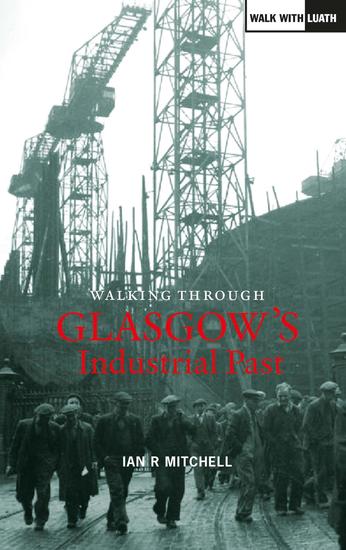
    Walking Through Glasgow's Industrial Past sets out to retrieve the hidden architectural, cultural and historical riches of some of Glasgow's industrial and working-class districts. Many who enjoy the fruits of Glasgow's recent gentrification may be surprised and delighted by the gems which Ian Mitchell has uncovered beyond the usual haunts.
    Show book
  • The Treasure Of Treasures For Alchemists - cover

    The Treasure Of Treasures For...

    Paracelsus The Great

    • 0
    • 0
    • 0
    This is a collection of five alchemical tracts written by one of the most famous alchemists who was said to have discovered the Philosopher's Stone. In these writings Paracelsus attempts to educate the reader about the nature of the Philosopher's Stone and the scientific principles from which we can be assured of its existence and understand how it works. Like all alchemical tracts, the language is very cryptic and allegorical so as to be unintelligible to the unworthy.
    Show book
  • Abortion - a personal story a political choice - cover

    Abortion - a personal story a...

    Pauline Harmange

    • 0
    • 0
    • 0
    From the author of I Hate Men, a personal and political reflection on abortion rights. 


    Discussion about abortion and associated rights are often limited to either "anti-abortion" or "pro-choice," the latter of which focuses on the importance of having the right to choose, rather than on what that right means for real people. 


    In this timely essay, Pauline Harmange provides an intimate, detailed account of her abortion. Reminiscent of Annie Ernaux's Happening, Abortion is nuanced, complex, honest, and precise. Harmange gives voice to the emotions, reflections, and contradictions that someone could experience when they choose to terminate a pregnancy. 


    At a time in which women's reproductive rights are being called into question around the world, Abortion is a clarion call, a powerful personal testimony, and a resolutely political vision: to restore power to our experiences, all our experiences, by sharing them, and to transform society for the better.
    Show book
  • What Is Property? - An Inquiry into the Principle of Right and of Government - cover

    What Is Property? - An Inquiry...

    Pierre-Joseph Proudhon

    • 0
    • 0
    • 0
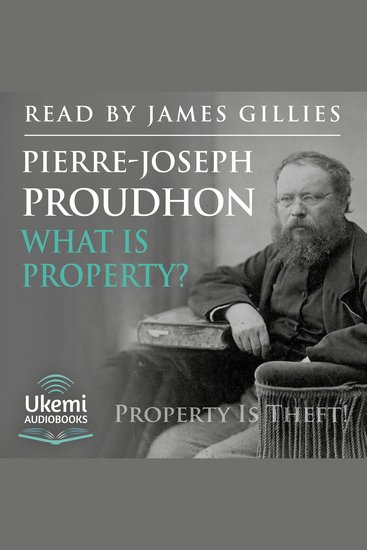
    ‘Property is Theft’, a phrase which has passed into common parlance, was the rallying call of Pierre-Joseph Proudhon’s political treatise What Is Property? Proudhon (1809-1865) was both admired and excoriated. A political theorist of the first order, he was vilified in his native France by the Communists and the Monarchists alike, though admired by Karl Marx as well as many in the nation’s academia and judiciary who valued the clarity of his thought and analytical method.  
     
    He criticised both Right and Left (the very definition of French political thinking), describing them as two sides of the same coin. Their solutions to society’s ills, he said, were like Thesis and Antithesis, based on a common error and both inadequate to the task of healing society. He offered, instead, a third way, which he called his Synthesis. Regarded as the founder of modern Anarchism, his aim was not to engender chaos, as the word anarchy often connotes, but to suggest a workable, political, and economic foundation for society which would promote order and equity for all under the most unfettered conditions of individual liberty.  
     
    Proudhon grew up in poverty, and was home schooled as a child, but received a bursary in his youth sufficient to allow him to attend the City College in his home town (though not sufficient, it seems, to buy him shoes). There, he discovered the library which introduced him to a world, classical and contemporary, previously denied him. Lacking wealth or contacts, he worked variously as a printer, a compositor and proof-reader by day and an essayist by night, learning Latin along the way to assist in his work. In 1830, a friend, a scholar, invited Proudhon to join him in Paris to pursue his philosophical writings full time. When a cholera outbreak forced his return home, Proudhon spent the next few years juggling his two careers. In 1839, he applied for a pension (bursary) at the Academy of Besançon which obliged him to write works on its behalf.  
     
    What Is Property?, published in France in 1840, was his first. It was so controversial that little else followed. However, it established his reputation, and he was eventually able to pursue his philosophical work full time. What Is Property? (First Memoir) attempts to uncover the roots of poverty and associated social ills and examines different attitudes to poverty and wealth from the Greeks to the present day. Proudhon quickly identifies a common thread, property, which he distinguishes from possession, and argues that only a fundamental, though gradual, abandonment of property (as an asset) and all that flows from it, can rescue society from its current conflicts. The memoir seeks to illuminate the underlying causes of war, poverty, slavery, and oppression and points the way to a solution. In effect, it is a practical manual for the survival of mankind. The Second Memoir (1841), included on this recording, is Proudhon’s response to the criticisms of the First Memoir, initially uncomprehending and then self-assured by turns. What Is Property? is Proudhon’s masterwork. It divides opinion, but no one who hears it can come away with their view of their own world unchanged.  
     
    Translation: Benjamin R. Tucker.
    Show book

  • Light in the Dark - The Last Sanctuary from the Holocaust - cover

    Light in the Dark - The Last...

    Robert Marshall

    • 0
    • 0
    • 0
    An extraordinary true story of survival and courage through the Holocaust. 


    Poland, 1943. It was the last refuge of the desperate, a warren of sewers underneath their city. Above, as the Nazis destroyed the ghetto of the city of Lvov, a small band of Jews escaped into a grim network of tunnels, living for fourteen months with the city's waste, the sudden floods, the fumes and the damp, the rats, the darkness, and the despair. 


    Their only support was a lone sewer worker, an ex-criminal who constantly threatened to leave them. Many died; some falling into the rushing waters of the river, some simply of exhaustion. At one point the survivors found themselves trapped in a chamber, filling to the roof with storm-water. 


    Yet survive they did, even infiltrating the camps above to find their missing relatives. When the Russians liberated Lvov, they emerged from the sewers filthy, bent double, emaciated, unrecognizable . . . but alive. 


    This powerful story based on a long series of interviews, and a hitherto private diary, creates a blazing testimony to human faith and endurance.
    Show book
  • How to Write a Series - A Guide to Series Types and Structure plus Troubleshooting Tips and Marketing Tactics - cover

    How to Write a Series - A Guide...

    Sara Rosett

    • 0
    • 0
    • 0
    Struggling to structure your book series? Learn how to make a series work for you: increase reader engagement and take advantage of the built-in marketing potential a series gives you.Are you unsure which series structure is best for you? Or are you several books into a series, but you’re stuck? Do you want to expand your literary universe but aren’t sure how to do it? Perhaps you have a series languishing in your backlist, and you need ideas on how to market it. Get the knowledge you need to make smart decisions about your series with How to Write a Series. You’ll learn: The three basic types of seriesThe benefits and drawbacks of writing each type of seriesTips for extending your series beyond your original planIdeas for creating spinoffs and expanding your literary universeHow to know when it’s time to end a seriesHow to save time writing your series and how to keep track of detailsHow to deal with the problems that result from being locked into a story world How to refresh your interest in a series if you’ve grown boredCreative ways to market your series	I’ve been writing for fifteen years as both a hybrid and independent author. I’ve published over twenty-five fiction books in four different series. Everything I’ve learned about writing a series has been through trial and error. I hope my lessons-learned will give you a shortcut when it comes to writing your series, plus tips for troubleshooting problems, and ideas for promoting your series.Unlock the power of a series in your author career with How To Write a Series.
    Show book