¡Acompáñanos a viajar por el mundo de los libros!
Añadir este libro a la estantería
Grey
Escribe un nuevo comentario Default profile 50px
Grey
Suscríbete para leer el libro completo o lee las primeras páginas gratis.
All characters reduced
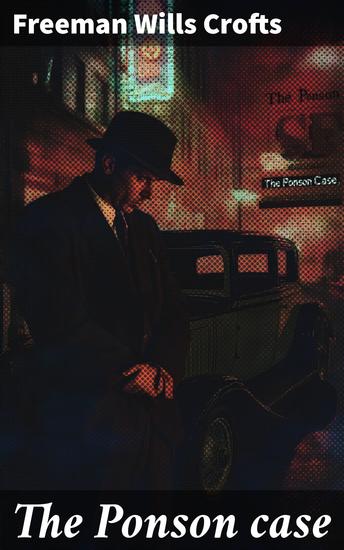
The Ponson case - cover

The Ponson case

Freeman Wills Crofts

Editorial: Good Press

  • 0
  • 0
  • 0

Sinopsis

In "The Ponson Case," Freeman Wills Crofts intricately weaves a compelling narrative that delves into the complexities of a singular crime through the lens of meticulous police procedural. The novel is characterized by Crofts' signature attention to detail and methodical plot development that reflects the principles of the Golden Age of detective fiction. Set against the backdrop of early 20th-century Britain, the story unfolds with the mysterious disappearance of a wealthy businessman, triggering a chain of events that lead to complex investigations and unexpected twists, ultimately revealing profound social commentary on the era's moral and ethical dilemmas. Freeman Wills Crofts, an established figure in crime fiction, was notably inspired by his background in engineering and his deep involvement in railway operations. This experience not only honed his analytical skills but also provided him with a rich tapestry of environments and characters to draw upon. Crofts' distinguished career as an author, marked by his pioneering focus on the detective's methodical approach, reflects his indelible influence on the genre and his commitment to realism that captivates readers. This book will appeal to both ardent fans of classic detective fiction and contemporary readers looking for a masterfully crafted mystery. Crofts' deft interplay of characterization and intricate plotting offers a thrilling reading experience that invites readers to engage with the text on a deeper level, making "The Ponson Case" an indispensable addition to any literary collection.
Disponible desde: 02/03/2025.
Longitud de impresión: 210 páginas.
Otros libros que te pueden interesar

  • Laura Silver Bell - cover

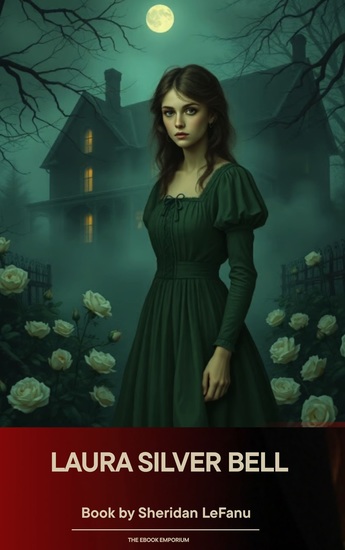
    Laura Silver Bell

    Joseph Sheridan Le Fanu

    • 0
    • 0
    • 0
    "She heard the chiming of the silver bells, and she knew the hills were calling her home."
    
    In a secluded village nestled beneath the shadow of ancient, brooding hills, dwells the beautiful and ethereal Laura Silver Bell. Unlike the other village girls, Laura feels a strange, magnetic pull toward the wild, unpeopled places of the moor. But in the world of Le Fanu, the hills have eyes, and the "Good People" (the Sidhe) are not the whimsical fairies of nursery rhymes—they are ancient, predatory, and possessive. When a mysterious and charismatic stranger appears, Laura finds herself caught between the warmth of human love and a chilling supernatural inheritance. It is a tale of enchantment that warns: once you hear the silver bells, you can never truly belong to the world of men again.
    
    The "Dark" Fairy Tale: Le Fanu strips away the Victorian "flower fairy" imagery to return to the roots of Celtic myth. His fairies are tall, silent, and dangerous beings who exist in the "liminal" spaces of the world. The story explores the "Changeling" myth through a sophisticated Gothic lens, making the supernatural feel like a physical, inevitable force of nature.
    
    A Heroine of Two Worlds: Laura is one of Le Fanu's most complex female characters. Her "silver" beauty is both a blessing and a curse, marking her as someone who doesn't quite fit into the mundane life of her village. Her struggle is a poignant metaphor for the outsider—the person who hears a music that no one else can.
    
    The Master of the Eerie: Laura Silver Bell showcases Le Fanu's ability to weave a sense of "wrongness" into the natural landscape. The rustle of the grass, the shifting shadows of the hills, and the sudden silence of the birds all build toward a climax that is as beautiful as it is devastating.
    
    Follow the music into the mist. Purchase "Laura Silver Bell" today.
    Ver libro
  • The Lottery Ticket - From their pens to your ears genius in every story - cover

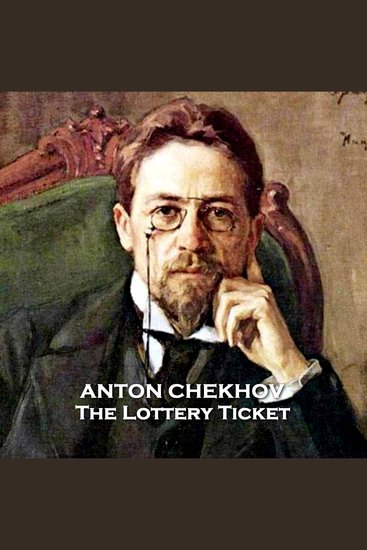
    The Lottery Ticket - From their...

    Anton Chekhov

    • 0
    • 0
    • 0
    Anton Pavlovich Chekhov was born on 29th January 1860 in Taganrog, on the south coast of Russia.  
    His family life was difficult; his father was strict and over-bearing but his mother was a passionate story-teller, a subject Chekhov warmed to. As he later said; ‘our talents we got from our father, but our soul from our mother’.  
    At school Chekhov was distinctly average. At 16 his father mis-managed his finances and was declared bankrupt. His family fled to Moscow. Chekhov remained and eked out a living by various means, including writing and selling short sketches to newspapers, to finish his schooling. That completed and with a scholarship to Moscow University obtained he rejoined his family. 
    He was able to help support them by selling satirical sketches and vignettes of Russian lifestyles and gradually obtained further commissions. In 1884, he qualified as a physician and, although it earned him little, he often treated the poor for free, he was fond of saying ‘Medicine is my lawful wife, and literature is my mistress.’ 
    His own health was now an issue as he began to cough up blood, a symptom of tuberculosis.  Despite this his writing success enabled him to move the family into more comfortable accommodation.  
    Chekhov wrote over 500 short stories which included many, many classics including ‘The Kiss’ and ‘The Lady with a Dog’.  His collection ‘At Dusk’ won him the coveted Pushkin Prize when was only 26.  
    He was also a major playwright beginning with the huge success of ‘Ivanov’ in 1887.   
    In 1892 Chekhov bought a country estate north of Moscow. Here his medical skills and money helped the peasants tackle outbreaks of cholera and bouts of famine. He also built three schools, a fire station and a clinic.  It left him with less time for writing but the interactions with real people gained him detailed knowledge about the peasantry and their living conditions for his stories.  
    His most famous work, ‘The Seagull’ was received disastrously at its premiere in St Petersburg. It was later restaged in Moscow to highlight its psychological aspects and was a huge success. It led to ‘Uncle Vanya’, ‘The Three Sisters’ and ‘The Cherry Orchard’.  
    Chekhov suffered a major lung hemorrhage in 1897 while visiting Moscow. A formal diagnosis confirmed tuberculosis and the doctors ordered changes to his lifestyle.  
    Despite a dread of weddings the elusive literary bachelor quietly married the actress Olga Knipper, whom he had met at rehearsals for ‘The Seagull’, on 25th May 1901. 
    By May 1904 with his tuberculosis worsening and death imminent he set off for the German town of Badenweiler writing cheerful, witty letters to his family and assuring them his health was improving.  
    On 15th July 1904 Anton Chekhov died at Badenweiler.  He was 44.
    Ver libro
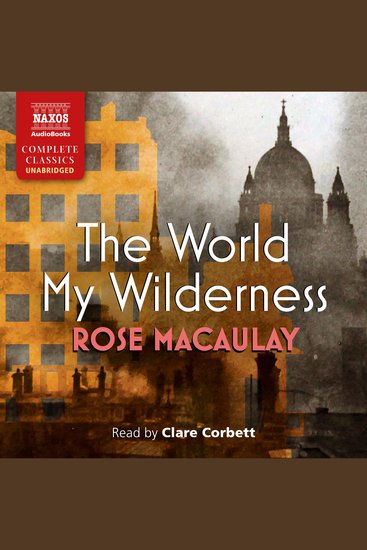
  • The World My Wilderness - cover

    The World My Wilderness

    Rose Macaulay

    • 0
    • 0
    • 0
    Rose Macaulay was a fascinating and influential British writer, known for her wit and intellect. She wrote numerous novels, essays and biographies, and she was highly regarded for her versatility as a writer. Her works often explored themes of social change, women’s rights and the complexities of human relationships. She had a unique ability to capture the essence of her characters and the world they inhabited, making her a much-admired figure in the literary world.
    The World My Wilderness was published in 1955 and follows the story of Barbary Deniston, a 17-year-old girl growing up in London during World War II. Barbary’s parents are divorced, and she divides her time between her mother’s bohemian lifestyle and her father’s more conventional life. The novel explores themes of identity, family, and the impact of war on individuals and society. It is considered one of Macaulay’s most personal and autobiographical works.
    Ver libro
  • The Murders in the Rue Morgue - cover

    The Murders in the Rue Morgue

    Edgar Allan Poe

    • 0
    • 0
    • 0
    "The Murders in the Rue Morgue" is a short story by Edgar Allan Poe, first published in Graham's Magazine in 1841. It is often considered the first modern detective story and features the character C. Auguste Dupin, who later became a prototype for many fictional detectives to come. The story revolves around a brutal double murder in Paris that baffles the police. C. Auguste Dupin, a brilliant amateur detective, takes on the challenge of solving the seemingly inexplicable crime. Through deductive reasoning and keen observation, Dupin unravels the mystery in a dramatic and unexpected manner.
    Ver libro
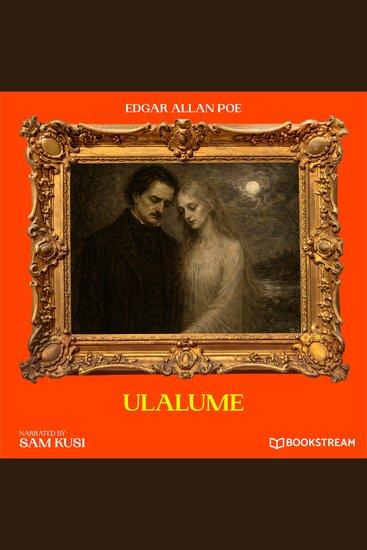
  • Ulalume - cover

    Ulalume

    Edgar Allan Poe

    • 0
    • 0
    • 0
    "Ulalume" is a poem written by Edgar Allan Poe in 1847. Much like a few of Poe's other poems (such as "The Raven", "Annabel Lee", and "Lenore"), "Ulalume" focuses on the narrator's loss of his beloved due to her death. Poe originally wrote the poem as an elocution piece and, as such, the poem is known for its focus on sound. Additionally, it makes many allusions, especially to mythology, and the identity of Ulalume herself, if a real person, has been a subject of debate.
    Ver libro
  • Henry the Fourth - cover

    Henry the Fourth

    William Shakespeare

    • 0
    • 0
    • 0
    This updated edition offers a strongly theatrical perspective on the origins of Shakespeare's The First Part of King Henry IV and the history of its interpretation. The introduction clarifies the play's surprising, de-centred dramatic structure, questioning the dominant assumption that the drama focuses on the education of Prince Hal. It calls attention to the effects of civil war upon a broad range of relationships. Falstaff's unpredictable vitality is explored, together with important contemporary values of honour, friendship, festivity and reformation. Extensive lexical glosses of obscure, ambiguous or archaic meanings make the rich wordplay accessible. The notes also provide a thorough commentary on Shakespeare's transformation of his sources (particularly Holinshed's Chronicles) and suggest alternative stagings. This updated edition contains a new introductory section by Katharine A. Craik, which describes recent stage, film and critical interpretations, and an updated reading list.
    Ver libro