Join us on a literary world trip!
Add this book to bookshelf
Grey
Write a new comment Default profile 50px
Grey
Subscribe to read the full book or read the first pages for free!
All characters reduced
Mr Midshipman Easy - Enriched edition - cover

Mr Midshipman Easy - Enriched edition

Frederick Marryat

Publisher: DigiCat

  • 0
  • 0
  • 0

Summary

In "Mr. Midshipman Easy," Frederick Marryat offers a vivid and engaging tale of a young man's adventures in the British Navy during the early 19th century. The novel is characterized by Marryat's keen observation and rich detail, weaving together nautical realism with the comedic misadventures of its protagonist, the naïve yet endearing Mr. Easy. As he navigates the trials of naval life, from enlistment to daunting battles, the story unfolds against a backdrop of growing maritime imperialism, reflecting the societal attitudes and values of the time, particularly regarding class and masculinity. Frederick Marryat, a naval officer himself, drew upon his personal experiences in the Royal Navy to create a narrative brimming with authenticity and insight. His literary career was significantly influenced by his own adventures at sea, alongside a desire to depict both the exhilarating and challenging aspects of naval life. Marryat's firsthand knowledge enables him to produce a compelling mix of adventure and social commentary, establishing him as a pioneer of the maritime novel genre. "Mr. Midshipman Easy" is not only a captivating adventure story; it serves as an important reflection on naval life in a transformational era of British history. Readers who revel in tales of resilience, growth, and humor will find Marryat's work both enlightening and entertaining, making it a valuable addition to any literary collection.

In this enriched edition, we have carefully created added value for your reading experience:
- A succinct Introduction situates the work's timeless appeal and themes.
- The Synopsis outlines the central plot, highlighting key developments without spoiling critical twists.
- A detailed Historical Context immerses you in the era's events and influences that shaped the writing.
- A thorough Analysis dissects symbols, motifs, and character arcs to unearth underlying meanings.
- Reflection questions prompt you to engage personally with the work's messages, connecting them to modern life.
- Hand‐picked Memorable Quotes shine a spotlight on moments of literary brilliance.
- Interactive footnotes clarify unusual references, historical allusions, and archaic phrases for an effortless, more informed read.
Available since: 08/15/2022.
Print length: 335 pages.

Other books that might interest you

  • The Richest Man In Babylon - cover

    The Richest Man In Babylon

    George S. Clason

    • 0
    • 0
    • 0
    The Richest Man in Babylon, based on "Babylonian parables", has been hailed as the greatest of all inspirational works on the subject of thrift, financial planning, and personal wealth. In simple language, these fascinating and informative stories set you on a sure path to prosperity and its accompanying joys. A celebrated bestseller, it offers an understanding and a solution to your personal financial problem. Revealed inside are the secrets to acquiring money, keeping money, and making money earn more money. This original edition has the original language, content, and message from George S. Clason as intended in 1926. It's all here, uncensored.
    Show book
  • Dracula – Chapter 6: Jonathan Harker’s Journal - A Chapter-by-Chapter Reading of Bram Stoker’s Classic - cover

    Dracula – Chapter 6: Jonathan...

    Bram Stoker

    • 0
    • 0
    • 0
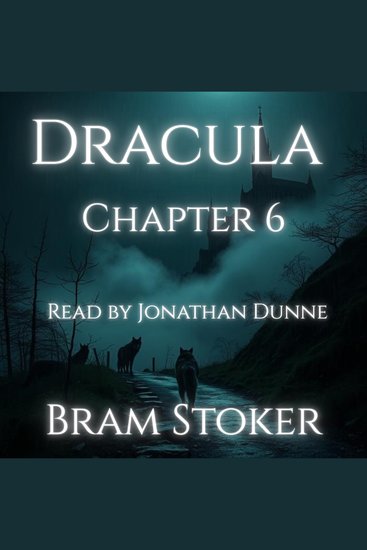
    In this chapter, the narrative shifts back to Jonathan Harker, detailing his harrowing experiences in Count Dracula’s castle. We witness the mounting terror of his captivity, his growing sense of isolation, and the eerie, supernatural events that surround him. The Gothic atmosphere deepens, and the reader feels the creeping dread of the unknown as Jonathan confronts the Count’s strange powers. 
    Meanwhile, the world outside begins to take shape through letters and newspaper clippings, hinting at connections that will soon draw Mina, Lucy, and others into the dark web surrounding Dracula. The tension between ordinary life and supernatural horror intensifies, laying the groundwork for the chilling events to come. 
    This is Chapter 6 of Bram Stoker’s Dracula, narrated by Amazon bestselling horror author Jonathan Dunne — part of a complete chapter-by-chapter audiobook series that brings the Gothic classic to life with haunting atmosphere, rich characterization, and cinematic storytelling. 
    Experience Jonathan’s mounting fear, the shadow of Dracula’s sinister presence, and the uneasy anticipation that makes the novel’s horror all the more compelling. 
    📖 Public domain text. Original publication: 1897.
    Show book
  • Elephants Can Remember - A Hercule Poirot Mystery: The Official Authorized Edition - cover

    Elephants Can Remember - A...

    Agatha Christie

    • 0
    • 0
    • 0
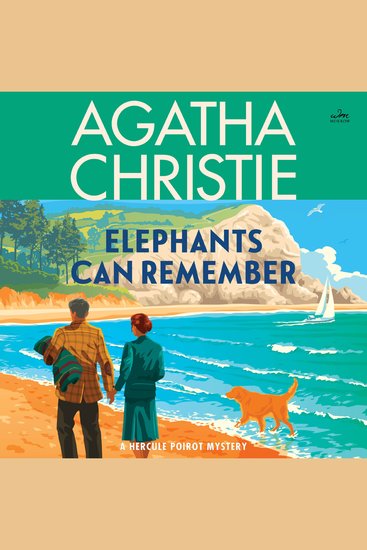
    A classic Hercule Poirot investigation, Agatha Christie’s Elephants Can Remember has the expert detective delving into an unsolved crime from the past involving the strange death of a husband and wife. 
    Hercule Poirot stood on the clifftop. Here, many years earlier, there had been a fatal accident followed by the grisly discovery of two bodies—a husband and wife who had been shot dead. 
    But who had killed whom? Was it a suicide pact? A crime of passion? Or cold-blooded murder? Poirot delves into the past and discovers that “old sins leave long shadows.”
    Show book
  • The Fall of the House of Usher - cover

    The Fall of the House of Usher

    Edgar Allan Poe

    • 0
    • 0
    • 0
    Title: The Fall of the House of Usher 
    Author: Edgar Allan Poe 
    Narrator: Jonathan Dunne 
    Original Publication: 1839 
    Public Domain: Yes 
    Series Placement: Number 45 in the Timeless Terrors series 
    Description: 
    The Fall of the House of Usher by Edgar Allan Poe stands as one of the defining masterpieces of gothic horror — a tale where decay, madness, and the supernatural intertwine within the crumbling walls of a doomed mansion. When an unnamed narrator visits the melancholic Roderick Usher and his ailing sister Madeline, he becomes ensnared in a world where the line between reality and delusion dissolves, and the very house itself seems alive with a malignant sentience. 
    Poe’s prose conjures an atmosphere of suffocating dread, exploring the collapse of body, mind, and bloodline. Every shadow, every whisper within the Usher estate echoes the inevitability of ruin — a meditation on mortality, isolation, and the inescapable power of fear. 
    Narrated by Amazon bestselling horror author Jonathan Dunne, this performance captures the story’s haunting rhythm and the slow, irresistible descent into terror that has enthralled readers for nearly two centuries. While the text is in the public domain, this narration is an original performance and copyright © 2025 Jonathan Dunne. 
    Part of Timeless Terrors, a series devoted to resurrecting the masters of the macabre and uncanny, The Fall of the House of Usher endures as one of Poe’s most enduring works — a symphony of melancholy and madness that reminds us: when the house falls, it takes the soul with it.
    Show book
  • Word Meal - Poetry Entrée with a Side of Novella Get Well Soon! - cover

    Word Meal - Poetry Entrée with a...

    Rodolfo Villarreal-Calderon

    • 0
    • 0
    • 0
    From being a resident physician during the COVID-19 pandemic to living passionately in travel, romance, and heartache, Rodolfo Villarreal-Calderon is a literary chef to an audience who did not realize their hunger—until served his Word Meal. It is a two-part course: first, 99 poems, and second, an 82-page short story (novella). 
    The poetry is organized around the three abstractions that connect us all—Love, Time, and Death. Love of lovers, of dogs, and of self; the Death of body, our past, and who we once were; the Time within which this all transpires—the Time of your life. You are invited to explore each abstraction and their combinations. Buffet style. 
    In the drama that is a healthcare encounter, the patient is—and always will be—the protagonist. Get Well Soon! is a novella revolving around a patient admitted to the hospital. The patient narrator reflects on the experiences of being well and ill, as well as the subtle and comical workings of an academic hospital team and hospital stay.
    Show book
  • The White Pigeon - From their pens to your ears genius in every story - cover

    The White Pigeon - From their...

    Maria Edgeworth

    • 0
    • 0
    • 0
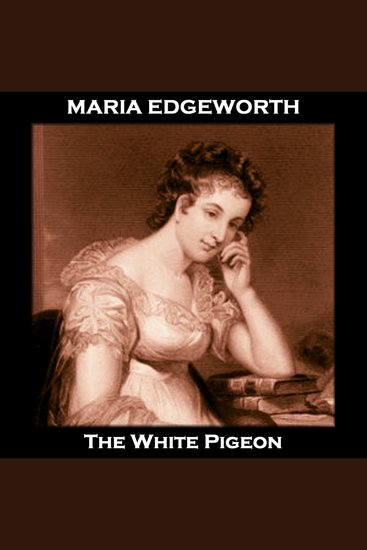
    Maria Edgeworth was born at Black Bourton, Oxfordshire on January 1st 1768. Her early years were with her mother's family in England. Sadly, her mother died when Maria was five.  
    Maria was educated at Mrs Lattafière's school in Derby in 1775. There she studied dancing, French and other subjects.  Maria transferred to Mrs Devis's school in Upper Wimpole Street, London. Her father began to focus more attention on Maria in 1781 when she nearly lost her sight to an eye infection.  
    She returned home to Ireland at 14 and took charge of her younger siblings. She herself was home-tutored by her father in Irish economics and politics, science, literature and law. Despite her youth literature was in her blood.  Maria also became her father's assistant in managing the family’s large Edgeworthstown estate.  
    Maria first published 1795 with ‘Letters for Literary Ladies’. That same year ‘An Essay on the Noble Science of Self-Justification’, written for a female audience, advised women on how to obtain better rights in general and specifically from their husbands. 
    ‘Practical Education’ (1798) is a progressive work on education. Maria’s ambition was to create an independent thinker who understands the consequences of his or her actions. 
    Her first novel, ‘Castle Rackrent’ was published anonymously in 1800 without her father's knowledge. It was an immediate success and firmly established Maria’s appeal to the public.  
    Her father married four times and the last of these to Frances, a year younger and a confidante of Maria, who pushed them to travel more widely: London, Britain and Europe were all now visited. 
    The second series of ‘Tales of Fashionable Life’ (1812) did so well that she was now the most commercially successful novelist of her age.  
    She particularly worked hard to improve the living standards of the poor in Edgeworthstown and to provide schools for the local children of all and any denomination. 
    After a visit to see her relations Maria had severe chest pains and died suddenly of a heart attack in Edgeworthstown on 22nd May 1849. She was 81.
    Show book