Join us on a literary world trip!
Add this book to bookshelf
Grey
Write a new comment Default profile 50px
Grey
Subscribe to read the full book or read the first pages for free!
All characters reduced
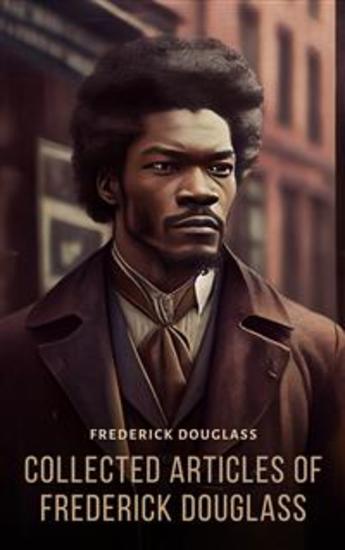
Collected Articles of Frederick Douglass - cover

Collected Articles of Frederick Douglass

Frederick Douglass

Publisher: Interactive Media

  • 0
  • 0
  • 0

Summary

A compilation of insightful essays and speeches by the renowned abolitionist and orator, Frederick Douglass. This collection brings together some of his most powerful and eloquent writings on the issues of slavery, freedom, and racial justice, showcasing his intellectual brilliance and tireless advocacy for the rights of African Americans. Through his incisive analysis and powerful rhetoric, Douglass challenges the prevailing views of his time and calls for a radical transformation of American society.
Available since: 02/23/2023.
Print length: 28 pages.

Other books that might interest you

  • The Shocking Truth about Economic Inequality - cover

    The Shocking Truth about...

    Zoey Fraisers

    • 0
    • 0
    • 0
    Economic inequality is one of the most pressing issues of our time. While some individuals amass enormous wealth, millions struggle to afford basic necessities. The gap between the rich and the poor has widened significantly over the past few decades, raising concerns about fairness, economic stability, and the future of society. This growing divide affects nearly every aspect of life, from access to education and healthcare to political representation and social mobility. Understanding the causes and consequences of economic inequality is essential to addressing the challenges it presents.  
      
    Historically, economic disparities have existed in every civilization, but modern inequality has taken on new dimensions. The rise of globalization, rapid technological advancements, and financial deregulation have contributed to an economic system that disproportionately benefits the wealthy. While free markets have driven innovation and lifted millions out of poverty, they have also concentrated wealth and power in the hands of a few. In many countries, the middle class—once the backbone of economic stability—has eroded, leaving a stark contrast between the privileged elite and those struggling to keep up.  
    Government policies play a crucial role in shaping economic inequality. Tax structures, labor laws, and social welfare programs determine how wealth is distributed within a society. In some cases, policies favor large corporations and high-income individuals, exacerbating disparities. Meanwhile, stagnant wages, the decline of labor unions, and rising costs of living make it increasingly difficult for working-class families to get ahead. The debate over economic inequality is not just about wealth but about opportunity. When financial barriers prevent people from accessing quality education, healthcare, and stable employment, economic mobility declines, reinforcing cycles of poverty. 
    Show book
  • The City - cover

    The City

    Robert E. Park, Ernest W....

    • 0
    • 0
    • 0
    First published in 1925, The City is a trailblazing text in urban history, urban sociology, and urban studies. Its innovative combination of ethnographic observation and social science theory epitomized the Chicago school of sociology. Robert E. Park, Ernest W. Burgess, and their collaborators were among the first to document the interplay between urban individuals and larger social structures and institutions, seeking patterns within the city’s riot of people, events, and influences. As sociologist Robert J. Sampson notes in his new foreword, though much has changed since The City was first published, we can still benefit from its charge to explain where and why individuals and social groups live as they do.
    Show book
  • The Plainsman: A Story of Wild Bill Hickok - cover

    The Plainsman: A Story of Wild...

    Frank Jenners Wilstach

    • 0
    • 0
    • 0
    "In the following pages I have endeavoured to give the reader a plain, honest, homespun account of my state in life, and some few of the difficulties which have attended me along its journey, down to this time. I am perfectly aware, that I have related many small and, as I fear, uninteresting circumstances; but if so, my apology is, that it was rendered necessary by a desire to link the different periods of my life together, as they have passed, from my childhood onward, and thereby to enable the reader to select such parts of it as he may relish most, if, indeed, there is any thing in it which may suit his palate."
    Show book
  • Sophist - A Deep Inquiry into Falsehood Language and Reality – Plato’s Study of the Nature of Being - cover

    Sophist - A Deep Inquiry into...

    Plato, Tim Zengerink

    • 0
    • 0
    • 0
    What if deception had a logic of its own? 
    In Sophist, Plato dares to tackle the concept of falsehood—not as error, but as something that seems to exist within language and thought. Through a dense but gripping dialogue between the Eleatic Stranger and Theaetetus, the discussion exposes the tricks of sophistry, the instability of language, and the paradox of how “what is not” can still be spoken of and understood. 
    This modernized audiobook delivers one of Plato’s most intellectually daring texts with clarity and precision. Perfect for thinkers, scholars, and seekers of truth. 
    What you’ll discover inside: 
    •	A bold philosophical exploration of non-being, falsehood, and the metaphysics of language 
    •	A deep critique of sophistry, appearance, and rhetorical manipulation 
    •	Plato’s method of division—used to isolate philosophical concepts with surgical accuracy 
    •	A readable, listener-friendly adaptation of one of Plato’s most abstract and influential works 
    If you want to unravel the logic behind illusion and sharpen your understanding of truth, Sophist is essential listening.
    Show book
  • Women Intersectionality & Europe - Exploring lived realities and the path to gender equality - cover

    Women Intersectionality & Europe...

    Tamara Makoni

    • 0
    • 0
    • 0
    How does identity shape the lives of women in Europe today? And what steps can we take to empower all women and thus achieve true gender equality? 
    Women, Intersectionality & Europe offers a clear and insightful look at what it means to be a woman in 21st century Europe. It brings together academic research, personal stories and case studies from across the continent to explore how women live, the unique challenges that they face, and how we can use this understanding to create a more inclusive future. It will engage your curiosity, deepen your awareness and inspire you to imagine a fairer, more equal future. 
    About the author 
    Tamara Makoni is an inclusion and culture specialist who in 2024 was named one of Europe's leading voices on diversity, equity and inclusion. She works extensively on inclusive community building, intersectionality and gender equality, and her thought leadership has been featured by several leading publications.
    Show book
  • The Brexit Referendum - The UK's EU Departure - cover

    The Brexit Referendum - The UK's...

    Nova Ashford

    • 0
    • 0
    • 0
    The Brexit referendum, which took place on June 23, 2016, marked a pivotal moment in the history of the United Kingdom and its relationship with the European Union. The decision to leave the EU, known as Brexit, came after years of mounting debate and growing division within British society and politics. The referendum was the result of a long-standing debate over the UK’s membership in the European Union, with political, economic, and cultural tensions playing a central role in shaping the outcome. 
    The road to Brexit began long before the referendum vote. The United Kingdom joined the European Economic Community (EEC) in 1973, a precursor to the European Union, and since then, the nation’s relationship with the organization has been fraught with disagreement. Euroscepticism, or skepticism about the benefits of EU membership, had been steadily rising, particularly among certain political groups and sections of the public. Critics of the EU argued that membership undermined national sovereignty and that the UK was bound by regulations and policies that did not align with its interests. This sentiment was exacerbated by issues such as immigration, trade regulations, and the financial burden of contributing to the EU budget. 
    In the years leading up to the referendum, the political landscape of the UK began to shift. The rise of UKIP (the United Kingdom Independence Party), led by Nigel Farage, brought the issue of EU membership into sharper focus. UKIP’s success in the 2014 European Parliament elections, where it emerged as the largest UK party, put pressure on the Conservative Party to address the growing concerns over the EU. Prime Minister David Cameron, seeking to quell dissent within his own party and avoid a potential electoral challenge from UKIP, promised a referendum on EU membership in 2013. This pledge set the stage for the referendum that would ultimately decide the UK’s fate within the EU.
    Show book