Join us on a literary world trip!
Add this book to bookshelf
Grey
Write a new comment Default profile 50px
Grey
Subscribe to read the full book or read the first pages for free!
All characters reduced
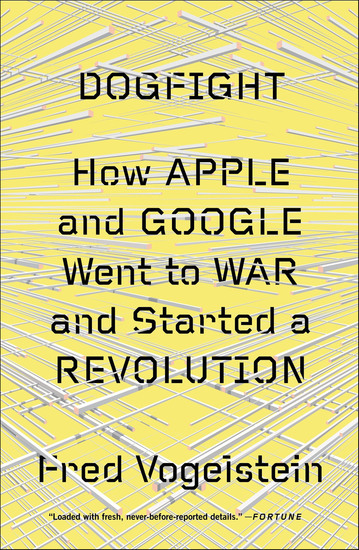
Dogfight - How Apple and Google Went to War and Started a Revolution - cover

Dogfight - How Apple and Google Went to War and Started a Revolution

Fred Vogelstein

Publisher: Sarah Crichton Books

  • 0
  • 0
  • 0

Summary

Behind the bitter rivalry between Apple and Google—and how it's reshaping the way we think about technologyThe rise of smartphones and tablets has altered the industry of making computers. At the center of this change are Apple and Google, two companies whose philosophies, leaders, and commercial acumen have steamrolled the competition. In the age of Android and the iPad, these corporations are locked in a feud that will play out not just in the mobile marketplace but in the courts and on screens around the world.     Fred Vogelstein has reported on this rivalry for more than a decade and has rare access to its major players. In Dogfight, he takes us into the offices and board rooms where company dogma translates into ruthless business; behind outsize personalities like Steve Jobs, Apple's now-lionized CEO, and Eric Schmidt, Google's executive chairman; and inside the deals, lawsuits, and allegations that mold the way we communicate. Apple and Google are poaching each other's employees. They bid up the price of each other's acquisitions for spite, and they forge alliances with major players like Facebook and Microsoft in pursuit of market dominance.Dogfight reads like a novel: vivid nonfiction with never-before-heard details. This is more than a story about what devices will replace our cell phones and laptops. It's about who will control the content on those devices and where that content will come from—about the future of media and the Internet in Silicon Valley, New York, and Hollywood.
Available since: 03/26/2024.
Print length: 273 pages.

Other books that might interest you

  • What I Was Doing While You Were Breeding - A Memoir - cover

    What I Was Doing While You Were...

    Kristin Newman

    • 0
    • 0
    • 0
    "What I Was Doing While You Were Breeding is kind of like if Eat, Pray, Love were written by your funniest friend." —Rachel Dratch 


    Kristin Newman spent much of her twenties and thirties buying dresses to wear to her friends' weddings and baby showers. Not ready to settle down and in need of an escape from her fast-paced job as a sitcom writer, Kristin instead traveled the world, often alone, for several weeks each year. In addition to falling madly in love with the planet, Kristin fell for many attractive locals, men who could provide the emotional connection she wanted without costing her the freedom she desperately needed. 


    Kristin introduces listeners to the Israeli bartenders, Finnish poker players, sexy Bedouins, and Argentinean priests who helped her transform into "Kristin-Adjacent" on the road—a slower, softer, and, yes, sluttier version of herself at home. Equal parts laugh-out-loud storytelling, candid reflection, and wanderlust-inspiring travel tales, What I Was Doing While You Were Breeding is a compelling debut that will have listeners rushing to renew their passports.
    Show book
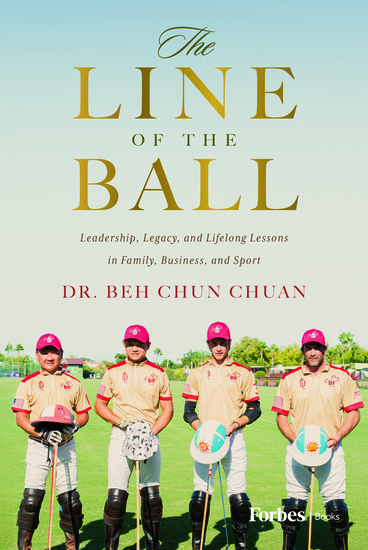
  • The Line of the Ball - Leadership Legacy and Lifelong Lessons in Family Business and Sport - cover

    The Line of the Ball -...

    Beh Chun Chuan

    • 0
    • 0
    • 0
    In the game of polo, "following the line of the ball" means staying on the optimal path to maintain momentum and control. For Dr. Beh Chun Chuan, this principle has guided not just his polo playing but his entire approach to business and life.
    Show book
  • Katharine Barnwell - How One Woman Revolutionized Modern Missions - cover

    Katharine Barnwell - How One...

    Jordan K. Monson

    • 0
    • 0
    • 0
    What if Mother Teresa or Billy Graham lived and worked — and nobody knew their names? What if one of the church’s most influential missionaries went almost unnoticed?Meet Katharine (Katy) Barnwell. Within Bible translation, she’s a legend. Outside of Bible translation, few have heard of her. But not even Billy Graham holds a candle to what God did through Katy.From hiding as a child from Nazi bombing raids, fleeing civil wars, and remaining calm under terrorist attacks and armed gunmen, to utterly revolutionizing every field she touched, Barnwell’s life proves there is no need to treat the missionary hall of fame as if its ranks are closed. On the contrary, her kingdom labor reveals that God is still in the business of raising up contemporary “greats” who are willing to face danger, go the distance, lift up God’s Word in unprecedented ways, and see the lost turn to Christ in droves. In fact, there may be no “great” in all of church history who matches Barnwell’s level of influence. All around the world, hundreds of millions of new believers read and hear Scripture in their own language because of Barnwell’s work, books, and language training. By some estimates, about 3,000 completed or in-process Bible translations swim directly downstream of her work. Since she rebuilt The Jesus Film Project’s methods, more than 300 million viewers around the world have become followers of Jesus. Given such accomplishments, one might expect Barnwell to be arrogant or aloof, and yet those who know her best report sweet surprise at how warm, endearing, patient, and feisty she is.Her African colleagues call her Mama Katy, and such a name is fitting. She is truly the mother of modern Bible translation and the mother of twenty-first-century missions.
    Show book
  • Christmas at Red Butte - From their pens to your ears genius in every story - cover

    Christmas at Red Butte - From...

    Lucy Ward Montgomery

    • 0
    • 0
    • 0
    The bookshelves of American literature are incredible collections that have gathered together centuries of very talented authors.  From this continent their fame spread and whilst among their number many are now forgotten or neglected their talents endure.  Among them is Lucy Ward Montgomery.
    Show book
  • Charles - The King and Wales - cover

    Charles - The King and Wales

    Huw Thomas

    • 0
    • 0
    • 0
    'It's a book which takes its time and really delves into the pivotal moments in Charles' connection with Wales... We are offered a glimpse at a man who has, over the decades, forged both a more formal support to Wales and a more personal warmth for it.' – Emma Schofield, Wales Arts Review
    'This is a highly readable and lively book, full of anecdote and character... Thomas needs to be praised for producing a well-written and pacy book on a controversial subject which is neither hatchet job nor fawning tribute.' – Myfanwy Alexander, Nation.Cymru
    Before Charles became King, he was Prince of Wales. It was a role he took more seriously than any predecessor of the modern British monarchy. From the moment he was created Prince of Wales in 1958 until his accession to the throne, Charles's approach to the role was to serve Wales and to promote Welsh life. But what impact has he had on the country, and what impression did the Welsh leave on him?
    This book examines the relationship that the Prince nurtured with a nation that meant much more to him than an honorary title. Dozens of interviews have helped Huw Thomas to unearth the untold stories of Charles's work in Wales, alongside the key role he has taken in developing industry, culture and conservation.
    For a man who has spent almost a lifetime waiting to be King, Huw Thomas reveals how Wales prepared Charles for the crown.
    Despite his initial reluctance to come to Wales as a student, his time spent learning the history and language of the Welsh at Aberystwyth in the 1960s fostered a passionate commitment to the nation. Wales has not always returned the compliment, with popular protests and more subtle snubs to his involvement in Welsh affairs. And yet those who have worked with him, and who call him a friend, cite a remarkable ability to make a difference without making a fuss. As a diplomat he is credited with bringing major employers to south Wales, offering jobs to a workforce that had been decimated by the collapse of the coal industry. As a cultural ambassador he revived royal patronage for the arts in Wales and sponsored the finest performers to emerge from the land of song. And as a champion of the natural environment, he has backed the farmers and conservationists who are nurturing the Welsh countryside, not least by employing traditional crafts to create the first royal home in Wales for 400 years.
    Show book
  • Death Ray The: The History and Conspiracy Theories Surrounding Nikola Tesla’s Futuristic Weapon - cover

    Death Ray The: The History and...

    Charles River Editors

    • 0
    • 0
    • 0
    Nikola Tesla was one of history’s greatest scientists, and though he is best known for his pioneering work with electricity, the fact that he is mostly remembered solely for that actually does a disservice to his legacy. Born a Serb in the Austrian Empire, Tesla came to the United States and worked in a laboratory for none other than the Wizard of Menlo Park, Thomas Edison. 
    Having established AC as an electrical supply system, Tesla became a global celebrity, and his devices and inventions fascinated people. Tesla tinkered with everything from X-rays to wireless communications and even attempted a primitive form of the radio. While Tesla was not able to successfully execute the devices and concepts he foresaw, his forward thinking in fields like wireless communication certainly proved prescient, and his futuristic devices and his later reputation for eccentricity helped create the “mad scientist” image that still remains a pop culture fixture. Tesla seemed to have come to grips with this aspect of his legacy late in life, noting, “The scientific man does not aim at an immediate result. He does not expect that his advanced ideas will be readily taken up." 
    During World War I, in December 1915, Tesla gave an interview to The New York Times in which he claimed he was working on something entirely new, a weapon that would use electrical power to instantly destroy a distant target. He explained that this weapon was “so far developed that great destructive effects can be produced at any point on the globe, determined beforehand and with great accuracy.” Tesla called this new weapon the “Teleforce,” and he would continue working on this project for the rest of his life, but he consistently refused to give details of its operation. Many people believed it was impractical, but with Tesla, it was never possible to be entirely certain.
    Show book