Join us on a literary world trip!
Add this book to bookshelf
Grey
Write a new comment Default profile 50px
Grey
Subscribe to read the full book or read the first pages for free!
All characters reduced
Baritone Saxophone part "Silent Night" for Sax Quartet - Stille Nacht heilige Nacht - cover

Baritone Saxophone part "Silent Night" for Sax Quartet - Stille Nacht heilige Nacht

Franz Xaver Gruber

Publisher: Glissato Edizioni Musicali

  • 0
  • 0
  • 0

Summary

Eb Baritone Saxophone part - "Silent Night" by Franz Xaver Gruber, arranged for for Saxophone Quartet (SATB/AATB), ideal for beginner to intermediate players. This arrangement, skilfully created by Francesco Leone, maintains an accessible level while offering an engaging musical experience. Presented in the key of Bb with a smooth modulation to Eb, it has a duration of approximately 3.15 minutes. Both the score and individual parts are available in this series. For an audio demonstration, scan the QR code on the cover or visit www.glissato.it with the product code: EG1292.

The score and parts are part of a series and are available for purchase.
To hear an audio demonstration, scan the QR code found on the cover or visit the specified website with the product code: EG1063.

This e-book is not just about the music, but also includes multilingual information cards in English, French, German, Spanish, Portuguese, Italian, Korean, Japanese, and Chinese, providing insights into the music and the composer, thereby catering to a diverse global audience.

| Saxophone sheet music, partituras para saxofón, partition de saxophone, Saxophon Noten, 譜面サックス, spartiti per sassofono, ноты для саксофона, partitura para saxofón, 색소폰 악보, موسيقى الساكسفون, 萨克斯管乐谱, saksofon notaları, partiture per sassofono, saxofoon bladmuziek, ноти для саксофона, saksofon nuty, müziği saksofon, música para saxofón, muzikë për saksofon, musik för saxofon, muzika za saksofon |
Available since: 09/01/2022.
Other books that might interest you

  • Medieval Architecture and Legacy - Building the Medieval World (3 in 1) - cover

    Medieval Architecture and Legacy...

    Harris Ropes

    • 0
    • 0
    • 0
    These three works highlight how architecture and intellectual ambition shaped the heart of the Middle Ages and left a legacy that endures to this day. 
    Begin with The Gothic Cathedral, a stunning symbol of spiritual devotion and engineering genius. Soaring spires, flying buttresses, and luminous stained glass windows combined to create sacred spaces that lifted hearts and minds toward heaven. These architectural marvels not only defined the skyline of medieval Europe but also reflected the era’s complex religious and social structures. 
    Next, delve into The Carolingian Renaissance, a revival of learning, literacy, and classical influence under Charlemagne's rule. This movement sparked architectural innovation, preserved ancient knowledge, and laid the foundations for a more cohesive European identity during a time of fragmentation and uncertainty. 
    Conclude with The Italian City-States, hubs of commerce, culture, and politics. Their wealth and rivalry fueled a vibrant civic life and groundbreaking urban planning that blended practicality with beauty. From Florence to Venice, these city-states bridged the medieval and Renaissance worlds, forever changing the course of European history. 
    Together, these works offer a window into how medieval people built not only physical structures—but also enduring cultural legacies.
    Show book
  • Guided By The Goddess: Finnish Wheel Of The Year - cover

    Guided By The Goddess: Finnish...

    Niina Niskanen

    • 0
    • 0
    • 0
    Finnish mythology is filled with stories from northern gods and goddesses, magical animals and feisty forest spirits. Finland was an agricultural society for hundreds of years and before that the inhabitants were hunter-gatherers. Our mythology and folktales are intertwined with the surrounding nature, clear lakes, northern lights and the forest, which was the home of all kinds of mysterious events. In this book you will become familiar with old Finnish gods and goddesses and ancient festivals. We will go through different deities that represent different seasons. All of these gods and goddesses have different messages for us and they can teach us valuable lessons, about ourselves, nature around us, and the universse.   
    Summer Solstice was the time to honor the thunder god Ukko, who brought the rain and life with him. This was the time to party and be merry. All kinds of spells and magic was performed during this magical day. The biggest festival of the year, however was the harvest festival Kekri. This was the time when the spirits and ghosts wondered among the living. Ancestors were remembered and they were invited to join the festivities. Many of the modern Finnish Christmas traditions, are in fact, based on the old Kekri celebration. In March when the earth woke up from it's sleep, the goddess Akka was celebrated. Spring equanox was known as matopäivä the day of the snakes. During this day, snakes woke up from hibernation and they danced to honor the earth goddess. 
    This book is perfect for anyone who is fascinated by history, folklore and old European cultures and anyone who is interested in magic, myth and lore. You will learn about ancient customs and traditions and how you can implement these teachings in your personal life. 
    Niina is a folklorist and mythology researcher. She has created multiple courses on her native Finnish folklore. 
    Show book
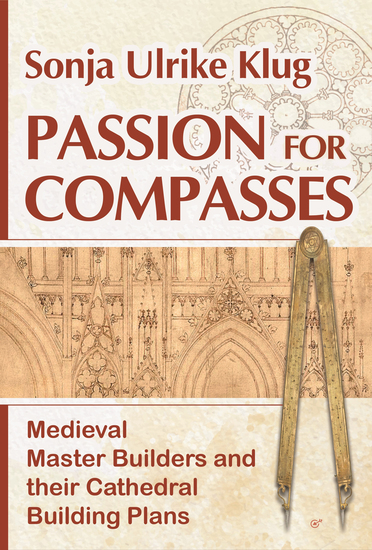
  • Passion for Compasses - Medieval Master Builders and their Cathedral Building Plans - cover

    Passion for Compasses - Medieval...

    Klug Sonja Ulrike

    • 0
    • 0
    • 0
    How medieval architects drew cathedral building plans
    The architectural history of the Middle Ages is full of surprises. It is difficult for us to imagine today that relatively few construction plans have been found for the impressive churches and cathedrals of the Romanesque and Gothic periods. Where did most of the drawings go? Have the plans been destroyed in Europe or lost over time? Or were they not made at all? 
    Although hardly any architectural drawings exist, there were numerous compasses. What were they used for and how? Was it possible to design complex buildings such as churches and cathedrals without blueprints? 
    The author takes her readers on an exciting cultural and historical journey through time. 
    She looks at the spread of papyrus, parchment and paper and traces the ability to write and calculate in Europe. She also looks at the construction process in historical illustrations and draws comparisons with Arabic architecture. Last but not least, she shows what types of compasses existed and how the drawing skills of master builders developed up to the Renaissance. 
    The insights into the history of architecture lead to surprising findings: The architects of the Middle Ages thought and planned very differently than we imagine today.
    Show book
  • Blitzkrieg Bops - A Brief History of Punks at War - cover

    Blitzkrieg Bops - A Brief...

    Alli Patton

    • 0
    • 0
    • 0
    What happens when aggressive, riotous punk music becomes the peacemaker?
    
    Chronicling a history of punks at war, Blitzkrieg Bops studies bands who have soundtracked a movement —including Pussy Riot, Stiff Little Fingers, National Wake, Wutanfall, Los Pinochet Boys, Rimtutitkui, The Kominas & more — creating music to overthrow corrupt governments, stomp out oppressive regimes, fight the establishment and, in turn, fight for their lives.
    Show book
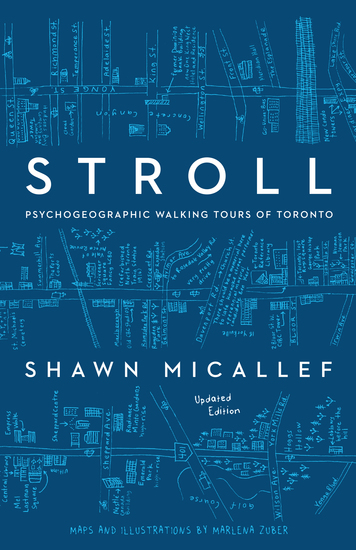
  • Stroll updated edition - cover

    Stroll updated edition

    Shawn Micallef

    • 0
    • 0
    • 0
    THE TORONTO STAR'S  "30 BOOKS WE CAN'T WAIT TO READ THIS SPRING"The updated edition of a Toronto favourite meanders around some of the city’s unique neighborhoods and considers what makes a city walkableWhat is the 'Toronto look'? Glass skyscrapers rise beside Victorian homes, and Brutalist apartment buildings often mark the edge of leafy ravines, creating a city of contrasts whose architectural look can only be defined by telling the story of how it came together and how it works, today, as an imperfect machine.Shawn Micallef has been examining Toronto’s streetscapes for decades. His psychogeographic reportages situate Toronto's buildings and streets in living, breathing detail, and tell us about the people who use them; the ways, intended or otherwise, that they are being used; and how they are evolving. 
    Stroll celebrates Toronto's details – some subtle, others grand – at the speed of walking and, in so doing, helps us to better get to know its many neighbourhoods, taking us from well-known spots like the CN Tower and Pearson Airport to the overlooked corners of Scarborough and all the way to the end of the Leslie Street Spit in Lake Ontario 
    "Shawn Micallef offers an alternative perspective on the shape of neighbourhoods with an updated edition of Stroll, which originally appeared fifteen years ago. His 'psychogeographic walking tours' take us through what he calls the Middle, Westish, Northish, Eastish, and Eastest areas of Toronto, showing us the known and sometimes obscure buildings and features that define Canada’s largest city." – Pamela Divinsky, Literary Review of Canada 
    "Shawn Micallef is the unofficial mayor of Toronto, the genial ambassador the city needs and deserves. As he strolls Toronto’s broad avenues and its little streets, he finds hidden pockets of delight – and weirdness, too. Join him and fall in love with the city again." – Liz Renzetti, author of Bury the Lead 
    "When I moved to Toronto in 2011, Stroll was the first book I added to my library and course reading lists. My students and I get lost in the PATH, sneak into lobbies, and visit the archives with this book as our guide. Micallef’s friendly voice invites us to slow down and notice not just a few landmark buildings but the city’s built fabric as a whole. This updated version offers our collective memory a much-needed affectionate yet critical view of recent changes to the city." – Erica Allen-Kim, Author of Building Little Saigon 
    "Stroll is a delightful and eccentric guidebook, full of clever writing, amusing stories and charming maps that will make you want to strap on your walking shoes and head into the streets of Toronto." – Carol Off, Author/Broadcaster"Shawn Micallef looks at the city in a way we all should more often – he sees it as a living book that is alive with stories just waiting to be told to the attentive observer. In Stroll, he gives us an introduction to just how interesting and surprisingly dramatic those stories are, and how exciting our city is when we hear them." – David Crombie, former mayor of Toronto"A smart and intimate guide to the city that makes you feel like an insider from start to finish." – Douglas CouplandThis new edition updates things in the city that have changed and includes several new walks.
    Show book
  • The Brain That Wouldn't Die A Classic Horror Film On Audio - cover

    The Brain That Wouldn't Die A...

    Joseph Green, Doris Brent, Rex...

    • 0
    • 0
    • 0
    The Brain That Wouldn't Die (also known as The Head That Wouldn't Die or The Brain That Couldn't Die) is a 1962 American science fiction horror film directed by Joseph Green and written by Green and Rex Carlton. The film was completed in 1959 under the working title The Black Door but was not theatrically released until May 3, 1962. The film focuses on a mad doctor who develops a means of keeping his fiancée's severed head alive for days, along with a lumbering, malformed brute (one of his earlier failed experiments) imprisoned in a closet. The following is the audio track of the feature film.
    Show book