Join us on a literary world trip!
Add this book to bookshelf
Grey
Write a new comment Default profile 50px
Grey
Subscribe to read the full book or read the first pages for free!
All characters reduced
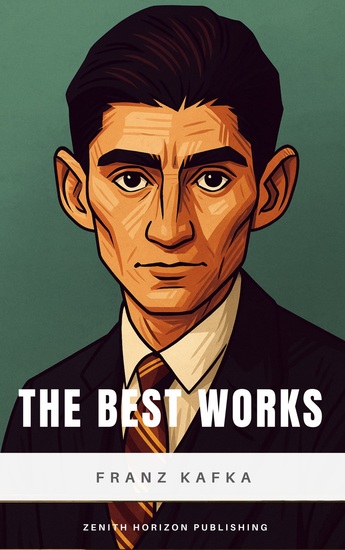
The Best Works - Surreal Tales of Isolation Law and the Absurd - cover

The Best Works - Surreal Tales of Isolation Law and the Absurd

Franz Kafka, Zenith Horizon Publishing

Publisher: Zenith Horizon Publishing

  • 0
  • 0
  • 0

Summary

🌀 Enter the enigmatic and haunting world of Franz Kafka, one of the most influential literary voices of the 20th century. This carefully curated collection includes his most powerful and unforgettable works, including The Metamorphosis, The Trial, and The Castle — stories that explore the surreal, the bureaucratic, and the existential.

Kafka's writing delves into alienation, identity, and the absurdity of modern life, capturing the struggles of individuals trapped in systems beyond their understanding. His prose is mysterious yet profound, inviting readers to question reality itself.

📚 This Collection Features:

The Metamorphosis

The Trial

The Castle

In the Penal Colony

A Hunger Artist

The Judgment

The Great Wall of China

And more Kafkaesque tales...

Perfect for fans of existential fiction, psychological literature, and modernist thought, this essential volume is both a literary treasure and a philosophical journey.

🛒 Click "Buy Now" to immerse yourself in the unforgettable world of Franz Kafka — where the line between nightmare and reality disappears.
Available since: 06/25/2025.
Print length: 1086 pages.

Other books that might interest you

  • Concerning the American Language - From their pens to your ears genius in every story - cover

    Concerning the American Language...

    Mark Twain

    • 0
    • 0
    • 0
    Samuel Langhorne Clemens was born in Florida, Missouri on the 30th November 1835 and is far better known by his pen name of Mark Twain.  An American writer and humorist of the first order he is perhaps best known for his novels ‘The Adventures of Tom Sawyer’ and its sequel ‘The Adventures of Huckleberry Finn’ which are often described with that mythic line The Great American Novel. 
    Twain grew up in Hannibal, Missouri which would later provide the backdrop to these great novels.  Apprenticed to a printer he also became a typesetter and then a master riverboat pilot on the Mississippi.  Later, heading west with his brother Orion to make his fortune, he failed at gold mining and instead turned to journalism and thence his true calling as a writer of humorous stories where his wit and humor sparkled from every paragraph, his craft evident with every page and punctured target. 
    A staunch supporter of copyright protections this helped him keep much of the wealth his writing created, though much money was also lost on investments that he pursued in his love for science and technology as well as investing in his own inventions. 
    Twain was born during a visit by Halley’s comet, and he predicted that he would go out with it as well.  He died the day after its subsequent return on 21st April 1910, at his house, Stormfield, located in Redding, Connecticut.
    Show book
  • A Wireless Message - From their pens to your ears genius in every story - cover

    A Wireless Message - From their...

    Ambrose Bierce

    • 0
    • 0
    • 0
    Ambrose Gwinnett Bierce was born on 24th June 1842 at Horse Cave Creek in Meigs County, Ohio. His parents were poor but they introduced him to literature at an early age, instilling in him a deep appreciation of books, the written word and the elegance of language.  
    Growing up in Koscuisko County, Indiana poverty and religion were defining features of his childhood, and he would later describe his parents as “unwashed savages” and fanatically religious, showing him little affection but always quick to punish. He came to resent religion, and his introduction to literature appears to be their only positive effect. 
    At age 15 Bierce left home to become a printer’s devil, mixing ink and fetching type at The Northern Indian, a small Ohio paper. Falsely accused of theft he returned to his farm and spent time sending out work in the hopes of being published. 
    His Uncle Lucius advised he be sent to the Kentucky Military Institute. A year later he was commissioned as an Officer.  As the Civil War started Bierce enlisted in the 9th Indiana Infantry Regiment.  
    In April 1862 Bierce fought at the Battle of Shiloh, an experience which, though terrifying, became the source of several short stories. Two years later he sustained a serious head wound and was off duty for several months. He was discharged in early 1865.  
    A later expedition to inspect military outposts across the Great Plains took him all the way to San Francisco. He remained there to become involved with publishing and editing and to marry, Mary Ellen on Christmas Day 1871.  They had a child, Day, the following year.  
    In 1872 the family moved to England for 3 years where he wrote for Fun magazine. His son, Leigh, was born, and first book, ‘The Fiend’s Delight’, was published.  
    They returned to San Francisco and to work for a number of papers where he gained admiration for his crime reporting. In 1887 he began a column at the William Randolph Hearst’s San Francisco Examiner.  
    Bierce’s marriage fell apart when he discovered compromising letters to his wife from a secret admirer. The following year, 1889 his son Day committed suicide, depressed by romantic rejection. 
    In 1891 Bierce wrote and published the collection of 26 short stories which included ‘An Occurrence at Owl Creek Bridge’.  Success and further works including poetry followed.  
    Bierce with Hearst’s resources helped uncover a financial plot by a railroad to turn 130 million dollars of loans into a handout. Confronted by the railroad and asked to name his price Bierce answered “my price is $130 million dollars. If, when you are ready to pay, I happen to be out of town, you may hand it over to my friend, the Treasurer of the United States”.  
    He now began his first foray as a fabulist, publishing ‘Fantastic Fables’ in 1899.  But tragedy again struck two years later when his second son Leigh died of pneumonia relating to his alcoholism.  
    He continued to write short stories and poetry and also published ‘The Devil’s Dictionary’.  
    At the age of 71, in 1913 Bierce departed from Washington, D.C., for a tour of the battlefields where he had fought during the civil war. At the city of Chihuahua he wrote his last known communication, a letter to a friend. It’s closing words were “as to me, I leave here tomorrow for an unknown destination,” Ambrose Bierce then vanished without trace.
    Show book
  • When the Time Comes and Other Stories - cover

    When the Time Comes and Other...

    M.H. Lee

    • 0
    • 0
    • 0
    A collection of ten speculative fiction stories that explore worlds that don't exist. (Or at least that we hope will never exist.) Includes both fantasy and science fiction stories.
    Show book
  • The Adventures of Huckleberry Finn - cover

    The Adventures of Huckleberry Finn

    Mark Twain

    • 0
    • 0
    • 0
    Set along the mighty Mississippi River, The Adventures of Huckleberry Finn is Mark Twain's timeless tale of freedom, friendship, and the search for identity. Huck Finn, a spirited boy escaping the confines of his small-town life, joins forces with Jim, an enslaved man fleeing for his freedom. Together, they embark on a daring journey aboard a raft, navigating treacherous waters and encountering a vivid cast of characters, from crafty conmen to feuding families.Through Huck's eyes, Twain explores themes of race, morality, and the bonds that transcend societal divisions. Huck wrestles with his conscience and challenges the prejudices of his world, making this story as relevant today as it was in its time. A thrilling adventure and a profound exploration of human nature, The Adventures of Huckleberry Finn is a cornerstone of American literature that will captivate readers of all ages.
    Show book
  • God Sees the Truth But Waits - From their pens to your ears genius in every story - cover

    God Sees the Truth But Waits -...

    Leo Tolstoy

    • 0
    • 0
    • 0
    Leo Tolstoy was born in 1828 in the Russian province of Tula to a wealthy noble family. As a child, he had private tutors but he showed little interest in any formal education. When he went to the University of Kazan in 1843 to study oriental languages and law, he left without completing his courses.  Life now was relaxed and idle but with some writing also taking place.  Gambling debts forced an abrupt change of path and he joined the army to fight in the Crimean War.  He was commended for his bravery and promoted but was appalled at the brutality and loss of life.  He recorded these and other earlier experiences in his diaries which formed the basis of several of his works. 
    In 1852 ‘Childhood’ was published to immediate success and was followed by ‘Boyhood’ and ‘Youth’. 
    His experience in the army and the horrors he witnessed resulted in ‘The Cossacks’ in 1862 and the trilogy ‘Sevastopol Tales’. After the war he travelled around Europe, visiting London and Paris and meeting such luminaries as Victor Hugo and Charles Darwin.  
    It was now that Tolstoy began his masterpiece, ‘War and Peace’. Published in 1869 it was an epic work that changed literature. He quickly followed this with ‘Anna Karenina’.  
    These successes made Tolstoy rich and helped him accomplish many of his dreams but also brought problems as he grappled with his faith and the lot of the oppressed poor. These revolutionary views became so popular that the authorities now kept him under surveillance.  
    He led a life of asceticism and vegetarianism and put his socialist ideals into practice by establishing numerous schools for the poor and food programmes. He also believed in giving away his wealth, which caused much discord with his wife.  
    His writing continued to bring forth classics such as ‘The Death of Ivan Ilyich’ and many brilliant and incisive short stories such as ‘How Much Land Does A Man Need’.  
    In 1901 Tolstoy was excommunicated from the Church and controversially deselected for the Nobel Prize for Literature. 
    Whilst undertaking a pilgrimage by train in October 1910 with his daughter Aleksandra he caught pneumonia in the nearby town of Astapovo.  Leo Tolstoy died on November 9th, 1910, he was 82.
    Show book
  • The Shadow in the Rose Garden - cover

    The Shadow in the Rose Garden

    D H Lawrence

    • 0
    • 0
    • 0
    'The Shadow in the Rose Garden'. Lawrence is often accused of misogyny and this story used as evidence against him. There is the simple but honest mine worker, who has taken on a wife who is 'above' him but who is struggling to understand her and her feelings for him. Slowly, the story unravels the woman's past. The reader cannot be entirely unsympathetic to her plight, Lawrence is too good a writer to let that happen, but her dishonesty has probably ruined two lives and our feelings are for the husband.
    Show book