Join us on a literary world trip!
Add this book to bookshelf
Grey
Write a new comment Default profile 50px
Grey
Subscribe to read the full book or read the first pages for free!
All characters reduced
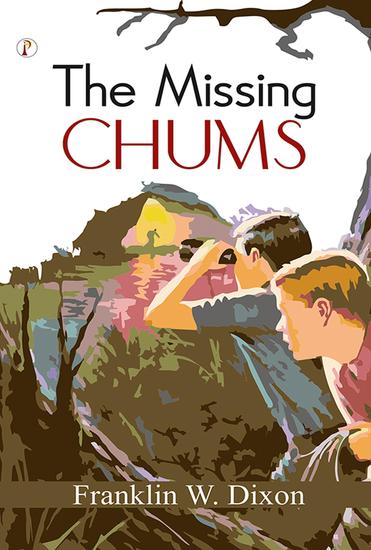
The Missing Chums - cover

The Missing Chums

Franklin W. Dixon

Publisher: Pharos Books

  • 0
  • 0
  • 0

Summary

In The Missing Chums, the Hardy Boys are thrust into a new mystery when two of their close friends suddenly vanish without a trace. The disappearance of Chet Morton and Biff Hooper shocks the town of Bayport, and Frank and Joe Hardy waste no time in launching an investigation to find their missing chums. As they follow the clues, the boys uncover a sinister plot involving a gang of criminals with plans to pull off a major heist. The Hardy Boys must navigate dangerous waters, both literally and figuratively, as they race against time to rescue their friends and foil the criminals' plans. Packed with suspense, action, and clever detective work, The Missing Chums is a classic Hardy Boys adventure that showcases the brothers' unbreakable bond and their relentless determination to seek justice. Along the way, they encounter treacherous situations that test their courage and resourcefulness, from high-speed boat chases to tense confrontations with the villains. This thrilling tale is a testament to the power of friendship and the lengths to which the Hardy Boys will go to protect those they care about.
Available since: 11/01/2026.
Print length: 147 pages.

Other books that might interest you

  • Tarzan the Terrible - Pal-ul-don Where the Men Have Tails - cover

    Tarzan the Terrible - Pal-ul-don...

    Edgar Rice Burroughs

    • 0
    • 0
    • 0
    Complete and unabridged, with 55 full-page plates by Evelyn Blacklock, Carl Frederik Aagaard and William Henry Davis. Tarzan searches a year for his wife in a hidden valley of Pal-ul-don, where the men have tails and the tribes worship a god who is a triceratops kept in a temple. Burroughs wrote it in 1921 and built the valley a language, a geography and a religion, then gave the ape-man a native ally who calls him Tarzan-jad-guru, Tarzan the Terrible. It is the book where his son grows up enough to fight beside him. Fifty-five plates from Sorolla, Chełmoński and others picture the wild coasts, sunset marshes and heavy industry of the years 1840 to 1921, the world Burroughs was writing from.
    Show book
  • The Socialist - From their pens to your ears genius in every story - cover

    The Socialist - From their pens...

    Ryûnosuke Akutagawa

    • 0
    • 0
    • 0
    Ryūnosuke Niihara was born in Kyōbashi, Tokyo in Japan on the 1st March 1892.  Sadly, his mother suffered severe mental illness after his birth and so, at only eight months old, he was sent to be raised by his maternal uncle and aunt, from whom he received the Akutagawa family name.  
    He was fascinated by classical Chinese literature from his early years and began writing after entering what was then the Tokyo Imperial University in 1913 to study English Literature.   
    The following year Akutagawa and his friends revived the literary journal ‘New Currents of Thought’ which published their own works and translations of such icons as W B Yeats and Anatole France. 
    Akutagawa published "Rashōmon" in 1915 and whilst it was disliked by his friends everyone else knew better.  As other short stories followed so did his growing literary reputation as the father of the Japanese short story. 
    Much of his work reinterpreted former classical works and incidents and this, melded with his strong dislike of naturalism, produced a writer of rare and genuine quality.  His character palette featured strong and domineering women, mainly based on his mother and the aunt who helped raise him. 
    In 1921, he spent four months in China as a reporter.  Whilst there his health was compromised by several illnesses and both his physical and mental health spiralled downwards.  He began to suffer from hallucinations and dreaded that he might have inherited his mother’s mental disorders.  
    Although he survived one suicide attempt Ryūnosuke Akutagawa died on the 24th July 1927 in Tokyo from an overdose of Veronal, a barbiturate.  He was 35.
    Show book
  • A Rich Woman - From their pens to your ears genius in every story - cover

    A Rich Woman - From their pens...

    Katharine Tynan

    • 0
    • 0
    • 0
    Katharine Tynan was born on 23rd January 1859 into a large family in Clondalkin, County Dublin. 
    The family business was cattle rearing and the farmhouse, set with the mountains for a backdrop, was a wonderful world for a young mind to learn and imagine. 
    She was educated at the convent school, St Catherine of Sienna, in Drogheda.  A stubborn streak inhibited her ability to learn as easily as the school wished. However she did learn on her own terms and soon began to take her ‘forbidden literature’, hidden in her clothing, to her loft in a stable hideaway.  
    Until she turned seventeen nothing appeared to point to a literary career.  But some verse printed in a Dublin newspaper changed everything. It led to a sonnet being printed in the Spectator.  Thereafter the Graphic published several others and even paid a half guinea for the privilege.   
    In 1884 Katharine dispatched herself to London and made an abiding friendship in Alice Meynell.  Alice was an established poet and helped, with her husband Wilfred, to publish many poets. The following year it was arranged for the publication of her first poetry volume, ‘Louise de la Vallière’.  
    She formed valuable friendships with the poets Gerard Manley Hopkins, William Butler Yeats and later Francis Ledwidge.  
    As she gathered friends and contacts into her life her literary output began to gather pace. Katharine had begun to write prose for the Speaker and for the Scots and National Observer.  
    In 1892 she married Henry Albert Hinkson, a fellow writer and a barrister.  They moved to England and had five children although two were to tragically die in infancy.   
    By now her output was prolific and ranged from poetry to novels to short stories.  It would later include a biography and further extend to editing and reviewing.   
    In 1912 the family returned to Claremorris, County Mayo, when her husband was appointed magistrate, a post he held until his early death in 1919.     
    Tynan is sometimes grouped amongst the War Poets of the First World War. Her experience was not direct but as a Mother with one son serving in France and another in Palestine, the emotions, fears and doubts are expressed in a beautiful and heart-felt way.  
    Involved in the Irish Literary Revival, Tynan expressed concern for feminist causes, the poor, and the effects of World War I in her work. She also meditated on her Catholic faith. 
    She is said to have written over 100 novels, 12 collections of short stories, plays and many volumes of enduring poetry as well as five volumes of autobiography. 
    Katharine Tynan Hinkson died at age 72 on 2nd April 1931 in London and is buried in Kensal Green Cemetery.
    Show book
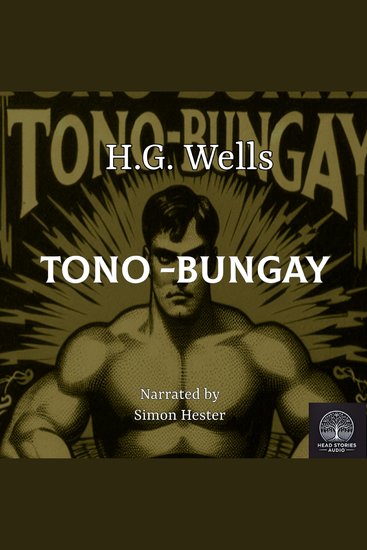
  • Tono-Bungay - cover

    Tono-Bungay

    H. G. Wells

    • 0
    • 0
    • 0
    First published in 1909, Tono-Bungay is one of H.G. Wells’s most striking novels, blending sharp social critique with personal reflection. It tells the story of George Ponderevo, a scientifically minded young man who becomes entangled in the world of speculative business through his uncle’s fraudulent patent medicine, Tono-Bungay. Through George’s journey—from an obscure provincial upbringing to the heights of financial success and eventual disillusionment—Wells offers a biting satire of Edwardian capitalism, class mobility, and the moral compromises of ambition. 
    While Tono-Bungay is often read as a critique of reckless entrepreneurship, it is also a deeply personal work, reflecting Wells’s own concerns about progress, empire, and the fleeting nature of wealth. The novel captures the tension between scientific idealism and the chaotic forces of commerce, making it as relevant today as it was over a century ago. 
    At once humorous and tragic, sweeping and intimate, Tono-Bungay remains one of Wells’s finest literary achievements—a novel that continues to provoke thought about the nature of success and the price of modernity.
    Show book
  • North and South - cover

    North and South

    Elizabeth Gaskell

    • 0
    • 0
    • 0
    A compelling novel that explores the clash between tradition and progress in a changing society.
    
    Margaret Hale moves from the peaceful countryside of southern England to the industrial north, where she is confronted with a world of factories, labor struggles, and social tension. As she adjusts to her new surroundings, she begins to understand the lives and challenges of those around her.
    
    At the center of the story is her complex relationship with John Thornton, a mill owner whose views initially clash with her own. Their evolving connection reflects deeper themes of class conflict, respect, and personal growth.
    
    Blending romance with social commentary, the novel offers insight into the realities of industrial life while maintaining strong emotional depth. It highlights issues of inequality, empathy, and the importance of understanding different perspectives.
    
    Written by Elizabeth Gaskell, this classic remains a powerful and thought-provoking work in English literature.
    
    Discover a story of change, conflict, and connection—download your copy today.
    Show book
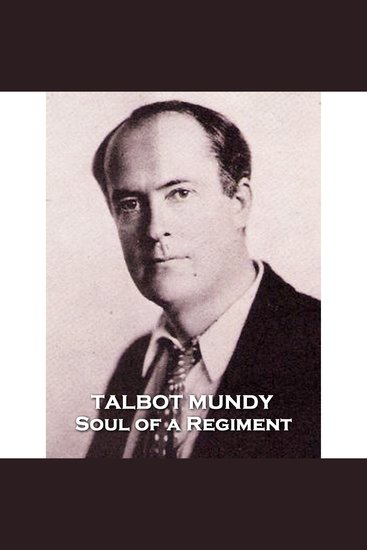
  • The Soul of a Regiment - From their pens to your ears genius in every story - cover

    The Soul of a Regiment - From...

    Talbot Mundy

    • 0
    • 0
    • 0
    Talbot Mundy was born William Lancaster Gribbon on April 23rd 1879 in London. 
    After a particularly undistinguished record at Rugby School, he ran off to Germany and joined a circus. After his return, from Germany, he left Britain to work as a relief worker in Baroda in India. 
    This was followed by further adventures in Africa, the Near East and the Far East.  His initial inclination was to be a con artist, a confidence trickster and exploit other areas of petty criminality.  
    However with a change of location to the United States and a near fatal mugging he decided that life as an upright citizen was now more to his liking. 
    By the age of 29 he had decided on Talbot Mundy as a name and three years later in 1911 he began his writing career. Obviously late but it was still to be prodigious none the less. 
    Talbot’s first story, "A Transaction in Diamonds," was published in The Scrap Book in February 1911.  Two months later in April he published his first non-fiction article, "Pig-sticking in India" – based on a sport much practised by British forces in the Empire – in the pulp magazine Adventure.  
    Many of his novels including his first ‘Rung Ho!’ and his most famous ‘King - Of the Khyber Rifles are set during the British Raj in India.  His time in India was short though he spent many years in Africa and, as seen in the attached bibliography, Talbot had no fear or qualms about writing about any location.  
    Talbot became an American citizen on 9th December 1916. 
    On 5th February 1920, Talbot Mundy, now President of the Anglo-American Society of America, arrived in Jerusalem. He also met and fell in love with a widow named Sally Ames, who would eventually become Mrs Mundy, number 4. During this period Talbot worked mainly as editor for the Jerusalem News, which entailed doing everything from proof reading to reporting. One of his biggest coups was that he was invited to go to Damascus to interview King Feisal. 
    In early 1922, Mundy moved to San Diego, California. It was here that he met Katherine Tingley, the head of a splinter branch of the Theosophical Society which had a community at Point Loma, near San Diego.  It was there in late 1923 that Talbot began writing perhaps his finest novel, Om, the Secret of Ahbor Valley. 
    By 1928 with relationships between himself and his then current wife and also with his publisher failing he re-located to New York to rebuild his life, career and finances. 
    Whilst much of Talbot’s early life was used in his work it seems he was not particularly proud to return to these places or indeed say to much more about his earlier escapades in these places. 
    Although his writing was to prove very popular over the years and has been revived on many occasions since his death it is fair to say that both his writing and his life were colourful.  He married a number of times and still believed that his business dealings would make him very rich. 
    However much of his life would not go as planned and it took several marriages in the hope of finding true happiness.  His sixth wife, Dawn, gave birth to a girl on 26 February 1933 shortly after their return to England. Unfortunately the child died shortly after birth. 
    Thereafter he wrote little but much of his work was republished and his name kept in print. 
    On 5 August 1940 Talbot Mundy died from complications associated with diabetes.
    Show book