Join us on a literary world trip!
Add this book to bookshelf
Grey
Write a new comment Default profile 50px
Grey
Subscribe to read the full book or read the first pages for free!
All characters reduced
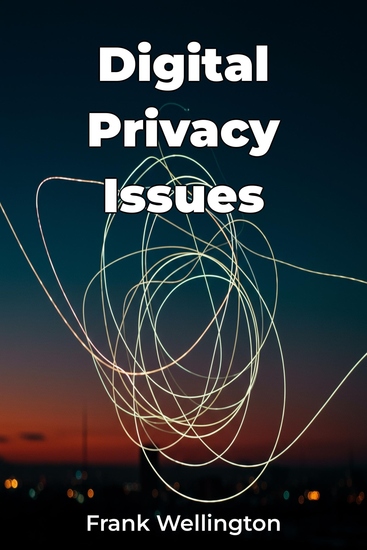
Digital Privacy Issues - cover

Digital Privacy Issues

Frank Wellington

Translator A AI

Publisher: Publifye

  • 0
  • 0
  • 0

Summary

Digital Privacy Issues explores the complex world of online data protection in an age of constant connectivity. It examines the challenges of securing digital identities amidst increasing data breaches and surveillance, highlighting the critical need for robust data security policies and legal frameworks. Did you know that the erosion of digital privacy can undermine fundamental human rights and erode trust in democratic institutions? The book uniquely integrates legal, technological, and ethical dimensions, presenting a comprehensive view suitable for a broad audience.

 
The book progresses by first introducing core concepts like data security and online surveillance. It then analyzes the legal landscape, referencing key legislation such as GDPR and CCPA. Finally, it delves into technological solutions for data encryption and secure communication.

 
By combining legal, technological, and educational strategies, the book argues for a multi-faceted approach to digital privacy. This approach emphasizes the need for individuals, organizations, and governments to collaborate to protect online data effectively.
Available since: 02/22/2025.
Print length: 97 pages.

Other books that might interest you

  • How to Interpret the Constitution - cover

    How to Interpret the Constitution

    Cass R. Sunstein

    • 0
    • 0
    • 0
    From New York Times bestselling author Cass Sunstein, a timely and powerful argument for rethinking how the U.S. Constitution is interpreted 
     
    The U.S. Supreme Court has eliminated the right to abortion and is revisiting other fundamental questions today—about voting rights, affirmative action, gun laws, and much more. Once-arcane theories of constitutional interpretation are profoundly affecting the lives of all Americans.  
    In this brief and urgent book, Harvard Law School professor Cass Sunstein provides a lively introduction to competing approaches to interpreting the Constitution—and argues that the only way to choose one is to ask whether it would change American life for the better or worse. If a  
    method of interpretation would eliminate the right of privacy, allow racial segregation, or obliterate free speech, it would be unacceptable for that reason. 
     
    But some Supreme Court justices are committed to “originalism,” arguing that the meaning of the Constitution is settled by how it was publicly understood when it was ratified.  
     
    Originalists insist that their approach is dictated by the Constitution. That, Sunstein argues, is a big mistake. The Constitution doesn’t contain instructions for its own interpretation.  
     
    Any approach to constitutional interpretation needs to be defended in terms of its broad effects—what it does to our rights and our institutions. It must respect those rights and institutions—and safeguard the conditions for democracy itself. 
     
    Passionate and compelling, How to Interpret the Constitution is essential reading for anyone who is concerned about how the Supreme Court is changing the rights and lives of Americans today.
    Show book
  • United Nations System - cover

    United Nations System

    Introbooks Team

    • 0
    • 0
    • 0
    When the world shrunk as countries around the world started communicating to each other and trading with each other, it became important to extend the policies and regulations of a country in order to accommodate the relations established with other countries. This is when international organizations began to see the light of the day. Countries required co-operation from each other in order to live together in the world and share the resources available. 
    United Nations System was not the first organization to see the need for co-operation among countries. It began as early as 1865 when the International Telecommunication Union was founded. The organization now exists as a part of the UN specialized agencies. Then in 1899 Hague became the site for the International Peace Conference which eventually led to the establishment of the Permanent Court of Arbitration in 1902. The objective of this organization was to settle crises peacefully and to avoid war. 
    The Second World War led to the subsequent formation of the United Nations. But even before it, existed the League of Nations which was founded during the First World War in 1919 under the Treaty of Versailles. Its objectives were very similar as that of the United Nations System today. The organization aimed at promoting international peace and encouraging co-operation among the participating countries. It failed in its endeavors when the Second World War began and hence stopped its activities. 
    The United Nations picked up from where its predecessors had left and aimed at preventing the events that had led to the Second World War. The attempts of the organization have been more successful than any of its forerunners and it has thus been able to become one of the most influential organizations in the world.
    Show book
  • No Apologies - How to Find and Free Your Voice in the Age of Outrage―Lessons for the Silenced Majority - cover

    No Apologies - How to Find and...

    Katherine Brodsky

    • 0
    • 0
    • 0
    We as a society are self-censoring at record rates. Say the wrong thing at the wrong moment to the wrong person and the consequences can be dire. Think that everyone should be treated equally regardless of race? You're a racist who needs to be kicked out of the online forum that you started. Believe there are biological differences between men and women? You're a sexist who should be fired with cause. Argue that people should be able to speak freely within the bounds of the law? You're a fascist who should be removed from your position of authority. When the truth is no defense and nuance is seen as an attack, self-censorship is a rational choice. Yet, our silence comes with a price. When we are too fearful to speak openly and honestly, we deprive ourselves of the ability to build genuine relationships, we yield all cultural and political power to those with opposing views, and we lose our ability to challenge ideas or change minds, even our own. 
      
    In No Apologies, Katherine Brodsky argues that it's time for principled individuals to hit the unmute button and resist the authoritarians among us who name, shame, and punish. Recognizing that speaking authentically is easier said than done, she spent two years researching and interviewing those who have been subjected to public harassment and abuse for daring to transgress the new orthodoxy or criticize a new taboo. While she found that some of these individuals navigated the outrage mob better than others, and some suffered worse personal and professional effects than others, all of the individuals with whom she spoke remain unapologetic over their choice to express themselves authentically. In sharing their stories, which span the arts, education, journalism, and science, Brodsky uncovers lessons for all of us in the silenced majority to push back against the dangerous illiberalism of the vocal minority that tolerates no dissent— and to find and free our own voices.
    Show book
  • Episode 12 - Art & Culture - cover

    Episode 12 - Art & Culture

    Anjum Sharma

    • 0
    • 0
    • 0
    Arts & culture play an important role in the development of a country. And government implements various programs and schemes to preserve it. In this episode, find out what happened in the past year in India in the field of history, music, folk traditions, performing arts, architecture, literature etc.
    Show book
  • The Fall of Boris Johnson - The Award-Winning Explosive Account of the PM's Final Days - cover

    The Fall of Boris Johnson - The...

    Sebastian Payne

    • 0
    • 0
    • 0
    The Fall of Boris Johnson is the explosive inside account of how a prime minister lost his hold on power. Written and read by Sebastian Payne, Director of Onward and former Whitehall Editor for the Financial Times.Winner at the 2022 Parlimentary Book AwardsA New Statesman, The Times, Daily Mail and FT Book of the Year'Revelatory' - The Daily Telegraph'Delicious detail' - The TimesBoris Johnson was touted as the saviour of the country and the Conservative Party, obtaining a huge commons majority and finally 'getting Brexit done'. But, within three short years, he was deposed in disgrace and left the country in crisis.Sebastian Payne tells the essential behind-the-scenes story, charting the series of scandals that felled Johnson: from the blocked suspension of Owen Paterson, through partygate and the final death blow: the Chris Pincher allegations. This is the full narrative of the betrayals, rivalries and resignations that resulted in the dramatic Conservative coup – and set in motion those events that saw the party sink to catastrophic new lows.With unparalleled access to those who were in the room when key decisions were made, Payne tells of the miscalculations and mistakes that led to Boris Johnson’s downfall. This is a gripping and timely look at how power is gained, wielded and lost in Britain today.'Genuinely page-turning' - Andrew Marr'Entertaining and illuminating' - Tim Shipman
    Show book
  • Crossways - cover

    Crossways

    William Butler Yeats

    • 0
    • 0
    • 0
    The first collection by Irish-born poet William Butler Yeats. Many decades before his mysterious and austere Modernist verse earned him a nobel prize, Yeats achieved renown as one of the last major poets in the High Romantic tradition. These poems showcase his Celtic imagination, his love for Irish folk-tales, and his commitment to the Romantic ideal of love. (Summary by Kasper Nijsen)
    Show book