Join us on a literary world trip!
Add this book to bookshelf
Grey
Write a new comment Default profile 50px
Grey
Subscribe to read the full book or read the first pages for free!
All characters reduced
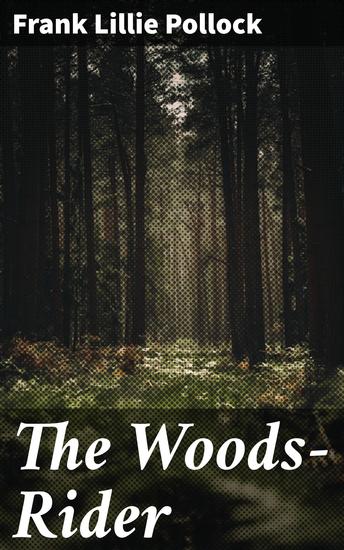
The Woods-Rider - Journey through the American Wild West Frontier - cover

The Woods-Rider - Journey through the American Wild West Frontier

Frank Lillie Pollock

Publisher: Good Press

  • 0
  • 0
  • 0

Summary

In "The Woods-Rider," Frank Lillie Pollock crafts a rich tapestry of wilderness adventure and introspective exploration, drawing readers into a world where nature serves as a backdrop for profound human experiences. The novel intertwines vivid descriptions of the Canadian landscape with an engaging narrative style, characterized by flowing prose that resonates with the immediacy of the protagonist's journey. Pollock'Äôs work reflects the early 20th-century literary movement toward naturalism, emphasizing the interconnectedness of man and the wild while probing into themes of solitude, reflection, and the innate allure of the untouched forest. Frank Lillie Pollock, an author imbued with a deep appreciation for the Canadian wilderness, spent his life immersed in the natural world. His background in natural sciences and his extensive travels throughout Canada undoubtedly shaped his perspective and deeply informed his writing. Pollock's passion for the environment and the intricate dynamics of outdoor life illuminate his prose, providing a unique lens through which to view the intimate relationship between humans and nature. I highly recommend "The Woods-Rider" to readers seeking an evocative narrative that delves into both the beauty and ferocity of untamed landscapes. This novel not only entertains but also provokes contemplation about one'Äôs place within the natural world, making it a resonant read for lovers of adventure, philosophy, and the great outdoors.
Available since: 08/21/2022.
Print length: 176 pages.
Other books that might interest you

  • The Keening - A Mystery of Gaelic Ireland - cover

    The Keening - A Mystery of...

    Anne Emery

    • 0
    • 0
    • 0
    The murdered body of Sorcha the prophetess is discovered following a lavish banquet at the Maguire castle in 16th-century Ireland. In the present day, a dig commences on the land, and not only is a body discovered, but a sheaf of prophecies. Who killed Sorcha?
    		 
    There has been a guesthouse on the Tierney land in County Fermanagh for hundreds of years. Now Tierney’s Hotel is faced with a development that will block the hotel’s best feature, its view of Enniskillen Castle. But the project can be stopped if there are important historical artifacts buried on the property. Enter the archaeologists.
    		 
    Mick’s ancestor, Brigid Tierney, ran the guesthouse in the late 1500s. We see Brigid and Shane and their children at a lavish banquet at the castle, home of the ruling family, the Maguires. The wine and ale flow freely, the harpist plays, the bard recites the Maguires’ heroic deeds. But one woman has a sense of foreboding. Sorcha the prophetess sees harrowing times ahead. The Tudors of England are determined to complete their brutal conquest of Ireland.
    		 
    The morning after the banquet, Sorcha is found dead on a bed of oak leaves. And Shane is accused of the killing. His lawyer, Terence, conducts his defence on the hilltop that constitutes the court in 1595.
    		 
    Ireland has had a complex and at times woeful history, and we see that history being played out in the lives of the Tierneys, past and present. 
    		 
    In 2018, the dig commences on Mick Tierney’s land. Historical artifacts? Yes. But also a sheaf of prophecies. And a body ― a bogman ― four hundred years old.
    Show book
  • Richard Garnett - A Short Story Collection - Esteemed biographer librarian and translator whose wealth of experience bled into his writing - cover

    Richard Garnett - A Short Story...

    Richard Garnett

    • 0
    • 0
    • 0
    Richard Garnett C.B. was born on the 27th February 1835.  
     
    Educated in Bloomsbury he then joined the nearby British Museum as an assistant librarian in 1851, shortly after his father’s death.  
     
    He was continuously promoted to high-ranking positions at the British Library until his retirement in 1899. 
     
    In his personal life he married Olivia Narney Singleton in 1863 and was the father to six surviving children.  Despite the constant call of work and family he found time to translate many titles from their original Greek, German, Italian, Spanish, and Portuguese.   
     
    As an author he wrote several volumes of verse, a book of short stories and several biographies and history books. 
     
    In 1901, Garnett was elected as a member to the American Philosophical Society. 
     
    Richard Garnett died on the 13th April 1906.  He was 71.
    Show book
  • Shirley - cover

    Shirley

    Charlotte Brontë

    • 0
    • 0
    • 0
    "Shirley" is a social novel set during the industrial depression of 1811-1812 in the manufacturing district of Yorkshire. The story revolves around the struggles of the working class and explores themes of social injustice, gender roles, and economic hardship. The title character, Shirley, is a strong and independent woman who challenges societal norms.
    Show book
  • The Swine-Gods - Story by a turn of the century London based Jewish writer - cover

    The Swine-Gods - Story by a turn...

    Regina Miriam Bloch

    • 0
    • 0
    • 0
    The bookshelves of American literature are incredible collections that have gathered together centuries of very talented authors.  From this continent their fame spread and whilst among their number many are now forgotten or neglected their talents endure.  Among them is the talented but obscure authoress Regina Miriam Bloch.
    Show book
  • Frozen River The: Book Summary & Analysis - cover

    Frozen River The: Book Summary &...

    Alexander Pike

    • 0
    • 0
    • 0
    This content is an independent and unofficial summary created for informational and educational purposes only. It is not affiliated with, authorized, approved, licensed, or endorsed by the original author or publisher. All rights to the original work belong to its respective copyright holders. This summary is not intended to substitute the original book, but to offer a concise overview and interpretation of its main ideas.


    In the bitter cold of 1789 Maine, the frozen Kennebec River gives up a body—and with it, the secrets of an entire town begin to thaw. At the center of this gripping historical mystery stands Martha Ballard, a midwife with an unshakable moral compass and a gift for seeing what others ignore. As she cares for her neighbors by day and records her observations by night, she becomes the unlikely detective in a chilling case of murder, corruption, and long-buried truths.
     
    With each revelation, Martha finds herself risking everything—her safety, her family’s standing, and the fragile balance of justice in a male-dominated society. But her courage doesn’t waver. Armed with her journal, her instincts, and her relentless commitment to truth, she unearths a conspiracy that could destroy those in power.
    Show book
  • The Bride of Lammermoor - cover

    The Bride of Lammermoor

    Walter Scott

    • 0
    • 0
    • 0
    "The Bride of Lammermoor" by Walter Scott is a tragic tale set in 17th-century Scotland. The story revolves around the ill-fated love of Lucy Ashton and Edgar Ravenswood, heirs to feuding families. As political intrigue and family conflicts escalate, Lucy's mental health deteriorates, leading to a harrowing climax. Scott weaves a narrative of love, madness, and the supernatural against the backdrop of a divided society. "The Bride of Lammermoor" stands as a haunting exploration of fate, societal expectations, and the consequences of forbidden love.
    Show book