Join us on a literary world trip!
Add this book to bookshelf
Grey
Write a new comment Default profile 50px
Grey
Subscribe to read the full book or read the first pages for free!
All characters reduced
The Great Gatsby - cover

The Great Gatsby

Francis Scott Fitzgerald

Publisher: Synapse Publishing

  • 0
  • 0
  • 0

Summary

The Jazz Age: lights, parties, beautiful cars and cocktail dresses, but behind the tenderness of the night lies its darkness, its harshness, the sense of loneliness. Young Nick Carraway moves to New York City in the summer of 1922. He rents a house in prestigious, dreamy Long Island, teeming with the newly rich desperately busy partying with each other. One neighbor strikes Nick in a particular way: he is the mysterious Jay Gatsby, who lives in an outsized, gaudy house, filling it every Saturday night with guests at his extravagant parties. Yet he lives in desperate loneliness and falls senselessly in love with Nick's married cousin Daisy. The American myth decays page after page, retaining all the glitter of its facade but also showing its fragility. Just as was happening to Fitzgerald himself, a former playboy grappling with the mystery of an existence now doomed to final dissolution.
Complete edition with reader-friendly table of contents.
Available since: 03/06/2024.
Other books that might interest you

  • The Hindu Pantheon - Myths Gods and Rituals of Ancient India - cover

    The Hindu Pantheon - Myths Gods...

    Odessa Nightshade

    • 0
    • 0
    • 0
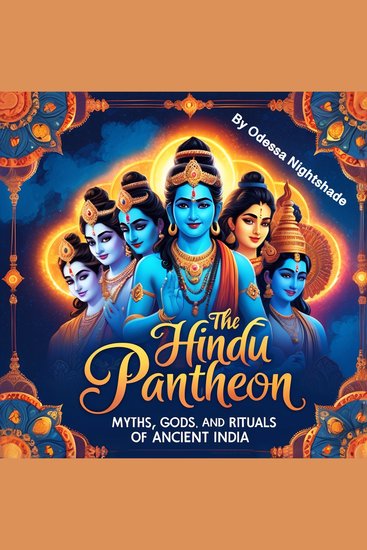
    Hindu mythology is one of the oldest and most complex religious traditions in the world. With a vast pantheon of gods, goddesses, and celestial beings, it weaves together myths, legends, and philosophical concepts that have shaped the spiritual landscape of India for thousands of years. Unlike many monotheistic traditions, Hinduism does not center around a single deity but instead embraces a diverse array of divine figures, each representing different aspects of existence. These deities are not merely supernatural beings but embodiments of cosmic principles, making Hindu mythology a unique fusion of religion, philosophy, and storytelling.  
      
    The foundation of Hindu mythology lies in its sacred texts, particularly the Vedas and Puranas. The Vedas, composed over 3,000 years ago, contain hymns and rituals dedicated to early Vedic deities, forming the spiritual bedrock of Hindu belief. The Puranas, written centuries later, expanded upon these traditions, introducing detailed narratives about the lives, battles, and divine exploits of gods like Vishnu, Shiva, and Devi. Together, these texts provide an extensive mythological framework that continues to influence Hindu practices and beliefs to this day.  
      
    One of the central themes in Hindu mythology is the concept of dharma, or cosmic order. The gods play a crucial role in maintaining balance in the universe, ensuring that righteousness prevails over chaos. Myths often depict the eternal struggle between good and evil, with divine beings intervening in the world through incarnations known as avatars. The most well-known avatars belong to Vishnu, who manifests as Rama, Krishna, and other heroic figures to restore harmony when disorder threatens creation. This belief in divine intervention reinforces the idea that morality and duty must be upheld in human life, as they are reflections of the cosmic law. 
    Show book
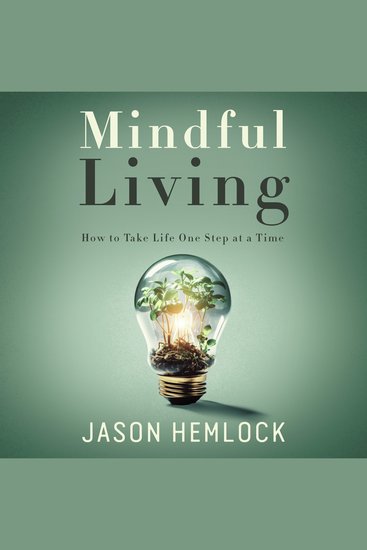
  • Mindful Living - How to Take Life One Step at a Time - cover

    Mindful Living - How to Take...

    Jason Hemlock

    • 0
    • 0
    • 0
    Do you find yourself getting caught up in obsessive thoughts and overthinking? 
    It’s time to break the cycle of negative thoughts and actions. Mindfulness has its roots in ancient practices but offers a fully modern way of tackling life’s problems. Mindful Living: How to Take Life One Step at a Time gives you everything you need to know to start living a more mindful – and happier – life. 
    Packed with practical tips and techniques, you’ll learn:How you can be mindful from the moment you wake upHow to be mindful in your conversationsWhy you don’t have to meditate to be mindfulHow to improve your diet with mindful eatingThe origins of mindfulness and why it’s not a religious or spiritual practiceMindfulness exercises you can easily incorporate into your daily routineAnd so much more! 
    Say goodbye to feeling constantly stressed and frazzled and welcome in a calmer, more relaxed you. 
    Pick up Mindful Living: How to Take Life One Step at a Time and see how simple it is for you to transform your life – today!
    Show book
  • The Valley of the Kings - Tombs and Treasures of the Pharaohs - cover

    The Valley of the Kings - Tombs...

    Omar Khalil

    • 0
    • 0
    • 0
    The Valley of the Kings, one of the most iconic archaeological sites in the world, first captured the attention of explorers and scholars in the 18th century. Though long known to local inhabitants, it was not until European adventurers began systematically exploring Egypt that the valley's true significance came to light. These early explorers, driven by a mix of scholarly curiosity and treasure hunting, began mapping and cataloging the tombs they encountered in the barren hills west of the Nile. Among them were figures like Giovanni Belzoni and Howard Carter, whose efforts would lay the foundation for modern Egyptology. 
    The role of local communities, particularly the people of Qurna and other nearby villages, cannot be overlooked. Many locals worked closely with foreign archaeologists, guiding them through the rugged terrain and even assisting in excavations. Their intimate knowledge of the landscape proved invaluable. Some families, generation after generation, were involved in archaeological digs, and many tombs might have remained hidden much longer without their contributions. However, this collaboration also brought complex dynamics, especially regarding the protection of cultural heritage and the handling of newly uncovered treasures. 
    Transforming what seemed like a lifeless desert into a thriving center of discovery, the Valley soon became a symbol of ancient grandeur and mystery. The dry climate and remote location helped preserve many of the tombs, allowing researchers to uncover not only the resting places of kings but also the beliefs, rituals, and artistry of ancient Egypt. With each new find, the Valley revealed more about the powerful individuals buried there and the civilization they ruled.
    Show book
  • The Miracle of the Black Leg - Notes on Race Human Bodies and the Spirit of the Law - cover

    The Miracle of the Black Leg -...

    Patricia J. Williams

    • 0
    • 0
    • 0
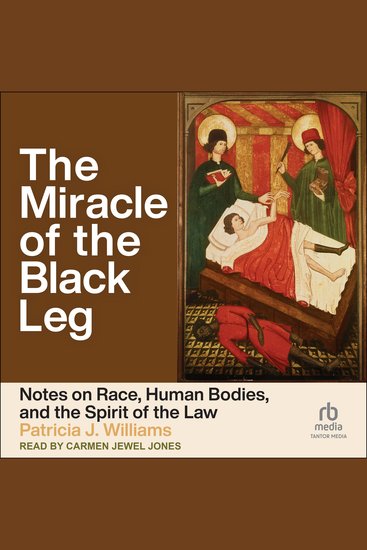
    Beginning with a jaw-dropping rumination on a centuries-old painting featuring a white man with a Black man's leg surgically attached (with the expired Black leg-donor in the foreground), contracts law scholar and celebrated journalist Patricia J. Williams uses the lens of the law to take on core questions of identity, ethics, and race. 


    With her trademark elegant prose and critical legal studies wisdom, Williams brings to bear a keen analytic eye and a lawyer's training to chapters exploring the ways we have legislated the ownership of everything from body parts to gene sequences—and the particular ways in which our laws in these areas isolate nonnormative looks, minority cultures, and out-of-the-box thinkers. 


    At the heart of "Wrongful Birth" is a lawsuit in which a white couple who use a sperm bank sue when their child "comes out Black." And "Hot Cheeto Girl" examines the way that algorithms give rise to new predictive categories of human assortment, layered with market-inflected cages of assigned destiny. 


    The Miracle of the Black Leg offers a brilliant meditation on the tricky place where law, science, ethics, and cultural slippage collide.
    Show book
  • Exploring the Realms of Norse Mythology - Exploring the Nine Realms: Unveiling the Rich Tapestry of Norse Mythology - cover

    Exploring the Realms of Norse...

    Abigail Simmons

    • 0
    • 0
    • 0
    Ancient Norse mythology's fabled universe features gods, giants, and mortals living among the cosmic infrastructure of Nine Realms that will, according to the book titled "Exploring the Realms of Norse Mythology: Exploring the Nine Realms: Unveiling the Rich Tapestry of Norse Mythology," reveal itself very soon. 
    There were books covering each and every kingdom. The writers started with Asgard, the land of powerful gods, went on through the mysterious and fertile lands of Vanaheim to hard rocky plains of Jotunheim, the land of giants, all along assisted by the central axis formed by Yggdrasil, the World Tree. 
    And then readers are taken down on this road with them where epic myth and the lore of Norse culture narrates the stirring tale of heroism, honor and destiny. It has to be said that the book includes detailed retellings of important myths, old gods such as Odin, Thor, and Freyja, or spiritual and cultural ideals in this exhaustive inquiry. 
    The book has been built chapter by chapter upon an exploration of one of the Nine Realms: on each world's cosmic function, its inhabitants, and symbolism in Norse mythology. The book also delves into how these old tales continue to inspire and echo today in speaking to common human concerns. 
    "Exploring the Realms of Norse Mythology" is an enlightening, encyclopedic treatment for anyone keen on really understanding the depth and power of Norse myths, which would be ideally suited to either the connoisseur of myths or any newcomer to the subject matter. It inspires readers into rediscovering the old classics and what they have to say nowadays.
    Show book
  • Political Philosophy - Ideas and Foundations of Governance - cover

    Political Philosophy - Ideas and...

    Hector Davidson

    • 0
    • 0
    • 0
    Political philosophy plays a central role in the development of societies, offering profound insights into the principles and ideas that shape governance and human relations. At its core, political philosophy seeks to understand the fundamental questions of power, authority, justice, and the rights of individuals within a collective. By examining these issues, political philosophy provides a framework for interpreting and evaluating the structures that govern our lives, from the most intimate social arrangements to the global political order. It is through political philosophy that we come to grips with the nature of justice, equality, freedom, and the role of the state in promoting the common good. 
    In every society, political philosophy serves as a critical lens for understanding the legitimacy of authority and the relationship between the individual and the state. Whether through the ideas of ancient philosophers like Plato and Aristotle or the modern theorists such as Hobbes, Locke, and Rousseau, the study of political philosophy allows us to explore the moral and practical foundations of governance. These thinkers sought answers to questions that remain relevant today: What is the rightful role of the government? What are the limits of state power? How can societies balance the competing interests of freedom, equality, and social order? 
    Moreover, political philosophy is essential for the functioning of a healthy democracy. By engaging with political ideas and questioning the established norms, political philosophers encourage critical thinking and the evaluation of political systems. They provide the intellectual tools for assessing the values that underlie our laws, policies, and political institutions. Political philosophy also serves as a guide for navigating complex moral dilemmas in governance, offering insights into how we can create a just society where the rights of individuals are respected while promoting the collective well-being.
    Show book