Join us on a literary world trip!
Add this book to bookshelf
Grey
Write a new comment Default profile 50px
Grey
Subscribe to read the full book or read the first pages for free!
All characters reduced
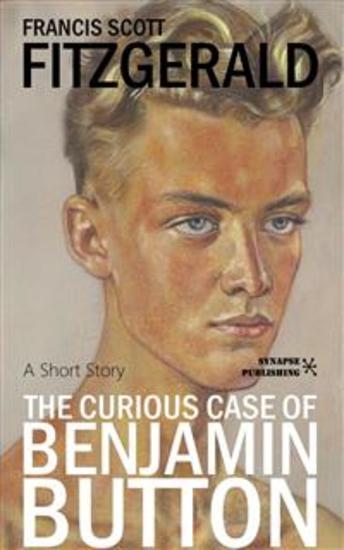
The Curious Case of Benjamin Button - cover

The Curious Case of Benjamin Button

Francis Scott Fitzgerald

Publisher: Synapse Publishing

  • 0
  • 0
  • 0

Summary

From the visionary genius of Francis Scott Fitzgerald comes this extraordinary story of madness and wonder, dealing with the blurred boundaries between reality and illusion. In the heart of New Orleans, Benjamin Button grows up backwards, aging in reverse of all human beings. Through his unique and extraordinary vicissitudes, the reader is taken on an exciting journey between past and present, discovering the true meaning of love, family and life itself. An unforgettable novel that fills the soul with wonder and awe, leaving an indelible imprint on the heart of those who dare to face its irresistible charm.
Complete edition with reader-friendly table of contents.
Available since: 03/06/2024.

Other books that might interest you

  • Across the Moors - From their pens to your ears genius in every story - cover

    Across the Moors - From their...

    W F Harvey

    • 0
    • 0
    • 0
    William Fryer Harvey AM was born on 14th April 1885 into a wealthy Quaker family in Leeds, West Yorkshire. 
    He was educated at the Quaker Bootham School in Yorkshire and Leighton Park School in Reading before university at Balliol College, Oxford.  
    His health was fragile and he poured his energies into writing short stories and in 1910 published his first collection ‘Midnight House’. 
    In the Great War he was with the Friends' Ambulance Unit and then served as a surgeon-lieutenant in the Royal Navy.  There he received the Albert Medal for Lifesaving but lung damage received at that time troubled him for the rest of his life. 
    He continued to write short stories, and even a memoir, but by 1925 ill health had forced his retirement to any outside work.  Three years later he published his second collection which contained his macabre classic ‘The Beast with Five fingers’, only one more collection would come from his pen in his lifetime. 
    For many years of his life he now lived in Switzerland with his wife but a yearning to be home saw them come back to England in 1935. 
    W F Harvey died in Letchworth on the 4th June 1937. He was 52.
    Show book
  • Householders - cover

    Householders

    Kate Cayley

    • 0
    • 0
    • 0
    A CBC BOOKS AND QUILL & QUIRE ANTICIPATED FALL BOOK 
    		 
    A LAMBDA LITERARY MOST ANTICIPATED LGBTQIA+ TITLE
    		 
    A 49TH SHELF BOOK OF THE YEAR 2021
    		 
    Linked short stories about families, nascent queers, and self-deluded utopians explore the moral ordinary strangeness in their characters’ overlapping lives.
    		 
    A woman impersonates a nun online, with unexpected consequences. In a rapidly changing neighborhood, tensions escalate around two events planned for the same day. The barista girlfriend of a tech billionaire survives a zombie apocalypse only to face spending her life with the paranoid super-rich. From a university campus to an underground bunker, a commune in the woods to Toronto and back again, the linked stories in Householders move effortlessly between the commonplace and the fantastic. In deft and exacting narratives about difficult children and thorny friendships, hopeful revolutionaries and self-deluded utopians, nascent queers, sincere frauds, and families of all kinds, Kate Cayley mines the moral hazards inherent in the ways we try to save each other and ourselves.
    Show book
  • Giddy Up - cover

    Giddy Up

    Kameron Claire

    • 0
    • 0
    • 0
    He’s an ex-military bouncer out on his night off. She’s a single mom letting loose for the first time in four years. Tonight was supposed to be a one-night thing, but can he get her to give him a lifetime instead? 
    Denny: I would never pick up a chick at the bar I manage security at, but it’s my night off and I have nowhere else to go. So when a woman I’ve never seen before throws me eyes from across the dance floor, I have to at least buy her a drink. Could I really meet my angel in this place? 
    Vivi: This is my first child free weekend in over four years—my first chance to cut loose, drink, and dance my cares away—and although my friend is hell-bent on finding me a man, I refuse to believe the hot and broody bear of a man across the room could be interested in my mom bod. 
    Each book in the series is a complete, standalone story. This is a steamy, short story romance, complete with instalove and a guaranteed happily ever-after. If you're looking for a great lunchtime read, or something to spark sexy dreams before bed, you’ll want to pick this one up. 
    Last Stand Saloon Series: Round Up, Making Up, Cowboy Up, and Giddy Up
    Show book
  • HorrorBabble's Ghost Stories: Volume 2 - cover

    HorrorBabble's Ghost Stories:...

    E.F. Benson, Algernon Blackwood,...

    • 0
    • 0
    • 0
    A second, broad selection of ghost stories both classic and obscure. 
    Contents: 
    "The Third Shadow" by H. R. Wakefield 
    A mountaineer's fate is sealed by a vengeful supernatural force. 
    "The Dance of Death" by Algernon Blackwood 
    Ignoring warnings, a frail man dances—death is his final partner. 
    "The Demon Lover" by Elizabeth Bowen 
    A wartime letter rekindles a long-forgotten, ghostly appointment. 
    "The Suicide" by Malcolm Ford Henry 
    A dead man mourns his own passing, filled with vain regret. 
    "Lens-Shy" by W. M. Clayton 
    A photographer of corpses discovers death's unsettling final portrait. 
    "The Last of Mrs. DeBrugh" by H. Sivia 
    A maid's promised inheritance vanishes with the widow’s cold refusal. 
    "Mommy" by Mary Elizabeth Counselman 
    An orphan girl claims visits from her mother—long since dead. 
    "Yuki-onna" by Lafcadio Hearn 
    A snow spirit haunts a woodcutter after a chilling encounter. 
    "Graves and Goblins" by Nathaniel Hawthorne 
    A ghostly narrator seeks peace from limbo’s lonely eternity. 
    "The House Party at Smoky Island" by L. M. Montgomery 
    Strangers gather at a remote house to share chilling tales. 
    "Keeping His Promise" by Algernon Blackwood 
    A man receives a ghostly visit from a forgotten friend. 
    "The Frontier Guards" by H. R. Wakefield 
    Curiosity leads Brinton into a haunted house’s invisible defences. 
    "The Theater Upstairs" by Manly Wade Wellman 
    A cinema screens forgotten films starring actors long since dead. 
    "The Terror by Night" by E. F. Benson 
    Ghosts, illusions, or madness? Night brings terror either way. 
    "The Burned House" by Vincent O'Sullivan 
    A traveller sees a burning house that never truly existed.
    Show book
  • Alexander Pushkin - A Short Story Collection - Born in Moscow with African roots Pushkin is considered by many to be the founder of modern Russian literature - cover

    Alexander Pushkin - A Short...

    Alexander Pushkin

    • 0
    • 0
    • 0
    Alexander Sergeyevich Pushkin was born on 26th May 1799 in Moscow into a family of Russian nobility. 
     
    Raised by nursemaids and French tutors in French he learnt Russian only via the household staff. 
     
    He graduated from the prestigious Imperial Lyceum, near St Petersburg and plunged into the vibrant and raucous intellectual youth culture of what was then the capital of the Russian Empire.  
     
    In 1820, he published his first long poem, ‘Ruslan and Ludmila’, with much controversy about both subject and style.  Pushkin was heavily influenced by the French Enlightenment and gravitated, with other literary radicals, towards social reform angering the Government. 
     
    His early literary work and reputation was poetic and written as he travelled around the Empire or engaged himself in various rebellions against the Ottoman Empire.  A clash with his own government after his poem, ‘Ode to Liberty’, was found among the belongings of the Decembrist Uprising rebels meant two years of internal exile at his mother's rural estate.  His friends and family continually petitioned for his release, sending letters and meeting with Tsar Alexander I and then Tsar Nicholas I.   
     
    In 1825, whilst at his Mother’s estate, Pushkin wrote his most famous play, the drama ‘Boris Godunov’.  
     
    Upon meeting with Tsar Nicholas I, Pushkin obtained his release and began work as the Tsar's Titular Counsel of the National Archives.  However, because of the earlier problems the tsar retained control of everything Pushkin published, and he was banned from travelling at will. 
     
    Around 1828, Pushkin met the 16-year-old Natalia Goncharova, one of the most talked-about beauties of Moscow.  After much hesitation, Natalia accepted his marriage proposal after she received assurances that the government had no intentions to persecute the libertarian poet.  When the Tsar gave Pushkin the lowest court title, Gentleman of the Chamber, he became enraged, feeling that the Tsar intended to humiliate him. 
     
    In the year 1831, during Pushkin's growing literary influence, he met Nikolai Gogol.  Recognising his gifts Pushkin supported him and published his short stories in his own magazine ‘The Contemporary’. 
     
    By the autumn of 1836, Pushkin was falling into greater and greater debt and facing scandalous rumours that his wife was having an affair.  
     
    In January 1837, Pushkin sent a ‘highly insulting letter’ to his wife’s pursuer, Georges-Charles de Heeckeren d'Anthès.  The only answer could be a challenge to a duel. 
     
    It took place on 27th January.  D'Anthès fired first, critically wounding Pushkin; the bullet entered at his hip and penetrated his abdomen.  Two days later Alexander Pushkin died of peritonitis.  He was 37. 
     
    1 - Alexander Pushkin - A Short Story Collection - An Introduction 
    2 - The Queen of Spades by Alexander Pushkin 
    3 - The Blizzard by Alexander Pushkin 
    4 - The Stationmaster by Alexander Pushkin 
    5 - The Shot by Alexander Pushkin 
    6 - The Coffin Maker by Alexander Pushkin 
     -  
     -  
     -  
    1 - Cornwall - A Short Story Collection - An Introduction 
    2 - Malachi's Cove by Anthony Trollope 
    3 - Ligeia by Edgar Allan Poe 
    4 - The Screaming Skull by F Marion Crawford 
    5 - The Haunted Church by Frederick Cowles 
    6 - The Limping Ghost by Frederick Cowles 
    7 - In the Mist by Mary E Penn 
    8 - The Botathen Ghost from Footprints of Former Men in Far Cornwall by the Reverend R S Hawker 
    9 - Room For One by Frederick Cowles 
    10 - Colonel Benyon's Entanglement by Mary Elizabeth Braddon 
    11 - Christmas Eve at a Cornish Manor House by Clara Venn
    Show book
  • A Rich Woman - From their pens to your ears genius in every story - cover

    A Rich Woman - From their pens...

    Katharine Tynan

    • 0
    • 0
    • 0
    Katharine Tynan was born on 23rd January 1859 into a large family in Clondalkin, County Dublin. 
    The family business was cattle rearing and the farmhouse, set with the mountains for a backdrop, was a wonderful world for a young mind to learn and imagine. 
    She was educated at the convent school, St Catherine of Sienna, in Drogheda.  A stubborn streak inhibited her ability to learn as easily as the school wished. However she did learn on her own terms and soon began to take her ‘forbidden literature’, hidden in her clothing, to her loft in a stable hideaway.  
    Until she turned seventeen nothing appeared to point to a literary career.  But some verse printed in a Dublin newspaper changed everything. It led to a sonnet being printed in the Spectator.  Thereafter the Graphic published several others and even paid a half guinea for the privilege.   
    In 1884 Katharine dispatched herself to London and made an abiding friendship in Alice Meynell.  Alice was an established poet and helped, with her husband Wilfred, to publish many poets. The following year it was arranged for the publication of her first poetry volume, ‘Louise de la Vallière’.  
    She formed valuable friendships with the poets Gerard Manley Hopkins, William Butler Yeats and later Francis Ledwidge.  
    As she gathered friends and contacts into her life her literary output began to gather pace. Katharine had begun to write prose for the Speaker and for the Scots and National Observer.  
    In 1892 she married Henry Albert Hinkson, a fellow writer and a barrister.  They moved to England and had five children although two were to tragically die in infancy.   
    By now her output was prolific and ranged from poetry to novels to short stories.  It would later include a biography and further extend to editing and reviewing.   
    In 1912 the family returned to Claremorris, County Mayo, when her husband was appointed magistrate, a post he held until his early death in 1919.     
    Tynan is sometimes grouped amongst the War Poets of the First World War. Her experience was not direct but as a Mother with one son serving in France and another in Palestine, the emotions, fears and doubts are expressed in a beautiful and heart-felt way.  
    Involved in the Irish Literary Revival, Tynan expressed concern for feminist causes, the poor, and the effects of World War I in her work. She also meditated on her Catholic faith. 
    She is said to have written over 100 novels, 12 collections of short stories, plays and many volumes of enduring poetry as well as five volumes of autobiography. 
    Katharine Tynan Hinkson died at age 72 on 2nd April 1931 in London and is buried in Kensal Green Cemetery.
    Show book