Join us on a literary world trip!
Add this book to bookshelf
Grey
Write a new comment Default profile 50px
Grey
Subscribe to read the full book or read the first pages for free!
All characters reduced
The Wonder of War on Land - Unveiling the Essence of Land Warfare: Strategy Sacrifice and Society in Battles - cover

The Wonder of War on Land - Unveiling the Essence of Land Warfare: Strategy Sacrifice and Society in Battles

Francis Rolt-Wheeler

Publisher: Good Press

  • 0
  • 0
  • 0

Summary

In "The Wonder of War on Land," Francis Rolt-Wheeler crafts a compelling narrative that explores the complex technologies and strategies of terrestrial warfare during the early 20th century. Rolt-Wheeler employs an engaging literary style, interweaving vivid descriptions and insightful analyses that reveal both the horror and the ingenuity of war. The book situates itself against the backdrop of World War I, examining not only the mechanization of battle but also the psychological impact of warfare on soldiers and civilians. His meticulous research and rich storytelling present a multifaceted understanding of the battlefield as both a site of heroism and devastation. Francis Rolt-Wheeler was not merely an observer of war; he was a passionate advocate for understanding its broader implications. His background as a journalist and author, combined with his deep interest in military science and technology, informed his perspective. His dedication to examining the human experience in conflict led him to probe the ethical dimensions of warfare, an endeavor that resonates throughout the pages of this thought-provoking text. For readers interested in military history, technology, or the psychological effects of conflict, "The Wonder of War on Land" is an essential addition to the canon. Rolt-Wheeler'Äôs ability to blend narrative with analysis makes this book both informative and engaging, inviting readers to reflect on the profound complexities of war.
Available since: 10/19/2023.
Print length: 205 pages.
Other books that might interest you

  • Start of World War I The: The History of the Events at the Beginning of the Great War - cover

    Start of World War I The: The...

    Editors Charles River

    • 0
    • 0
    • 0
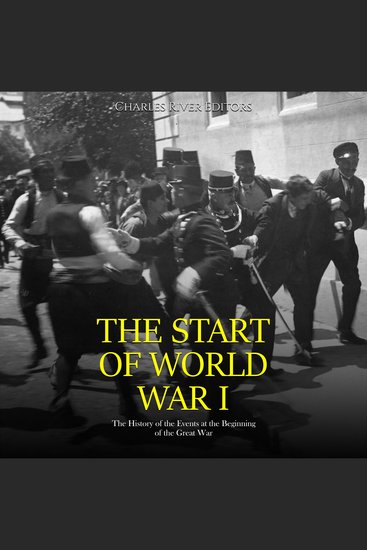
    By the 20th century, warfare was nothing new to the European powers, especially when it came to fighting each other. Conflicts had been a mainstay on the European continent for over two millennia. Even after the Napoleonic wars had enveloped Europe in large scale war for nearly 20 years in the 19th century, the Europeans’ imperialism continued unabated. It would take the devastation of World War I to shock Europe and jolt the world’s superpowers out of their imperialistic tendencies.  
    	 The final straw came June 28, 1914, when a Serbian assassinated Archduke Franz Ferdinand, the heir to the throne of Austria-Hungary, in Sarajevo, Bosnia. Austria-Hungary immediately issued ultimatums to Serbia. When they declared war on Serbia July 28, 1914, Russia mobilized for war as well. The Germans mobilized in response to Russia on July 30, and the French, still smarting from the Franco-Prussian War, mobilized for war against Germany. The British also declared war on Germany on August 4. Thus, in the span of one week, six nations had declared war, half of which had no interest in the Balkans.  
    	Needless to say, the First World War came at an unfortunate time for those who would fight in it. After an initial period of relatively rapid maneuver during which the German forces pushing through Belgium and the French and British forces attempting to stymie them made an endless series of abortive flanking movements that extended the lines to the sea, a stalemate naturally tended to develop. The infamous trench lines soon snaked across the French and Belgian countryside, creating an essentially futile static slaughterhouse whose sinister memory remains to this day, but if trench warfare was an inevitability during the war, it is only because the events leading up to the initial battles were quite different.
    Show book
  • All the Way by The Grand Canal - cover

    All the Way by The Grand Canal

    Jo Kerrigan

    • 0
    • 0
    • 0
    Stretching from Dublin right through the Midlands and west to the mighty Shannon, the Grand Canal was a stunning feat of engineering in the eighteenth century, vital for Ireland's trade and industry.
    Over two centuries later, the canal has a new life as a walking and cycling trail. Visitors can step back in time, enjoying the peace and quiet of yesteryear while discovering quirky humpbacked bridges and ivy-covered warehouses, in a landscape far removed from modern pressures.
    Jo Kerrigan examines the history, life and lore of the waterway over the centuries, while master photographer Richard Mills offers gorgeous images of its elegant locks and bridges, and the wildflowers, animals and birds found along its leafy banks.
    Show book
  • A Garden Wedding for His Son - God Recreates and Secures Shalom - cover

    A Garden Wedding for His Son -...

    James Wilson

    • 0
    • 0
    • 0
    BOOK SUMMARY: This book takes a deep dive into the Old Testament and New Testament's use and development of the Wedding Metaphor in Scripture. The book develops the importance of the Wedding Metaphor in understanding the heart and character of God Himself. Additionally, we learn some amazing aspects of the plans and purposes of God regarding the Creation from beginning to the end of time. The Wedding Metaphor also supplies a new perspective on understanding the actions of God regarding the life and death of Jesus. This includes some insightful and helpful new understandings of the meaning of the cross (the atonement). Most importantly the book develops a clear view of God's intentions to re-create the Shalom of the Garden of Eden environment in the New Creation to come. ADDITIONAL INFO: This book represents a study of scripture through the consideration of the wedding metaphor. It emphasizes metaphor as a means of "inter-realm" communication. This facilitates those of us living in the earthly realm, being given a better insight into the events and reality of the spiritual realm.
    Show book
  • 100 Japanese Words and Phrases for Beginners - cover

    100 Japanese Words and Phrases...

    J Young

    • 0
    • 0
    • 0
    There are many benefits to learning a new language. At the most basic level, learning a new language means you are able to communicate in another language whether that is listening, speaking, reading or writing. However, language is much more than that. Language is a gateway to another culture and to the people who live there. Maybe you have always wanted to learn a new language, but you just never had time. There’s always something to do or somewhere to go. Yet, there is a way! ??With learning any new skill or information, it is best to scaffold the material. “100 Japanese Words and Phrases for Beginners” is intended to be used as a repetitive audiobook in order to help you master your first 100 Japanese words. With repetition and practice, you’ll be communicating in Japanese in no time!?
    Show book
  • First Ladies of the 19th Century - cover

    First Ladies of the 19th Century

    Charles River Editors

    • 0
    • 0
    • 0
    American presidents have shaped the course of global affairs for generations, but as the saying goes, behind every great man there’s a great woman. While the First Ladies often remain overshadowed by their husbands, some have carved unique niches in their time and left their own lasting legacy. Dolley Madison helped establish the role of the First Lady in the early 19th century, Eleanor Roosevelt gave voice to policy issues in a way that made her a forerunner of First Ladies like Hillary Clinton, and Jackie Kennedy created glamorous trends that made her more popular than her husband.  
    Eleanor Roosevelt and Hillary Clinton may have been the most politically active First Ladies in American history, but Abigail Adams was the first to act as political advisor for her husband and the first to be dubbed Mrs. President. Indeed, Abigail was politically inclined to degree highly unusual among women of the 18th and 19th century, and she had originally impressed her future husband John because she was so well versed in poetry, philosophy and politics. Abigail was also very progressive, championing women’s rights and abolition long before they became widely held views even in traditionally liberal Massachusetts. While her time as First Lady was important, Abigail Adams remains one of the most recognized and respected First Ladies in American history due to her voluminous correspondence with John when they were separated throughout the American Revolution, as she remained in Massachusetts while John found himself in the thick of politics during his time in the Continental Congress and over in France.
    Show book
  • The Internet Is Not What You Think It Is - A History a Philosophy a Warning - cover

    The Internet Is Not What You...

    Justin E. H. Smith

    • 0
    • 0
    • 0
    An original deep history of the internet that tells the story of the centuries-old utopian dreams behind it—and explains why they have died today 
     
    Many think of the internet as an unprecedented and overwhelmingly positive achievement of modern human technology. But is it? In The Internet Is Not What You Think It Is, Justin Smith offers an original deep history of the internet, from  
    the ancient to the modern world—uncovering its surprising origins in nature and centuries-old dreams of radically improving human life by outsourcing thinking to machines and communicating across vast distances. Yet, despite the internet’s  
    continuing potential, Smith argues, the utopian hopes behind it have finally died today, killed by the harsh realities of social media, the global information economy, and the attention-destroying nature of networked technology. 
     
    Ranging over centuries of the history and philosophy of science and technology, Smith shows how the “internet” has been with us much longer than we usually think. He draws fascinating connections between internet user experience,  
    artificial intelligence, the invention of the printing press, communication between trees, and the origins of computing in the machine-driven looms of the silk industry. At the same time, he reveals how the internet’s organic structure and  
    development root it in the natural world in unexpected ways that challenge efforts to draw an easy line between technology and nature. 
     
    Combining the sweep of intellectual history with the incisiveness of philosophy, The Internet Is Not What You Think It Is cuts through our daily digital lives to give a clear-sighted picture of what the internet is, where it came from, and where it might be taking us in the coming decades.
    Show book