Join us on a literary world trip!
Add this book to bookshelf
Grey
Write a new comment Default profile 50px
Grey
Subscribe to read the full book or read the first pages for free!
All characters reduced
The Ballad of Dorothy Wordsworth - A Life - cover

The Ballad of Dorothy Wordsworth - A Life

Frances Wilson

Publisher: Farrar, Straus and Giroux

  • 0
  • 1
  • 0

Summary

A “sensitive and elegantly written” biography of Dorothy Wordsworth, sister and muse of the Romantic English poet William Wordsworth (Publishers Weekly).“[A] highly charged and forthright biography. . . . A ‘perpetual third party,’ Dorothy Wordsworth finally steps out of the shadows in this assured and involving reclamation of an intriguing, literary figure.” —Booklist (starred review)Described by the writer and opium addict Thomas De Quincey as “the very wildest . . . person I have ever known,” Dorothy Wordsworth was neither the self-effacing spinster nor the sacrificial saint of common telling. A brilliant stylist in her own right, Dorothy was at the center of the Romantic movement of the early nineteenth century. She was her brother William Wordsworth's inspiration, aide, and most valued reader, and a friend to Coleridge; both borrowed from her observations of the world for their own poems. William wrote of her, “She gave me eyes, she gave me ears.”In order to remain at her brother’s side, Dorothy sacrificed both marriage and comfort, jealously guarding their close-knit domesticity—one marked by a startling freedom from social convention. In the famed Grasmere Journals, Dorothy kept a record of this idyllic life together. The tale that unfolds through her brief, electric entries reveals an intense bond between brother and sister, culminating in Dorothy’s dramatic collapse on the day of William’s wedding to their childhood friend Mary Hutchinson. Dorothy lived out the rest of her years with her brother and Mary. The woman who strode the hills in all hours and all weathers would eventually retreat into the house for the last three decades of her life.In this succinct, arresting biography, Frances Wilson reveals Dorothy in all her complexity. From the coiled tension of Dorothy’s journals, she unleashes the rich emotional life of a woman determined to live on her own terms, and honors her impact on the key figures of Romanticism.“In The Ballad of Dorothy Wordsworth, Ms. Wilson strides purposefully through Wordsworth’s intoxicating life. . . . One chapter begins with a quotation from the political-punk band Gang of Four: ‘This heaven gives me migraine.’ This book, its own kind of heaven, gave me quite the opposite.” —The New York Times“Entertaining and sometimes ingenious. . . . Wilson . . . makes a strong case for taking a fresh look at Dorothy Wordsworth.” —Los Angeles Times
Available since: 02/17/2009.
Print length: 356 pages.

Other books that might interest you

  • Kishore Rao: Care Starts With A 'K' - From The Mitra Tantra Archive Of Personal Narratives - cover

    Kishore Rao: Care Starts With A...

    Ranjan Kamath

    • 0
    • 0
    • 0
    To Kishore Rao, the words of Rabindranath Tagore enshrine the belief behind Karunashraya: "Death is not extinguishing the light It is putting out the light because the dawn has come."
    Show book
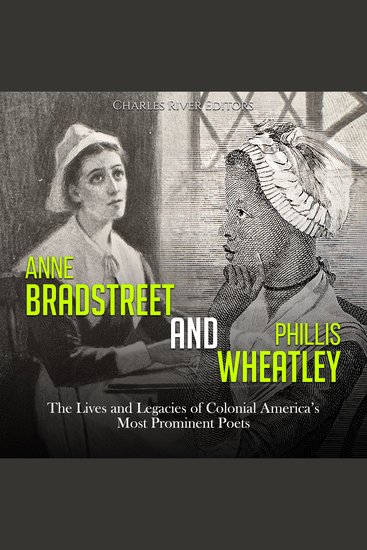
  • Anne Bradstreet and Phillis Wheatley: The Lives and Legacies of Colonial America’s Most Prominent Poets - cover

    Anne Bradstreet and Phillis...

    Editors Charles River

    • 0
    • 0
    • 0
    Anne Bradstreet was born into an unusual family that, in the early years of the 17th century, believed in educating daughters as well as sons. She then moved to the American wilderness as a young bride and proceeded to produce children and poetry at nearly equal speed in the years that followed. Historian Theodore Stanton observed, “The most of her poems were produced between 1630 and 1642, that is, before she was thirty years old; and during these years she had neither leisure, nor elegant surroundings, nor freedom from anxious thoughts, nor even abounding health. Somehow, during her busy lifetime, she contrived to put upon record compositions numerous enough to fill a royal octavo volume of 400 pages, — compositions which entice and reward our reading of them, two hundred years after she lived.” 
    	Phillis Wheatley has always been a difficult figure for people to wrap their minds around, both during her life and centuries after it. Indeed, she fits no easy stereotypes that historians or contemporaries liked to use to classify their subjects. Even her name is complicated, with her first name being spelled at times “Phyllis,” and her surname being given without the extra “e” in the final syllable. Like so much of her life, her name was not the one given to her by her parents but instead by the people who first enslaved her. 
    	Then there was the matter of her “career,” which has always escaped definition. In the 18th century, enslaved people were not supposed to have been educated, certainly not to the level that Wheatley was, nor were they supposed to have creative abilities beyond those taught to them by their masters. In a time and place where slaves were rarely taught to read, they were obviously not expected to write better poetry than the vast majority of their peers. 
    Show book
  • Ӕthelflӕd - The Lady of the Mercians - cover

    Ӕthelflӕd - The Lady of the...

    Tim Clarkson

    • 0
    • 0
    • 0
    This Dark Ages biography chronicles the life of one of the period's most famous women: the ruler of Mercia who took England back from the Vikings. 


    At the end of the ninth century, a large part of what is now England was controlled by the Vikings—warlike Scandinavians who had been attacking the British Isles for more than a hundred years. Alfred the Great, king of Wessex, was determined to regain the conquered lands. But when he died in 899 A.D., the task passed to his son Edward. In the early 900s, Edward led a great fight against the Viking armies, assisted by the English rulers of Mercia: Lord Æthelred and his wife Æthelflæd, who was also Edward's sister. 


    After her husband's death, Æthelflæd ruled Mercia on her own, leading the army to war and working with her brother to achieve their father's aims. Known to history as the Lady of the Mercians, she earned a reputation as a capable general who was feared by her enemies. In this authoritative biography, Tim Clarkson tells her remarkable life story from childhood to her vital role in saving England from the Vikings.
    Show book
  • Legendary Warriors - Tales of Courage and Honor (3 in 1) - cover

    Legendary Warriors - Tales of...

    Odessa Nightshade

    • 0
    • 0
    • 0
    his book brings together the powerful legends of three distinct warrior cultures—each embodying courage, honor, and the relentless pursuit of justice in their respective eras. 
    First, delve into the legendary King Arthur and his Knights of the Round Table, whose heroic deeds in medieval Britain have inspired countless generations. Explore the honor and chivalry that defined Arthurian legend and how the myth of Camelot shaped Western notions of heroism. 
    Next, venture to the ancient land of the Samurai, where loyalty, discipline, and combat prowess were the cornerstones of an elite warrior class. The Samurai's code of Bushido is legendary, and their stories are filled with battles, honor, and sacrifice, from the feudal era of Japan to the powerful influence they had on modern culture. 
    Finally, step into the rugged frontier of the American Old West, where legendary figures such as Wild Bill Hickok, Billy the Kid, and other frontier heroes became symbols of bravery and resilience. These warriors faced perilous challenges in the unforgiving landscapes of the American frontier, fighting for survival, freedom, and justice in a lawless world. 
    Through gripping storytelling, Legendary Warriors honors the enduring spirit of warriors from different cultures and explores the common themes of courage, loyalty, and sacrifice that define their timeless legacies.
    Show book
  • Dark Psychology - Body Language Seduction Non-Verbal Communication and More - cover

    Dark Psychology - Body Language...

    Lucia Kohlers

    • 0
    • 0
    • 0
    What is dark psychology? You probably already know the answer to this question, but there is so much involved in it. 
    What is manipulation? And more importantly, how can you spot it fast when others use it? 
    These questions will be answered exactly in this elaborate book. A myriad of other subtopics will be addressed as well. We will talk about things like: 
    Seduction 
    Sex traffickers 
    Verbal abuse 
    Persuasion techniques 
    The Dark Triad 
    How people decide on things 
    Sociopaths 
    NLP 
    Serial killers 
    Mentalism 
    Propaganda 
    Emotions 
    Scams 
    Subconscious mind 
    And so many other things. You probably don’t realize how much of a jackpot you have hit when it comes to valuable content. I suggest you pick up this book now! Don’t wait any longer!
    Show book
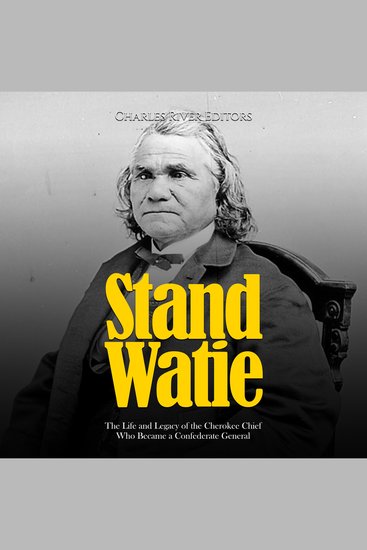
  • Stand Watie: The Life and Legacy of the Cherokee Chief Who Became a Confederate General - cover

    Stand Watie: The Life and Legacy...

    Editors Charles River

    • 0
    • 0
    • 0
    Stand Watie’s life connects the traditional Cherokee homeland in Tennessee and Georgia, the fight within the tribe over leaving for the West or staying on their homeland and trying to resist, and the Trail of Tears. At the same time, his life also includes the ongoing split between mixed-blood and full-blood Cherokee in the Cherokee Nation, and the chaos of Indian Territory during the Civil War.  
    	On the surface, Indian Territory was peaceful and fairly prosperous, but old resentments simmered under the surface. The most dangerous of these was in the Cherokee Nation. Following the Cherokee removal, the leaders of the faction of the tribe that had actually signed the Treaty of New Echota suffered violence. There had been a law that giving away Cherokee land was punishable by death, and several of the leaders who signed the treaty were murdered. Stand Watie was one of the signers, and he barely escaped, but one of his brothers was executed. 
    	The Principal Chief was John Ross. He and his faction managed to retain political control of the Cherokee tribe, but there was lasting enmity between the Watie and Ross factions of the tribe. In a broad sense, the signers of the hated treaty were mixed-blood Cherokee, and the resistance had been led by full-bloods. Stand Watie headed the mixed-blood faction and John Ross the full-blood faction. Ironically, John Ross himself was mixed-blood and Watie was a full-blood, but regardless, this tribal split had important ramifications for the Cherokee in the coming war. 
    	Like the country as a whole, the Cherokee Nation was split over the question of slavery, and with an estimated 100 slaves owned, Watie was the biggest native slaveholder in the region. At the start of the war, Watie was commissioned as a colonel in Confederate service and later as a brigadier general. His 1st Cherokee Mounted Rifles Regiment fought more engagements than any other Confederate unit west of the Mississippi River.
    Show book