Join us on a literary world trip!
Add this book to bookshelf
Grey
Write a new comment Default profile 50px
Grey
Subscribe to read the full book or read the first pages for free!
All characters reduced
How to know the wild flowers: a guide to the names haunts and habits of our common wild flowers - cover

How to know the wild flowers: a guide to the names haunts and habits of our common wild flowers

Frances Theodora Parsons

Publisher: Good Press

  • 0
  • 0
  • 0

Summary

In "How to Know the Wild Flowers: A Guide to the Names, Haunts, and Habits of Our Common Wild Flowers," Frances Theodora Parsons offers an illuminating exploration of North America's native flora, blending botanical knowledge with poetic observation. This meticulously crafted guide features detailed descriptions, accompanied by vibrant illustrations that enhance its engaging prose. Parsons situates her work within the burgeoning American environmental consciousness of the early 20th century, manifesting a deep reverence for nature while providing practical advice on wildflower identification and appreciation, making this book an essential resource for both amateur botanists and casual nature enthusiasts alike. Frances Theodora Parsons, a pioneering naturalist and educator, was profoundly influenced by the changing landscape of American nature studies. Her background in both education and horticulture equipped her with a unique perspective to bridge the gap between scientific inquiry and public appreciation of the natural world. Parsons' relentless curiosity and dedication to understanding plant life propelled her to write extensively on her discoveries, reflecting a broader movement toward environmental awareness during her lifetime. This book is highly recommended for anyone seeking to deepen their connection with nature, enhance their botanical knowledge, or embark on a journey of outdoor discovery. Parsons' accessible style and thorough insights invite readers to cultivate an appreciation for the intricate beauty and diversity of wildflowers, inspiring a sense of wonder and stewardship for the natural world.
Available since: 03/02/2025.
Print length: 220 pages.


Other books that might interest you

  • Leadership for Scientists and Engineers - Transforming Brilliant Technical Experts Into Great Managers - cover

    Leadership for Scientists and...

    Gwen Acton

    • 0
    • 0
    • 0
    Like it or not, you’re a leader now. Better step away from your computer and figure out how to deal with people! 
    There are few leadership books tailored specifically to the needs of technical-minded people who like hard evidence, plain language, and industry-specific guidance. 
    People like you! 
    Gwen Acton, PhD, has helped thousands of scientists and engineers to become better leaders, and she can help you too. Leadership for Scientists and Engineers offers a clear, pull-no-punches walk through all the skills you’ll need to manage a team and advance in your role, including: 
        * Delegating. Delegating way more than you think you should. Delegating like your life depends on it. 
        * Conducting one-on-ones that put you and your reports at ease and ensure no surprises when it comes time for the annual review. 
        * Navigating the hiring and onboarding process no matter what size organization you’re working with. 
        * Figuring out what to do when someone starts crying in your office. 
    Science and engineering take a lot of technical know-how, but leadership takes a lot of soft skills—communication, networking, setting and adjusting goals. 
    You want to be good at this stuff. You don’t want to hate it. Leadership for Scientists and Engineers is here to help.
    Show book
  • The Things We Make - The Unknown History of Invention from Cathedrals to Soda Cans - cover

    The Things We Make - The Unknown...

    Bill Hammack

    • 0
    • 0
    • 0
    Discover the secret method used to build the world . . . 


    For millennia, humans have used one simple method to solve problems. Whether it's planting crops, building skyscrapers, developing photographs, or designing the first microchip, all creators follow the same steps to engineer progress. But this powerful method, the "engineering method", is an all but hidden process that few of us have heard of—let alone understand—but that influences every aspect of our lives. 


    Bill Hammack, a Carl Sagan Award–winning professor of engineering and viral "The Engineer Guy" on YouTube, has a lifelong passion for the things we make, and how we make them. Now, for the first time, he reveals the invisible method behind every invention and takes us on a whirlwind tour of how humans built the world we know today. From the grand stone arches of medieval cathedrals to the mundane modern soda can, Hammack explains the golden rule of thumb that underlies every new building technique, every technological advancement, and every creative solution that leads us one step closer to a better, more functional world. Spanning centuries and cultures, Hammack offers a fascinating perspective on how humans engineer solutions in a world full of problems.
    Show book
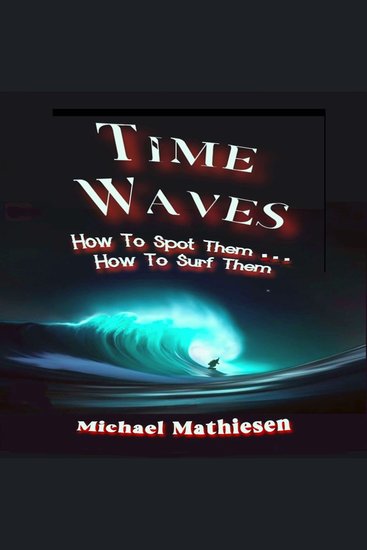
  • Time Waves - How To Spot Them How To Surf THem - cover

    Time Waves - How To Spot Them...

    Michael Mathiesen

    • 0
    • 0
    • 0
    What if time isn’t a straight line—but a wave you can ride? 
    In Time Waves, Michael Mathiesen invites readers on a mind-bending journey through the quantum surf of reality itself. Blending cutting-edge physics, mythic resonance, and visionary storytelling, this book challenges everything we think we know about time, consciousness, and our place in the universe. 
    Drawing inspiration from quantum mechanics, gravitational wave theory, Jungian archetypes, and the poetic elegance of wave interference, Mathiesen proposes a radical new framework: time is not a passive backdrop to our lives—it’s an active, dynamic field of energy, pulsing with rhythms we can learn to detect, interpret, and even harness. 
    Spot the Patterns. Feel the Pull. Catch the Wave. 
    Whether you're a physicist, philosopher, seeker, or surfer of ideas, Time Waves offers a toolkit for navigating the unseen forces shaping our lives. Through vivid metaphors, scientific rigor, and speculative leaps, Mathiesen explores: 
    The anatomy of a time wave—how resonance, amplitude, and phase shifts mirror our lived experience. 
    Interference patterns of destiny—why some moments feel “meant to be” and others spiral into chaos. 
    The surfer’s mindset—how intuition, timing, and flow state align with quantum principles. 
    Atomic clocks and cosmic choreography—a visionary proposal to ESA and NASA to detect time waves via the LISA mission. 
    Mythology meets physics—from Hermes to Hawking, how ancient symbols echo modern science.
    Show book
  • Website Development - Web Design Skills for Beginners - cover

    Website Development - Web Design...

    Jonathan Rigdon

    • 0
    • 0
    • 0
    Website development involves creating and maintaining websites. It encompasses various aspects such as web design, web programming, and database management. Web developers use languages like HTML, CSS, and JavaScript to build the structure, style, and interactivity of websites. Additionally, they may work with server-side scripting languages like PHP, Python, or Ruby to handle dynamic content and databases. Understanding user experience (UX) and search engine optimization (SEO) are also crucial for creating successful websites.
    Show book
  • Radium Revelations Uncovered - "Elevate your understanding with engaging audio lessons from 'Radium Revelations Uncovered' for peak performance!" - cover

    Radium Revelations Uncovered -...

    Asher Wrenfield

    • 0
    • 0
    • 0
    Radium Revelations Uncovered 
    A Simplified Guide to Inspiring Resilience Through Devastating Circumstances 
    Are you looking to advance your career and solidify your knowledge by successfully navigating challenging situations? 
    In search of an all-encompassing guide that offers everything you need to uncover hidden truths and inspire resilience? 
    Your quest ends here! 
    This guide will be your ultimate companion for deepening your understanding, refining your skills, and engaging in practical exercises. With this resource, you are well-prepared for success. 
    Updated for the current understanding of resilience through adversity. 
    Key highlights of this enhanced guide: 
    - In-depth insights about overcoming challenges and inspiring resilience 
    - Comprehensive breakdown of critical concepts and theories 
    - Effective strategies for preparation and problem-solving 
    Our guide stands out due to its thorough coverage, which is essential for your success. Concepts are not just briefly touched upon; they are explored in depth with clarity. 
    Please be aware that this guide is an independent resource and is not affiliated with any official entity concerning resilience training. 
    Crafted with a clear structure and accessible language, our guide ensures seamless transitions between topics. Say goodbye to complex jargon and embrace clear, concise, and technically accurate content. 
    Why hesitate? Click the BUY NOW button, secure your guide, and embark on your journey toward uncovering the truths of resilience!
    Show book
  • The Power of Prions - The Strange and Essential Proteins That Can Cause Alzheimer’s Parkinson’s and Other Diseases - cover

    The Power of Prions - The...

    Michel Brahic

    • 0
    • 0
    • 0
    Over the last decade, scientists have discovered the importance and widespread presence in the body of a remarkable family of proteins known as prion proteins. Research links various types of prion proteins to neurodegenerative diseases such as Parkinson's and Alzheimer's—and this has fueled the search for new drugs that could halt the progression of these terrible disorders. Other discoveries have revealed the essential roles prion proteins play in memory and immunity, and the part they may have played in the beginnings of life on our planet. 


    Brahic, a leading researcher on diseases of the central nervous system, first describes the discovery of prions and their role in infection, beginning with early work on the animal disease scrapie and a mysterious human illness in New Guinea, apparently transmitted by cannibalism. Prion proteins were then revealed as the cause of other illnesses, from "mad cow" disease and its human counterpart, Creutzfeldt-Jakob disease, to such noninfectious brain disorders as Parkinson's and Alzheimer's. While the prion proteins responsible for diseases are definitively "bad," Brahic also explains that these abnormal prions are rare exceptions. Most of the time, prion proteins actually serve "good" and vital functions—and they may even have been present at the origin of life itself.
    Show book