Join us on a literary world trip!
Add this book to bookshelf
Grey
Write a new comment Default profile 50px
Grey
Subscribe to read the full book or read the first pages for free!
All characters reduced
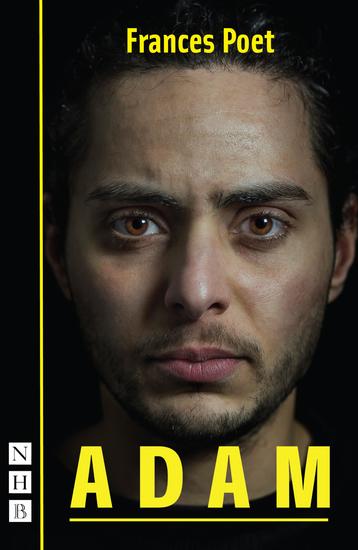
Adam - cover

Adam

Frances Poet

Publisher: Nick Hern Books

  • 0
  • 0
  • 0

Summary

If you are born in a country where being yourself can get you killed, exile is your only choice.
Frances Poet's play Adam is the remarkable true story of a young trans man having to make that choice and begin his journey. It charts Adam's progress from Egypt to Scotland, across borders and genders, in his search for a place to call home.
The play was first performed by the National Theatre of Scotland at the Traverse Theatre, Edinburgh, during the Edinburgh Festival Fringe 2017, where it won a Fringe First award. It was directed by Cora Bissett, with music by Jocelyn Pook, and starred Adam Kashmiry, whose story inspired the play.
A TV movie based on the play, written by Frances Poet and also starring Adam Kashmiry, was made by Hopscotch Films and National Theatre of Scotland, and was broadcast by the BBC in 2021. The film was the winner in the Television Scripted category at the 2021 BAFTA Scotland Awards.
Available since: 08/03/2017.
Print length: 64 pages.

Other books that might interest you

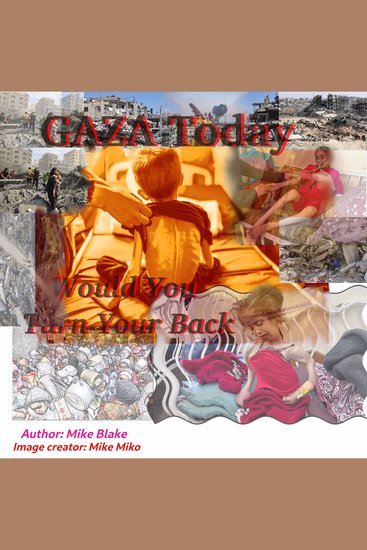
  • GAZA Today - Would You Turn Your Back - cover

    GAZA Today - Would You Turn Your...

    Mike Blake

    • 0
    • 0
    • 0
    GAZA Today: Would You Turn Your Back. 
    (Harmony-Join Book 4) 
    Everyone knows what Gaza is. A strip of land in the Middle East, being vociferously fought over. 
    I don't want to get into the Politics of it, but at least a brush with it is unavoidable if you attempt 
    any kind of dialogue or description of the occurrences that are happening there - truly awful. 
    This poem is a short one, and keeps to the suffering of its people, and not delving too much into sides 
    of the Political spectrum. 
    I think the suffering in a modern day scenario with instant and graphic footage of this one-sided war 
    is horrific. 
    Regardless of who did what to who, and who did it first etc, it should be focused on the humanitarian side 
    in any conflict lest we lose sight of what we maybe fighting for - I think the focus on humanity has been totally 
    lost. 
    Are we to Turn Our Back on these people. The West should push for extreme Sanctions to reign in the seemingly 
    unstoppable gungho aggression of the combatants - There is a Geneva convention you know. 
    It can only mean something if it is enforced... 
    Footnote: This Poem is all about the kids in this conflict. Whose right and whose wrong, shouldn't come into it 
    on the humanitarian field of view.
    Show book
  • Macbeth - cover

    Macbeth

    William Shakespeare

    • 0
    • 0
    • 0
    Anthony Quayle, Robert Hardy, Ian Holm, Stanley Holloway and Jill Balcon in an unabridged performance of Shakespeare's Macbeth
    Show book
  • Black Rhythms Sacred Voices - cover

    Black Rhythms Sacred Voices

    M.A. Tucker

    • 0
    • 0
    • 0
    In Black Rhythms, Sacred Voices, M.A. Tucker weaves a powerful tapestry of poetry that echoes with the soul of Black history, struggle, and triumph. These verses pulse with the rhythms of survival, the melodies of resistance, and the sacred voices that refuse to be silenced. 
    From the weight of ancestry to the fire of revolution, from love's quiet sanctuary to the echoes of the unspoken, this collection captures the raw beauty and unbreakable spirit of Blackness. Each poem is a hymn to those who came before us, a reckoning with the present, and a declaration of a future where our voices rise, untamed and free. A lyrical sanctuary for those who have ever felt unseen, unheard, or unheld. 
    For the ancestors. For the dreamers. For us.
    Show book
  • One-Act Play Collection 003 - cover

    One-Act Play Collection 003

    Various

    • 0
    • 0
    • 0
    This collection of ten one-act dramas features plays by Edward Goodman, Alice Gerstenberg, Arnold Bennett, John Galsworthy, Anton Chekhov, Frank Wedekind, Moliere, Theresa Helburn, John Kendrick Bangs, and Harold Brighouse. (Summary by wildemoose)
    Show book
  • Golden Days of good Queen Bess - cover

    Golden Days of good Queen Bess

    Sir John Comyns Carr

    • 0
    • 0
    • 0
    LibriVox volunteers bring you 8 recordings of Parody on "The Golden Days of good Queen Bess" by Sir John Carr. This was the Fortnightly Poetry project for November 15th, 2009.
    Show book
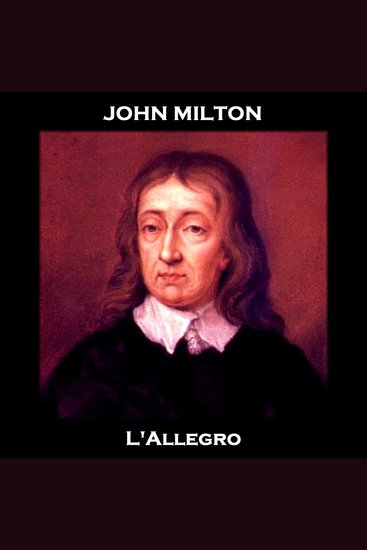
  • L'Allegro - From their pens to your ears genius in every story - cover

    L'Allegro - From their pens to...

    John Milton

    • 0
    • 0
    • 0
    John Milton was born in Bread Street, London, on December 9th, 1608.  His early years were privately tutored before gaining a place at St Paul’s School and in 1625 he matriculated at Christ's College, Cambridge, earning a BA in 1629 and an MA in 1632. At Cambridge he had developed a reputation for poetic skill but also experienced alienation from his peers and university life as a whole.  
    The next 6 years were spent in private study. He read both ancient and modern works of theology, philosophy, history, politics, literature and science, in preparation for a poetical career.  Milton mastered Latin, Greek, Hebrew, French, Spanish, and Italian. To these he would add Old English (whilst researching his History of Britain) and also acquired more than a passing acquaintance in Dutch.  
    Although he was studying, some of his poetry from this time is remarkable; L’Allegro and Il Penseroso in 1631 and Lycidias in 1638. 
    In May 1638, Milton embarked upon a 15 month tour of France and Italy. These travels added a new and direct experience of artistic and religious traditions, especially Roman Catholicism.  He cut the journey short to return home during the summer of 1639 because of what he claimed were "sad tidings of civil war in England."  
    Once home, Milton wrote prose tracts against episcopacy, in the service of the Puritan and Parliamentary cause.  
    He married 16-year-old Mary Powell in June 1643 but she left him after only a few months during which he wrote and published several writings on divorce. Mary did return after 3 years and their life thereafter seemed harmonious.  Milton received a hostile response to the divorce tracts and drove him to write Areopagitica, his celebrated attack on pre-printing censorship.  
    With the parliamentary victory in the Civil War, Milton wrote The Tenure of Kings and Magistrates (1649) which defended popular government and implicitly sanctioned the regicide which led to his appointment as Secretary for Foreign Tongues by the Council of State.  
    On 24 February 1652 Milton published his Latin defense of the English People, Defensio Pro Populo Anglicano, also known as the First Defense. Milton's Latin prose and intellectual sweep, quickly gained him a European reputation.  
    Tragically his first wife, Mary, died on May 5th, 1652 following the birth of their fourth child.   The following year Milton had become totally blind, probably due to glaucoma.  He then had to dictate his verse and prose to helpers, one of whom was the poet Andrew Marvell.  
    He married again to Katherine Woodcock but she died in February 1658, less than four months after giving birth to a daughter, who also tragically died.  
    Though Cromwell’s death in 1658 caused the English Republic to collapse Milton stubbornly clung to his beliefs and in 1659 he published A Treatise of Civil Power, attacking the concept of a state-dominated church. Upon the Restoration in May 1660, Milton went into hiding for his life. An arrest warrant was issued and his writings burnt. He re-emerged after a general pardon was issued, but was nevertheless arrested and briefly imprisoned before influential friends, such as Marvell, now an MP, intervened 
    His third marriage was to Elizabeth Mynshull. Despite a 31-year age gap, the marriage seemed happy and Milton spent the remaining decade of his life living quietly in London, apart from a short spell in Chalfont St. Giles, during the Great Plague of London.  
    Milton was to now publish his greatest works, which had been gestating for many years.  Paradise Lost, perhaps the classic English Epic poem was originally published in 10 books in 1667.  This was followed by Paradise Regained and Samson Agonistes in 1671.  Because of his anti-monarchy views their reception was muted but over the centuries since Milton has established himself as second only to Shakespeare.  He died of kidney failure on November 8th, 1674 and was buried in the church of St Giles Cripplegate.
    Show book