Join us on a literary world trip!
Add this book to bookshelf
Grey
Write a new comment Default profile 50px
Grey
Subscribe to read the full book or read the first pages for free!
All characters reduced
Evelina - cover

Evelina

Frances Burney

Publisher: Bygone Books

  • 0
  • 0
  • 0

Summary

A young woman enters society for the first time and discovers a world of romance, manners, and hidden truths.

Evelina is the celebrated debut novel by Frances Burney, a landmark work in the development of the English novel.

Written in the form of letters, the story follows Evelina Anville, a young woman of uncertain social position who experiences the excitement and challenges of entering fashionable London society. As she encounters romance, misunderstandings, and the complexities of social expectations, Evelina learns to navigate a world governed by reputation, manners, and appearances.

With sharp wit, humor, and keen observations of 18th-century life, Burney explores themes of identity, love, family, and social ambition.

A significant classic of English literature, Evelina remains a charming and insightful portrait of a young woman finding her place in society.
Available since: 06/24/2026.
Print length: 288 pages.


Other books that might interest you

  • Taras Bulba and Other Tales - Six Tales of Ukraine and Petersburg - cover

    Taras Bulba and Other Tales -...

    Nikolaï Gogol

    • 0
    • 0
    • 0
    An old Cossack colonel greets his sons home from the seminary by knocking the elder down, then takes them both to the Sich and a war that will test every bond of blood and faith. Gogol moves between slaughter and lyric within a paragraph, and the steppe itself is the book's largest character. Five shorter tales follow it — St. John's Eve, The Cloak, How the Two Ivans Quarrelled, The Mysterious Portrait and The Calash. Paintings of riders, siege and horizon open this Gilded Library volume; the decoration is sabre, horsetail standard and steppe grass.
    Show book
  • CARNACKI: The Complete Collection - cover

    CARNACKI: The Complete Collection

    William Hope Hodgson

    • 0
    • 0
    • 0
    Step into the world of one of the most influential paranormal investigators of the early 20th century with "CARNACKI: The Complete Collection". This definitive anthology brings together all of William Hope Hodgson’s celebrated stories featuring the brilliant, if eccentric, investigator, Thomas Carnacki. Known for his keen intellect, inventive methods, and unshakable resolve, Carnacki faces some of the most chilling and enigmatic supernatural phenomena of his time. 
    Throughout these nine tales, Carnacki is called upon to confront strange forces that defy logic and reason. Armed with his trusty scientific tools, a deep understanding of the occult, and a fearless heart, he investigates everything from spectral hauntings and ghostly apparitions to malevolent spirits and unearthly forces lurking in the shadows. 
    The first six stories were collected in the 1913 anthology, “Carnacki, the Ghost-Finder”, with the latter three appearing in an expanded collection of the same name published in 1947.
    Show book
  • The Theogony - cover

    The Theogony

    Hesiod

    • 0
    • 0
    • 0
    The Theogony "the genealogy or birth of the gods" is a poem by Hesiod (8th – 7th century BC) describing the origins and genealogies of the Greek gods, composed c. 730–700 BC. It is written in the Epic dialect of Ancient Greek and contains 1022 lines. 
    Hesiod's Theogony is a large-scale synthesis of a vast variety of local Greek traditions concerning the gods, organized as a narrative that tells how they came to be and how they established permanent control over the cosmos. It is the first known Greek mythical cosmogony. The initial state of the universe is chaos, a dark indefinite void considered a divine primordial condition from which everything else appeared. Theogonies are a part of Greek mythology which embodies the desire to articulate reality as a whole; this universalizing impulse was fundamental for the first later projects of speculative theorizing.
    Hesiod appropriates to himself the authority usually reserved to sacred kingship. The poet declares that it is he, where we might have expected some king instead, upon whom the Muses have bestowed the two gifts of a scepter and an authoritative voice (Hesiod, Theogony 30–3), which are the visible signs of kingship. It is not that this gesture is meant to make Hesiod a king. Rather, the point is that the authority of kingship now belongs to the poetic voice, the voice that is declaiming the Theogony.
    Show book
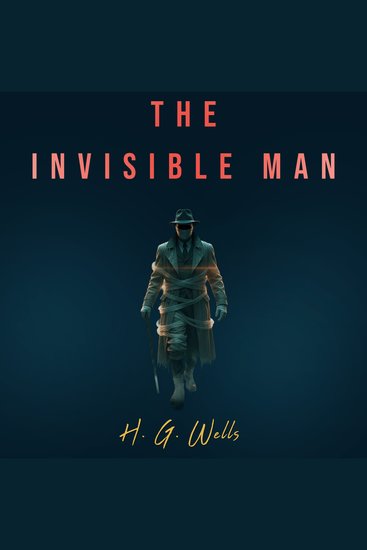
  • The Invisible Man - cover

    The Invisible Man

    H. G. Wells

    • 0
    • 0
    • 0
    The stranger came early in February, one wintry day, through a biting wind and a driving snow, the last snowfall of the year, over the down, walking from Bramblehurst railway station, and carrying a little black portmanteau in his thickly gloved hand.    He was wrapped up from head to foot, and the brim of his soft felt hat hid every inch of his face but the shiny tip of his nose; the snow had piled itself against his shoulders and chest, and added a white crest to the burden he carried.    He staggered into the "Coach and Horses" more dead than alive, and flung his portmanteau down. "A fire," he cried, "in the name of human charity! A room and a fire!" He stamped and shook the snow from off himself in the bar, and followed Mrs. Hall into her guest parlour to strike his bargain. And with that much introduction, that and a couple of sovereigns flung upon the table, he took up his quarters in the inn. Mrs. Hall lit the fire and left him there while she went to prepare him a meal with her own hands. A guest to stop at Iping in the wintertime was an unheard-of piece of luck, let alone a guest who was no "haggler," and she was resolved to show herself worthy of her good fortune.    As soon as the bacon was well under way, and Millie, her lymphatic maid, had been brisked up a bit by a few deftly chosen expressions of contempt, she carried the cloth, plates, and glasses into the parlour and began to lay them with the utmost éclat. Although the fire was burning up briskly, she was surprised to see that her visitor still wore his hat and coat, standing with his back to her and staring out of the window at the falling snow in the yard. His gloved hands were clasped behind him, and he seemed to be lost in thought. She noticed that the melting snow that still sprinkled his shoulders dripped upon her carpet. "Can I take your hat and coat, sir?" she said, "and give them a good dry in the kitchen?"
    Show book
  • The Untilled Field - Irish Stories of Priests Exiles and Artists - cover

    The Untilled Field - Irish...

    George Moore

    • 0
    • 0
    • 0
    Ireland in a dozen stories: a priest who drives a girl from the parish, an emigrant's letter, a stonecutter, a village where nothing will grow because everyone who could has gone. Moore was an Irish landlord's son who went to Paris to paint, failed, and came back with Zola's method; several of these 1903 stories first appeared in Irish translation, and it is the book that taught Joyce what a Dubliners might look like. Fifty-seven plates from Raeburn to Orpen track the Irish and European portrait across two centuries, the same faces and rooms Moore's priests, exiles and artists move through.
    Show book
  • Young Goodman Brown and Other Stories - cover

    Young Goodman Brown and Other...

    Anthony M. Rud, Joseph Sheridan...

    • 0
    • 0
    • 0
    Step into the world of classic literature with our digital audiobook version of "Young Goodman Brown and Other Stories." Immerse yourself in the haunting tales penned by some of the greatest authors in literary history. 
     
    First up is Nathaniel Hawthorne's timeless masterpiece, "Young Goodman Brown," a journey into the heart of darkness where the line between reality and illusion blurs, leaving you questioning the nature of good and evil. 
     
    Followed by Anthony M. Rud's "Ooze," a chilling exploration of the macabre that will send shivers down your spine as you venture into the mysterious depths of the unknown. 
     
    Next, Joseph Sheridan Le Fanu's "A Debt of Honor" introduces you to a world of secrets and vengeance, where debts must be paid in blood, and the past can never truly be escaped. 
     
    And finally, E. F. Benson's "Mr. Tilly's Seance" invites you to a gathering where the boundaries between the living and the dead are blurred, and the consequences of dabbling in the supernatural are all too real.
    Show book