Join us on a literary world trip!
Add this book to bookshelf
Grey
Write a new comment Default profile 50px
Grey
Subscribe to read the full book or read the first pages for free!
All characters reduced
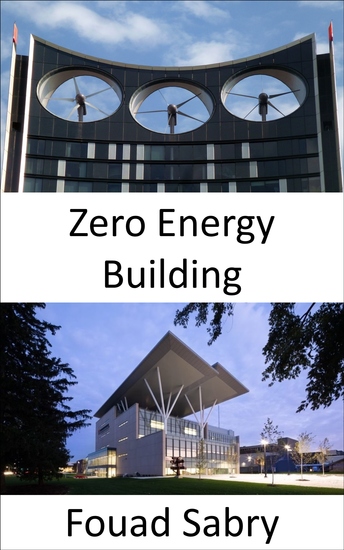
Zero Energy Building - Total utility energy consumed equal to total renewable energy produced - cover

Zero Energy Building - Total utility energy consumed equal to total renewable energy produced

Fouad Sabry

Publisher: One Billion Knowledgeable

  • 0
  • 0
  • 0

Summary

What Is Zero Energy Building
 
A Zero Energy Building (ZEB), also known as a Net Zero Energy (NZE) building or a Zero Net Energy (ZNE) building, is a building with net zero energy consumption. This means that the total amount of energy used by the building on an annual basis is equal to the amount of renewable energy created on the site or in other definitions by renewable energy sources offsite, using technology such as heat pumps, high efficiency windows and insulation, and solar panels. Other names for this type of building include a Zero Net Energy During their lifetimes, these structures should be able to release into the atmosphere an amount of greenhouse gases that is lower, on average, than that of comparable non-ZNE structures. There are times when they emit greenhouse gases and utilize nonrenewable sources of energy, but there are also times when they decrease the use of energy and the generation of greenhouse gases in other places by the same amount. The pursuit of zero-energy buildings is motivated not only by a desire to have a less negative influence on the surrounding environment, but also by a desire to save money. The financial viability of zero-energy buildings is ensured by the availability of tax benefits and savings on energy expenditures. The virtually Zero Energy Building (nZEB) initiative is a similar idea that has been accepted and executed by the European Union and other cooperating nations. The objective of the initiative is to have all newly constructed buildings in the area comply with the nZEB criteria by the year 2020.
 
How You Will Benefit
 
(I) Insights, and validations about the following topics:
 
Chapter 1: Zero-energy building
 
Chapter 2: Renewable energy
 
Chapter 3: Solar energy
 
Chapter 4: BedZED
 
Chapter 5: Solar water heating
 
Chapter 6: Environmental impact of electricity generation
 
Chapter 7: Sustainable energy
 
Chapter 8: Low-energy house
 
Chapter 9: Energy-plus building
 
Chapter 10: Passive house
 
Chapter 11: Sustainable architecture
 
Chapter 12: Microgeneration
 
Chapter 13: Renewable heat
 
Chapter 14: Energy efficiency in British housing
 
Chapter 15: Solar air conditioning
 
Chapter 16: Solar power
 
Chapter 17: BrightBuilt Barn
 
Chapter 18: Green retrofit
 
Chapter 19: Creative Energy Homes
 
Chapter 20: Zero carbon housing
 
Chapter 21: Zero heating building
 
(II) Answering the public top questions about zero energy building.
 
(III) Real world examples for the usage of zero energy building in many fields.
 
(IV) 17 appendices to explain, briefly, 266 emerging technologies in each industry to have 360-degree full understanding of zero energy building' technologies.
 
Who This Book Is For
 
Professionals, undergraduate and graduate students, enthusiasts, hobbyists, and those who want to go beyond basic knowledge or information for any kind of zero energy building.
Available since: 10/15/2022.
Print length: 407 pages.
Other books that might interest you

  • Empower Your Birth: Transformative Insights for a Positive Experience - "Elevate your birthing journey! Discover empowering insights with our transformative audiobook for a positive experience" - cover

    Empower Your Birth:...

    Thorneby Vinveston

    • 0
    • 0
    • 0
    Empower Your Birth: Transformative Insights for a Positive Experience 
    ⭐⭐ Simplified Audio Guide with Explanations ⭐⭐ 
    Are you seeking to enhance your birthing experience and gain valuable knowledge that leads to a positive outcome? 
    Searching for a thorough guide that covers all the essential elements for transforming your birth experience with practical, calming techniques? 
    Your search is over! 
    This guide is your ultimate companion for deepening your understanding, applying meaningful techniques, and participating in practical exercises designed for a successful birth experience. 
    Updated to reflect the latest insights for 2024-2025. 
    Key features of this comprehensive guide: 
    - In-depth insights on transforming your birth experience 
    - Detailed explanations of practical, calming techniques 
    - Effective strategies for preparation and stress relief 
    Our guide stands out due to its thorough content, which is crucial for achieving a triumphant birth experience. Concepts are explored in depth, ensuring a rich understanding. 
    Please note that this guide is an independent resource and not affiliated with any official entity. 
    Crafted with a clear structure and approachable language, our guide guarantees seamless transitions between topics. Say goodbye to confusing jargon and embrace clear, accurate, and practical content. 
    So why wait? Click the BUY NOW button, secure your guide, and embark on the journey toward a transformative and positive birth experience!
    Show book
  • Chasing Proof Finding Faith - A Young Scientist’s Search for Truth in a World of Uncertainty - cover

    Chasing Proof Finding Faith - A...

    Tom Rudelius

    • 0
    • 0
    • 0
    He had science and an Ivy League pedigree―why did he need God? Immersed in his physics studies at Cornell, Tom Rudelius never thought much about God until his brother, a new convert to Christianity, challenged him to explore faith. To placate his twin, he reluctantly began exploring the Bible and the life of Jesus. Seeking proof of God’s existence, he found himself in a world of uncertainty, faced with plenty of reasons for both faith and doubt.In Chasing Proof, Finding Faith, Tom, now a rising young theoretical physicist, traces his journey to unexpected faith, through subsequent doubt and anxiety, and ultimately to a firmer, life-transforming allegiance to Jesus. Along the way, he explores some of the issues he wrestled with, includingCreation and cosmic originsThe problem of evil and sufferingThe compatibility of miracles with science and the plausibility of Jesus’ resurrectionThe reliability of the BibleWhile Tom never found absolute proof of God or Christianity, he ultimately concluded that the existing evidence for both is compelling and compatible with science. His searingly honest story is a potent guide for those doubting or exploring faith.
    Show book
  • The Fabric of Cosmos - Unraveling the Mystery of Dark Matter - cover

    The Fabric of Cosmos -...

    Dirk Fallon

    • 0
    • 0
    • 0
    The story of dark matter begins not in the distant reaches of the universe, but in the questions that humans have asked for centuries. What is the universe made of? Why do galaxies behave the way they do? As our tools for observing the cosmos improved, so did our understanding—but with every answer came more mystery. In the early 20th century, astronomers began to notice strange things. Galaxies were spinning in ways that defied the laws of physics, at least as we understood them. The stars on the outer edges of galaxies were moving far too fast to be held together by the gravity from visible matter alone. There had to be something else out there, something invisible, something we couldn’t detect with telescopes. This was one of the first big hints that something massive and unseen—what we now call dark matter—was shaping the universe. 
    Modern cosmology was born when scientists started to view the universe not just as a collection of stars and planets, but as a dynamic, evolving structure governed by deep physical laws. Einstein’s theory of general relativity reshaped our understanding of space, time, and gravity. Suddenly, the universe was a place where space could bend, expand, and even accelerate. These ideas led to the Big Bang theory and the realization that the cosmos had a beginning and has been changing ever since. But as astronomers began mapping out galaxies and measuring their movements, inconsistencies popped up. The math didn’t add up unless we assumed that most of the mass in the universe was missing from our view. That mass didn’t emit light, didn’t reflect it, and didn’t absorb it. It was dark, but it was there.
    Show book
  • Childhood Unplugged - Practical Advice to Get Kids Off Screens and Find Balance - cover

    Childhood Unplugged - Practical...

    Katherine Johnson Martinko

    • 0
    • 0
    • 0
    Ditch the devices and bring back the magic of being a kid    
     Screens are everywhere. Children spend an average of 7.5 hours on digital devices every day with profoundly negative consequences. While some tech may “amplify” real life experience (online music lessons or Zoom calls with faraway family, for example), the vast majority “amputates” by limiting physical activity, creating anxiety, or damaging self-esteem.  Childhood Unplugged  takes a bold approach to creating healthy boundaries around the use of digital media, suggesting kids should be offline for the majority of their time.   
     Drawing on her own family’s experience, plus interviews with digital minimalists, educators, and child development experts, author Katherine Martinko presents:    Meticulously researched analysis of the impacts of excessive screen time on children's physical, neurological, emotional, and social development   Specific pathways to reduced screen exposure, naturally leading to more time spent outdoors, increased confidence and empathy, more creative and active play, and other benefits   Inspiration for caregivers overwhelmed by the thought of severing ties with the digital babysitter   Age-appropriate advice for fundamental change, with specific sections for babies and toddlers, school-aged children, and adolescents.    
     Taking a calming, nonjudgmental approach,  Childhood Unplugged  is a lifeline for parents, caregivers, educators, and anyone who questions the role of digital media and yearns for the young people in their life to experience the profound beauty and magic of childhood.
    Show book
  • Mammalogy - Mammals: Exploring Warm-Blooded Life on Earth - cover

    Mammalogy - Mammals: Exploring...

    Mike Crawford

    • 0
    • 0
    • 0
    Mammals, the dominant group of warm-blooded vertebrates on Earth today, have a deep evolutionary history that stretches back over 300 million years. Their origins can be traced to the synapsids, a group of amniotes that first appeared in the late Carboniferous period. These early synapsids were distinct from reptiles and birds, possessing a single temporal fenestra, an opening in the skull that allowed for stronger jaw muscles. Over millions of years, synapsids diversified into a variety of forms, some of which gave rise to the therapsids, the direct ancestors of modern mammals. 
    During the Permian period, therapsids became the dominant terrestrial vertebrates, developing more advanced characteristics such as differentiated teeth, a more upright posture, and improved metabolic efficiency. However, the Permian-Triassic extinction event, the most severe mass extinction in Earth's history, led to a significant decline in their diversity. Those that survived continued to evolve, giving rise to cynodonts, a subgroup of therapsids that displayed increasingly mammal-like features. Cynodonts had more complex teeth, enhanced jaw mechanics, and possibly even fur, adaptations that would later define true mammals.
    Show book
  • Ultimate Flutter for Cross-Platform App Development - Build Seamless Cross-Platform Flutter UIs with Dart Dynamic Widgets Unified Codebases and Expert Testing Techniques - cover

    Ultimate Flutter for...

    Temidayo Adefioye

    • 0
    • 0
    • 0
    Elevate Your Cross-Platform Development Skills with Flutter and Dart, and Advanced UI Techniques.Book DescriptionUnlock the full potential of Flutter with this practical and indispensable resource, catering to both beginners and seasoned developers seeking to enhance their skills.This book will provide you with foundational insights into Flutter and Dart programming to master the dynamic widget system and empower you to create visually stunning and responsive UI designs.The book begins with exploring Dart language and then moves on to Flutter's dynamic widgets and UI elements, the art of styling, theming, and creating interactive designs. Next, from handling images, media, and effects to delving into advanced techniques like typography and slivers, this book equips you to build adaptive UIs for diverse platforms. You will navigate seamlessly through topics such as navigation, device feature utilization, and API integration. Learn effective unit testing strategies for robust UI components.Table of ContentsSECTION 1 Getting Started with Flutter1. Introduction to Flutter and its Environment2. Introduction to Dart Programming3. Exploring Flutter Widgets and UI ElementsSECTION 2 Building Modern UI Designs4. Styling, Theming, and Interactive UI Designs in Flutter5. Working with Images, Media, and Effects in Flutter6. Typography, Slivers, and Advanced UI Techniques in FlutterSECTION 3 Creating Cross-Platform UIs7. Building Adaptive UIs for Different Platforms8. Handling Navigation and Routing9. Utilizing Device Features and APIsSECTION 4 Testing and Debugging Flutter UIs10. Widget Testing UI Components11. Conclusion and the Next StepsIndex
    Show book