Join us on a literary world trip!
Add this book to bookshelf
Grey
Write a new comment Default profile 50px
Grey
Subscribe to read the full book or read the first pages for free!
All characters reduced
Undeclared War - Covert Operations and Modern Warfare - cover

Undeclared War - Covert Operations and Modern Warfare

Fouad Sabry

Publisher: One Billion Knowledgeable

  • 0
  • 0
  • 0

Summary

What is Undeclared War
 
An undeclared war is a military conflict between two or more nations without either side issuing a formal declaration of war. The term is sometimes used to include any disagreement or conflict fought about without an official declaration. Since the United Nations police action in Korea, some governments have pursued disciplinary actions and limited warfare by characterizing them as something else such as a military action or armed response.
 
How you will benefit
 
(I) Insights, and validations about the following topics:
 
Chapter 1: Undeclared war
 
Chapter 2: Nuclear warfare
 
Chapter 3: Martial law
 
Chapter 4: Iraq disarmament crisis
 
Chapter 5: Casus belli
 
Chapter 6: Declaration of war
 
Chapter 7: Declaration of war by the United States
 
Chapter 8: Police action
 
Chapter 9: War Powers Clause
 
Chapter 10: Powers of the president of the United States
 
(II) Answering the public top questions about undeclared war.
 
Who this book is for
 
Professionals, undergraduate and graduate students, enthusiasts, hobbyists, and those who want to go beyond basic knowledge or information for any kind of Undeclared War.
Available since: 05/26/2024.
Print length: 93 pages.
Other books that might interest you

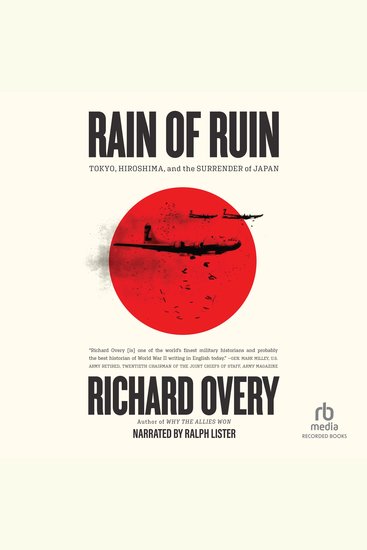
  • Rain of Ruin - Tokyo Hiroshima and the Surrender of Japan - cover

    Rain of Ruin - Tokyo Hiroshima...

    Richard Overy

    • 0
    • 0
    • 0
    A leading historian of World War II sheds new light on the purposes and impact of the U.S. incendiary and atomic bombing of Japan’s cities in 1945. 
      
    With the development of the B-29 “Superfortress” in summer 1944, strategic bombing, a central component of the Allied war effort against Germany, arrived in the Pacific theater. In 1945 Japan experienced the three most deadly bombing attacks of the war. The firebombing of Tokyo in March burned the city’s most densely populated sector, killed some 85,000 residents, and left more than one million homeless. The attack was part of a months-long campaign of incendiary bombing that destroyed almost two-thirds of Japan’s cities. The two atomic blasts in August killed hundreds of thousands in Hiroshima and Nagasaki, most of them civilians. The bombing brought a destabilizing devastation that, combined with a declaration of war by the Soviet Union, induced Japan, as they put it, to terminate the war. 
      
    Many at the time and since have credited American air power, and especially the two atomic bombs, with Japan’s surrender. But Richard Overy tells a different, more dimensional story. Drawing on his expertise on the war and its bombing campaigns, he delivers a precise recounting of these aerial attacks, and a balanced, informed assessment of how and why they occurred. Overy is astute on the Allied decision-making, and, notably, integrates the Japanese leadership as well. He ably navigates the dramatic endgame of the war, which featured factional infighting within the Japanese cabinet, a scramble by American officials to formulate an acceptable version of “unconditional surrender,” and the crucial role played by the emperor, Hirohito. The atomic bombing emerges as impactful but not decisive in this rich, multilayered history.
    Show book
  • Adaptable - How to Lead with Curiosity Pivot with Purpose and Thrive through Change - cover

    Adaptable - How to Lead with...

    Alexa Carlin

    • 0
    • 0
    • 0
    Life’s obstacles offer two distinct directions: They can push you backward or fuel you forward. The choice is up to you. 
    At 17, Alexa Carlin became CEO of her first company, designing jewelry that made a difference, one bracelet at a time. But at 21, she was induced into a medical coma and given a one-percent chance to live. In Adaptable, she shares the stories of her journey, offering powerful insights into hope, courage, and life’s challenges. 
    Written and narrated in a heartfelt and authentic tone, Adaptable invites readers to develop a new perspective on their past and current obstacles. The stories, lessons, and action steps that fill each chapter gently guide readers back to their true selves, allowing them to connect deeply to their inner light and shine brightly with their true purpose. 
    Alexa encourages and inspires readers to use their own challenges not as a reason to abandon dreams, but as a springboard from which to thrive.
    Show book
  • Our Others - Stories of Ukrainian Diversity - cover

    Our Others - Stories of...

    Olesya Yaremchuk

    • 0
    • 2
    • 0
    Olesya Yaremchuk’s literary reportages paint realistic, thoughtful, and historically informed depictions of how these various groups arrived in Ukraine.
    Show book
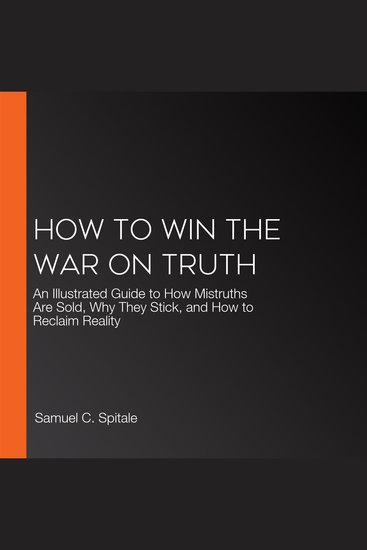
  • How to Win the War on Truth - An Illustrated Guide to How Mistruths Are Sold Why They Stick and How to Reclaim Reality - cover

    How to Win the War on Truth - An...

    Samuel C. Spitale

    • 0
    • 0
    • 0
    Made to Stick by Chip Heath meets Thing Explainer by Randall Munroe in this guide to navigating today's post-truth landscape, filled with examples of modern-day propaganda campaigns. 


    We're bombarded with information like never before. Some of it's true, some of it's spin, and some of it's flat-out fake news. And that's by design. Propaganda helps governments and corporations sell us products, lifestyles, and ideas. Sometimes the agenda is harmless, but other times it's destructive, and it's not always easy to spot the difference. 


    Whether you want to be informed on the issues or debunk misinformation wherever you encounter it, How to Win the War on Truth is here to help. You'll learn: the history of propaganda, from Edward Bernays to Fox News; why simple messages are so powerful; who profits from propaganda; how propaganda is manufactured and delivered directly to you; and how to find the truth for yourself. 


    Filled with real-world examples of propaganda in all its forms, How to Win the War on Truth will help you see the world with clear eyes for the first time. Because when it comes to preserving democracy and fighting for our rights, it's essential that we do.
    Show book
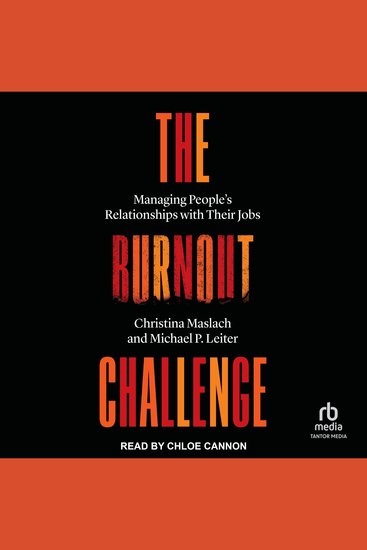
  • The Burnout Challenge - Managing People’s Relationships with Their Jobs - cover

    The Burnout Challenge - Managing...

    Michael P. Leiter, Christina...

    • 0
    • 0
    • 0
    Two pioneering researchers identify key causes of workplace burnout and reveal what managers can do to promote increased productivity and health. 


    Citing a wealth of research data and drawing on illustrative anecdotes, The Burnout Challenge shows how organizations can change to promote sustainable productivity. Christina Maslach and Michael P. Leiter provide useful tools for identifying the signs of employee burnout, most often exhaustion, cynicism, and ineffectiveness. They also advise managers on assembling and interpreting worker self-evaluation surveys, which can reveal workplace problems and potential solutions. And when it comes to implementing change, Maslach and Leiter offer practical, evidence-driven guidance. The key, they argue, is to begin with less-taxing changes that employees nonetheless find meaningful, seeding the ground for more thorough reforms in the future. 


    Experts estimate that more than $500 billion and 550 million workhours are lost annually to on-the-job stress, much of it caused by dysfunctional work environments. As priorities and policies shift across workplaces, The Burnout Challenge provides pragmatic, creative, and cost-effective solutions to improve employee efficiency, health, and happiness.
    Show book
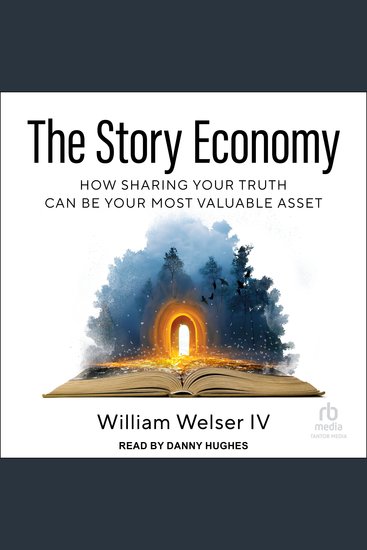
  • The Story Economy - How Sharing Your Truth Can Be Your Most Valuable Asset - cover

    The Story Economy - How Sharing...

    William Welser

    • 0
    • 0
    • 0
    How do you value your private data? What about your job? The truth is someone is selling your data, and your job may be among the countless others being lost to AI at record rates. Because of this abuse of technology among many others, most people have lost all agency over their technology, devices, and information. But technologist William Welser IV has a plan to help us regain control.Enter The Story Economy, a guide that provides fresh purchasing power in a world where opportunity feels harder and harder to grasp. Within, Welser outlines the need for an alternative economy where stories can become solutions to overwhelming new problems. His entirely new marketplace allows us to use our stories as currency, putting the data we've voluntarily given to good use—allowing us to purchase goods and services and giving us the power to see exactly where our data is going and to whom.In this exciting and sometimes scary world of AI, Big Tech is using all of its tools against us to create a society in which we're lonely, broke, and lost. We must take back our power and make the technology work for us to close the healthcare, education, and wealth divide—and in the process, foster self-awareness to help us become astute decision-makers and stay ahead of technology. The Story Economy provides the innovative blueprint to get started.
    Show book