Join us on a literary world trip!
Add this book to bookshelf
Grey
Write a new comment Default profile 50px
Grey
Subscribe to read the full book or read the first pages for free!
All characters reduced
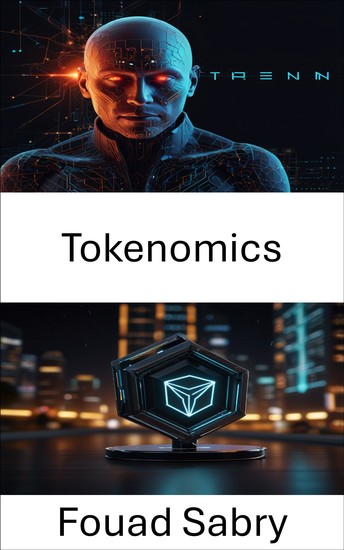
Tokenomics - Unlocking Digital Value in the Tron Blockchain Ecosystem - cover

Tokenomics - Unlocking Digital Value in the Tron Blockchain Ecosystem

Fouad Sabry

Publisher: One Billion Knowledgeable

  • 0
  • 0
  • 0

Summary

In the rapidly evolving world of blockchain, understanding the economic and political forces shaping decentralized ecosystems is crucial. Tokenomics explores the intersection of blockchain innovation and political science, revealing how value, governance, and power unfold in decentralized environments like Tron Blockchain.
 
Chapters Brief Overview:
 
1: Tokenomics: Examines token utility, distribution, and incentive models within the Tron Blockchain.
 
2: Cryptoeconomics: Explores how game theory and incentives secure and govern decentralized networks.
 
3: Decentralized autonomous organization: Unpacks DAOs and their governance role in Tron’s decentralized system.
 
4: Cardano (blockchain platform): Highlights Cardano’s governance model and contrasts it with Tron’s approach.
 
5: Decentralized finance: Explores DeFi protocols and their impact on financial freedom within Tron.
 
6: Solana (blockchain platform): Analyzes Solana's architecture, comparing it to Tron’s scalable design.
 
7: SpankChain: Details how niche blockchain platforms like SpankChain innovate in value exchange.
 
8: Blockchain: Introduces blockchain fundamentals and their political and economic implications.
 
9: Decentralized application: Discusses DApps’ role in shifting control away from centralized authorities.
 
10: Uniswap: Shows how Uniswap reshaped token exchange and its lessons for Tronbased systems.
 
11: Initial coin offering: Covers ICOs' role in funding and governance of Tronrelated projects.
 
12: Cryptocurrencies in Europe: Looks at regulation in Europe and how it affects Tron and other chains.
 
13: Cryptocurrency: Offers an overview of digital currencies and their transformative socioeconomic power.
 
14: Polkadot (blockchain platform): Examines Polkadot’s interoperability and compares it with Tron’s goals.
 
15: Ethereum: Traces Ethereum’s innovations and their influence on Tron’s token ecosystem.
 
16: Line Goes Up – The Problem with NFTs: Investigates NFT critiques and implications for Tron users.
 
17: Blockchain game: Highlights gaming's influence on token use and user engagement in Tron.
 
18: Cryptocurrency wallet: Explains wallet infrastructure and its security in Tron’s ecosystem.
 
19: Anthony Di Iorio: Profiles a blockchain pioneer to draw inspiration for Tron’s community builders.
 
20: Cryptocurrency bubble: Reflects on past market bubbles to caution Tron investors and enthusiasts.
 
21: Axie Infinity: Shows playtoearn dynamics and how Tron could harness similar economic models.
 
Tokenomics is essential for professionals, students, and enthusiasts eager to navigate the Tron Blockchain's political, social, and economic layers. Whether you're shaping policy, building applications, or simply fascinated by decentralization, this book offers more insight than its price suggests.
Available since: 08/11/2025.
Print length: 248 pages.


Other books that might interest you

  • Einstein's Unfinished Dream - Practical Progress Towards a Theory of Everything - cover

    Einstein's Unfinished Dream -...

    Don Lincoln

    • 0
    • 0
    • 0
    Humanity has long looked to the sky and marveled at the world around us. We've wondered why the world is the way it is and whether it has to be that way. For millennia these questions were theological, transitioning to philosophical during the Enlightenment, but the discipline that now drives progress is science. We now look forward, hoping to make additional connections and create a better understanding of the ultimate laws of nature. We dream of a time when we have developed a theory of everything—a theory that answers all questions. 


    There is so much that we don't know. This book is up front about our ignorance and spends some time dispelling some of the more popular theories. It then redirects the listener's attention to how we will actually move forward, by identifying things we don't yet understand and engaging with the experiments that will drive our comprehension. 


    Einstein's Unfinished Dream explores the cutting-edge research of modern particle physicists that pushes us slowly towards a theory of everything. Marshalling decades of experience in distilling high-level scientific concepts, Lincoln invites listeners into the mysteries of dark matter, dark energy, matter/antimatter asymmetry, quark and lepton flavor, and other phenomena that have puzzled humanity for centuries.
    Show book
  • Animal Crossing - cover

    Animal Crossing

    Kelsey Lewin

    • 0
    • 0
    • 0
    Before the world of Animal Crossing became a pandemic lifeline for millions, the "social sim" communication game Dо̄butsu no Mori, or "Animal Forest," debuted in 2001 on Nintendo 64 in Japan, then once again in 2002 on GameCube to critical and commercial success all over the world. 


    An open-ended casual game ahead of its time, Animal Crossing set the stage for the series's many incarnations to come with its focus on building community and friendship, its in-game currency of Bells, and its village of Animalese-speaking friends like Tom Nook, K. K. Slider, and the mean Mr. Resetti. You could visit the villages of your friends and give them gifts—all without being connected to the internet. 


    Video game preservationist and historian Kelsey Lewin tells the story of how a mundane-sounding game full of bug-catching, letter-writing, and furniture-collecting became one of Nintendo's best-loved franchises, with Animal Crossing: New Horizons eclipsing Super Mario Bros. for all-time sales in Japan, unlocking gaming's massive potential to tap into our desire to plant trees, find friends, and make the world a better place.
    Show book
  • Free Creations of the Human Mind - The Worlds of Albert Einstein - cover

    Free Creations of the Human Mind...

    Michael D. Gordin, Diana Kormos...

    • 0
    • 0
    • 0
    A nuanced portrait of Albert Einstein, a world citizen pivotally engaged in politics, humanitarianism, and science. 
      
    Albert Einstein (1879–1955) was the most influential scientist of the twentieth century, and his influence shows little sign of abating. His work comprises of much of today's understanding of the structure of the microphysical and cosmic universes. Einstein was a man of the modern world, faced with intellectual and existential challenges of extraordinary magnitude, a working scientist immersed in epochal theories of special relativity, the quantum theory, but also in organizational activities and teaching at Princeton's Institute for Advanced Study. More than any other past scientist, Einstein still pervades popular iconography and has come to symbolize genius, creativity, and innovation infused with humanism, wisdom, and humor. His life is interconnected with so many of the important political and intellectual movements of his era—Zionism, pacifism, Nazism, nuclear weapons, philosophy, civil rights, McCarthyism, the League of Nations, and more—that his views shaped the world he lived in while his persona acquired a formidable patina deposited by generations of apocryphal mythmaking, both during and after his lifetime. 
      
    Free Creations of the Human Mind: The Worlds of Albert Einstein presents a concise and nuanced account of Einstein's life and work embedded in his intellectual and social contexts, based on the substantial discoveries made through the study of his tremendous personal archive and several generations of assiduous scholarship. By disentangling the public persona from the private man, the rhetorical statement from the heartfelt conviction, this book shows Einstein as a man of the modern world, faced with intellectual and existential challenges of extraordinary magnitude, whose life was framed by turbulent, violent historical events. 
      
    "Albert Einstein lived a life of soaring scientific creativity. He also witnessed, and responded to, some of the most searing developments of modern times: world wars, the rise of Nazism, and the nuclear age. This remarkable book traces how the efforts of Einstein's life hung together."—David Kaiser, Germeshausen Professor of Physics and the History of Science, Massachusetts Institute of Technology
    Show book
  • Leadership and Agile Project Management with Scrum - Mastering Project Management and Leadership Techniques - cover

    Leadership and Agile Project...

    Ben Stephen

    • 0
    • 0
    • 0
    The book begins with an overview of the Agile and Scrum frameworks and their key principles and practices. It then delves into the specific challenges of scaling Agile and Scrum to meet the needs of large-scale projects, such as managing dependencies and coordination across multiple teams, integrating Agile and Scrum with other methodologies and tools, and measuring and improving performance. 
    The book also covers important topics such as customer engagement and collaboration, automation and AI, sustainability and social responsibility, and training and professional development. It provides detailed examples and case studies from real-world projects, as well as best practices and tools for managing large-scale Agile development. 
    This book is an essential resource for Agile team members and leaders, project managers, and anyone involved in large-scale Agile development. It is also suitable for organizations looking to adopt or improve Agile and Scrum practices. This book provides a comprehensive guide for understanding and addressing the complex challenges of large-scale Agile development and will help readers to develop the skills and knowledge needed to be successful in their roles. 
     
    Show book
  • Rocks and Minerals - A Field Guide - cover

    Rocks and Minerals - A Field Guide

    Evelyn Mervine

    • 0
    • 0
    • 0
    A comprehensive guide to rocks and minerals—a must-have for any rock hound’s library. 
    Rocks & Minerals is a field guide to 50 varieties of rocks and minerals. In this book, you’ll find profiles on individual specimens, each showcasing characteristics, chemical composition, origins, and key identifiers. Take a deep dive into geology, including:QuartzBiotiteMuscoviteLimoniteGypsumOlivineAmphiboleTopaz  
      
    And many more! From beautiful gemstones to sparkling geodes and incredible volcanic formations, this guide is an engrossing overview of natural environments. Use this book to learn tips for building your own collection. Rock hounds and geologists alike will find wonderful opportunities for discovery. 
    Chemical formulas, recommended reading, and a glossary are included in the audiobook companion PDF download.
    Show book
  • Extreme Programming for Beginners - Embracing Agility Quality and Collaboration in Software Development - cover

    Extreme Programming for...

    Daniel Green

    • 0
    • 0
    • 0
    Dive into the dynamic world of Extreme Programming (XP) with "Extreme Programming: Embracing Agility, Quality, and Collaboration in Software Development" your essential roadmap to understanding and implementing one of the most effective agile methodologies in software development. Designed with beginners in mind, this book demystifies XP practices, making them accessible and actionable for new developers, project managers, and teams aspiring to enhance their development process. 
    Extreme Programming (XP) stands out for its focus on customer satisfaction, flexibility in the face of changing requirements, and emphasis on technical excellence and good design. This book starts by introducing the foundational values of XP—communication, simplicity, feedback, courage, and respect—and how these principles guide the XP practices to promote high-quality software and productive teamwork. 
    "Extreme Programming" breaks down the core practices of XP, including Test-Driven Development (TDD), Continuous Integration (CI), Pair Programming, Collective Code Ownership, and Coding Standards. Each chapter dives deep into one practice, explaining its importance, how it works, and how to implement it effectively in your projects. Practical examples and real-life scenarios illustrate the challenges and benefits of adopting XP, providing readers with a clear view of how to apply these practices to improve their development process. 
    The book goes beyond the basics, offering insights into refining and adapting XP practices to fit various project sizes and types. It explores advanced topics such as managing distributed teams, integrating XP with other project management methodologies, and scaling XP for large projects. 
     
    Show book